Top 10 Gardens: Do Minimalist Ideas
Introduction
A minimalist garden is not an empty garden. It is a calmer, cleaner, more intentional outdoor space where every plant, pathway, planter, chair, and texture has a reason to be there. For many USA homeowners, renters, and patio lovers, this style is especially appealing because outdoor areas are often expected to do a lot. A backyard may need to feel peaceful after work, pretty enough for guests, easy to maintain during hot summers, and practical enough for real life.
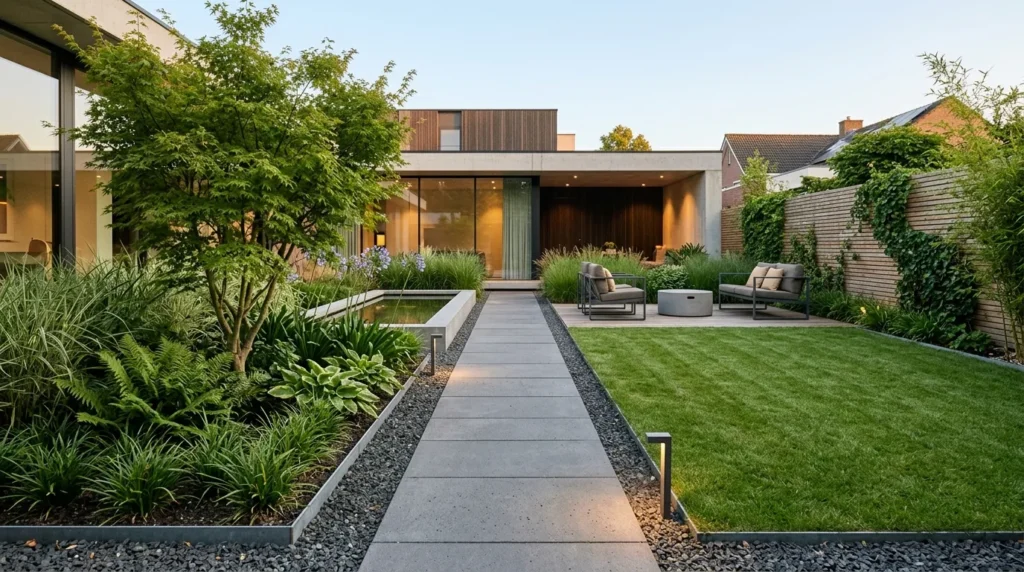
The beauty of minimalist garden design is that it removes visual noise without removing warmth. Instead of crowded flower beds, mismatched pots, and random decor, this approach uses strong shapes, simple materials, repeating plants, clean borders, and natural textures. The result feels modern, polished, and relaxing, whether you have a suburban backyard, small townhouse patio, balcony, side yard, or front entry garden.
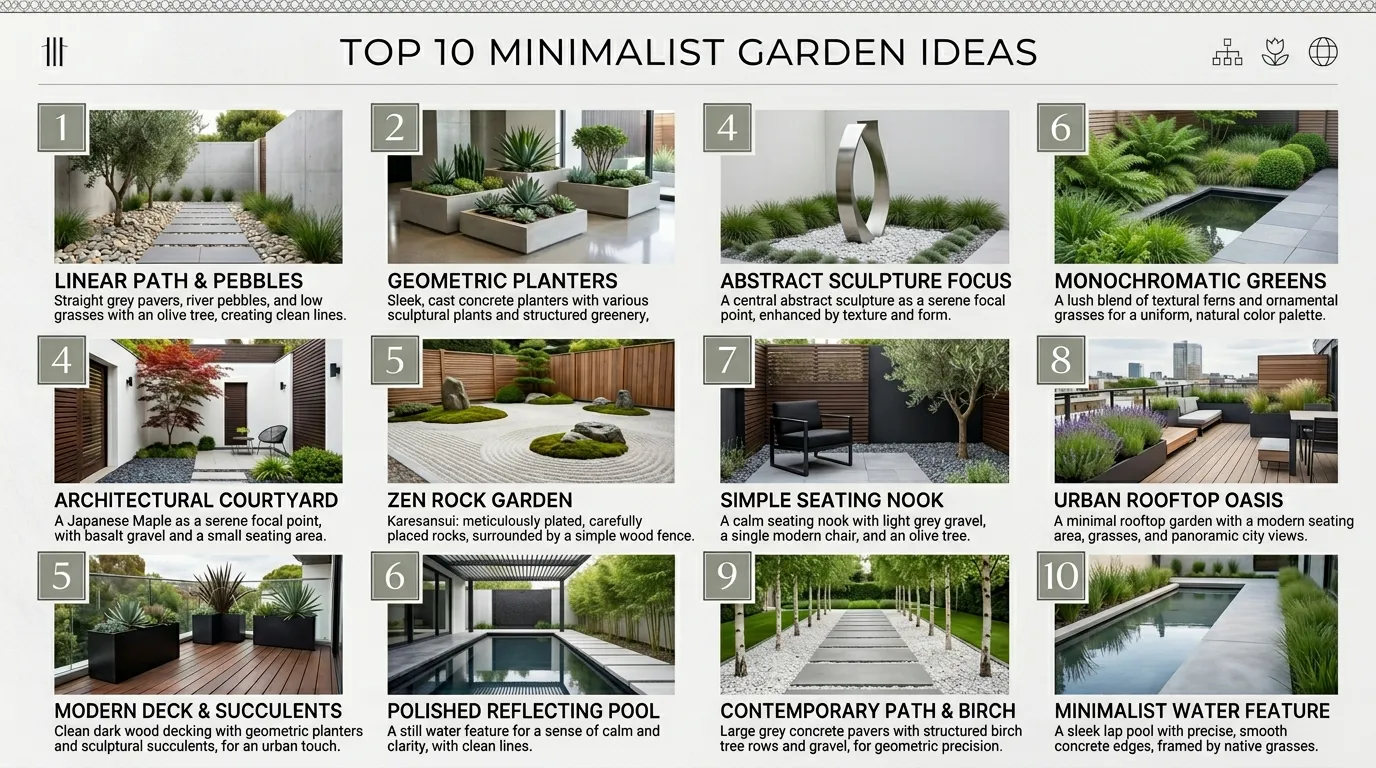
If you searched for Gardens: Do Minimalist, this guide will help you build a space that feels simple but not boring. The ideas below focus on real materials, practical layouts, low-maintenance planting choices, and Pinterest-friendly styling that looks beautiful in photos and works in daily life. You will find gravel courtyards, structured borders, raised beds, statement trees, soft lighting, and seating zones that can be adapted to different budgets and climates.
The goal is not to copy one perfect designer garden. The goal is to create an outdoor space that feels calm, usable, and visually balanced. With the right plant choices, fewer but better materials, and a thoughtful layout, even a plain yard can feel high-end, peaceful, and deeply personal.
1. Gravel Courtyard
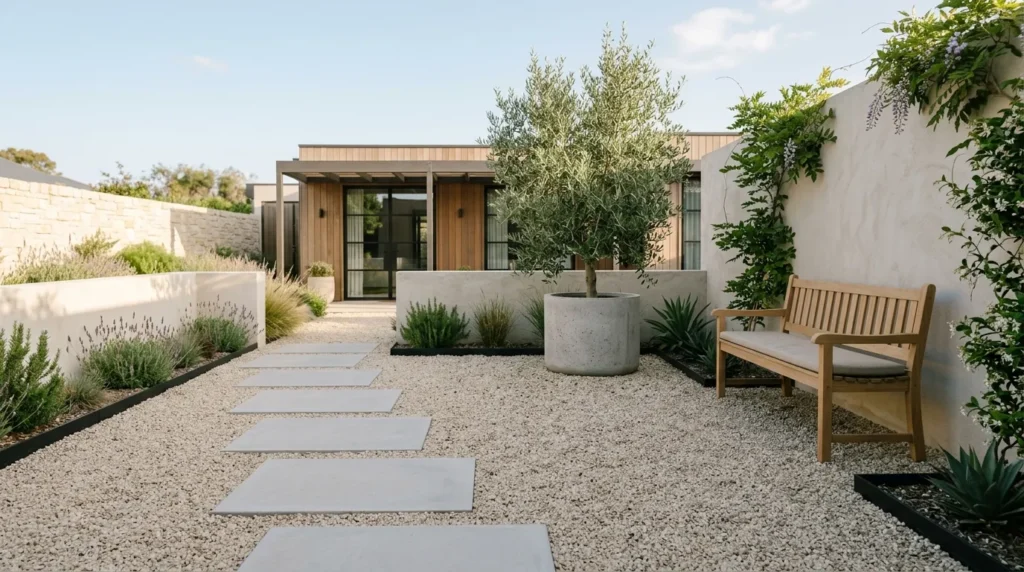
- Creates a clean foundation that feels modern, calm, and easy to maintain.
- Works beautifully in small yards, side yards, patios, and front entry spaces.
- Uses pea gravel, decomposed granite, steel edging, pavers, planters, and drought-tolerant plants.
- Reduces lawn maintenance while adding texture, drainage, and visual structure.
- Looks especially polished with repeating planters, sculptural grasses, and simple outdoor seating.
A gravel courtyard instantly makes an outdoor space feel cleaner, quieter, and more intentional. Instead of relying on a full lawn or crowded flower beds, this idea uses texture and open space as part of the design. Pea gravel, crushed stone, or decomposed granite creates a soft visual surface that works well in dry regions, compact yards, and modern patios. In my experience, gravel looks best when it is contained with steel, brick, or concrete edging because the clean boundary keeps the whole garden feeling designed rather than unfinished.
The practical benefit is that gravel handles foot traffic, drains well, and needs far less care than grass. Add large stepping stones to create a path, then place a bench, fire bowl, or pair of chairs as the focal point. Keep planting simple with ornamental grasses, lavender, boxwood, agave, or rosemary depending on your climate. The transformation feels calm and expensive because the space is not overloaded. It becomes a low-maintenance outdoor room where texture, shape, and negative space do most of the visual work beautifully.
2. Evergreen Borders
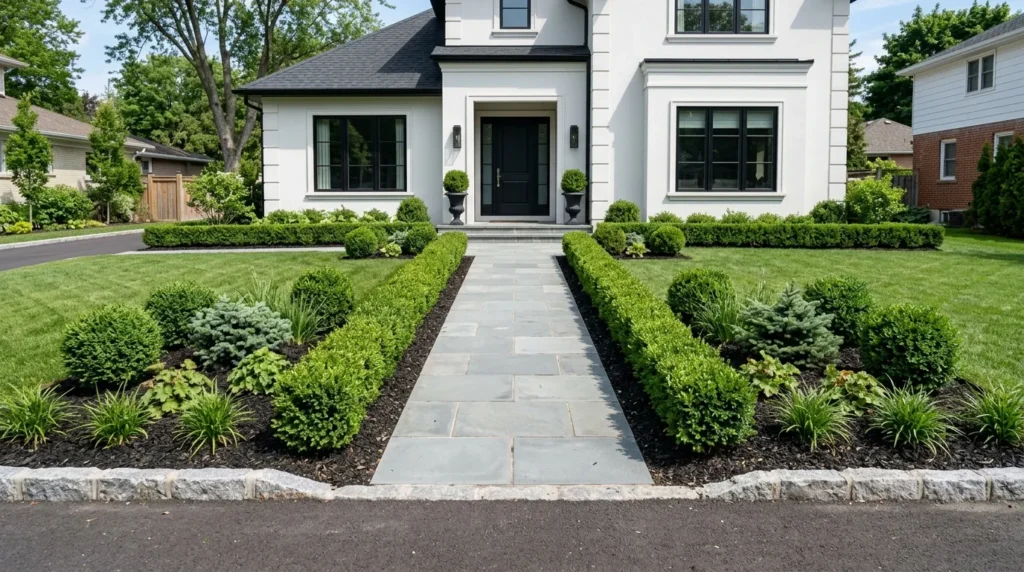
- Gives the garden structure during every season, including winter.
- Helps patios, paths, fences, and front yards feel neat and finished.
- Works with boxwood, holly, yew, dwarf arborvitae, juniper, and compact shrubs.
- Creates a clean backdrop for gravel, stone, concrete, and simple seating areas.
- Makes outdoor spaces feel more expensive because the lines stay consistent year-round.
Evergreen borders are the quiet backbone of a minimalist garden because they create structure all year. While seasonal flowers come and go, evergreen shrubs keep the space looking intentional through spring, summer, fall, and winter. Boxwood, dwarf holly, yew, compact juniper, and small arborvitae can form clean edges around patios, pathways, and front entries. That is why many landscape designers recommend starting with structure before adding decorative plants. A simple green border gives the eye a calm line to follow and makes the entire yard feel more organized.
This idea works especially well for USA homes where curb appeal matters but maintenance needs to stay realistic. Keep the shapes simple: low hedges along a walkway, clipped shrubs beside the porch, or repeated evergreens around a seating zone. Use mulch, gravel, or stone beneath them so the base stays clean. The result is polished without feeling fussy. Even when nothing is blooming, the garden still looks complete, which makes the outdoor space feel dependable, mature, and easier to care for through changing weather and busy schedules.
3. Concrete Planters
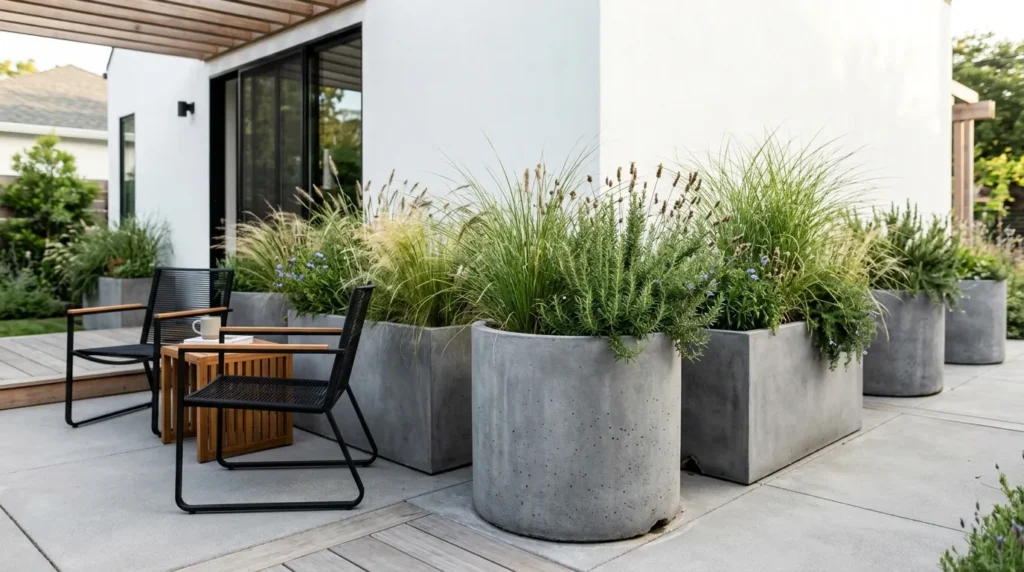
- Adds architectural shape without needing a full landscape renovation.
- Works well on balconies, patios, decks, porches, and modern front entries.
- Pairs beautifully with olive trees, snake plants, grasses, succulents, lavender, and herbs.
- Creates a high-end look using simple materials, clean lines, and repeating forms.
- Helps renters and homeowners upgrade outdoor areas without permanent construction.
Concrete planters bring an architectural look to outdoor spaces without major construction. Their clean lines, soft gray tones, and sturdy presence make plants feel more sculptural and intentional. They work beautifully on patios, balconies, decks, front steps, and courtyard corners where built-in landscaping is not possible. Choose square, rectangular, or rounded shapes, then repeat the same planter style for a cohesive effect. I’ve noticed that repeating two or three matching planters often looks more expensive than using many random pots in different colors and sizes.
The key is choosing plants with strong forms rather than overly busy combinations. Try olive trees, rosemary, snake plants, ornamental grasses, lavender, succulents, or small evergreens, depending on sunlight and climate. Use high-quality potting soil, drainage holes, and saucers where needed to protect surfaces. Concrete also pairs well with black metal furniture, wood benches, gravel, and white exterior walls. The final look feels clean, grounded, and modern. It is especially useful for renters because planters can define a garden area without digging, building, or changing the property permanently.
4. Single Tree Focus
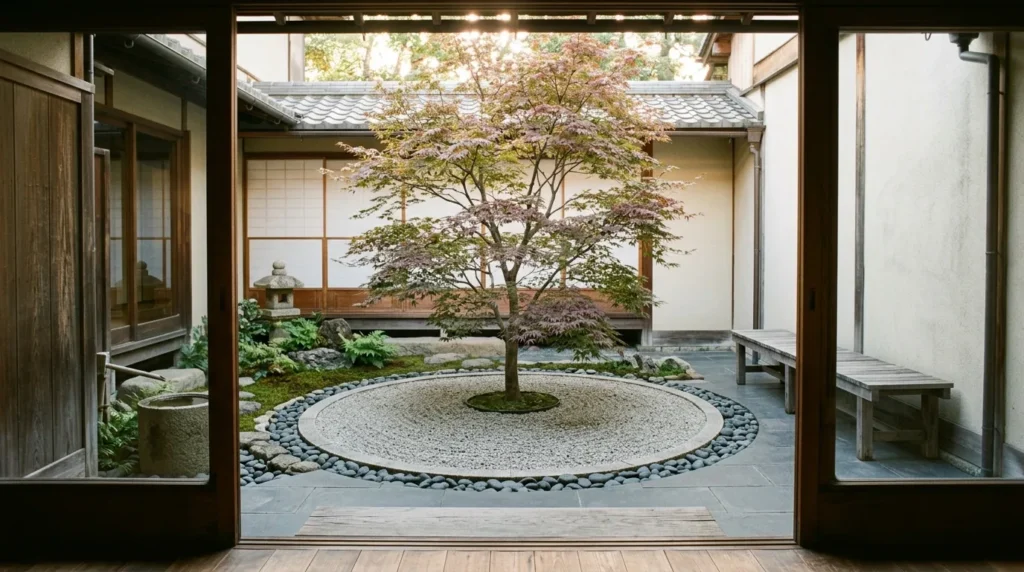
- Creates a strong focal point without crowding the garden with too many plants.
- Works in courtyards, small backyards, front entries, and patio corners.
- Looks beautiful with Japanese maple, olive, crepe myrtle, serviceberry, or citrus trees.
- Adds height, shade, movement, and seasonal interest in a simple way.
- Makes the outdoor space feel curated because one feature gets room to breathe.
One beautiful tree can do more for a minimalist garden than dozens of small plants. A single tree focus gives the outdoor space height, shade, movement, and a natural focal point without clutter. Choose a tree that fits the scale of your yard, such as a Japanese maple, olive tree, serviceberry, crepe myrtle, citrus tree, or dwarf magnolia. The important part is giving it room to breathe. When one tree is framed by gravel, mulch, stone, or simple groundcover, it immediately feels intentional and almost sculptural.
This approach is especially helpful in small gardens because it avoids the common mistake of planting too much. Place the tree where it can be seen from a window, doorway, seating area, or path. Add uplighting, a circular gravel bed, or a simple bench nearby to make the feature stronger. Over time, the tree becomes the emotional anchor of the garden. It changes with the seasons, adds privacy, and creates a peaceful view without needing constant restyling, excessive decor, or complicated planting combinations around it.
5. Clean Pathways
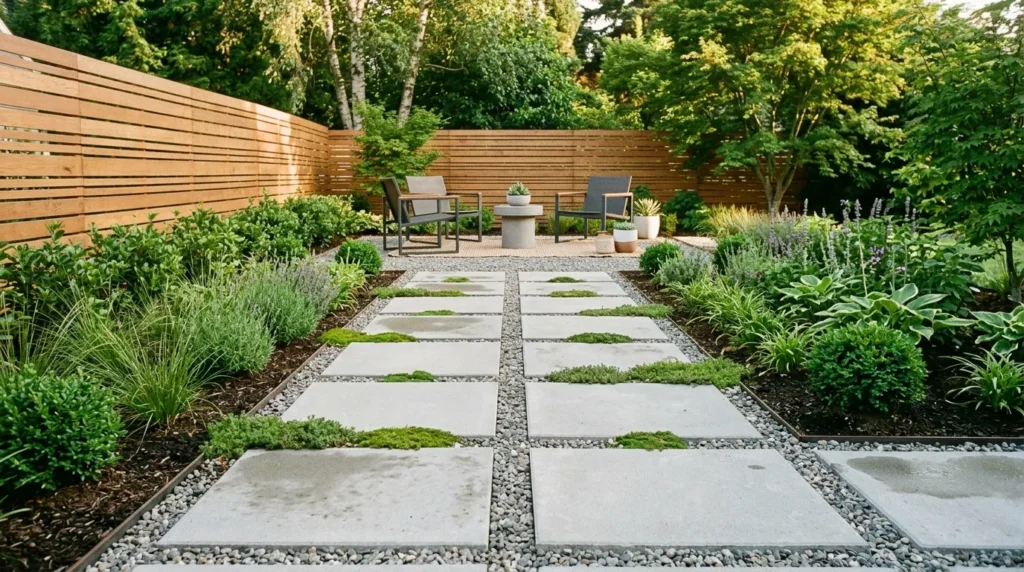
- Gives the garden a clear sense of movement and layout.
- Works with concrete pavers, gravel, flagstone, stepping stones, or brick.
- Helps small yards feel organized instead of random or crowded.
- Connects entries, patios, seating areas, raised beds, and side yards.
- Makes maintenance easier by separating walking zones from planting zones.
A clean pathway makes a garden feel planned before anyone even notices the plants. Pathways guide movement, connect outdoor zones, and create strong lines that support a minimalist layout. Use concrete pavers, large stepping stones, flagstone, brick, or gravel depending on your home’s style. The spacing should feel comfortable for walking, not just decorative. In my experience, oversized pavers with gravel or low groundcover between them create one of the most Pinterest-friendly looks because the contrast feels modern, calm, and visually balanced.
The transformation is both practical and visual. A clear path can lead from the back door to a seating area, from the driveway to the front porch, or through a side yard that previously felt wasted. Keep the edges crisp with steel edging, low plants, or mulch so the walkway stays defined. Avoid too many curves unless the yard truly needs them. The finished result feels organized, welcoming, and easy to use. It also protects planting beds from foot traffic, which keeps the garden looking tidy longer.
6. Monochrome Planting
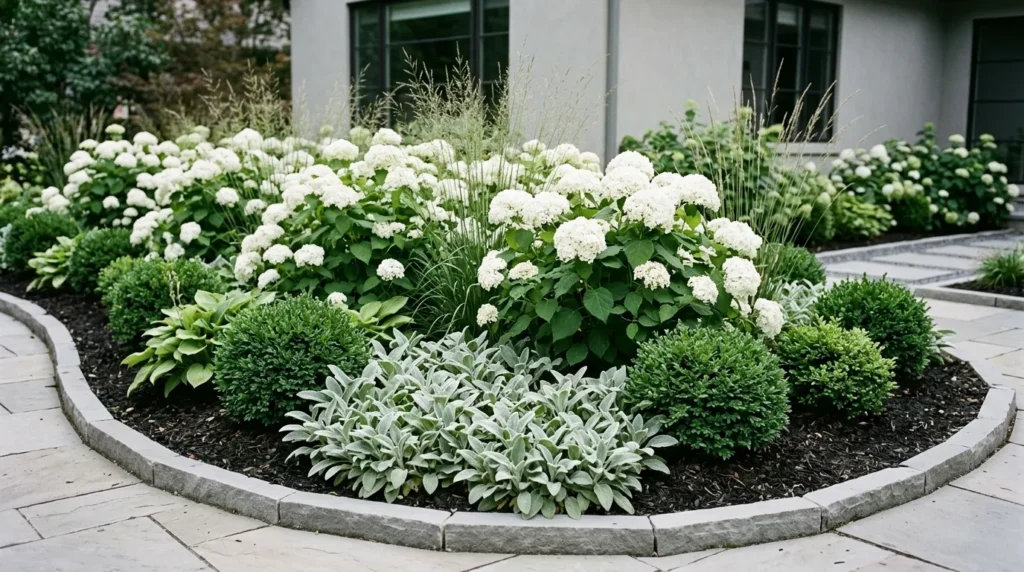
- Creates a calm, cohesive garden by limiting the color palette.
- Works with white flowers, green foliage, silver leaves, or deep burgundy accents.
- Makes small outdoor spaces feel more polished and less visually busy.
- Uses repetition to create rhythm, balance, and a designer-inspired look.
- Helps flowers and foliage feel intentional instead of random or overcrowded.
Monochrome planting creates a peaceful garden by limiting color and letting texture become the star. Instead of mixing every flower shade together, choose one main color family and repeat it throughout the space. White blooms with green foliage feel classic and bright, while silver-green plants feel soft and coastal. Deep burgundy accents can add drama without making the garden feel busy. This is one of the easiest ways to make a simple yard look curated because the repeated palette ties every bed, planter, and border together visually.
To make monochrome planting feel rich, vary height, leaf shape, and bloom size. Pair white hydrangeas with boxwood, lamb’s ear, ornamental grass, and small white annuals for a layered look. In warmer climates, try agave, dusty miller, white lantana, and rosemary. The result feels calm but never flat because each plant contributes a different texture. This idea is practical for homeowners who feel overwhelmed at the nursery. A limited palette makes shopping easier, reduces impulse buys, and keeps the garden looking cohesive from spring through late summer.
7. Still Water
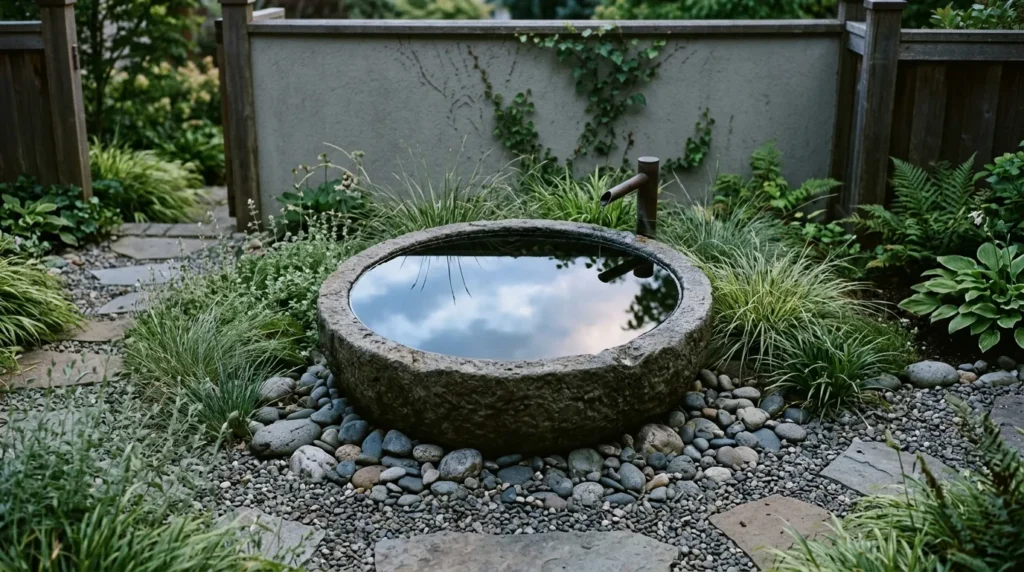
- Adds a peaceful focal point without needing a large pond or complex feature.
- Works with bowls, troughs, fountains, reflecting pools, or simple basins.
- Brings sound, light reflection, and movement into a quiet garden layout.
- Looks beautiful near seating, stone paths, gravel areas, and shaded corners.
- Helps the garden feel more relaxing, spa-like, and visually balanced.
A simple water feature can make a minimalist garden feel peaceful, polished, and almost spa-like. It does not need to be large or complicated. A stone bowl, narrow trough, small fountain, reflecting basin, or modern bubbling urn can add sound, reflection, and movement without overwhelming the layout. Place it where it can be seen from a chair, kitchen window, or patio door. I’ve seen this work well in compact spaces because water adds atmosphere without requiring many decorative objects or colorful plantings around it.
The most important detail is restraint. Choose one water feature with a clean shape, then surround it with simple materials like gravel, concrete, slate, or smooth river stones. Keep nearby planting low so the feature stays visible. Solar pumps can work for some small setups, while plug-in fountains may offer stronger circulation. The practical benefit is that the garden feels more relaxing during evenings, weekends, and quiet mornings. The reflection of sky, greenery, and light brings softness to hard materials while still keeping the design simple.
8. Raised Garden Beds
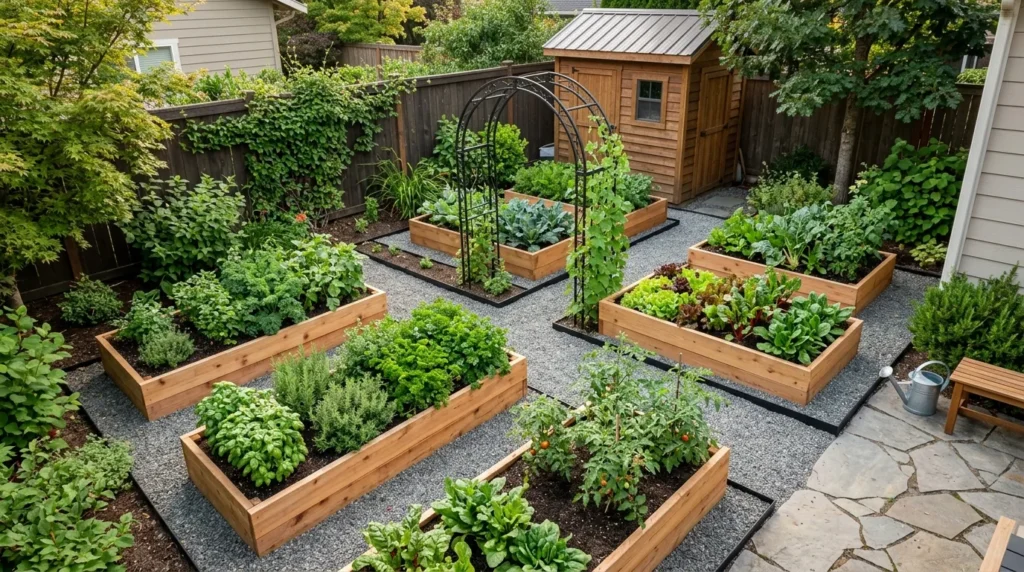
- Keeps planting areas organized, practical, and visually clean.
- Works for vegetables, herbs, flowers, grasses, and compact shrubs.
- Uses cedar, metal, stone, concrete block, or painted wood materials.
- Helps control soil quality, drainage, spacing, and garden maintenance.
- Looks especially modern when beds are repeated in matching shapes.
Raised garden beds can look beautifully minimalist when they are built with clean lines and repeated shapes. Instead of scattered planting areas, raised beds organize herbs, vegetables, flowers, or grasses into clear zones. Cedar, galvanized metal, stone, concrete block, or painted wood can all work depending on the home’s style. The best designs keep the bed shape simple, usually rectangular or square, with enough walking space around each side. This makes planting, watering, harvesting, and weeding much easier while keeping the garden visually tidy.
This idea is especially practical for USA backyards where soil quality, drainage, or clay-heavy ground can be a challenge. Fill beds with good soil, compost, and mulch so plants have a healthier foundation. For a minimalist look, avoid mixing too many plant types in one bed. Try one bed for herbs, one for leafy greens, and one for flowers or ornamental grasses. The repeated layout looks clean and intentional. It also makes gardening more accessible because the raised height reduces bending and keeps maintenance more comfortable.
9. Outdoor Seating
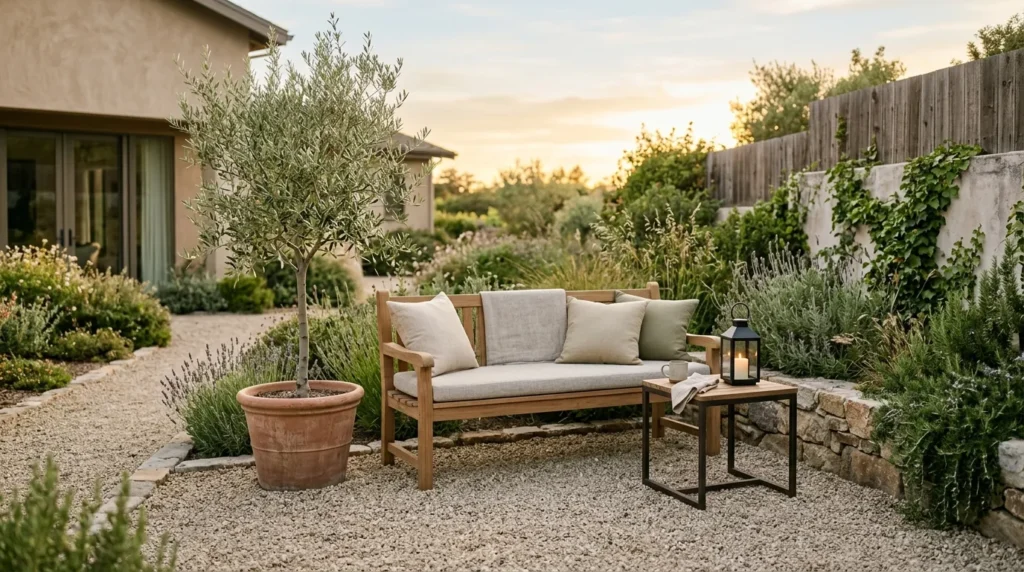
- Turns the garden into a usable outdoor room instead of just a view.
- Works with benches, lounge chairs, bistro sets, sectionals, or simple stools.
- Looks best with restrained colors, durable materials, and weather-friendly cushions.
- Creates a destination for coffee, reading, hosting, and evening relaxation.
- Helps the overall design feel warm, personal, and lived-in.
Outdoor seating turns a minimalist garden from something you look at into something you actually use. A simple bench, pair of lounge chairs, bistro set, or low outdoor sofa can create a destination within the yard. Choose furniture with clean lines and durable materials like teak, powder-coated metal, concrete, rope, or weather-resistant wicker. Keep cushions neutral or muted so the seating blends with the garden instead of competing with it. That balance makes the space feel warm, practical, and high-end without becoming crowded.
Placement matters as much as the furniture itself. Put seating where there is a view, shade, privacy, or evening light. A bench under a tree, two chairs beside gravel, or a small table near raised beds can feel inviting without needing much decor. Add one outdoor pillow, a lantern, or a small side table for function. The result is a garden that supports real routines: morning coffee, reading, quiet calls, casual hosting, or sunset conversations. Minimalist design works best when it feels beautiful and livable.
10. Soft Night Lighting
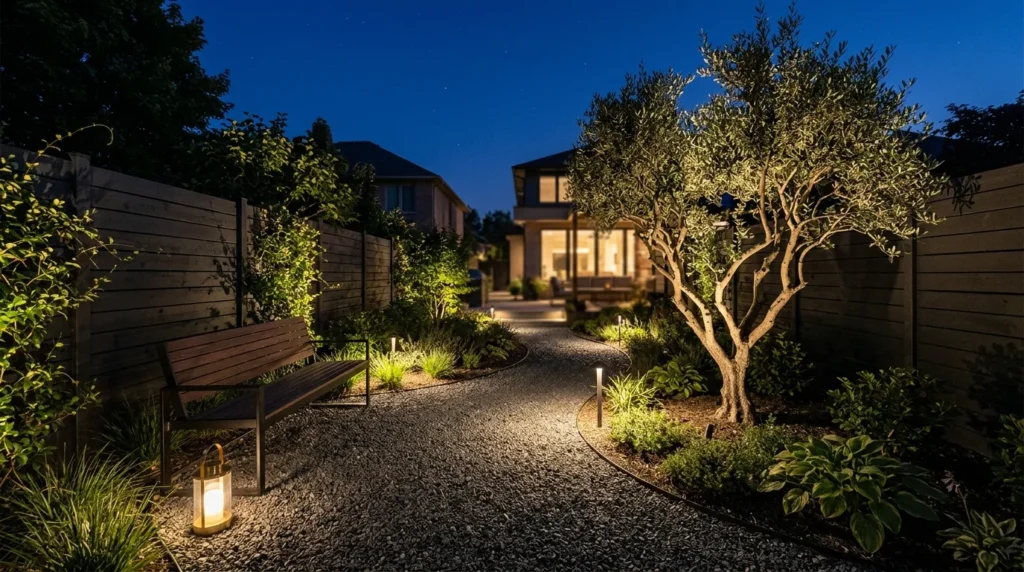
- Extends the garden’s use into the evening without harsh brightness.
- Works with path lights, uplights, lanterns, sconces, string lights, and solar fixtures.
- Highlights trees, pathways, seating zones, walls, and water features.
- Adds safety while making the outdoor space feel warm and inviting.
- Creates a Pinterest-worthy evening mood with very little visual clutter.
Soft night lighting can completely change how a minimalist garden feels after sunset. Instead of bright floodlights, use warm, low lighting that highlights paths, trees, seating areas, and architectural details. Path lights, lanterns, wall sconces, uplights, and discreet solar fixtures can all work if they are placed with intention. The goal is to create glow, not glare. In my experience, warm lighting around 2700K feels the most inviting because it flatters plants, stone, wood, and outdoor furniture without making the yard feel harsh or commercial.
The best lighting plan uses fewer fixtures in smarter locations. Uplight one tree, add low lights along a path, place a lantern near seating, and softly illuminate steps for safety. Avoid mixing too many fixture styles because consistency keeps the space calm. This final layer makes the garden usable for evening dinners, summer gatherings, quiet reading, and late-night walks outside. It also creates beautiful Pinterest photos because shadows, textures, and silhouettes become more dramatic. For Gardens: Do Minimalist, lighting is often the detail that makes everything feel finished.