12 Shoe Storage Entryway Ideas
Introduction
The entryway is the first place your home makes an impression, but it is also one of the easiest areas to clutter. Shoes pile up near the door, backpacks slide onto the floor, keys disappear under mail, and the whole space can start feeling messy before anyone even walks into the living room. A smart entryway setup solves more than one problem. It gives every pair of shoes a place, keeps daily items within reach, and makes the home feel cleaner the moment the door opens.
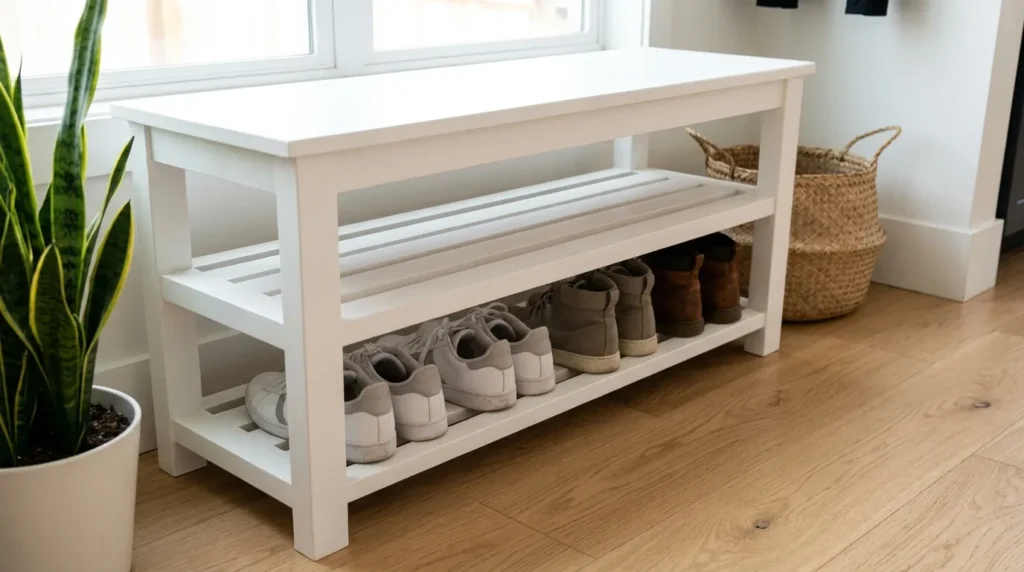
For USA homes, this matters because entryways come in so many shapes. Some houses have a full mudroom, some apartments have only a narrow wall, and some families use the garage door as the real everyday entrance. The best system is not always the biggest one. It is the one that fits your routine, your floor space, your family size, and the types of shoes you actually wear every day.
These ideas are designed to feel beautiful enough for Pinterest but practical enough for real life. You will find options for small spaces, busy families, renters, modern homes, farmhouse entries, and narrow hallways. Each idea includes styling logic, material suggestions, and simple layout guidance so your entryway can feel organized, welcoming, and easier to maintain.
1. Bench Cubbies
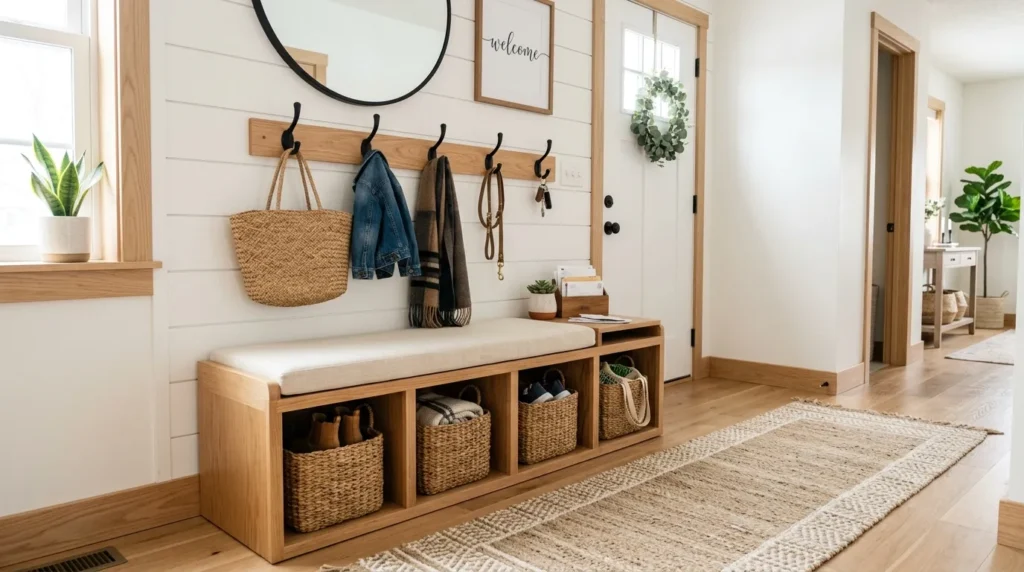
- Use a bench with open cubbies underneath for everyday shoes and quick seating.
- Add cushion padding on top to make the entryway feel warmer and more comfortable.
- Use labeled baskets inside cubbies if you want a cleaner, less visible look.
- Keep the most-used pairs in the easiest slots for fast morning routines.
- Choose wood, white, black, or woven textures to match your home style.
A bench with cubbies is one of the most practical entryway upgrades because it solves two problems at once. You get a place to sit while putting on shoes, and you get clear storage underneath for daily pairs. This layout works especially well for families, renters, and busy households where shoes usually land near the door. In my experience, open cubbies work best when each person gets a section, because the system becomes simple enough for everyone to follow without thinking too much.
The finished look can feel clean, warm, and very intentional with only a few styling choices. Add a washable cushion, a row of matching baskets, and a small hook rail above the bench for bags or jackets. If your entry is narrow, choose a slim bench that does not block walking space. For a more polished look, keep seasonal or rarely worn shoes somewhere else. This keeps the bench from turning into a crowded drop zone and helps the entryway stay guest-ready.
2. Slim Cabinet
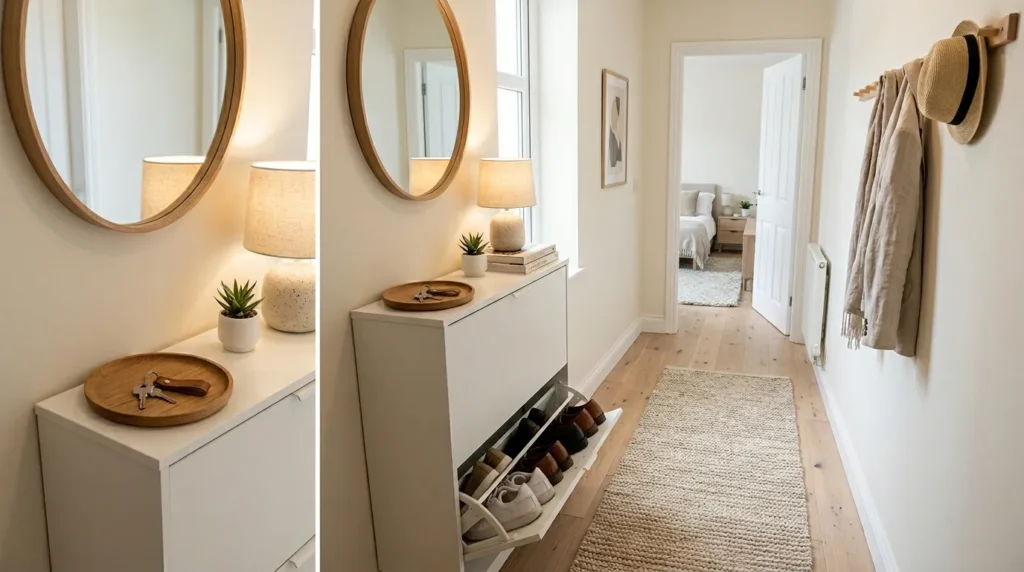
- Choose a narrow tilt-out cabinet for hallways, apartments, and small entry spaces.
- Use the top surface for keys, mail, a tray, or a small decorative lamp.
- Pick a cabinet with doors to hide visual clutter and create a cleaner look.
- Anchor tall cabinets safely if they are placed in high-traffic family areas.
- Match the cabinet color to nearby walls for a subtle built-in effect.
A slim cabinet is perfect when your entryway needs organization without losing walking space. Tilt-out cabinets are especially useful because they hold several pairs while staying close to the wall. This makes them a smart choice for apartments, townhomes, and narrow hallways where a full bench would feel too bulky. The closed front keeps the area looking calm, which is helpful when the rest of the home opens directly from the front door into the living room or dining area.
The transformation is strongest when the cabinet also works as a small landing zone. Add a tray for keys, a bowl for sunglasses, and a mirror above it to make the whole wall feel finished. A white cabinet blends into light walls, while black or walnut creates a stronger furniture-style statement. I’ve noticed this idea works well for people who want a clean look but do not want every pair visible. It keeps the entry polished while still supporting everyday routines.
3. Woven Baskets
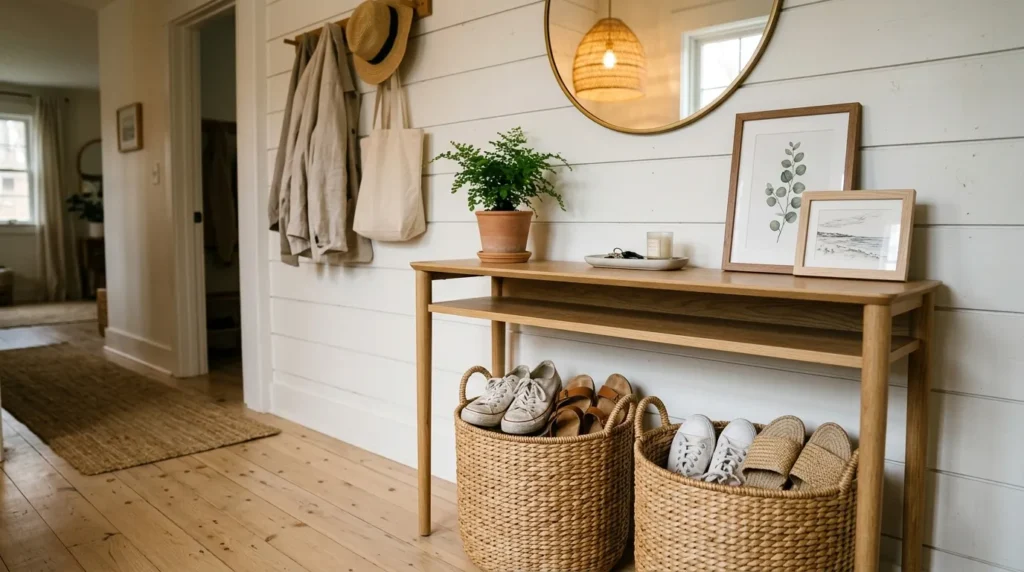
- Use large woven baskets for casual shoes, sandals, slippers, or kids’ everyday pairs.
- Place baskets under a console table, bench, or open shelf to save floor space.
- Choose matching baskets for a clean look or mixed textures for a relaxed style.
- Add labels if multiple family members share the same entryway area.
- Avoid overfilling baskets so shoes remain easy to grab and put away.
Woven baskets make an entryway feel soft, casual, and easy to maintain. They are especially helpful when you want a less rigid system for sandals, house shoes, kids’ sneakers, or quick-grab pairs. Instead of lining shoes across the floor, you can gather them into one textured container that looks intentional. This idea works beautifully in farmhouse, coastal, boho, and transitional homes because natural fibers add warmth to hard entryway surfaces like tile, wood, and painted trim.
The key is choosing baskets that fit the space and routine. A deep basket can work for kids’ shoes, while a shallow basket is better for adults because pairs stay easier to see. Place baskets under a bench, beside a door, or beneath a narrow console table for a layered look. Add small labels if everyone needs their own zone. This setup is not meant for delicate heels or tall boots, but it works wonderfully for casual daily pairs that usually create clutter near the door.
4. Floating Shelves
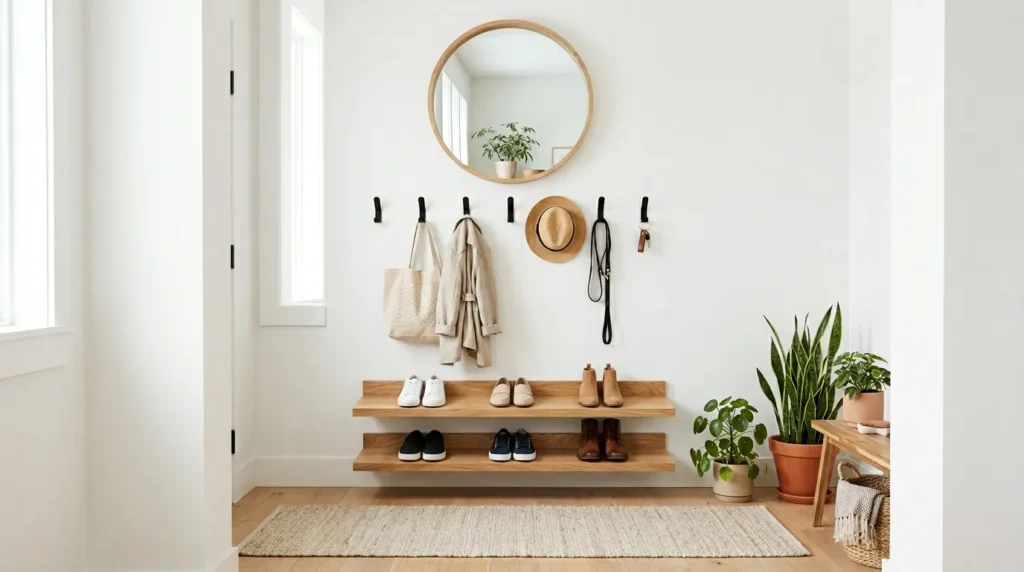
- Install low floating shelves to keep shoes lifted and floors easier to clean.
- Use wood shelves for warmth or white shelves for a clean modern look.
- Leave enough vertical space between shelves for sneakers, flats, and ankle boots.
- Keep the shelf depth practical so shoes do not hang too far into the walkway.
- Style the top shelf with a plant, basket, or small framed print.
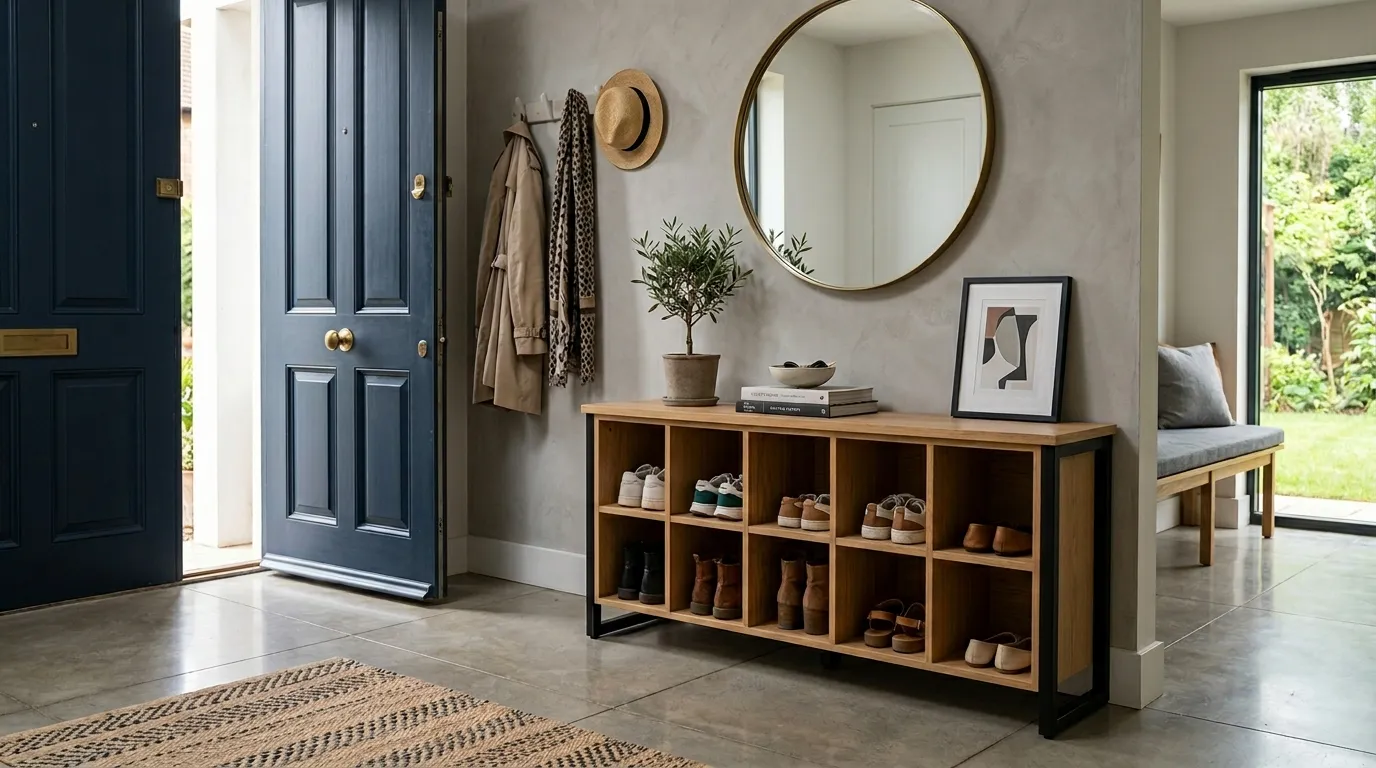
Floating shelves can make a small entryway feel lighter because they keep storage off the floor. This idea works well when you have an empty wall but not enough room for bulky furniture. Low shelves can hold everyday pairs, while the wall above can be used for hooks, art, or a mirror. That vertical layering makes the area feel designed instead of crowded. Many designers recommend wall-mounted solutions in tight spaces because they free up floor area and make cleaning much easier.
The final look can be simple, modern, and surprisingly custom. Use two or three sturdy shelves in matching wood or painted finishes, then keep only the most-used shoes visible. Add a narrow tray below if wet shoes are common during rainy or snowy months. For a polished Pinterest-style entry, pair wood shelves with black hooks, a round mirror, and a soft runner rug. The setup feels open and organized while still giving shoes a clear place near the door.
5. Mudroom Lockers
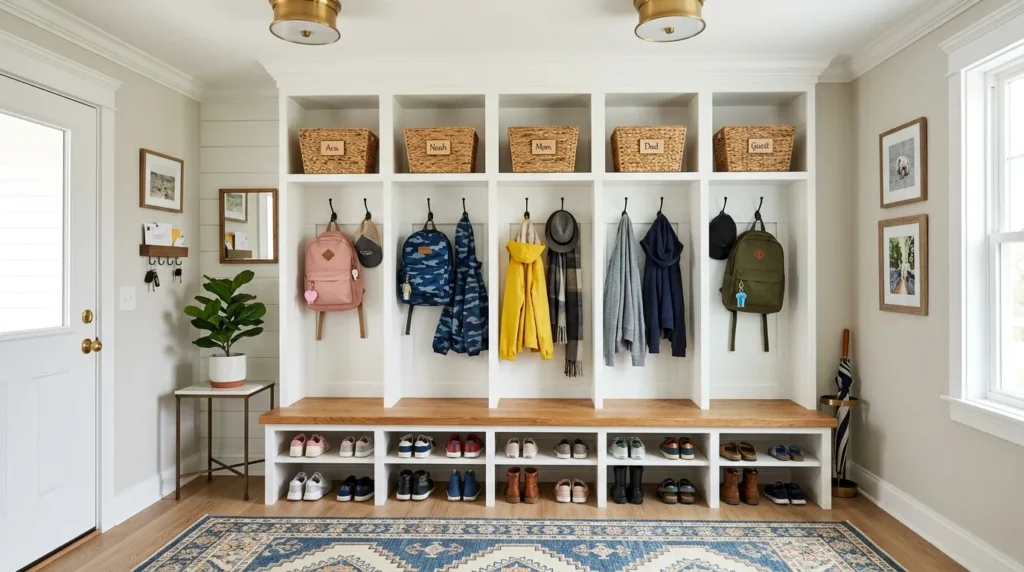
- Create individual locker-style zones for each family member’s shoes, bags, and jackets.
- Use lower cubbies for footwear and upper hooks for coats, backpacks, or hats.
- Add baskets, labels, or name tags to make the system easier for kids.
- Choose durable materials if the space connects to a garage, backyard, or laundry room.
- Keep one open shelf for seasonal items like gloves, sports gear, or umbrellas.
Mudroom lockers are ideal for busy families because they turn chaos into assigned zones. Each person gets a space for shoes, bags, coats, and daily items, which reduces the pileup near the door. This idea works especially well in suburban homes, garage entries, laundry rooms, and back-door drop zones. The structure does not have to be custom-built to be useful. Tall bookcases, modular cubes, or ready-made hall trees can create a similar locker effect with less cost and less installation.
The biggest benefit is routine. Kids know where sneakers go, adults know where work shoes belong, and backpacks stop landing in the middle of the floor. Add labels or small name plates if the system serves multiple people. Use durable baskets for sports shoes, washable rugs for muddy days, and hooks at child-friendly heights. A mudroom locker setup may take more planning than a single bench, but it can completely change how the home feels during school mornings, workdays, and busy evenings.
6. Hidden Drawer
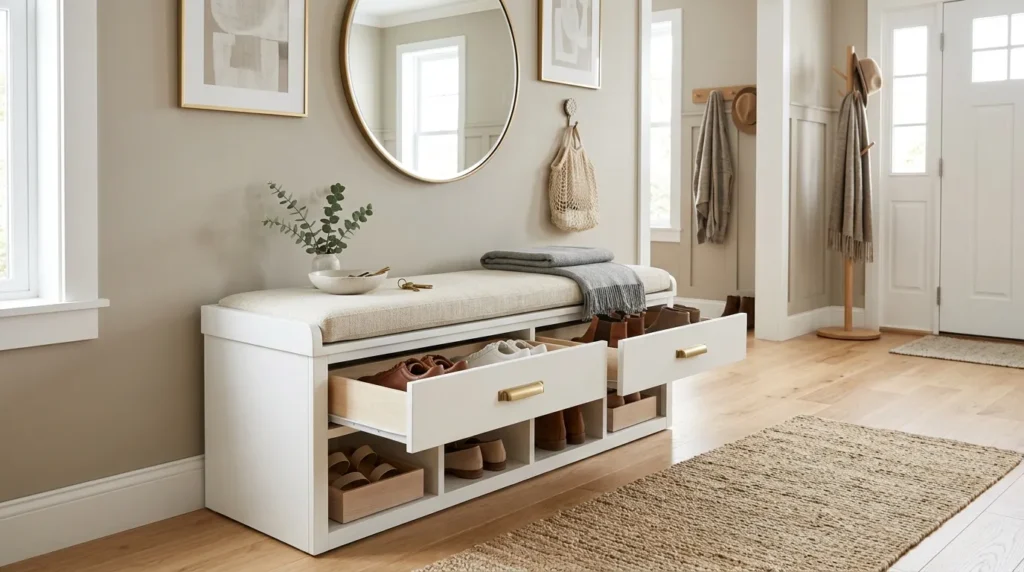
- Use a bench, console, or cabinet with pull-out drawers for concealed footwear.
- Choose shallow drawers for flats and sneakers or deeper drawers for bulkier pairs.
- Add dividers if you want each pair to stay neatly separated inside.
- Keep drawer handles simple so the furniture looks clean and entry-friendly.
- Use hidden storage when your entry opens directly into a main living area.
Hidden drawers are perfect when you want function without showing the mess. This idea works especially well in homes where the entryway is part of the living room or open floor plan. Instead of seeing rows of shoes, guests see a clean bench, console, or cabinet that blends with the rest of the furniture. Pull-out drawers make it easier to access pairs than deep closed cabinets, especially if you organize them by family member, shoe type, or daily use.
The result feels polished and calm because the clutter disappears behind clean lines. A drawer bench can hold sneakers, flats, slippers, and kids’ shoes while still giving everyone a place to sit. Add a tray on top for mail or keys, then style the wall with a mirror and simple art. If odors are a concern, choose breathable drawers or add small charcoal inserts. This setup is excellent for people who love a tidy home but still need realistic storage for everyday footwear.
7. Vertical Rack
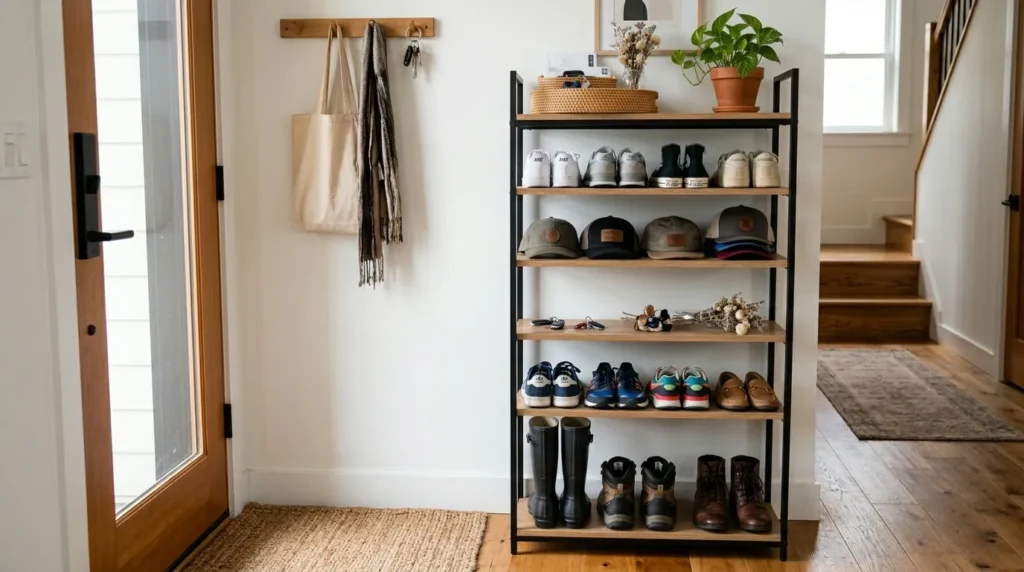
- Use a tall narrow rack when floor space is limited but wall height is available.
- Choose open shelving so shoes stay visible and easy to grab.
- Place heavier shoes on lower levels and lighter pairs near the top.
- Keep the rack near the door but outside the main walking path.
- Use matching baskets on upper shelves for small accessories or seasonal items.
A vertical rack helps you use height instead of spreading shoes across the floor. This is a smart option for small apartments, shared rentals, dorm-style spaces, and compact entryways where width is limited. A tall rack can hold many pairs while taking up less floor area than a wide bench or cabinet. The open design also helps you see what you own, which makes mornings easier. In my experience, vertical systems work best when they are edited and not overloaded.
The finished setup can look tidy if the rack feels intentional rather than temporary. Choose metal for a modern utility look, wood for warmth, or white shelving for a lighter feel. Place boots and heavier shoes at the bottom for balance. Use top shelves for baskets, hats, or out-of-season accessories if they are not easy to reach daily. This idea works well behind a door, near a garage entrance, or beside a coat closet where vertical space is available.
8. Boot Tray
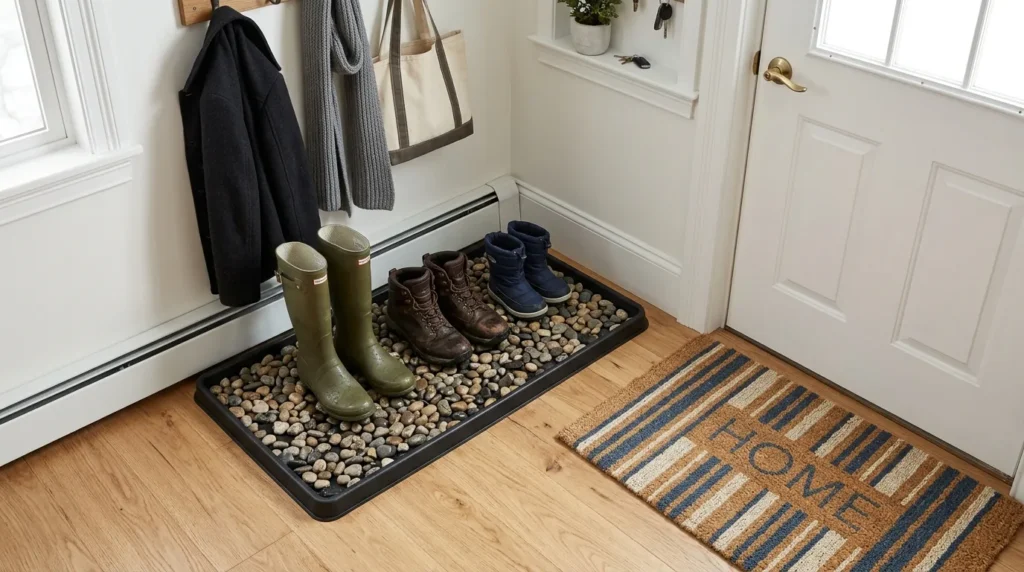
- Place a waterproof tray near the door for wet, muddy, or snowy footwear.
- Choose rubber, metal, plastic, or stone-look trays depending on your entry style.
- Add smooth pebbles inside the tray to lift shoes and help them dry faster.
- Keep the tray near a mat so dirt does not spread across the floor.
- Use this idea seasonally during rainy, snowy, or muddy months.
A boot tray is a simple upgrade that can protect your floors every day. This idea is especially useful in rainy states, snowy climates, farmhouses, lake homes, and family entryways where outdoor mess follows people inside. The tray gives wet shoes a clear landing spot instead of letting water, salt, dirt, or grass spread across wood or tile floors. It is one of those small details that does not feel exciting at first, but quickly becomes something you rely on.
The look can still be attractive when you choose the right materials. A black rubber tray feels practical and low-maintenance, while a galvanized metal tray looks farmhouse-friendly. Adding river stones can make the tray look more styled and help water drain away from soles. Place it under hooks, beside a bench, or near the garage entrance for easy use. This setup is not meant to hold every pair you own, but it is perfect for the messy pairs that need a controlled spot.
9. Hall Tree
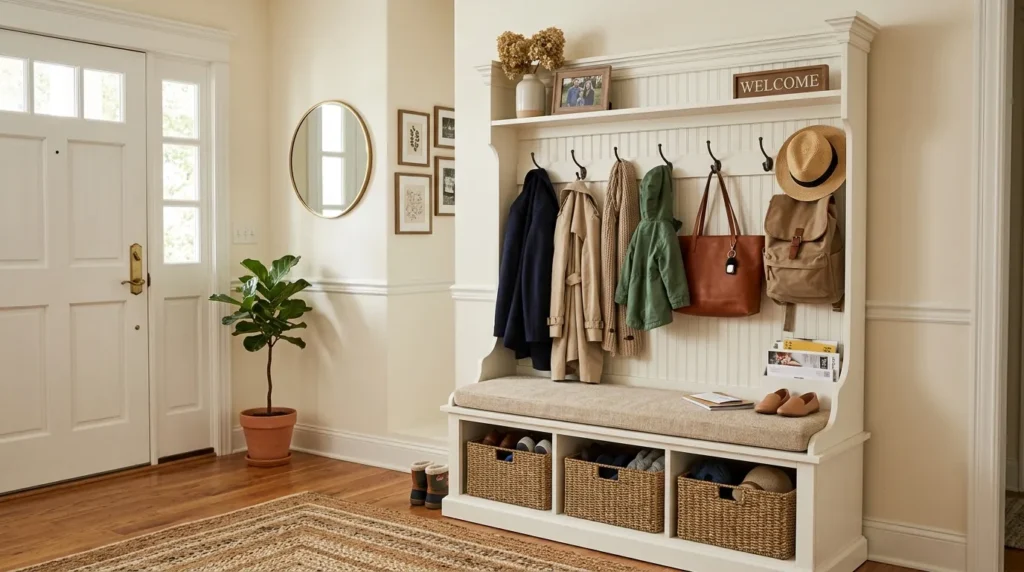
- Choose a hall tree with hooks, a seat, and lower compartments for daily shoes.
- Use it as an all-in-one entry station for coats, bags, keys, and footwear.
- Pick a size that fits the wall without blocking doors or hallway traffic.
- Add small baskets underneath for kids’ shoes, gloves, scarves, or pet items.
- Style the seat with a washable cushion for comfort and visual warmth.
A hall tree is a strong choice when your entryway needs one complete organization piece. It combines hooks, seating, and lower storage into a single furniture item, which makes the space easier to plan. This idea works well in homes without a closet near the front door. Instead of adding separate hooks, a bench, and baskets, you get everything in one vertical station. The result feels structured, which is helpful for busy households where daily items need a clear place.
The finished entry can feel welcoming and classic with the right styling. Add a cushion to the bench, baskets under the seat, and a small tray for keys if the design includes a shelf. Keep the hooks limited to daily coats and bags so the hall tree does not become visually heavy. White styles feel bright and farmhouse-inspired, black feels modern, and wood tones feel warm. A hall tree is especially useful near front doors, garage entries, and mudroom walls.
10. Closet Makeover
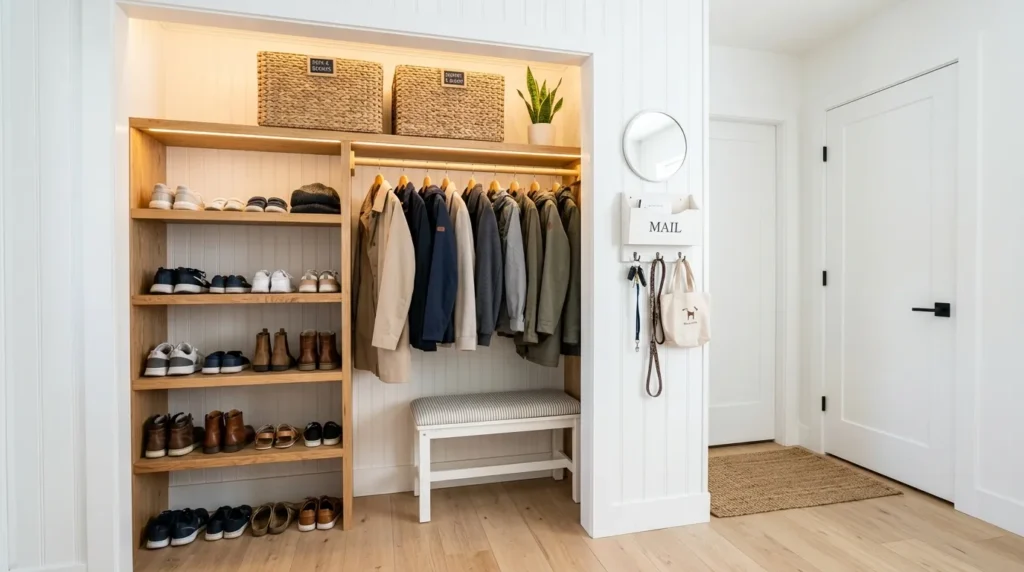
- Turn an entry closet into a more functional footwear and outerwear zone.
- Add tiered shelves, stackable racks, or low cubbies under hanging coats.
- Use door organizers for slippers, flats, umbrellas, or small accessories.
- Keep seasonal shoes higher or lower depending on how often they are used.
- Add lighting if the closet feels dark and hard to maintain.
A closet makeover can give your entryway hidden organization without adding furniture. Many coat closets have wasted space under hanging jackets, which makes them perfect for shelves, cubbies, or stackable racks. This idea is practical for people who prefer a clean entry with fewer visible items. It also works well in homes where the hallway is too narrow for a bench or cabinet. Instead of fighting the lack of floor space, you make the existing closet work harder.
The transformation can be surprisingly dramatic with simple materials. Add a low shoe rack, a second shelf, a few baskets, and stick-on lighting if the closet feels dark. Use the inside of the door for smaller items like slippers, dog leashes, umbrellas, or kids’ accessories. Keep only current-season footwear in the easiest spots so the closet does not become overwhelming. When the door closes, the entry looks clean, but the daily essentials remain easy to grab before leaving the house.
11. Under Stairs
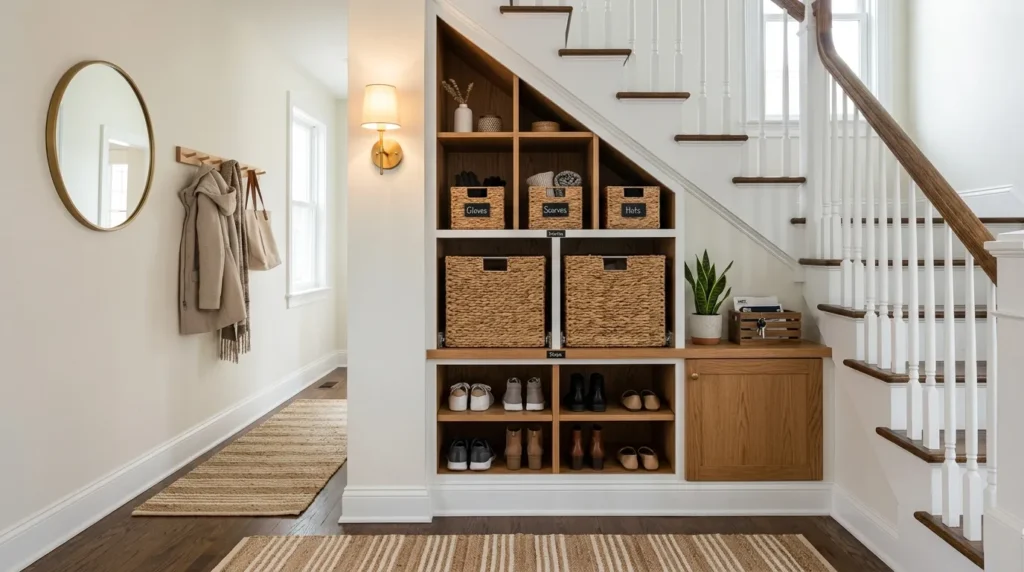
- Use the space beneath stairs for built-in cubbies, drawers, or low shelves.
- Keep the design shallow enough so shoes do not disappear too far back.
- Add baskets or pull-out bins to make deep corners easier to access.
- Paint the area to match nearby trim for a clean built-in appearance.
- Use lighting if the under-stair space feels shadowy or hard to see.
Under-stair space is often wasted, but it can become a smart entry zone. If your stairs are near the front door, garage entrance, or main hallway, the lower area can hold shoes, bags, and seasonal items without taking up extra room. Built-in cubbies look polished, but freestanding shelves or pull-out baskets can also work well. This idea is especially helpful in townhomes, split-level homes, and smaller houses where every inch needs to earn its place.
The key is making the space easy to reach. Deep storage can become frustrating if shoes slide too far back, so use pull-out bins, low drawers, or shallow cubbies whenever possible. Add a small light strip if the space feels dark. Paint shelves the same color as the trim for a built-in look, or use warm wood for contrast. This setup can turn an awkward architectural area into a useful, attractive feature that keeps the entryway floor clear.
12. Minimal Drop Zone
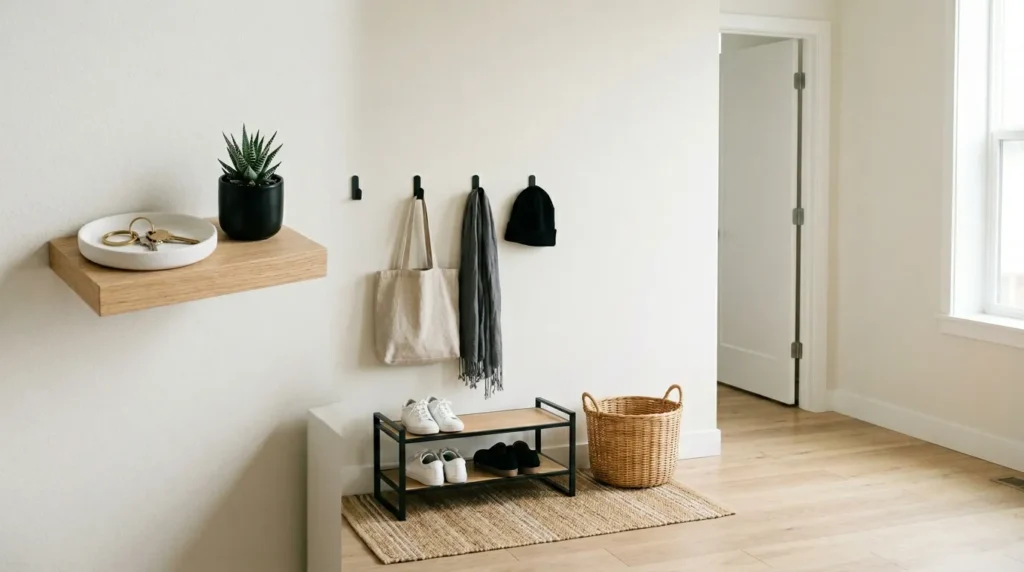
- Create a simple entry station with only a mat, small rack, hooks, and tray.
- Keep the number of visible shoes low so the area feels calm and open.
- Use one basket for overflow items like slippers, kids’ shoes, or sandals.
- Choose neutral colors and clean lines for a modern uncluttered look.
- Reset the area daily so it does not become a pileup spot.
A minimal drop zone is ideal when you want the entryway to feel calm and uncluttered. This idea works because it focuses on the few items you use every day instead of trying to store everything near the door. A small rack, a sturdy mat, a hook rail, and a key tray may be enough for one person, a couple, or a low-traffic entrance. The point is not to create a large storage system; it is to stop clutter before it spreads.
The finished space feels light, intentional, and easy to clean. Choose a narrow rack or low shelf that holds only the current daily pairs. Add a washable mat for dirt control, a small tray for keys, and hooks for bags or jackets. If extra shoes collect quickly, use one hidden basket or move rarely worn pairs to a closet. This setup works beautifully in apartments, modern homes, and small entryways where a peaceful first impression matters more than maximum capacity.