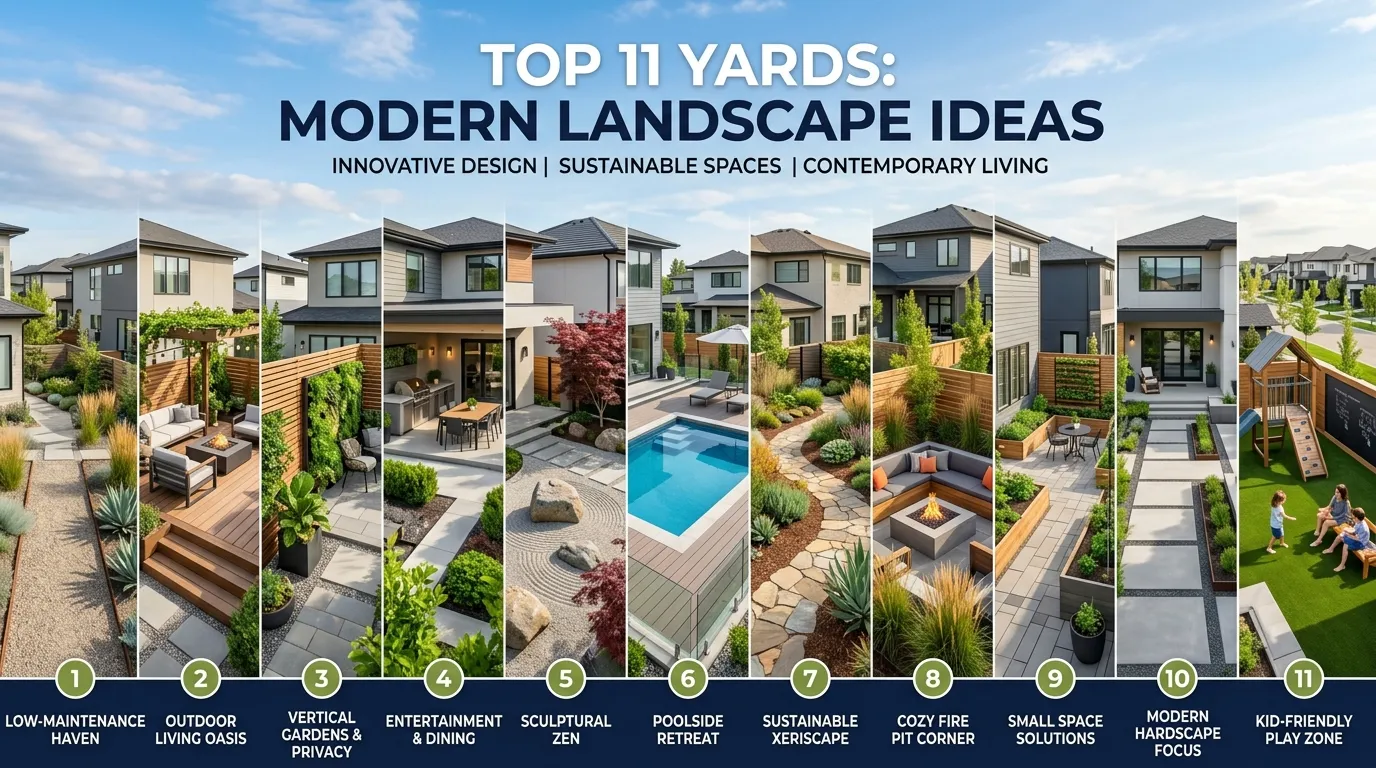
Top 11 Yards: Do Modern Landscape Ideas
Introduction
Modern yard design is all about blending functionality, aesthetics, and natural elements to create outdoor spaces that are both practical and visually appealing. With thoughtful landscaping, homeowners can turn a simple backyard into a Pinterest-worthy retreat that accommodates relaxation, entertainment, and daily activities. Incorporating greenery, textures, and functional zones enhances usability while maintaining elegance. For USA readers, understanding layout, material choices, and complementary elements ensures a cohesive design that works with different property sizes and shapes, providing a modern, low-maintenance, and inspiring landscape.
The Yards: Do Modern guide focuses on creative, human-centered ideas to elevate outdoor spaces. From layered planting beds to integrated seating areas and pathways, each design emphasizes usability while enhancing visual interest. By combining hardscape elements, soft grass or turf, and decorative accents like lighting or planters, homeowners can achieve a stylish, practical, and inviting environment. These tutorials provide actionable insights for creating modern yards that are not only functional but also Pinterest-ready, allowing families and guests to enjoy outdoor living in style.
Yard Design Ideas
1. Minimalist Lawn Space
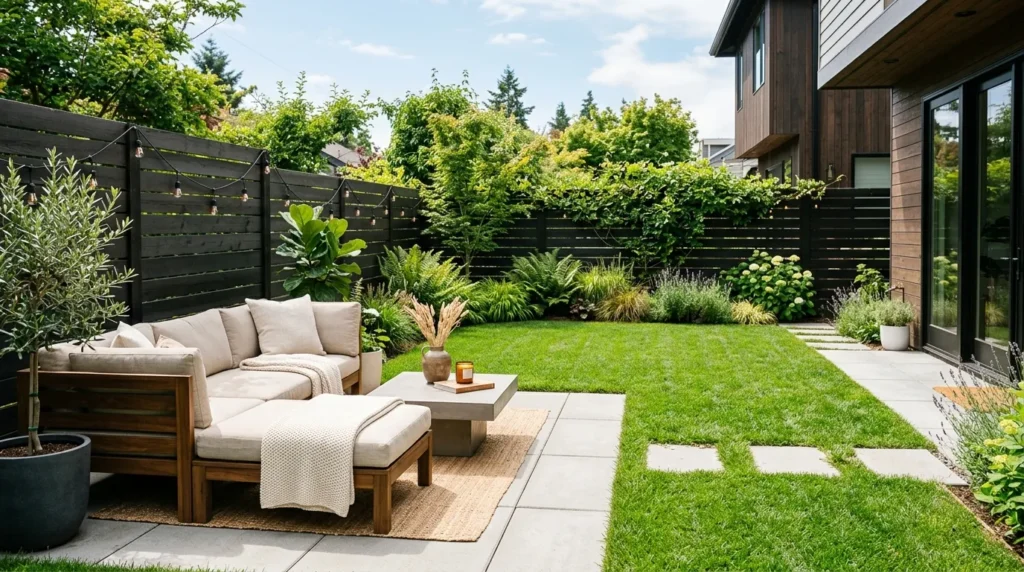
- Open grassy areas for versatile use
- Works for small to medium yards
- Needs well-maintained turf and simple furniture
- Ideal for meditation, yoga, or casual lounging
- Highlights green space with clean design
A minimalist lawn space maximizes open area while maintaining a modern aesthetic. This style works because simplicity allows the lawn itself to be the focal point, emphasizing clean lines and balance. Use low-profile seating or benches to enhance functionality without cluttering. I’ve noticed that minimalism in yards makes spaces feel larger and Pinterest-ready. This tutorial is practical for homeowners seeking a serene environment that accommodates both relaxation and light outdoor activities.
Set up low seating or simple benches on the lawn, leaving ample open space. The transformation emphasizes green beauty, creates functional zones, and provides breathing room for outdoor activities. This design is practical because it works with limited space, requires minimal maintenance, and offers a visually appealing, modern yard layout.
2. Layered Plant Beds
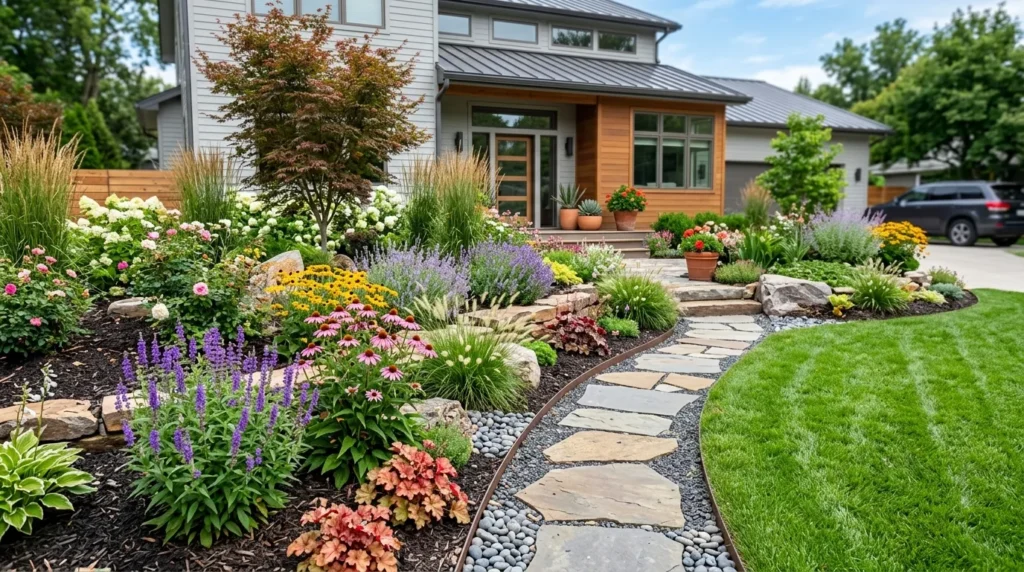
- Combines textures and heights for depth
- Works for medium to large yards
- Needs planters, mulch, and ornamental plants
- Ideal for borders, pathways, or focal points
- Adds visual dimension and seasonal interest
Layered plant beds create depth and structure in modern yards. This style works because arranging plants in different heights and textures draws the eye and provides visual interest throughout the year. Incorporate flowering plants, shrubs, and grasses for variation. I’ve noticed that layering enhances Pinterest-worthy appeal while creating functional planting zones. This tutorial is practical for defining borders, complementing pathways, or highlighting specific yard areas.
Construct multiple planting layers along yard edges or around focal points, using mulch or stones to separate levels. The transformation adds dimension, visual interest, and seasonal variety. This design is practical because it organizes planting areas efficiently, supports biodiversity, and enhances overall aesthetic appeal.
3. Stone Path Integration
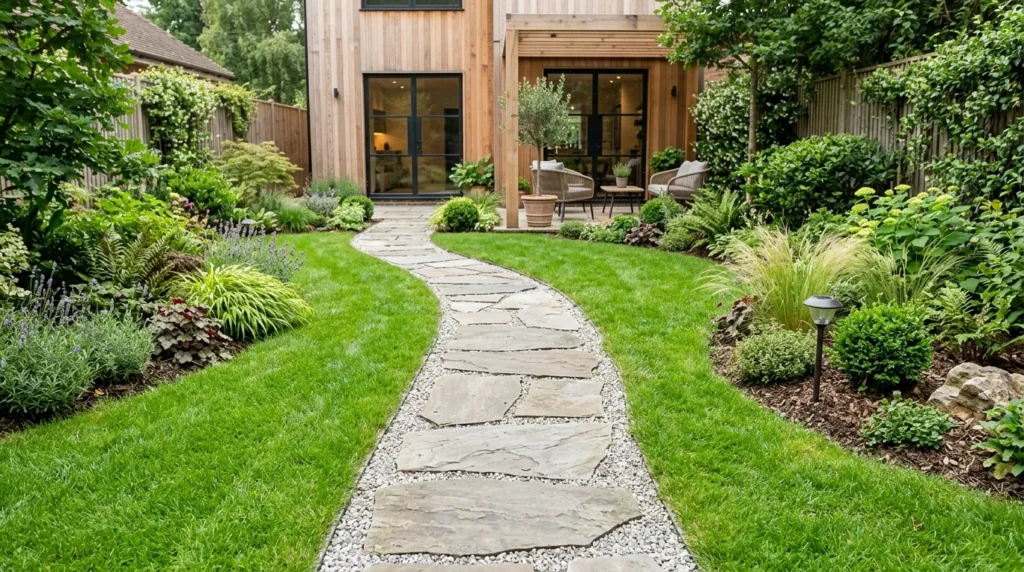
- Connects zones while adding texture
- Works for small to large yards
- Needs stepping stones, gravel, and turf
- Ideal for garden paths or functional flow
- Adds practical navigation with modern appeal
Stone path integration combines aesthetics and functionality. This style works because pathways guide movement through the yard while contrasting textures add visual interest. Use flat stones, gravel borders, and turf to define edges. I’ve noticed that alternating stone shapes and sizes makes the design look Pinterest-ready. This tutorial is practical for connecting seating areas, gardens, or lawn zones while maintaining a cohesive modern landscape.
Lay flat stones along desired routes, filling gaps with grass or gravel. The transformation ensures safe, easy navigation while adding texture and interest. This approach is practical because it preserves greenery, reduces wear, and creates structured, visually appealing pathways.
4. Outdoor Seating Nook
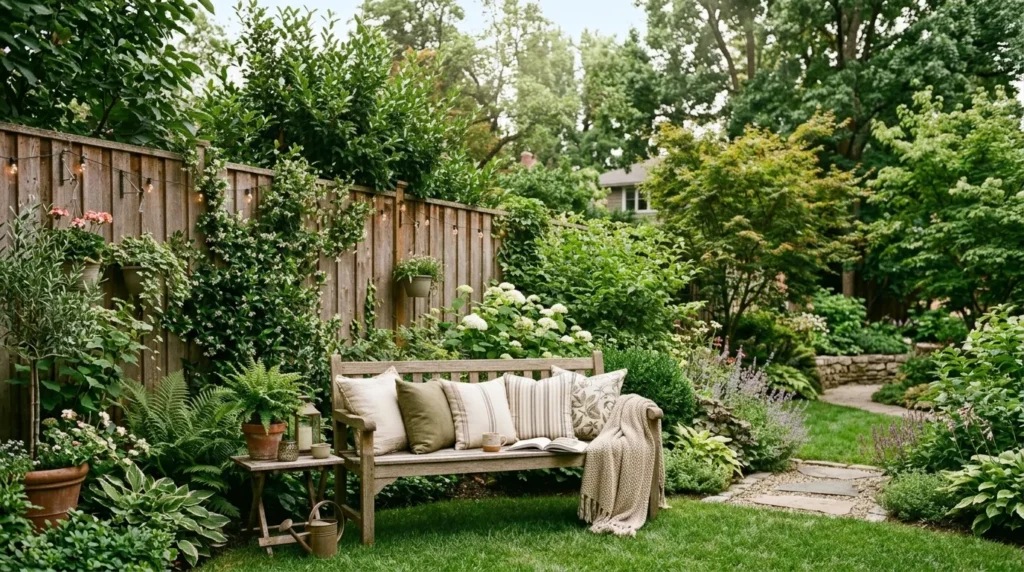
- Cozy corner for relaxation
- Works in medium to large yards
- Needs benches, cushions, and surrounding plants
- Ideal for reading, coffee, or small gatherings
- Creates intimate and inviting zones
An outdoor seating nook provides a functional and relaxing corner in the yard. This style works because combining seating with surrounding greenery creates a visually cohesive and comfortable space. Add cushions, low tables, or planters for functionality and charm. I’ve noticed that placing nooks near focal points enhances Pinterest-ready appeal. This tutorial is practical for designing private zones for relaxation, conversation, or casual activities.
Position benches or seating in a corner or near plants, adding soft furnishings. The transformation creates an intimate, inviting space that encourages use and enhances yard aesthetics. This design is practical because it organizes functional zones, integrates natural elements, and provides comfort without overcrowding the yard.
5. Water Feature Integration
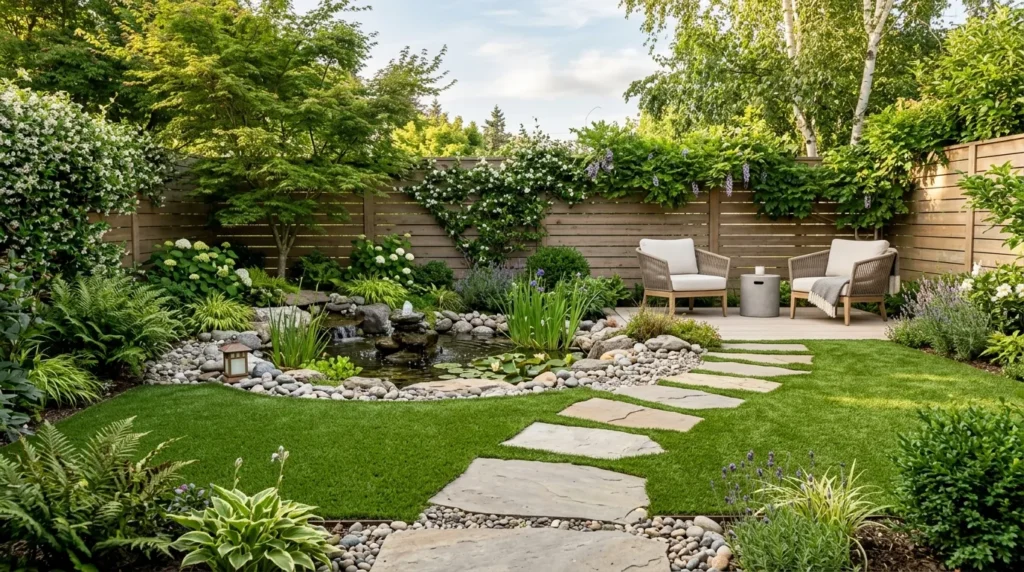
- Adds movement and auditory appeal
- Works for medium to large yards
- Needs pond, fountain, or small stream
- Ideal for focal points and relaxation
- Enhances sensory experience and modern aesthetics
Incorporating a water feature enhances the yard’s appeal through visual and auditory elements. This style works because flowing water creates a calming effect while drawing attention to a focal point. Use fountains, small ponds, or streams with surrounding stones and plants. I’ve noticed water features elevate Pinterest-worthy appeal and modern landscaping. This tutorial is practical for creating sensory-focused zones that provide both beauty and tranquility.
Install a small fountain or pond in a central or side location, surrounding it with stones and plants. The transformation adds movement, sound, and a serene focal point. This design is practical because it integrates natural elements, enhances modern aesthetics, and creates a relaxing atmosphere for outdoor enjoyment.
6. Raised Garden Boxes
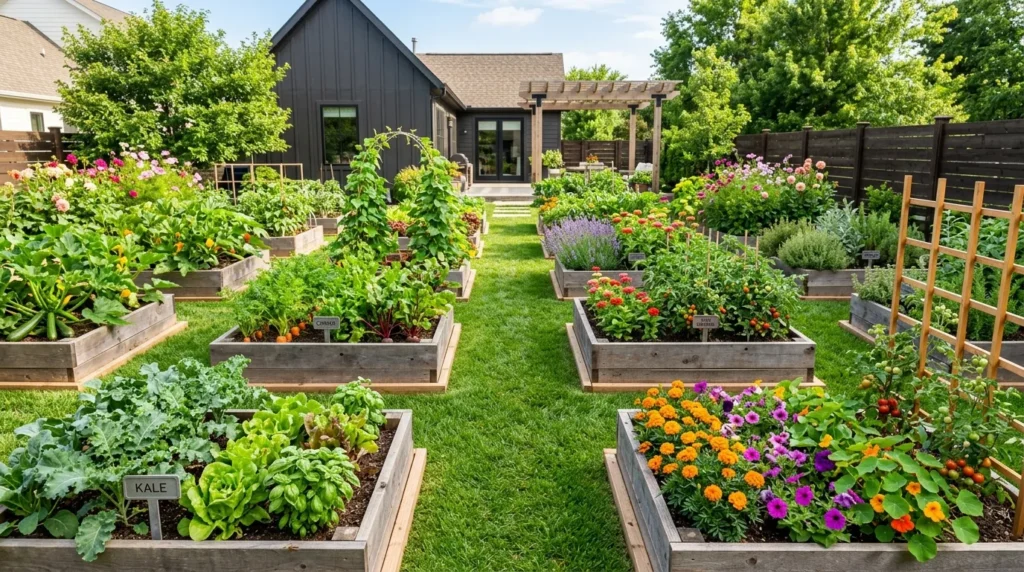
- Combines structure with planting
- Works for medium to large yards
- Needs wooden or composite boxes, soil, and plants
- Ideal for vegetable or flower cultivation
- Adds visual organization and height contrast
Raised garden boxes bring structure and accessibility to modern yards. This style works because elevating plants reduces maintenance, improves soil control, and creates visually defined planting zones. Use wood, composite, or stone boxes for durability and style. I’ve noticed that raised beds are Pinterest-ready when arranged geometrically with complementary turf or pathways. This tutorial is practical for functional gardening while maintaining modern yard aesthetics.
Position boxes in straight lines or geometric layouts, filling with flowers, herbs, or vegetables. The transformation adds height, organization, and visual contrast. This design is practical because it organizes planting zones, simplifies maintenance, and enhances yard structure while supporting both aesthetics and productivity.
7. Fire Pit Patio
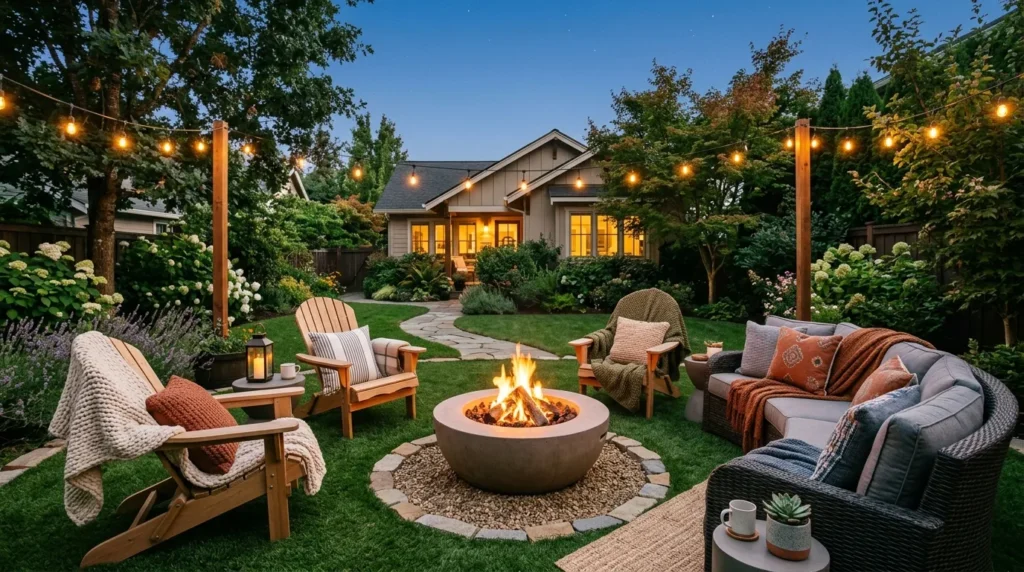
- Combines heat with modern aesthetics
- Works in medium to large yards
- Needs fire pit, seating, cushions, and turf
- Ideal for evening gatherings or casual hangouts
- Creates a cozy focal point
A fire pit patio integrates warmth and functionality into modern yard design. This style works because placing seating around a fire pit encourages social interaction while turf or lawn softens the area and enhances visual appeal. Use cushions, chairs, and surrounding plants for comfort and Pinterest-ready charm. I’ve noticed that fire pits instantly create inviting zones that are both functional and visually appealing. This tutorial is practical for hosting gatherings or enjoying quiet evenings outdoors.
Position the fire pit centrally and arrange seating around it, incorporating cushions or lanterns. The transformation provides a cozy, engaging space, encourages conversation, and enhances yard aesthetics. This design is practical because it combines comfort, safety, and modern visual appeal for versatile outdoor enjoyment.
8. Outdoor Dining Lawn
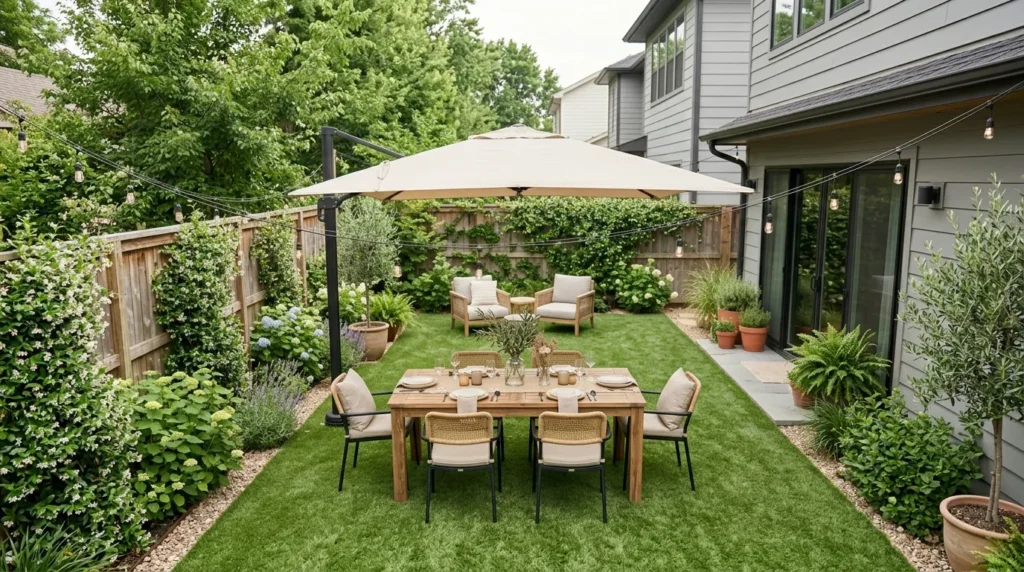
- Combines greenery with functional dining
- Works on medium to large yards
- Needs dining table, chairs, umbrella, and turf
- Ideal for brunches, dinners, or family gatherings
- Balances aesthetics and utility
An outdoor dining lawn uses artificial or natural turf as a base for a functional dining area. This style works because greenery softens the space while tables and seating maintain usability. Add umbrellas or shade solutions to enhance comfort. I’ve noticed pairing wood or metal furniture with lawn surfaces creates a Pinterest-ready look. This tutorial is practical for creating an outdoor dining environment that is stylish, comfortable, and low-maintenance.
Place dining tables and chairs on a level grassy area, adding cushions or shade for comfort. The transformation balances greenery with functionality, making meals more enjoyable outdoors. This setup is practical because it utilizes available space efficiently while enhancing modern yard aesthetics.
9. Pergola Lounge Area
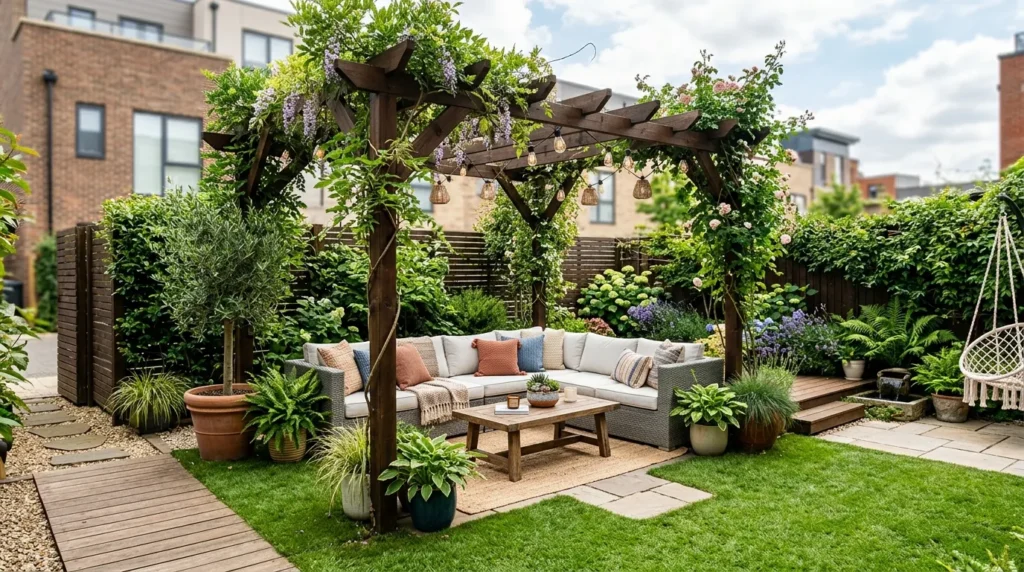
- Provides shade and vertical interest
- Works in medium to large yards
- Needs pergola structure, climbing plants, seating, and turf
- Ideal for relaxing or reading
- Adds intimacy and style
A pergola lounge area transforms a yard by adding structure, shade, and depth. This style works because vertical elements complement horizontal turf, creating a layered and inviting space. Incorporate plants, seating, and ambient lighting to achieve a Pinterest-ready look. I’ve noticed pergolas enhance cozy zones while making the yard feel sophisticated. This tutorial is practical for creating a functional, shaded space suitable for relaxation or small gatherings.
Install a pergola over turf and place chairs or sofas beneath it. Add plants, hanging lights, or curtains for style and comfort. The transformation creates intimacy, structure, and focal interest while keeping the yard green and visually appealing. This design is practical because it integrates shade and seating efficiently.
10. Zen Garden Lawn
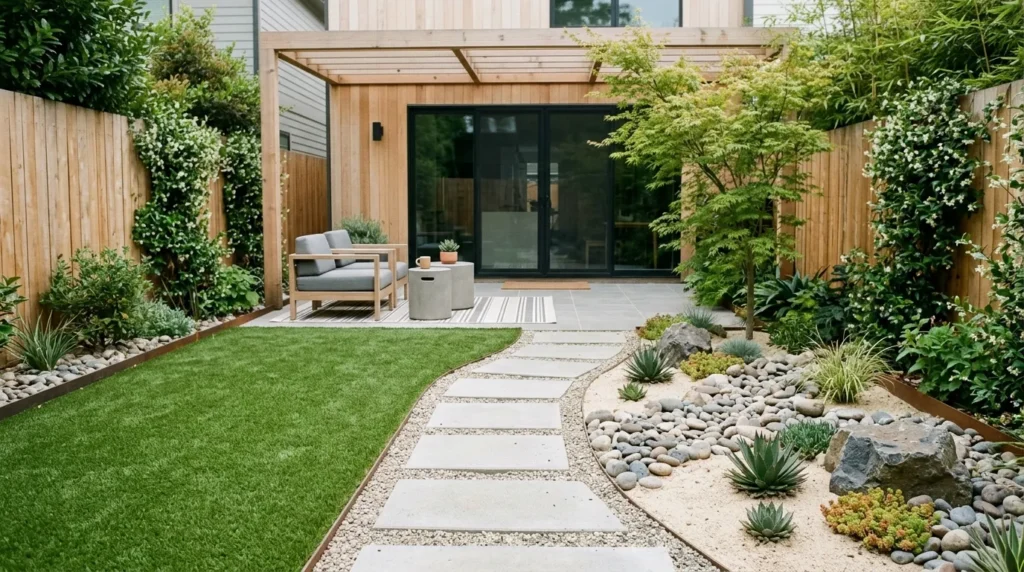
- Combines minimalism with natural elements
- Works on small to medium yards
- Needs sand, rocks, turf, and simple furniture
- Ideal for meditation, reflection, or visual appeal
- Creates a peaceful modern environment
A Zen garden lawn uses minimalist design and natural materials to create a tranquil modern yard. This style works because combining turf with rocks and sand introduces texture and calmness. Low seating or a bench completes the Pinterest-ready setup. I’ve noticed that a balanced mix of greenery and hardscape elevates modern aesthetics while supporting relaxation. This tutorial is practical for creating an inspiring outdoor retreat that fosters mindfulness and visual simplicity.
Arrange sand or rock patterns on turf and place a bench or low seating nearby. The transformation provides serenity, visual interest, and functional relaxation space. This design is practical because it requires minimal upkeep, supports meditation, and enhances the yard’s modern aesthetic.
11. Terraced Planting Lawn
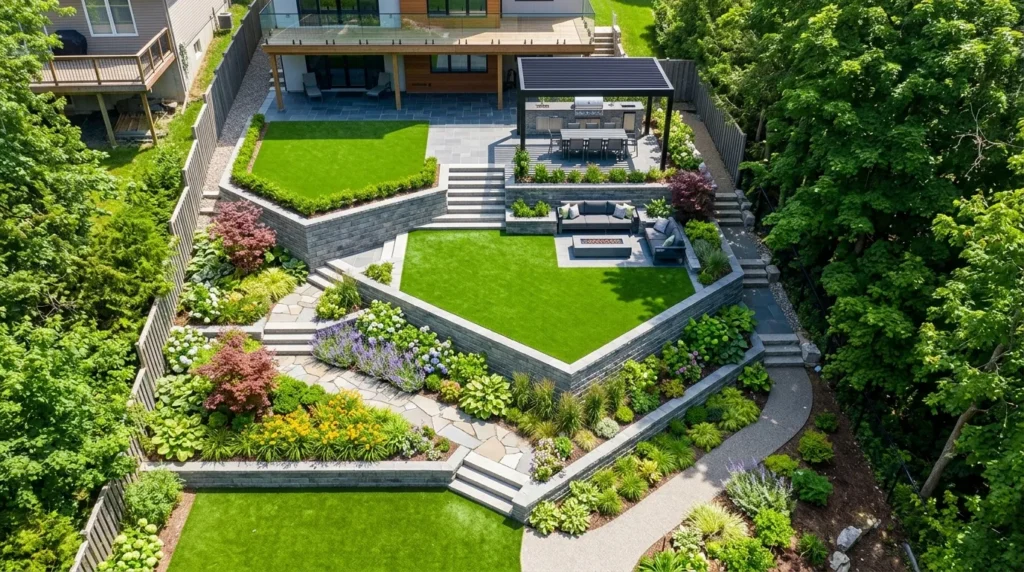
- Adds levels and visual variety
- Works on medium to large yards
- Needs retaining walls, turf, and plants
- Ideal for multi-functional zones
- Enhances depth and modern aesthetics
A terraced planting lawn creates dimension by using levels to organize plants, seating, and pathways. This style works because elevation changes add visual interest and allow distinct functional zones. Incorporate retaining walls, planters, and turf for a cohesive, Pinterest-ready design. I’ve noticed terracing makes even modest yards feel expansive and structured. This tutorial is practical for creating dynamic landscapes while maintaining modern visual appeal.
Construct terraces with retaining walls and fill levels with turf and plants. Add seating or pathways on each layer. The transformation increases depth, organizes the yard efficiently, and provides multi-functional zones. This design is practical because it balances aesthetics, usability, and greenery, making modern yards feel structured and versatile.