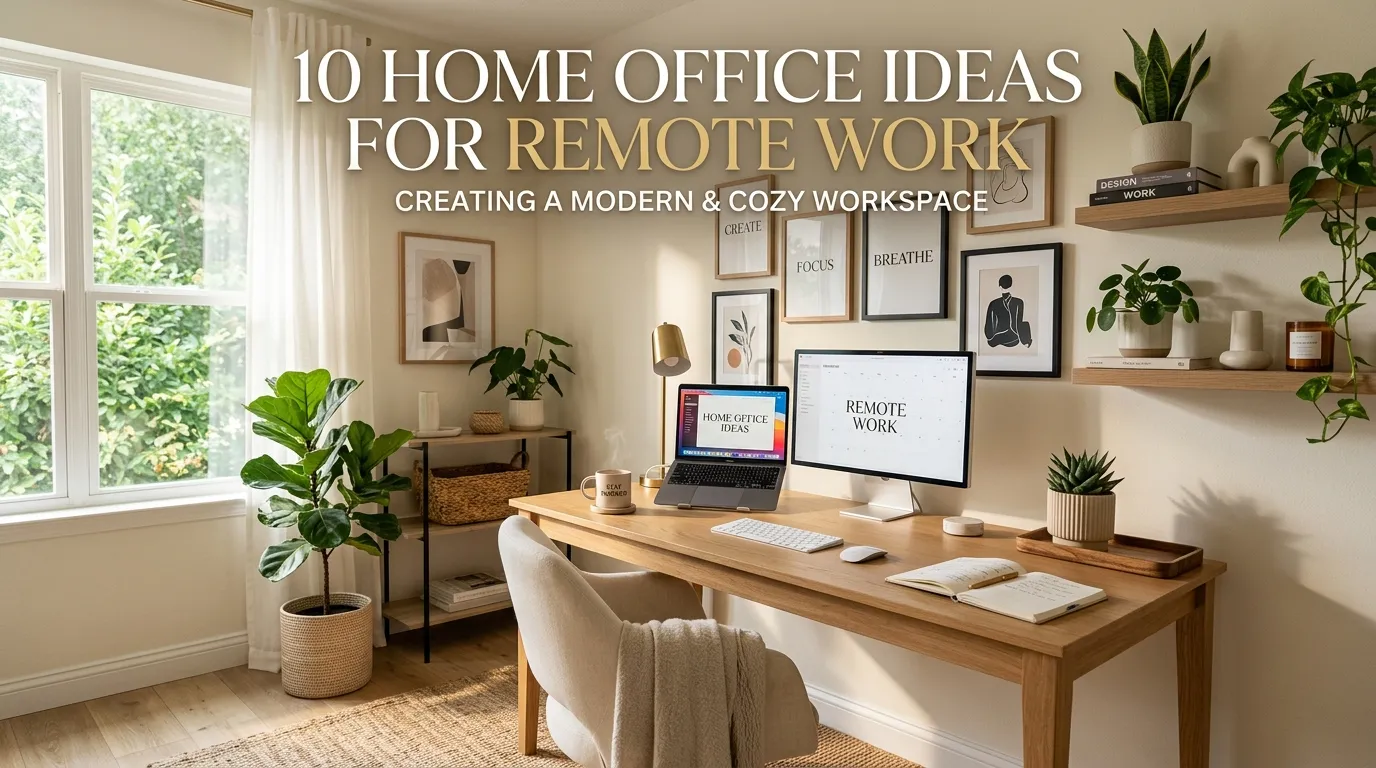
10 Home Office Ideas for Remote Work
Introduction
Remote work has changed the way people think about their homes. A spare bedroom, dining corner, hallway nook, or even a small apartment wall can become a focused workspace when it is planned with comfort, storage, lighting, and daily habits in mind. The goal is not to create a showroom-perfect desk that looks good for one photo and fails in real life. The goal is to design a space that helps you sit down, focus faster, feel comfortable, and still enjoy the room after work ends.
For USA readers, this matters because many homes now need flexible spaces that support video calls, emails, creative work, online meetings, side businesses, and family routines. A good setup should reduce clutter, improve posture, look calm on camera, and make work feel separate from the rest of life. Even small changes like a better lamp, cleaner cable management, a supportive chair, or a styled wall behind your desk can make the workday feel smoother.
These ideas are designed to be practical and Pinterest-friendly at the same time. You will find inspiration for corners, windows, shelves, lighting, storage, small spaces, and shared rooms. Each setup includes simple styling logic, useful materials, and real-life tips so your workspace looks beautiful but still works hard every day.
1. Quiet Corner
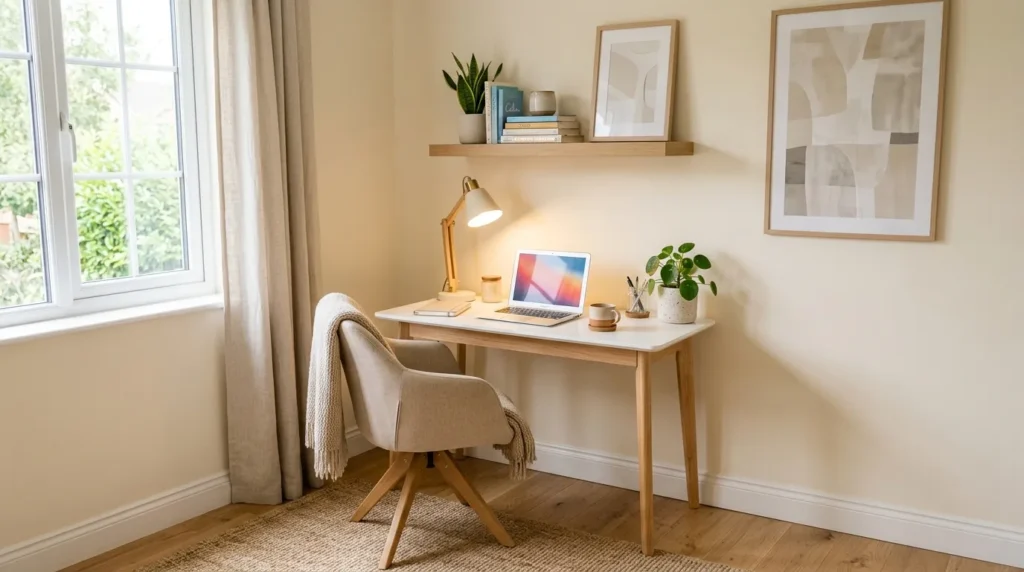
- Choose a low-traffic corner away from the TV, kitchen noise, and main hallway movement.
- Use a compact desk, supportive chair, small lamp, and one vertical storage piece.
- Add a soft rug under the desk to visually separate the work zone.
- Keep only daily essentials on the surface so the corner feels calm.
- Use plants, framed art, or a pinboard to make the setup feel intentional.
A quiet corner can become your most productive spot when it feels separate from the rest of the room. This idea works well because you do not need a full spare bedroom to create a serious work area. A simple desk placed in a calm corner can give your brain a clear signal that it is time to focus. In my experience, the best corners are not always the largest ones; they are the ones with fewer distractions, better light control, and enough wall space for simple storage.
The transformation comes from treating the corner like a small room within a room. Add a slim desk, a chair with proper support, a lamp, and one vertical shelf or wall grid. A rug helps define the area, while framed art or a cork board gives it personality without clutter. Keep chargers, notebooks, and pens in one tray so cleanup takes less than a minute. This setup works especially well in apartments, guest rooms, and living rooms where space needs to stay flexible.
2. Window Desk
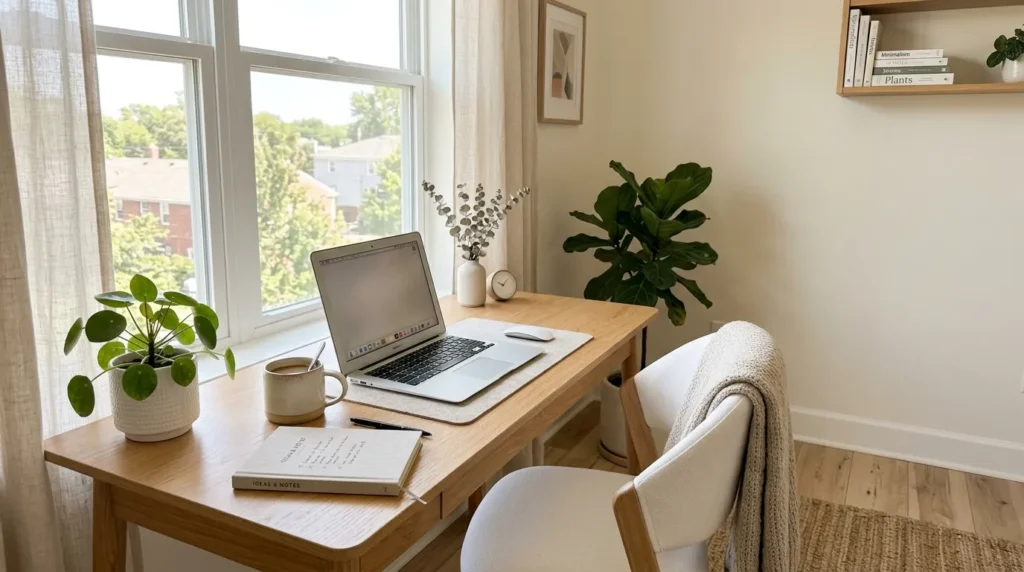
- Place the desk near natural light, but avoid direct screen glare during working hours.
- Use light curtains, woven shades, or blinds to control brightness throughout the day.
- Add a plant, ceramic cup, and small tray for a fresh, simple desktop look.
- Keep the monitor slightly angled if sunlight hits the screen in the afternoon.
- Choose a chair that looks good from behind if the desk faces into the room.
A window desk makes the workday feel brighter and less boxed in. Natural light can improve the mood of a workspace, especially during long remote days when you spend hours at a screen. The key is not placing the desk anywhere near a window; it is controlling the light so it feels helpful instead of harsh. Soft curtains, blinds, or woven shades can reduce glare while still keeping the space airy. I’ve noticed window setups feel best when the desktop stays simple and uncluttered.
The final look can feel fresh, calm, and visually open. Use a white, oak, or black desk depending on your room style, then add one plant to soften the corner. Keep the view in mind when styling the surface because too many objects can make the space feel busy. If your window faces a street, use sheer curtains for privacy during video calls. This setup works beautifully in bedrooms, sunrooms, loft apartments, and small homes where daylight makes the workspace feel larger.
3. Built-In Shelves
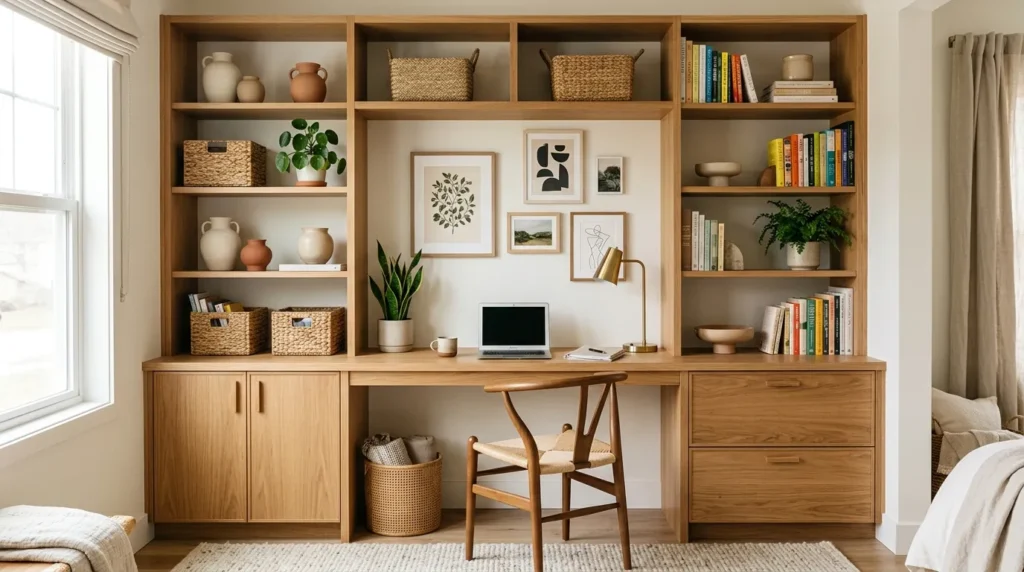
- Use shelves above or beside the desk to keep books, baskets, and supplies organized.
- Mix closed storage with open styling so the area looks neat but not empty.
- Keep frequently used items on lower shelves for quick access during the day.
- Add matching boxes or woven bins to hide chargers, papers, and office tools.
- Style shelves with a balance of books, decor, plants, and practical containers.
Built-in shelves make a workspace feel custom, even when the furniture is simple. This idea works because vertical storage keeps the desktop clear while giving the wall a finished, designed look. You do not need expensive cabinetry to get the effect. Floating shelves, modular bookcases, or budget-friendly wall units can create the same organized feeling. That’s why many designers recommend using height in small work areas. When everything has a place, the desk becomes easier to use and easier to reset after work.
The best shelf styling blends beauty with function. Place practical items like notebooks, files, printer paper, and tech accessories inside baskets or labeled boxes. Then use open spaces for books, framed photos, a small plant, or a ceramic vase. Avoid filling every shelf from edge to edge because breathing room makes the design look more polished. This setup is perfect for people who work with paperwork, planning supplies, creative tools, or multiple devices. It turns a plain wall into a useful and attractive work zone.
4. Neutral Palette
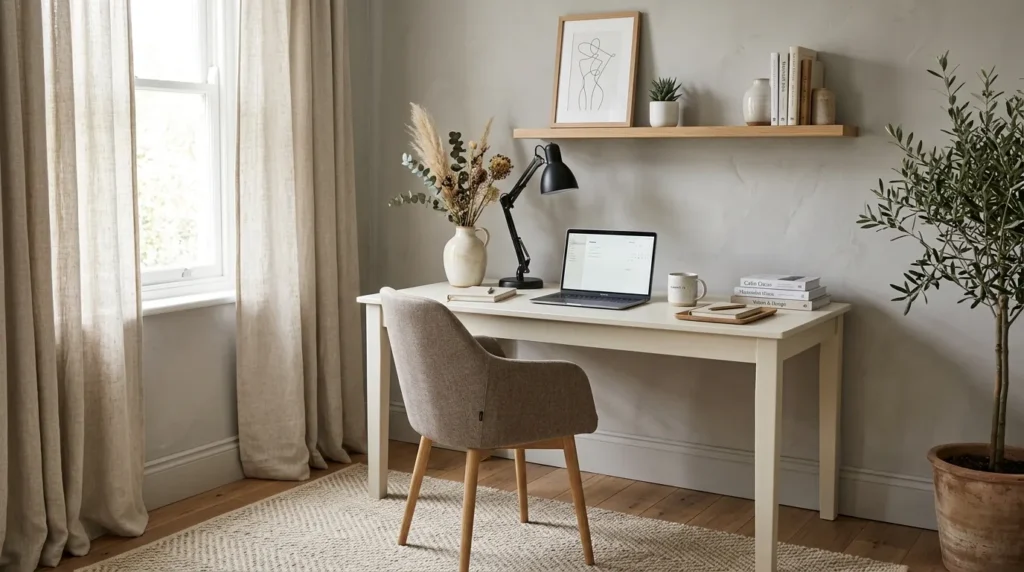
- Choose soft colors like white, beige, warm gray, taupe, cream, or natural wood.
- Add texture through linen curtains, woven baskets, rugs, wood, and matte ceramics.
- Use one darker accent, such as black hardware or a charcoal chair, for balance.
- Keep the desktop clean so the peaceful color palette feels intentional.
- Add warmth with a small plant, framed art, or a wood lamp base.
A neutral palette can make your work area feel calmer before you even sit down. Soft colors reduce visual noise, which is helpful when your mind is already busy with deadlines, calls, and notifications. This style works especially well for remote workers who want a peaceful setup that blends into the rest of the home. Instead of using many bright colors, focus on layered textures like wood grain, linen fabric, woven baskets, and matte finishes. The result feels warm, clean, and easy to live with.
The transformation is subtle but powerful because the space starts feeling less stressful. A cream desk, natural wood shelf, beige rug, and soft gray chair can create a grounded backdrop for deep work. Add black picture frames or a dark desk lamp if the room needs contrast. In many homes, this approach also makes video calls look more polished because the background feels clean without being distracting. A neutral setup is practical for bedrooms, living rooms, and shared spaces where the work area should not dominate everything.
5. Ergonomic Setup
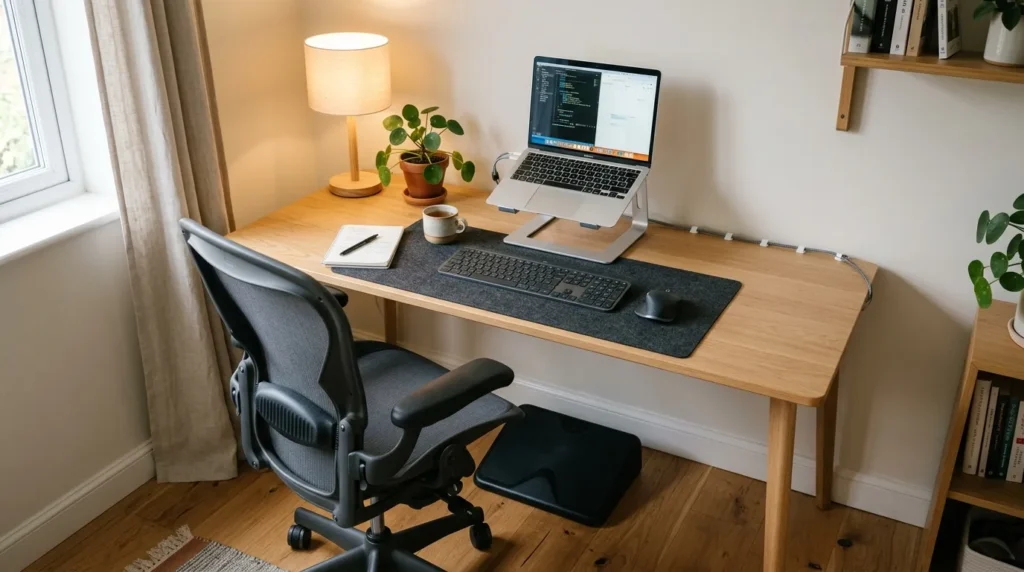
- Choose a supportive chair with adjustable height, good back support, and comfortable cushioning.
- Keep the monitor at eye level to reduce neck strain during long work sessions.
- Use a keyboard tray, laptop stand, or footrest if your desk height feels awkward.
- Keep elbows relaxed and wrists supported when typing for long periods.
- Add a standing desk converter if you like switching positions during the day.
An ergonomic setup is one of the smartest upgrades for remote work. A beautiful desk is not enough if your back, shoulders, neck, or wrists feel uncomfortable after a few hours. The chair should support your body, the screen should sit near eye level, and your feet should rest flat or on a footrest. This does not mean the room has to look clinical. Many stylish chairs, laptop stands, and adjustable accessories now blend well with modern interiors while still making the workday easier on your body.
The real benefit shows up at the end of the day. When your setup supports better posture, you are less likely to finish work feeling drained and stiff. Use a laptop stand with a separate keyboard if you work on a laptop for hours. Add a soft wrist rest, cable clips, and a footrest if needed. I’ve seen this work well in many homes because small ergonomic fixes often matter more than expensive decor. Comfort should be part of the design, not an afterthought.
6. Zoom Backdrop
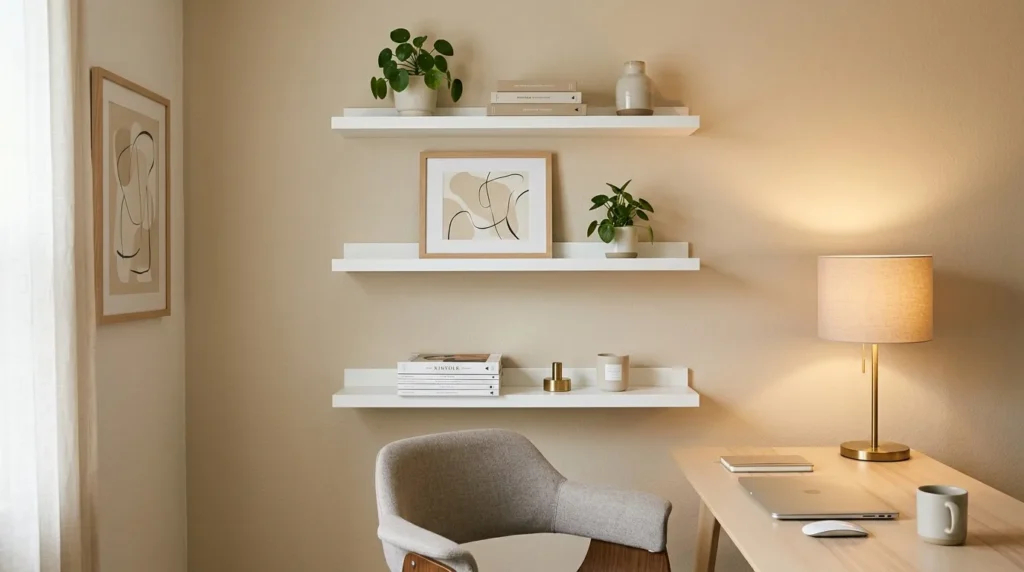
- Style the wall behind your chair with simple art, shelves, plants, or clean paneling.
- Avoid busy patterns, messy storage, bright clutter, or personal items you dislike showing.
- Use soft lighting from the front so your face looks clear on video calls.
- Keep the background professional but warm, not cold or overly staged.
- Test your camera view before finalizing shelf height, art placement, and desk angle.
A strong video-call backdrop makes remote work feel more professional instantly. The wall behind you matters because it becomes part of your online presence during meetings, interviews, client calls, and team check-ins. You do not need a complicated studio setup to make it look good. A simple framed print, a plant, a styled shelf, or warm wall paneling can create a polished background. The key is avoiding visual clutter that pulls attention away from your face and makes the call feel less focused.
The best backdrop looks natural in the room and clean on camera. Place your desk so the background has depth, but avoid showing laundry, kitchen counters, open closets, or piles of supplies. Use a soft front-facing lamp to brighten your face, especially if the window is behind you. A tidy shelf with books, baskets, and one plant can look warm without feeling distracting. This idea is especially useful for freelancers, remote employees, coaches, teachers, and anyone who spends regular time on video calls.
7. Storage Wall
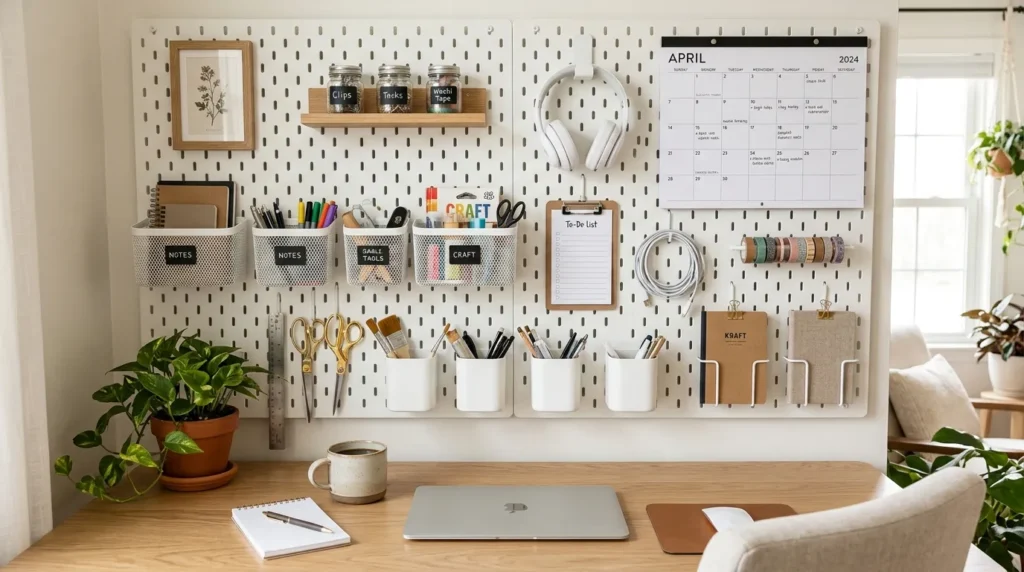
- Use pegboards, wall grids, shelves, or cabinets to store supplies vertically.
- Keep labels simple so you can find items quickly during busy workdays.
- Add hooks for headphones, calendars, scissors, cords, or small baskets.
- Choose storage pieces in matching colors for a cleaner, calmer wall design.
- Leave some empty space so the wall does not feel crowded or overwhelming.
A storage wall can turn a messy desk into a clean command center. This idea works because it moves supplies off the work surface and onto the wall where they are easier to see and reach. Pegboards are great for creative workers, teachers, crafters, and planners because hooks and baskets can be changed anytime. Wall grids feel lighter and more modern, while cabinets hide visual clutter completely. The goal is to keep the workspace functional without letting every tool sit in the open.
The finished wall should feel organized, not overloaded. Use matching baskets, simple labels, and a limited color palette so the setup looks clean from across the room. Place daily items at arm’s reach and occasional supplies higher up or inside boxes. If your desk is in a bedroom or living room, closed cabinets may look more peaceful than open storage. This setup helps remote workers who use notebooks, tech gear, files, art supplies, or planners because it saves time and keeps the desktop clear.
8. Cozy Lighting
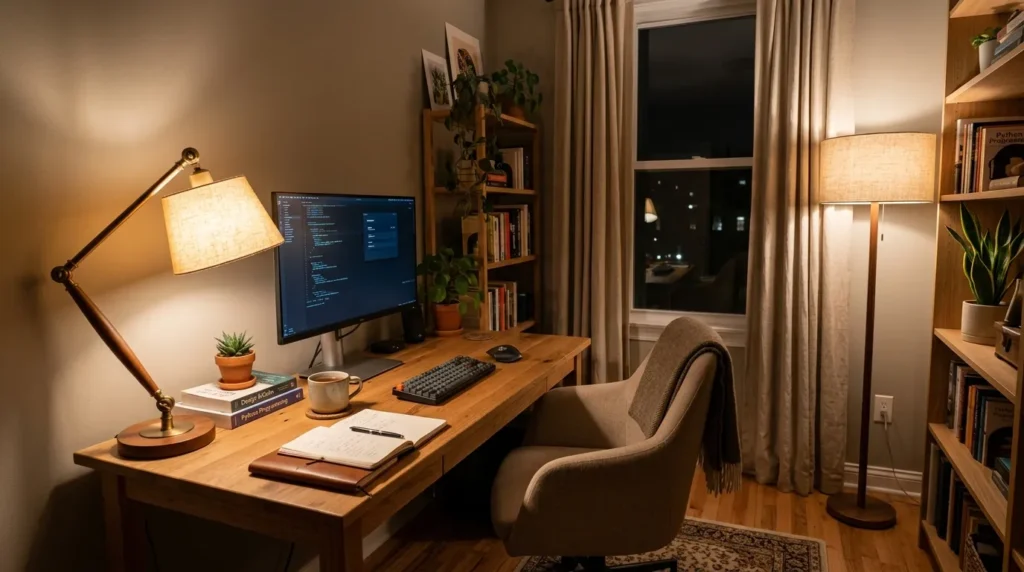
- Layer natural light, task lighting, and soft ambient lighting for better comfort.
- Use a desk lamp with an adjustable arm for reading, writing, and focused tasks.
- Add a floor lamp or wall sconce if the room feels dark in the evening.
- Choose warm bulbs for a softer, more comfortable after-hours work mood.
- Avoid placing harsh light directly behind your screen or above your head.
Cozy lighting can make a workspace feel inviting instead of exhausting. Many remote workers rely on one ceiling light, then wonder why the room feels flat, cold, or tiring by late afternoon. Layered lighting works better because each source has a purpose. Natural light supports daytime energy, a desk lamp helps with focused work, and a floor lamp or wall sconce softens the room after sunset. This is especially helpful in winter months when daylight feels shorter across many parts of the USA.
The transformation is both visual and practical. A warm task lamp can make your desk feel like a dedicated work station, while a soft floor lamp keeps the room from feeling harsh during evening emails. Choose lamps that match your decor style, such as brass for classic rooms, matte black for modern spaces, or wood bases for warm minimal rooms. Good lighting also improves video calls and reduces eye strain. It turns a basic work area into a place you actually want to use.
9. Small Nook
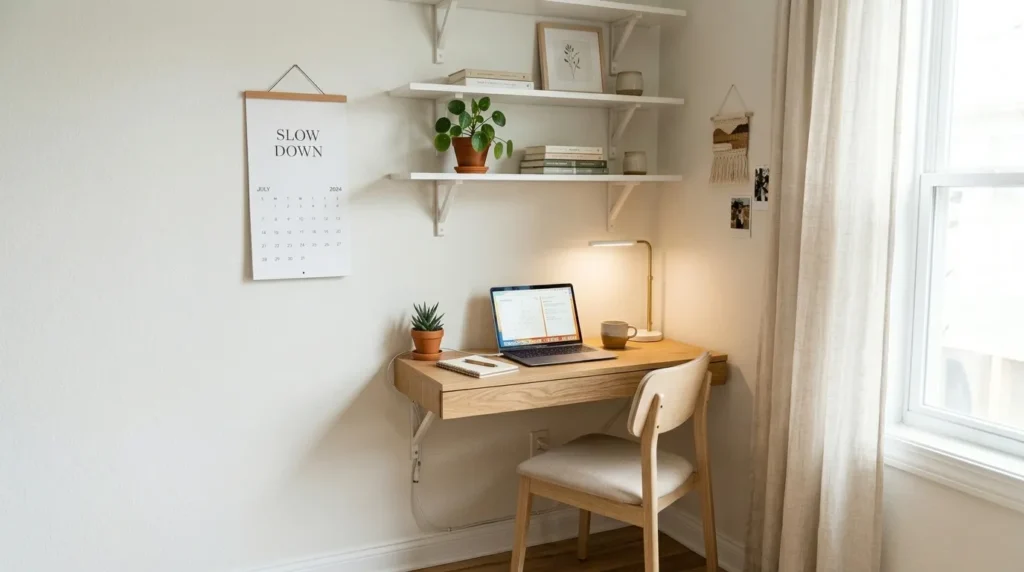
- Use a narrow desk, floating desk, or wall-mounted table in tight spaces.
- Choose a chair that can slide fully under the desk when not in use.
- Add floating shelves above the work surface for supplies and decor.
- Keep colors light so the nook feels open instead of crowded.
- Use a small lamp, wall calendar, and one decorative object for balance.
A small nook can become a surprisingly effective workspace when every inch has a purpose. This idea is perfect for apartments, hallway ends, bedroom corners, closets, and awkward wall spaces that usually go unused. A narrow desk or floating surface can provide enough room for a laptop, notebook, and coffee without taking over the room. The most important rule is restraint. When space is limited, fewer items look better and function better than a crowded setup filled with supplies you rarely touch.
The finished nook should feel simple, useful, and easy to close down after work. Use floating shelves above the desk to store books, small baskets, or a plant without stealing floor space. Choose a chair that tucks in neatly so the room still feels open. Light colors, simple lines, and hidden cables make the area look larger. This setup is ideal for renters because many pieces can be temporary or wall-friendly. A small nook proves you do not need a large room to work comfortably.
10. Dual Zone
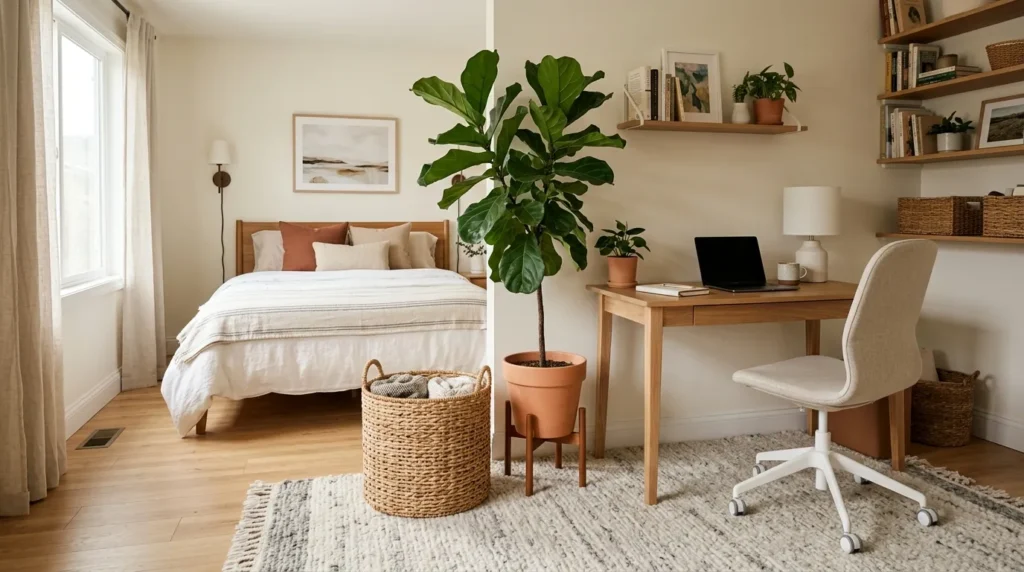
- Divide a shared room into work and relaxation zones using layout, rugs, or shelves.
- Place the desk away from the bed or sofa when possible to create mental separation.
- Use a room divider, bookcase, curtain, or tall plant for privacy.
- Choose furniture that matches the room so the work area feels integrated.
- Store work items out of sight after hours to protect personal time.
A dual zone setup helps your room serve two purposes without feeling chaotic. Many people work from bedrooms, living rooms, dining rooms, or guest spaces, so separation becomes important. The goal is to make the desk feel connected to the room but not spread across it. Use a rug, bookcase, curtain, or tall plant to create a visual boundary. Even turning the desk away from the bed or sofa can help your mind understand when work starts and when it ends.
The biggest transformation is emotional because the room feels easier to live in after work. Store your laptop, notebook, and papers in a drawer, basket, or cabinet at the end of the day. This small habit keeps your personal space from feeling like an unfinished office. Use matching wood tones, fabric colors, and decor so the desk does not look random. A dual zone works beautifully for families, renters, and remote workers who need practical function without giving up comfort, style, or personal space.