

10 Homemade Mosquito Repellent Ideas
Introduction
Warm evenings, backyard dinners, porch sitting, gardening, camping weekends, and summer cookouts can lose their charm quickly when mosquitoes start biting. Many USA families look for simple ways to make outdoor spaces feel more comfortable without turning every patio night into a chemical-heavy routine. That is where natural-style repellent ideas, smart scent blends, and outdoor prevention habits can be helpful. Still, it is important to be realistic. Homemade options may support comfort, but they should not replace proven protection in high-risk mosquito areas.
For stronger bite protection, especially where mosquito-borne illnesses are a concern, the CDC recommends using EPA-registered insect repellents and following label instructions. The EPA lists registered skin-applied repellent ingredients such as DEET, picaridin, IR3535, oil of lemon eucalyptus, p-menthane-3,8-diol, catnip oil, and citronella oil. Oil of lemon eucalyptus and PMD products should not be used on children under age 3, according to CDC guidance. (CDC)
This guide is written for readers who want Pinterest-friendly, practical, and home-inspired Homemade Mosquito repellent ideas for patios, porches, garden corners, picnic tables, and casual outdoor routines. Think of these as supportive comfort ideas, not guaranteed medical-grade protection. Always patch test anything used on skin, avoid eyes and broken skin, keep essential oils away from young children and pets unless approved by a professional, and use EPA-registered products when reliable protection matters most.
1. Citronella Spray

- Adds a fresh outdoor scent to patio and porch routines
- Works well for short backyard sitting, gardening, and evening setups
- Uses simple ingredients like distilled water, witch hazel, and citronella oil
- Should be patch tested before skin use and kept away from eyes
- Pairs well with fans, clean yards, and covered outdoor seating
Citronella spray is one of the most familiar natural-style options for summer outdoor comfort. Its bright lemony scent is often associated with patios, candles, and backyard gatherings because it helps create a fresher atmosphere around sitting areas. To make a simple version, combine distilled water, witch hazel, and a small amount of citronella essential oil in a clean spray bottle. Shake well before every use because oil and water separate. In my experience, this type of spray works best as part of a short outdoor routine, not as full-day protection.
The most practical way to use citronella spray is around seating zones, outdoor rugs, porch corners, and clothing edges rather than heavily soaking skin. If you do apply it to skin, dilute carefully and patch test first. Avoid spraying near the face, eyes, cuts, or irritated areas. Store the bottle away from heat and direct sunlight, and remake small batches often so the mixture stays fresh. For better comfort, combine this idea with a clean patio, no standing water, and a fan, since mosquitoes are weak flyers.
2. Lavender Mist
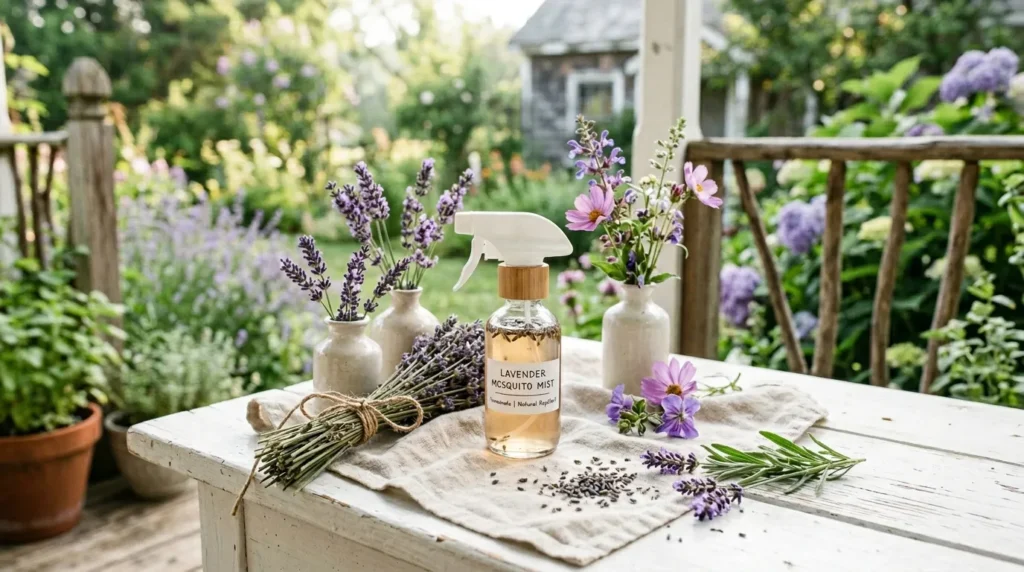
- Creates a softer floral scent for porches, patios, and bedroom screens
- Feels gentle and pleasant compared with sharper herbal blends
- Works with distilled water, witch hazel, and lavender essential oil
- Adds a calming mood to evening outdoor spaces
- Should still be diluted and tested before any skin contact
Lavender mist is a good choice when you want a repellent-style scent that feels softer and more relaxing. The floral aroma works beautifully around covered porches, garden seating, screened patios, and outdoor reading corners. A simple blend can include distilled water, witch hazel, and a few drops of lavender essential oil in a fine-mist bottle. Shake it before spraying because essential oils do not stay mixed in water. I’ve noticed lavender blends feel especially nice in spaces where people want a calmer scent instead of a strong citrus or mint aroma.
This idea works best as a light refresh for fabrics, air around seating, and personal outdoor routines. Spray lightly on outdoor cushions only after testing a hidden area, because oils may stain some fabrics. For skin use, dilution and patch testing are important, especially for sensitive skin. Lavender can also be paired with rosemary or cedarwood for a deeper herbal scent. Keep the bottle clearly labeled and away from children. The final effect is not just functional. It can make an evening porch feel cleaner, softer, and more inviting.
3. Lemon Eucalyptus

- Uses a scent profile commonly associated with mosquito repellent products
- Works best when handled carefully and diluted properly
- Offers a crisp, clean aroma for outdoor evenings
- Should not be used on young children without proper guidance
- Best paired with proven protection when bite risk is high
Lemon eucalyptus is popular because its crisp scent feels clean, bright, and strongly outdoorsy. However, this ingredient needs careful wording and careful use. Commercial oil of lemon eucalyptus products are not the same as simply mixing essential oil at home, and proven products should be EPA-registered when reliable protection is needed. For a home-style scent blend, some people use lemon eucalyptus essential oil diluted in a carrier or mixed into a spray base, but it should always be handled cautiously and never used undiluted on skin.
This idea is better treated as a careful outdoor comfort blend than a guaranteed shield. Avoid using oil of lemon eucalyptus or PMD products on children under 3, and always follow product labels for any commercial repellent. (CDC) For adults, patch test first, avoid the face and irritated skin, and keep the scent light. It can pair nicely with cedarwood, lavender, or witch hazel in a small bottle. When mosquitoes are heavy or illness risk is present, choose an EPA-registered repellent instead of relying only on a homemade mix.
4. Peppermint Blend
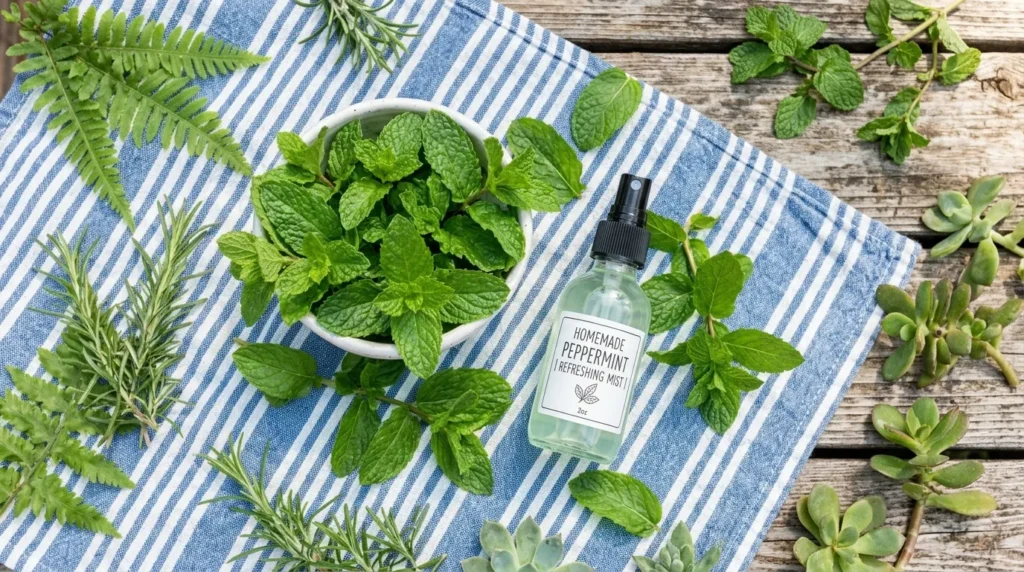
- Adds a strong, fresh scent to outdoor sitting areas
- Works well around patio edges, porch corners, and garden tables
- Uses peppermint oil with distilled water and witch hazel or alcohol base
- Feels crisp in hot weather but may be too strong for sensitive users
- Should be kept away from eyes, pets, babies, and irritated skin
Peppermint blend is a bold option for people who like a crisp, cooling scent outdoors. The aroma is strong, so a little goes a long way. A simple spray can be made with distilled water, witch hazel or a small amount of alcohol-based mixing base, and a few drops of peppermint essential oil. Shake well before every use, and test carefully before spraying near fabrics or skin. This type of blend works nicely around porch rails, patio corners, picnic tables, and garden work areas where a fresh scent feels welcome.
The main thing to remember is that peppermint oil can feel intense. It should never be used near eyes, on broken skin, or in strong concentrations. Families with babies, sensitive skin, asthma concerns, or pets should be extra cautious and ask a qualified professional before using essential oils around them. For a more balanced scent, mix peppermint with lavender or cedarwood instead of using it alone. This creates a fresher outdoor atmosphere without feeling too sharp. It is most useful for short sitting periods and casual backyard comfort.
5. Rosemary Water

- Uses a kitchen-garden herb many homeowners already recognize
- Adds a clean herbal scent to patio and outdoor dining areas
- Can be made as a cooled rosemary infusion for light misting
- Works nicely with lemon peel, lavender, or mint for scent layering
- Best used fresh and stored in the refrigerator for short periods
Rosemary water is a simple herb-based idea that feels approachable for families who prefer pantry-style ingredients. Instead of relying only on essential oils, you can simmer fresh rosemary sprigs in water, let the mixture cool completely, strain it, and pour it into a clean spray bottle. The result is a light herbal mist that smells fresh around outdoor dining areas, garden benches, and porch spaces. It is not a substitute for registered repellent, but it can support a cleaner, more intentional outdoor setup during mild mosquito activity.
This idea works best when made in small batches and used quickly. Since it is water-based and does not contain a strong preservative system, store it in the refrigerator and discard it if the smell, color, or texture changes. You can add lemon peel while steeping for a brighter scent, or pair rosemary with mint for a garden-style blend. Avoid spraying it into eyes or on irritated skin. I’ve seen this work well as part of a full patio routine with clean surfaces, candles, fans, and covered food.
6. Cedarwood Oil
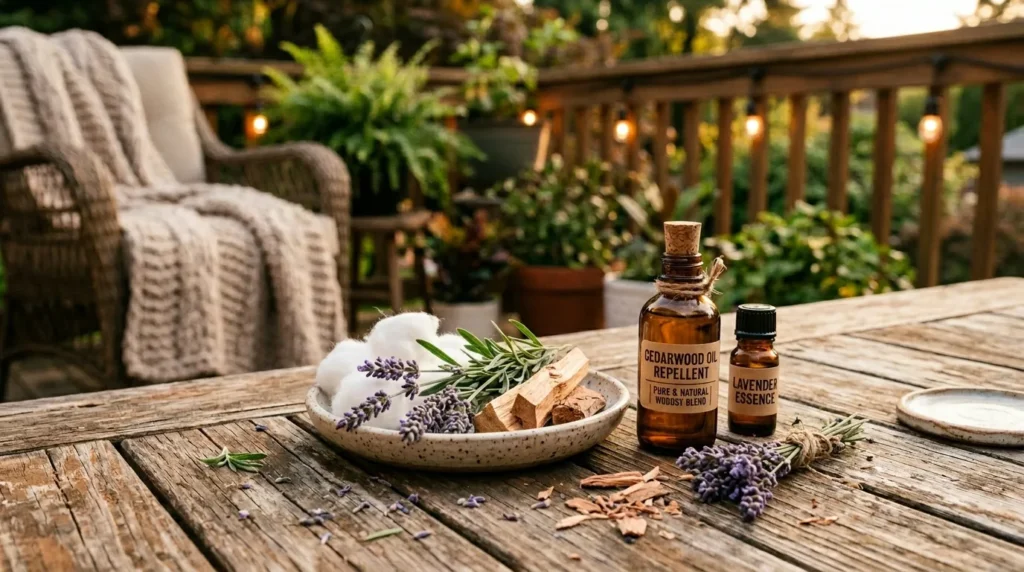
- Adds a warm woodsy scent to porches, decks, and patio corners
- Works well in diluted sprays, diffuser stones, or cotton ball stations
- Pairs beautifully with lavender, citronella, rosemary, or lemongrass
- Feels less sharp than peppermint or strong citrus blends
- Should be diluted carefully before any skin contact
Cedarwood oil is a good option when you want a warmer, less citrus-heavy outdoor scent. It has a woodsy aroma that feels natural around decks, cabins, garden seating, and rustic porch spaces. For a simple spray, dilute cedarwood essential oil with distilled water and witch hazel, then shake well before every use. You can also place a few diluted drops on cotton balls inside small outdoor-safe bowls near seating areas. This gives the space a subtle scent without spraying every surface or applying anything directly to skin.
The finished mood feels cozy and grounded, which makes cedarwood especially nice for evening patios. It blends well with lavender for softness, citronella for brightness, or rosemary for an herbal garden feel. If using it on skin, always dilute properly in a carrier and patch test first. Avoid using essential oils around pets without guidance, because some oils may be unsafe for animals. For high-mosquito evenings, use cedarwood as a supporting atmosphere idea while choosing proven protection for skin. This balance keeps the setup pretty, practical, and safer.
7. Herb Pots
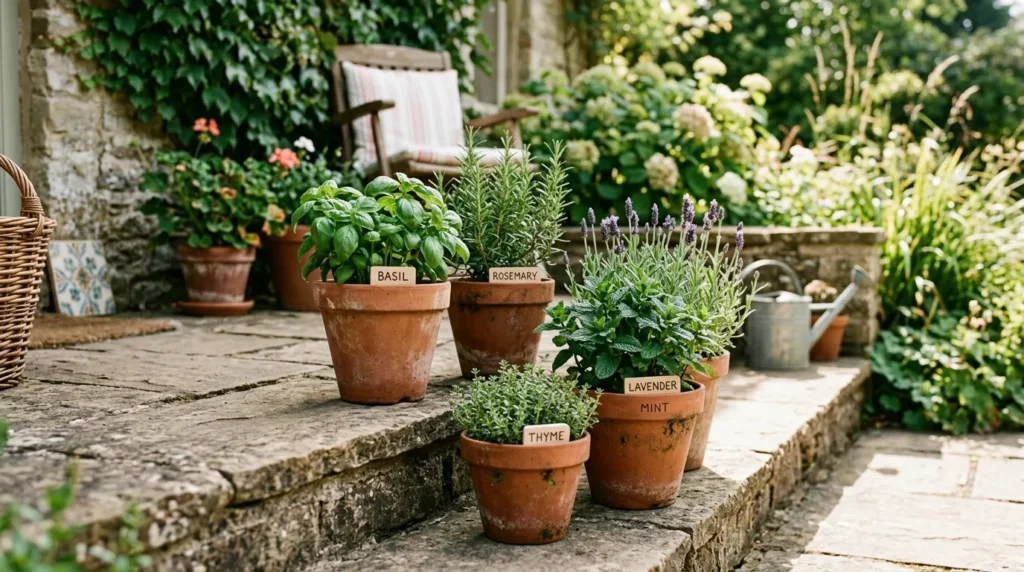
- Adds living greenery that looks beautiful near outdoor seating
- Works with basil, rosemary, mint, lavender, citronella grass, and thyme
- Helps style patios while adding fresh fragrance
- Doubles as garden decor for porches, decks, and entry steps
- Needs proper sunlight, drainage, and regular trimming
Herb pots are one of the prettiest ways to make an outdoor space feel fresher and more intentional. Instead of mixing sprays, you can style fragrant plants near a patio table, porch steps, deck rail, or garden bench. Basil, rosemary, mint, lavender, thyme, and citronella grass are popular choices because they bring scent, texture, and greenery. Use containers with drainage holes, quality potting mix, and the right sunlight for each plant. This is especially useful for renters or homeowners who want a natural look without permanent landscaping changes.
The biggest benefit is that herb pots improve the atmosphere while also upgrading the visual design. A cluster of terracotta pots can feel Mediterranean, black planters can look modern, and galvanized containers can suit farmhouse patios. Keep mint in its own pot because it spreads aggressively in garden beds. Trim herbs regularly so they stay full and healthy. In my experience, herb pots work best as part of a bigger mosquito-control routine. They look beautiful and smell fresh, but they should not be treated as complete bite protection.
8. Vinegar Bowl

- Creates a simple patio table idea using common household ingredients
- Works best as an outdoor scent station, not a skin repellent
- Can be paired with herbs, citrus peels, or cloves for a stronger aroma
- Should be placed away from food, children, and pets
- Useful for porches, picnic areas, and garden work tables
A vinegar bowl is a low-cost outdoor idea for people who like simple household solutions. Add apple cider vinegar or white vinegar to a small bowl, then include lemon slices, rosemary sprigs, mint, or cloves for a stronger scent profile. Place it near a patio corner, garden worktable, or outdoor prep area rather than directly beside food. The smell can be strong, so use it where airflow can soften it. This is not a skin repellent, but it can be part of a layered backyard comfort setup.
The best way to use this idea is as a temporary outdoor station during short gatherings. Choose a stable bowl that will not tip easily, and keep it out of reach of kids and pets. Empty it after use so it does not become messy, attract unwanted pests, or collect rainwater. I’ve noticed vinegar bowls make more sense for rustic outdoor spaces, potting benches, and casual porch setups than polished dining tables. Pair them with fans, covered trash, clean surfaces, and removed standing water for better overall mosquito management.
9. Clove Citrus

- Adds a strong natural scent to outdoor tables and porch corners
- Uses lemon, lime, orange, or grapefruit with whole cloves
- Works as a decorative scent accent for summer gatherings
- Looks beautiful in bowls, trays, or picnic table centerpieces
- Best used fresh and discarded after outdoor use
Clove citrus is one of the most Pinterest-friendly ideas because it looks pretty while adding a strong natural scent. Cut lemons, limes, oranges, or grapefruits in halves or thick slices, then press whole cloves into the fruit. Place the pieces in a shallow bowl, tray, or outdoor centerpiece near a seating area. The citrus adds brightness, while the cloves bring a warm spicy aroma. This idea works well for cookouts, garden parties, porch dinners, and casual summer evenings when you want the table to feel styled.
Because this uses fresh fruit, it should be treated as a short-term decorative scent accent. Put it out shortly before guests arrive, keep it away from curious pets, and discard it after use. Do not leave fruit outside overnight, because it can attract insects or wildlife and become unpleasant. For a stronger visual effect, combine citrus halves with rosemary sprigs, lavender stems, or a few small candles nearby. This creates a charming summer table moment, but it should still be paired with real repellent when mosquitoes are active.
10. Yard Reset

- Removes mosquito-friendly conditions around the home
- Focuses on standing water, clogged gutters, buckets, toys, and planters
- Improves patios, porches, lawns, and outdoor living zones
- Works alongside sprays, plants, fans, and protective clothing
- Helps prevent the problem instead of only masking scents
A yard reset is one of the most important mosquito-control steps because it targets the environment, not just the scent around your skin. Mosquitoes can breed in standing water, so check buckets, saucers, toys, birdbaths, clogged gutters, tarps, wheelbarrows, and low spots where water collects. Empty or refresh water regularly, store containers upside down, and keep drains clear. This step may not look as decorative as a spray bottle or herb pot, but it often makes the biggest difference in how comfortable your outdoor space feels.
The CDC recommends removing standing water around the home as part of mosquito bite prevention, along with using repellents properly and protecting skin when needed. (CDC) A weekly reset can become part of your summer routine: sweep the porch, empty plant saucers, clean gutters, refresh pet bowls, cover trash, and check outdoor toys. Add fans near seating areas because moving air can make it harder for mosquitoes to linger. This is where Homemade Mosquito comfort ideas work best, as part of a complete outdoor plan.