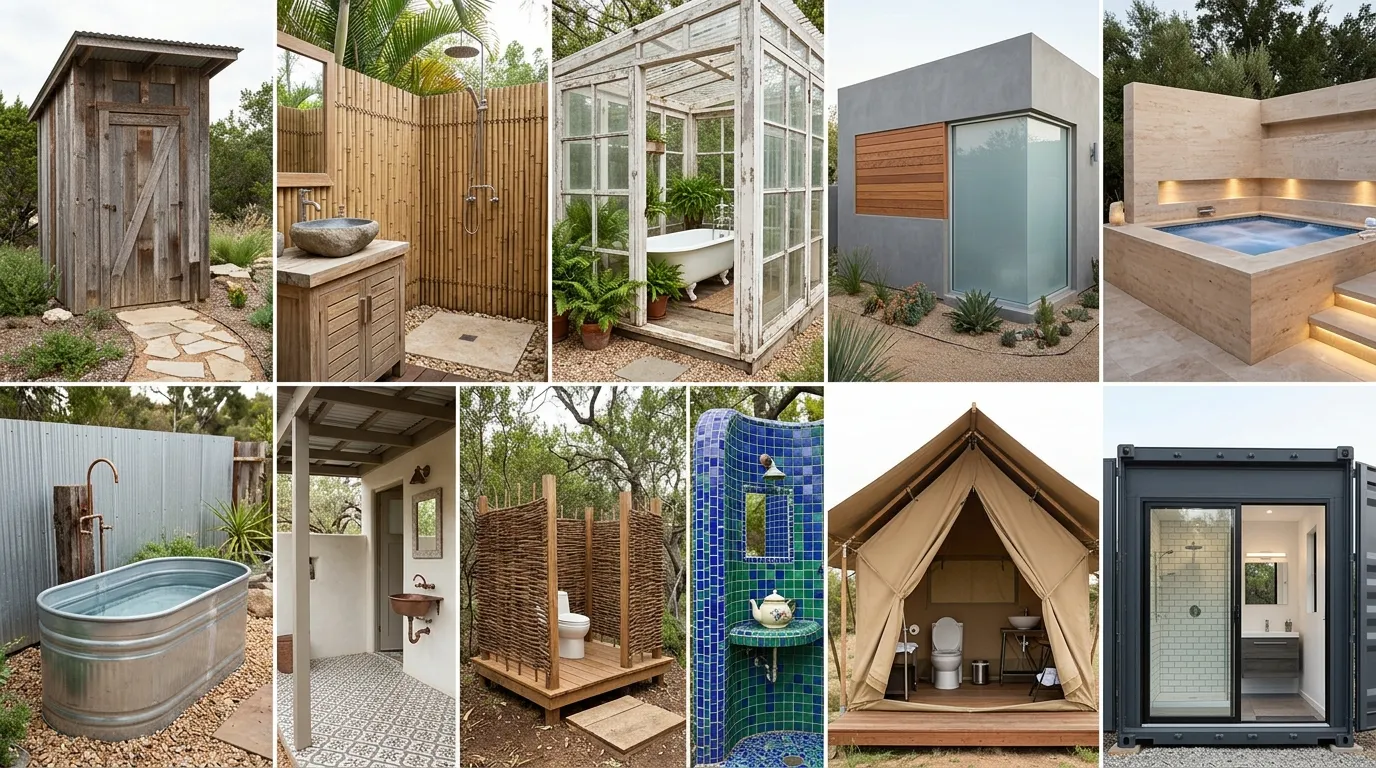
11 Backyard Bathroom Ideas to Try
Introduction
Designing a backyard bathroom brings luxury, convenience, and a connection to the outdoors, transforming ordinary routines into refreshing experiences. These spaces are ideal for poolside relaxation, garden retreats, or private backyard escapes. I’ve noticed that thoughtful layouts, natural textures, and strategic placement enhance both aesthetics and usability. From stone flooring to wooden enclosures, every element can contribute to a functional, visually inspiring outdoor bathroom. This guide provides actionable ideas for American homes, balancing rustic charm, modern comfort, and Pinterest-ready styling, making your backyard a versatile space for daily enjoyment and entertaining.
1. Stone Path Access
Bullet Points
- Guides visitors naturally to the bathroom
- Adds rustic charm and texture
- Creates a visually appealing entrance
- Can incorporate flagstone, pavers, or gravel
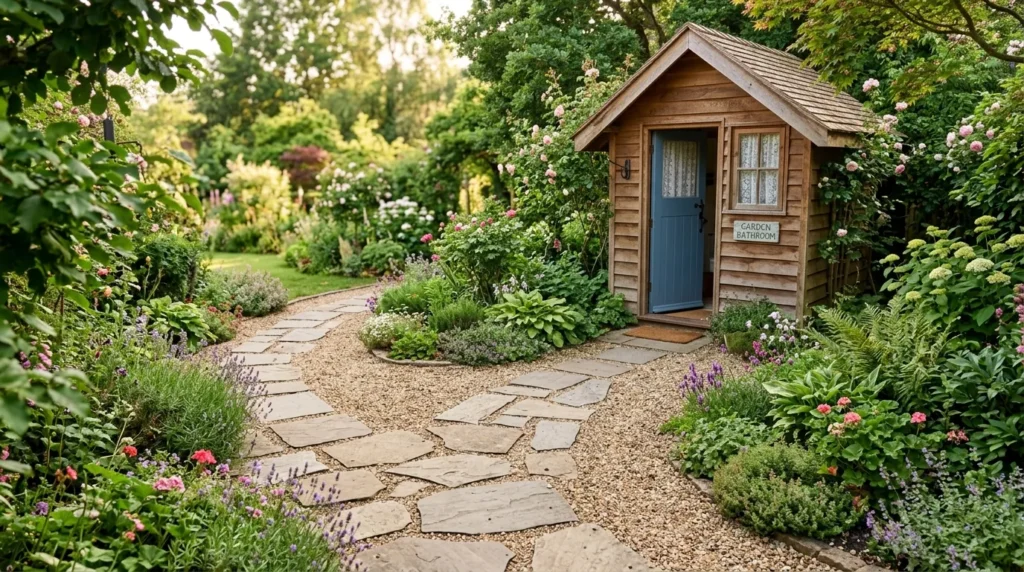
A stone path creates an inviting entryway for backyard bathrooms. Materials such as flagstone, river rock, or gravel introduce natural textures and integrate seamlessly with garden landscaping. Designers often recommend curving paths to create a sense of exploration and to enhance the visual journey toward the bathroom. I’ve noticed that stone paths not only improve accessibility but also set the tone for a cohesive outdoor design. Proper spacing, smooth edges, and complementary plants ensure a safe and aesthetically pleasing walkway that ties the outdoor bathroom into the overall backyard layout.
Functionally, stone paths provide durability and stability, reducing mud and erosion near the bathroom entrance. They can be combined with edging, small shrubs, or ambient lighting to further enhance safety and aesthetics. Varied stone sizes and textures create visual interest, giving each step a tactile experience. In real-life layouts, pathways can guide visitors through landscaped features or toward water amenities, establishing a harmonious flow between the backyard bathroom and surrounding garden. This approach combines beauty, practicality, and a rustic, Pinterest-ready charm suitable for American backyard spaces.
2. Wooden Privacy Screens
Bullet Points
- Provides visual privacy while keeping open-air feel
- Adds warmth and natural texture
- Works well with climbing plants or trellises
- Durable with water-resistant treatments
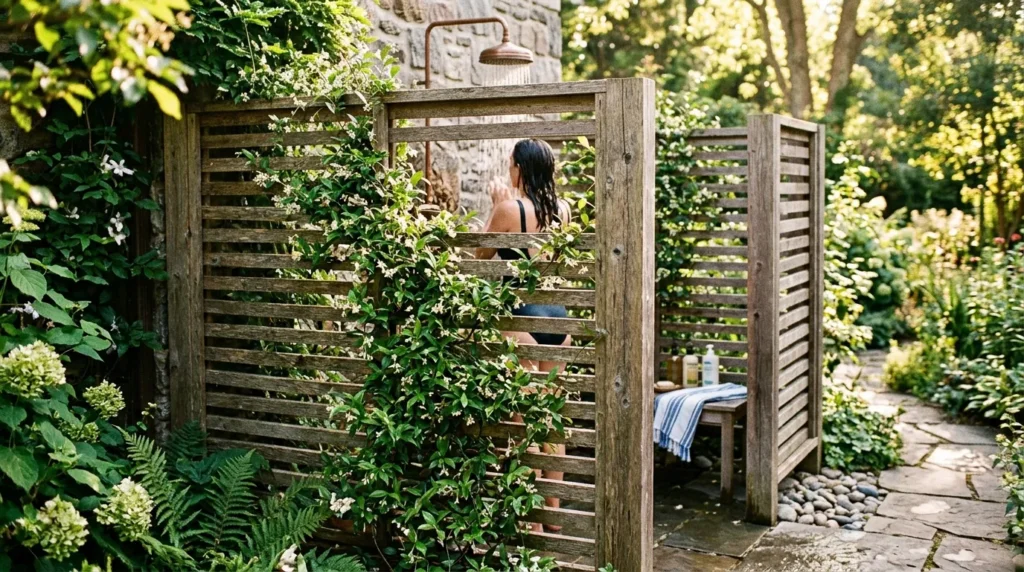
Wooden privacy screens are essential for outdoor bathrooms, ensuring discretion without isolating the space from nature. Treated wood, cedar, or teak panels create warmth while complementing stone and tile finishes. Designers often suggest lattice or slatted panels to allow airflow and sunlight while maintaining privacy. I’ve noticed that incorporating greenery like vines or climbing plants softens rigid lines and enhances the natural aesthetic. Proper layout ensures coverage for showering areas while keeping the design visually connected to the garden, creating a comfortable and inviting backyard retreat.
Functionally, wooden screens improve usability and help define zones within the backyard bathroom. They can be freestanding or attached to fencing, offering flexibility and durability with weatherproof finishes. Adding hooks, lighting, or shelves integrates functionality without sacrificing aesthetics. In real-life use, these panels complement pathways, flooring, and enclosures, creating a cohesive environment. The combination of texture, privacy, and natural color enhances the overall backyard experience, making the outdoor bathroom feel secure, stylish, and harmoniously integrated with landscaping.
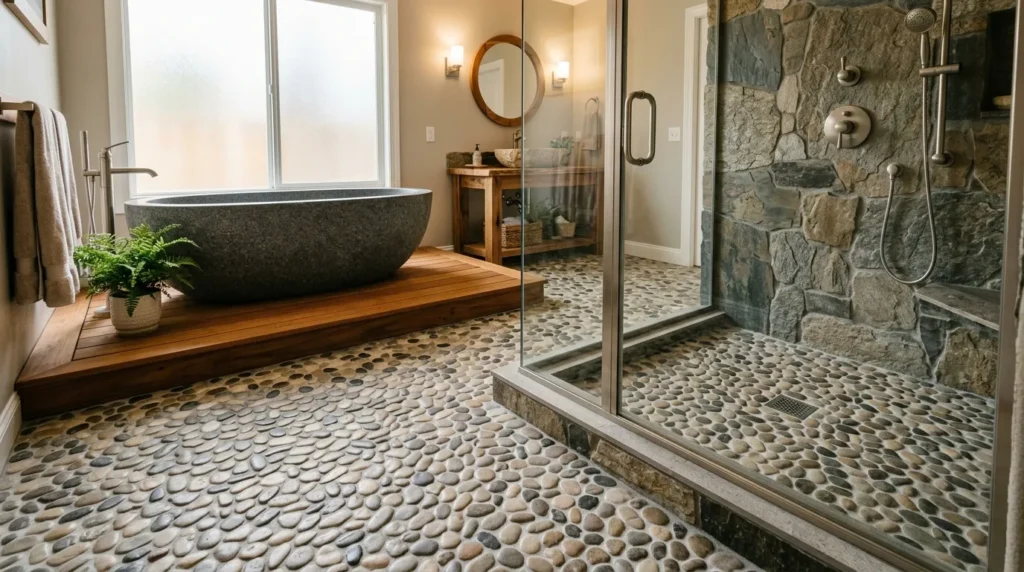
3. Pebble Flooring
Bullet Points
- Adds tactile and visual interest
- Enhances natural, earthy aesthetic
- Works with stone, wood, or metal finishes
- Durable and slip-resistant
Pebble flooring brings texture, comfort, and a spa-like feel to backyard bathrooms. Smooth river stones or polished pebbles provide a tactile surface that’s safe underfoot and visually appealing. Designers often recommend using contrasting shapes or colors to create a dynamic pattern. I’ve noticed that pebble floors pair beautifully with wooden decking, stone tiles, and outdoor fixtures, blending rustic charm with modern function. The irregularities in pebble size and color contribute to a natural, organic look, making the shower or bathing area feel immersed in the surrounding garden environment.
Functionally, pebble floors are slip-resistant and durable, ideal for outdoor wet areas. Proper sealing ensures longevity while maintaining texture and color. Pebble flooring complements other materials like wood benches, stone walls, or metal fixtures, providing a cohesive aesthetic. In practical layouts, pebble areas can define shower zones, guide water drainage, or create focal points. Homeowners benefit from tactile comfort, visual appeal, and a natural connection to the outdoors, turning an ordinary backyard bathroom into a functional and Pinterest-worthy retreat that combines style and practicality.
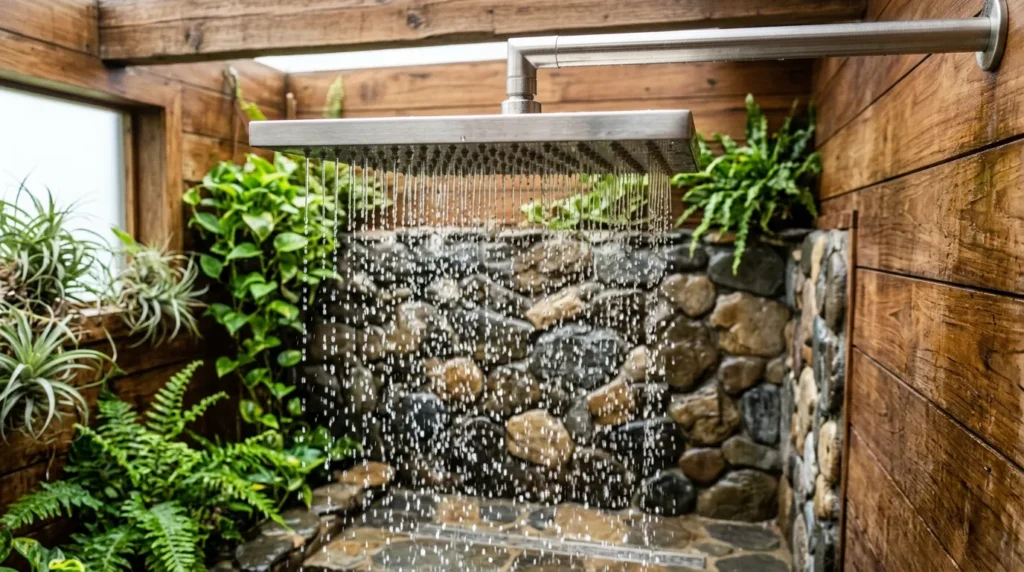
4. Rainfall Shower Fixtures
Bullet Points
- Provides spa-like water flow
- Complements outdoor ambiance
- Works with stone, wood, or metal accents
- Weather-resistant for outdoor use
Rainfall shower fixtures bring a luxurious, spa-inspired experience to backyard bathrooms. The wide water coverage simulates natural rain, adding sensory appeal to outdoor bathing. Designers often recommend pairing rainfall heads with stone floors, wooden walls, or pergolas to enhance aesthetic integration. I’ve noticed that these fixtures create a calming environment while emphasizing texture and materials in the surrounding space. Proper installation ensures durability, water pressure, and functionality, making the shower practical for daily use while remaining visually stunning.
Functionally, rainfall showers improve coverage and comfort, providing a soothing outdoor bathing experience. Combined with handheld sprayers or adjustable height fixtures, they offer versatility for different users. Strategically placing the shower near natural plants, stone pathways, or decked areas amplifies the connection with the surrounding backyard. In real-life applications, rainfall fixtures paired with lighting or water accents create a serene retreat. The result is an outdoor bathroom that balances practicality with luxury, offering a Pinterest-ready design that enhances usability, relaxation, and aesthetic charm.
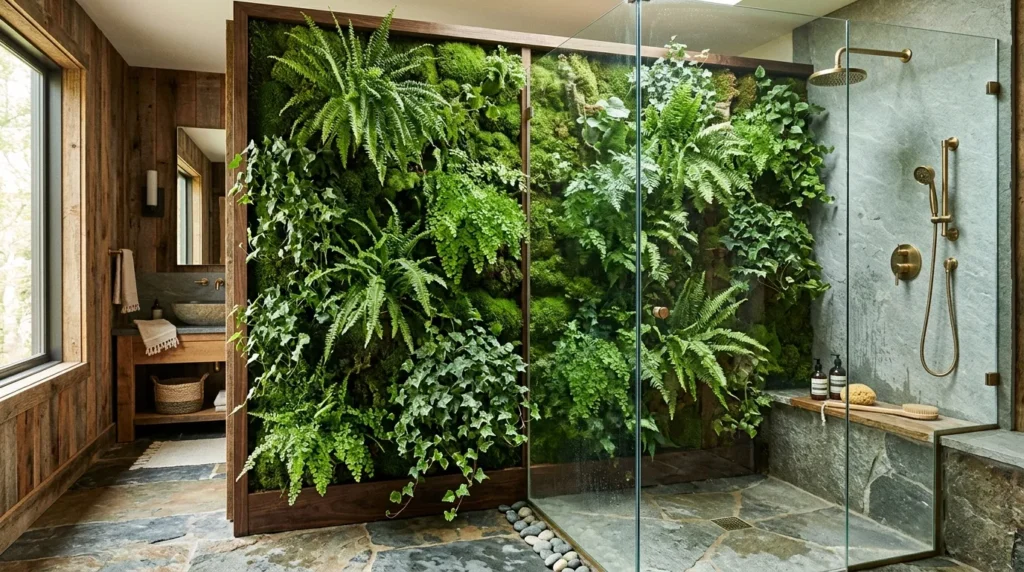
5. Green Wall Features
Bullet Points
- Adds lush, living texture
- Provides privacy and natural aesthetics
- Complements stone, wood, and tile
- Improves microclimate and air quality
Green walls or vertical gardens bring life and vibrancy to backyard bathrooms. Plants like ferns, ivy, or moss introduce layers of texture and natural color while enhancing privacy. Designers often recommend modular panels for flexibility and maintenance ease. I’ve noticed that living walls create a calming, spa-like atmosphere while blending seamlessly with stone floors, wood accents, and natural landscaping. These installations also soften rigid lines, integrate water features, and visually connect the bathroom to the surrounding outdoor environment, providing an organic focal point that enhances aesthetic appeal.
Functionally, green walls improve air quality, absorb heat, and reduce sound reflections, contributing to a more comfortable outdoor space. They can incorporate irrigation systems for low-maintenance care and seasonal planting flexibility. When integrated with rainfall showers, pebble flooring, and wooden benches, living walls help create a cohesive, immersive outdoor experience. In practical layouts, they offer both visual impact and functional benefits, making backyard bathrooms feel private, refreshing, and connected to nature. The combination of greenery, textures, and water elements ensures a functional, Pinterest-worthy retreat.
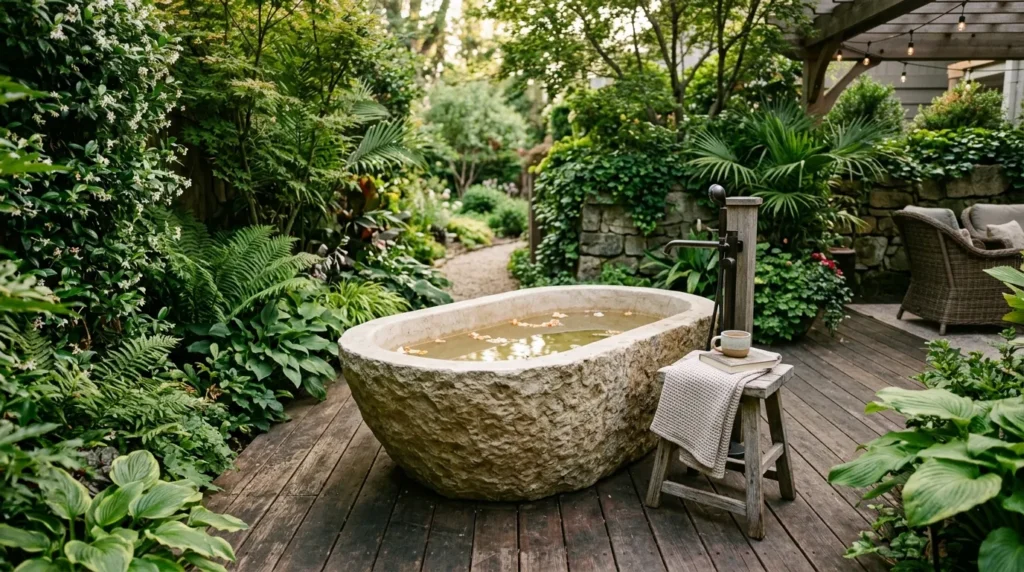
6. Freestanding Bathtub
Bullet Points
- Adds luxury and visual interest
- Works with wood, stone, or metal finishes
- Creates a relaxing backyard retreat
- Durable and weather-resistant
A freestanding bathtub elevates backyard bathrooms by offering a luxurious soaking experience. Materials like stone, copper, or treated metals ensure durability while enhancing rustic or modern aesthetics. I’ve noticed that placing tubs near greenery, stone pathways, or under pergolas creates a natural focal point. Designers often pair freestanding tubs with rainfall showers or benches to enhance usability. The combination of organic textures, natural light, and ambient surroundings turns the space into a comfortable, relaxing retreat that seamlessly integrates with backyard landscaping, creating a visually striking and practical design.
Functionally, freestanding tubs provide flexibility for layout and placement, accommodating outdoor conditions and drainage. They can be paired with nearby shelving or benches for convenience and styling. Homeowners benefit from an immersive bathing experience that connects directly with nature while maintaining comfort and accessibility. Combining tubs with textured stone floors, wooden panels, or living walls enhances both aesthetics and usability. In real-life layouts, freestanding tubs become the centerpiece of the backyard bathroom, offering luxury, practicality, and Pinterest-ready appeal while harmonizing with other design elements.
7. Pergola Overhead Structure
Bullet Points
- Provides partial shade and privacy
- Supports hanging plants, lights, or curtains
- Enhances architectural interest
- Complements stone, wood, and metal materials
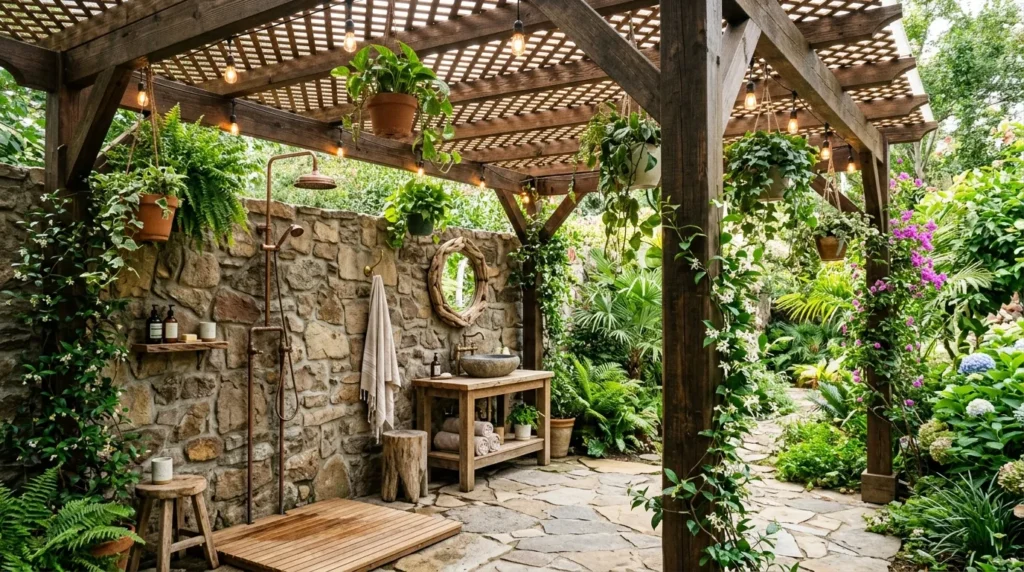
A pergola over the backyard bathroom adds architectural interest while providing functional benefits. Wooden beams or lattice roofs offer partial shade and privacy, making outdoor showers or bathtubs comfortable during sunny days. I’ve noticed that pergolas also serve as support for climbing plants, string lights, or fabric curtains, further enhancing the outdoor aesthetic. Designers often recommend coordinating the pergola with flooring, walls, and fixtures to create a cohesive environment. The structure transforms the outdoor bathroom into a semi-enclosed sanctuary, blending natural elements with functional architectural design.
Functionally, pergolas improve usability by reducing direct sunlight and wind exposure while defining the space. They allow flexibility for adding decorative lighting, plants, or water features to enhance ambiance. Homeowners can customize pergola height, materials, and finishes to complement stone pathways, pebble floors, or wooden benches. In practical layouts, the structure creates a sense of enclosure while maintaining openness, improving comfort and privacy. Combining pergolas with other outdoor elements elevates the backyard bathroom into a stylish, functional, and Pinterest-ready retreat for daily relaxation or entertaining.
Continuing from the first part, these additional backyard bathroom ideas focus on creating luxurious, functional, and visually engaging spaces. From waterfall showers to creative lighting, each element enhances usability while connecting the bathroom to the surrounding garden. I’ve noticed that integrating textures like stone, wood, and greenery elevates both aesthetic and practical aspects. These strategies are designed for American backyards, balancing rustic charm, modern comfort, and Pinterest-ready appeal. By implementing these ideas alongside the previous ones, homeowners can create backyard bathrooms that feel like immersive outdoor retreats suitable for daily use or entertaining guests.
8. Waterfall Shower Feature
Bullet Points
- Creates a dramatic focal point
- Mimics natural water flow for a spa feel
- Works with stone, wood, or metal materials
- Durable with proper waterproofing
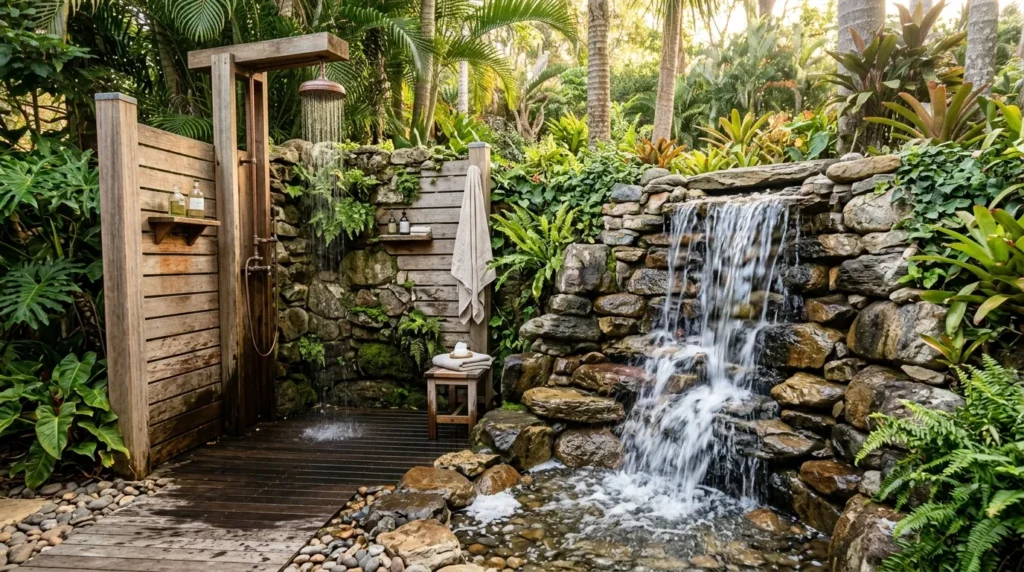
A waterfall shower adds drama and natural appeal to a backyard bathroom. Flowing water from a wall-mounted fixture or freestanding spout creates visual and auditory interest, enhancing the outdoor spa-like experience. I’ve noticed that pairing the waterfall with stone flooring, wooden decking, or surrounding greenery amplifies its organic effect. Designers often recommend waterproof materials and proper drainage to maintain durability and safety. This feature transforms a functional shower into a centerpiece, drawing attention and integrating seamlessly with the natural surroundings for a cohesive backyard retreat.
Functionally, waterfall showers provide broad water coverage and a calming experience. Combining them with handheld sprayers increases versatility, catering to different preferences and uses. Strategically placing the feature near textured stone walls, plant panels, or wooden enclosures creates a balanced, visually appealing layout. Homeowners benefit from a relaxing outdoor bathing experience while maintaining practicality and safety. This combination of form and function ensures the waterfall shower is both a functional feature and a design focal point, enhancing the backyard bathroom with a Pinterest-worthy aesthetic.
9. Outdoor Bathtub Retreat
Bullet Points
- Offers a luxurious soaking experience
- Works with stone, copper, or wooden finishes
- Integrates seamlessly with garden landscapes
- Durable and weather-resistant
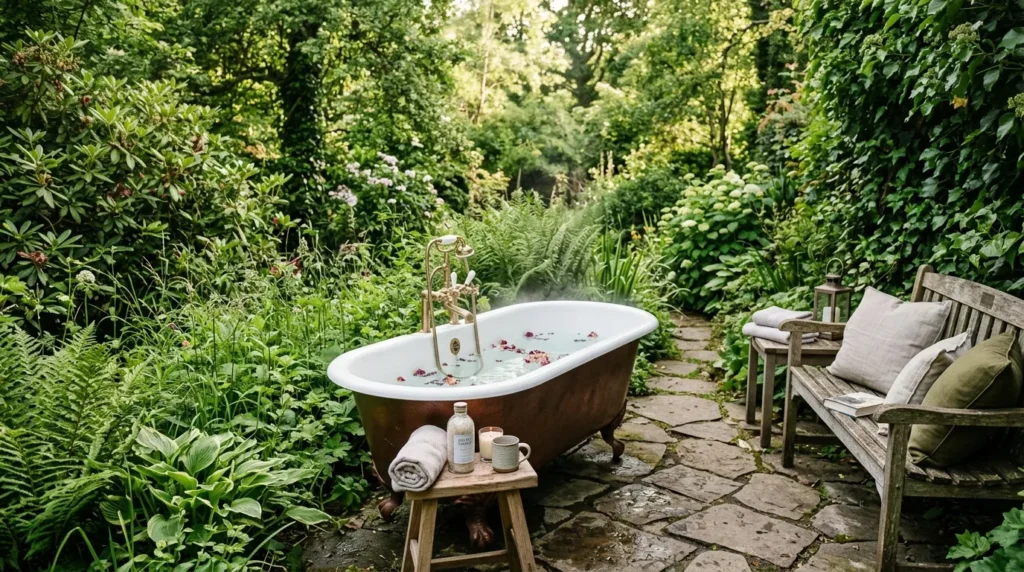
An outdoor bathtub elevates backyard bathrooms by providing a private, indulgent soaking area. Freestanding tubs made of stone, copper, or weather-treated wood offer durability while enhancing visual appeal. I’ve noticed that positioning the tub near greenery, stone paths, or a pergola improves privacy and creates a focal point in the space. Designers often recommend complementing the tub with pebble or stone flooring, wooden benches, and ambient lighting to enhance the retreat-like atmosphere. This feature transforms the outdoor bathroom into a luxurious, functional space while harmonizing with natural surroundings.
Functionally, an outdoor bathtub allows for relaxing soaks and versatile layouts, integrating well with other fixtures like rainfall or waterfall showers. The tub’s placement and surrounding elements enhance usability, drainage, and comfort. Pairing the bathtub with greenery, wooden accents, or privacy panels creates a visually appealing and immersive environment. In real-life layouts, this combination encourages homeowners to enjoy nature while maintaining functionality, turning an ordinary backyard bathroom into a private oasis. The result is a luxurious, Pinterest-ready outdoor space with both aesthetic and practical appeal.
10. Ambient Outdoor Lighting
Bullet Points
- Enhances ambiance and safety at night
- Highlights textures, pathways, and features
- Works with solar, LED, or string lighting
- Complements wood, stone, and greenery
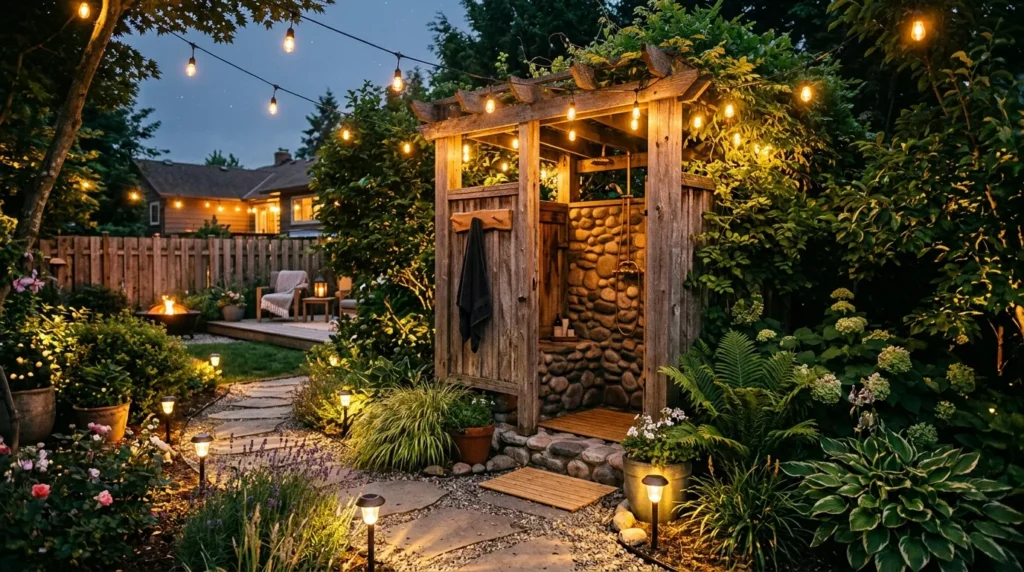
Outdoor lighting transforms backyard bathrooms by balancing safety, functionality, and aesthetics. Pathway lights, sconces, or string lights can highlight wooden structures, stone floors, and plant walls while creating a warm, inviting glow. I’ve noticed that layered lighting softens shadows and emphasizes textures, making the outdoor bathroom usable at dusk or evening. Designers often recommend dimmable or solar-powered options to enhance flexibility and efficiency. Properly positioned lighting elevates visual appeal while maintaining practicality, turning functional spaces into Pinterest-worthy retreats that feel cozy and safe.
Functionally, lighting ensures visibility and security while enhancing the overall aesthetic. Solar or LED fixtures are durable for outdoor conditions and energy-efficient. Integrating lights into pathways, pergolas, or around water features emphasizes textures and highlights key areas like showers or tubs. In real-life use, combining ambient, task, and accent lighting creates depth and layered visual interest. Homeowners benefit from enhanced functionality and atmosphere, creating a backyard bathroom that is both practical for night use and visually striking. Lighting is a crucial component for style, safety, and Pinterest-ready appeal.
11. Freestanding Towel Racks
Bullet Points
- Adds functionality and visual appeal
- Works with wood, metal, or woven materials
- Flexible placement for convenience
- Complements other outdoor features
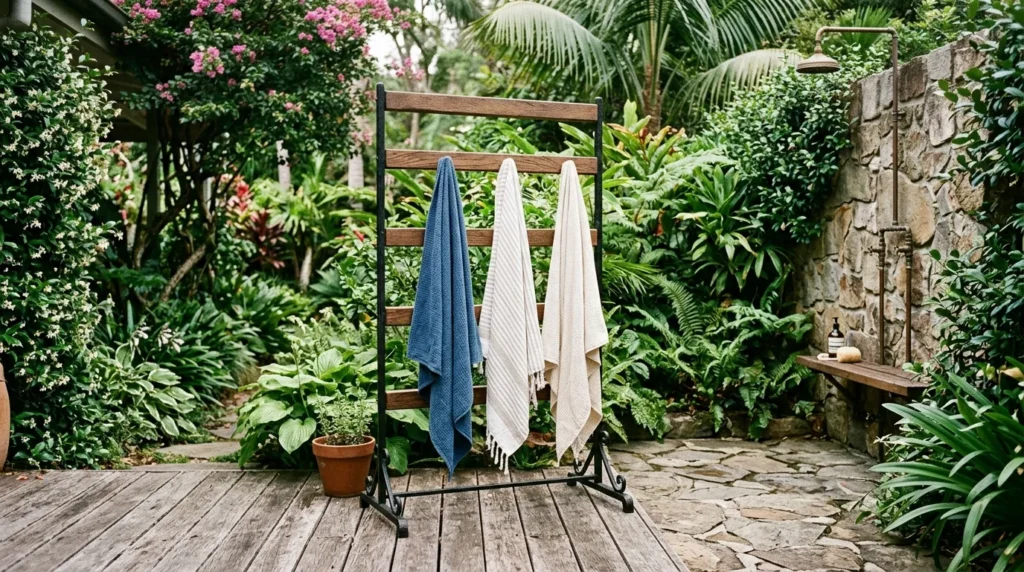
Freestanding towel racks provide practical storage and enhance the visual appeal of backyard bathrooms. Materials like treated wood, wrought iron, or weather-resistant metals add durability while maintaining style. I’ve noticed that positioning racks near showers or tubs improves usability and encourages organization. Designers often recommend selecting finishes and heights that harmonize with other outdoor elements, such as pergolas, wooden benches, or stone pathways. The rack becomes both a functional element and a subtle design accent, enhancing the overall composition of the backyard bathroom without crowding the space.
Functionally, freestanding racks allow homeowners to display towels, robes, or baskets in accessible locations while supporting outdoor durability. They can be repositioned as needed, providing flexibility for seasonal changes or backyard layout adjustments. When combined with other design elements like pebble floors, rainfall showers, or pergolas, these racks contribute to a cohesive, well-thought-out space. In real-life applications, freestanding racks balance functionality and visual harmony, making the backyard bathroom convenient, organized, and visually pleasing, offering a practical Pinterest-ready feature that complements the overall outdoor aesthetic.