

How High Should Pendant Lights Hang Above a Kitchen Island?
Determining how high should pendant lights hang above a kitchen island is a common dilemma for homeowners looking to balance aesthetics with functionality. While there is no single rule that applies to every kitchen, industry standards provide a solid foundation for achieving the right look. Most designers agree that the bottom of a pendant light should sit between 30 and 36 inches above the countertop.
This specific range ensures the fixture provides effective illumination without obstructing your view or creating an uncomfortable glare while you work. By following these guidelines, you can create a cohesive space that feels both balanced and professional.
The Standard Height for Pendant Lighting

The most widely accepted rule for determining how high should pendant lights hang above a kitchen island is to measure between 30 and 36 inches from the countertop surface to the bottom of the fixture. This measurement is not arbitrary; it is designed to keep the light source at a level that illuminates the workspace without blinding anyone standing or sitting at the island. If you have standard 8-foot ceilings, this range is almost always the safest starting point for your design.
When you hang lights lower than 30 inches, you risk blocking sightlines across the kitchen. This can make the room feel cramped and interfere with conversations between people on opposite sides of the island. Conversely, mounting them higher than 36 inches can cause the light to disperse too widely, losing the focused task lighting that makes pendants so useful in a culinary space.
Always account for the tallest person in your household when finalising these measurements. If someone is particularly tall, you might lean toward the 36-inch end of the spectrum to prevent them from bumping their head or feeling crowded. Conversely, if your ceilings are lower, you might need to adjust the placement to ensure the space maintains a sense of vertical balance.
Adjusting for Ceiling Height

Your ceiling height plays a massive role in how you should position your lighting. In homes with 8-foot ceilings, sticking to the 30-to-36-inch rule is usually perfect. However, if your kitchen features 9-foot or 10-foot ceilings, you may need to adjust the pendant height to maintain proper visual proportions.
For higher ceilings, you should generally increase the distance from the countertop by about 3 inches for every extra foot of ceiling height. This prevents the fixtures from appearing as though they are floating too high in the void of the room. A pendant that looks balanced in a standard room can easily look lost in a space with vaulted or high ceilings if the cord length isn’t adjusted accordingly.
Keep in mind that the scale of the pendant itself also matters when ceilings are tall. Larger, more substantial fixtures often work better in high-ceiling environments because they occupy more visual space. If you choose a delicate, small pendant for a high ceiling, you might find yourself lowering it further than the standard recommendation just to make it feel grounded.
Considering the Size of Your Pendants

The physical size of your light fixtures influences how they interact with your kitchen island. Large, heavy pendants often feel better when hung slightly higher, while smaller, more delicate designs might benefit from being hung slightly lower. You want to avoid a situation where the light fixtures feel like a barrier between the kitchen and the dining area.
If you are planning to use multiple oversized pendants, be mindful of how they impact the total visual weight of the room. You can find detailed technical advice on National Electrical Manufacturers Association guidelines regarding fixture installation to ensure you meet safety standards. When fixtures are too large and hung too low, they can dominate the kitchen island and make the entire area feel cluttered.
Balance is the key to a successful kitchen design. If you have a massive island, a single large pendant might look out of place, while a cluster of three smaller ones could provide better coverage. Always test the placement with a temporary setup or a mock-up before committing to the final cord lengths.
The Importance of Task Lighting
Pendant lights serve a dual purpose: they are decorative elements and functional task lighting. When you think about how high should pendant lights hang above a kitchen island, consider what you actually do on that surface. If the island is your primary spot for food preparation, you need the light to be close enough to illuminate your cutting board or mixing bowl clearly.
If your pendants are hung too high, the light will likely hit your eyes rather than the work surface. This creates glare, which is the enemy of a well-lit kitchen. You want the light to be directed downward to create a pool of brightness on the island, rather than scattering light across the entire room.
If you have dimmable bulbs, you have more flexibility with your height choices. Dimmers allow you to soften the light in the evening when the kitchen transitions from a workspace to a social hub. Even if your lights are hung at the perfect height, having the ability to adjust the intensity is a huge advantage for multi-purpose islands.
Calculating the Number of Pendants

Choosing the right number of pendants is just as important as deciding on the height. A common rule of thumb is to place one pendant for every 2 feet of counter space. If you have a small island, two pendants are usually sufficient, while a large island might accommodate three or even four.
Spacing is equally critical to the overall look. You want your pendants to be evenly distributed across the length of the island to create a sense of symmetry.
If you place them too close together, the lighting will overlap and create hotspots. If they are too far apart, you will have dark gaps on the countertop where you might need light the most.
Consider the following table as a general guide for spacing your lights:
| Island Length | Number of Pendants | Recommended Spacing |
|---|---|---|
| Under 5 Feet | 2 Pendants | 24 inches apart |
| 5 to 7 Feet | 3 Pendants | 20-24 inches apart |
| Over 7 Feet | 3-4 Pendants | 24-30 inches apart |
Accounting for Sightlines
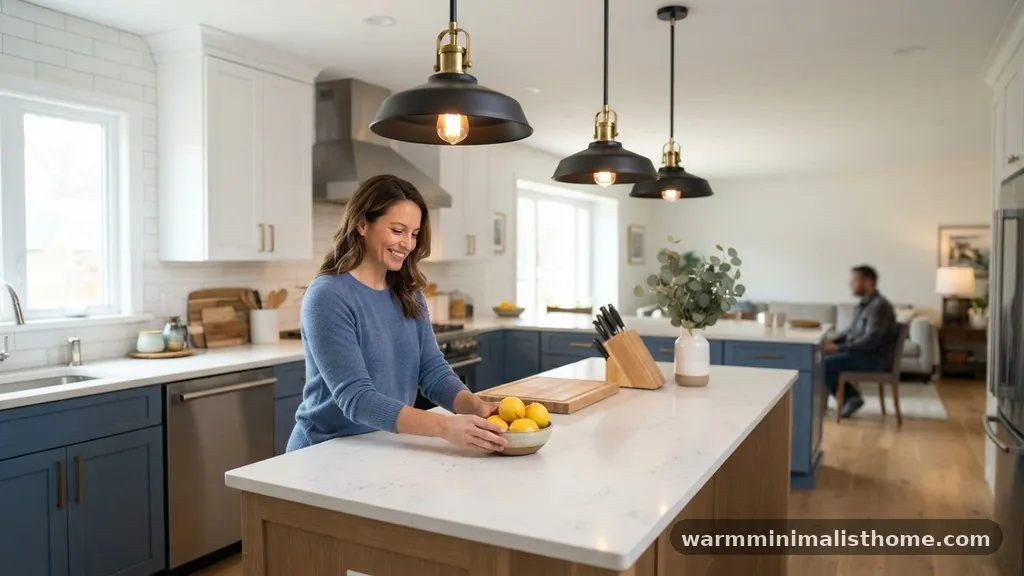
Your kitchen island is often the focal point of an open-concept room. If you are standing in the living room or dining area, your eyes will naturally be drawn to the pendants. If the lights are hung too low, they will act as a visual wall, cutting off the flow of the room.
Try to position your lights so that they are at eye level or slightly above when you are sitting at the island. This ensures that you can see the person sitting opposite you without the fixture getting in the way. If you use the island for dining, this is especially important to maintain a comfortable social atmosphere.
If your kitchen layout is particularly open, prioritize transparency in your fixture design. Glass or open-frame pendants allow light to pass through, which makes them feel less bulky than solid metal or opaque shades. This can help you get away with a slightly lower placement without sacrificing the feeling of openness.
The Role of Fixture Shape
The shape of your pendant light can change how you perceive its height. A long, drum-style pendant might feel lower than a rounded globe pendant, even if both are hung at exactly 30 inches from the surface. This is because the visual mass is distributed differently.
If you choose a long, linear fixture, you might find that you can hang it slightly higher than a traditional round pendant. Linear fixtures provide a wider spread of light, which compensates for the extra height. Conversely, a small, narrow pendant might need to hang lower to provide enough focused light on the counter.
Always look at the bottom opening of the shade. If the opening is wide, the light will spread out more, which might allow for a higher mounting position. If the opening is narrow, the light will be more concentrated, requiring a lower position to hit the countertop effectively.
Common Installation Mistakes
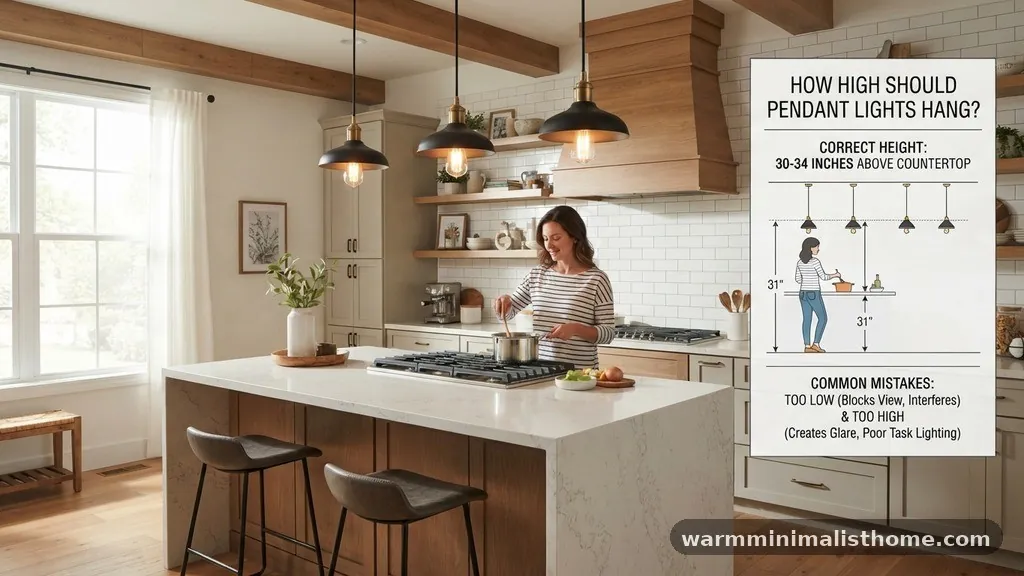
One of the most frequent mistakes is failing to account for the thickness of the countertop material. A standard 30-inch measurement should be taken from the actual countertop surface, not the floor. If you have an exceptionally thick butcher block or stone slab, you need to adjust your cord length accordingly.
Another common error is ignoring the “swing” of the lights. If you have a ceiling fan or a nearby door, ensure that the pendants are not positioned where they will be hit or cause a distraction. You should also verify that the light fixtures don’t interfere with any kitchen appliances, such as tall blender jars or mixers that sit on the counter.
Take your time during the installation process to hold the fixtures at different heights before cutting the cords. Most modern pendants come with adjustable cables, so use this feature to your advantage. A few inches of difference can dramatically change the mood and functionality of your kitchen.
Safety and Electrical Considerations

Safety should always be your top priority when installing any lighting. Ensure that the junction boxes in your ceiling are rated to support the weight of your chosen fixtures. Some decorative pendants can be surprisingly heavy, especially if they are made of glass, ceramic, or thick metal.
If you are not comfortable working with electrical wiring, hire a licensed professional. Improper wiring can lead to flickering lights, damaged fixtures, or even fire hazards. A professional will ensure that your pendants are securely mounted and that the electrical load is properly balanced.
Don’t forget to check the bulb type and wattage. LED bulbs are the industry standard today because they are cool to the touch and energy-efficient. Since your pendants will be relatively close to your food preparation area, you want bulbs that don’t generate excessive heat.
Designing for Longevity
Trends in kitchen lighting change, but the principles of good design remain constant. Choosing a classic, timeless style for your pendants will ensure that your kitchen looks fresh for years to come. Think about the long-term maintenance of your fixtures when you make your purchase.
Open-bottom pendants are generally easier to clean than enclosed globes, which can trap dust and insects. If you choose a material like brushed nickel or matte black, you won’t have to worry about fingerprints as much as you would with polished chrome or glass. Consider how the finish of your lights coordinates with your cabinet hardware and faucet fixtures.
Ultimately, your kitchen should reflect your personal taste while remaining highly functional. If you find a light you love, don’t be afraid to experiment with the height until it feels right for your space. The numbers are just guidelines, and the best kitchen is one that feels comfortable and inviting to you.
Frequently Asked Questions
Can I hang my pendant lights higher than 36 inches?
Yes, you can hang them higher if you have very tall ceilings or if you are using larger, high-output fixtures. Just be aware that hanging them too high may cause the light to become diffuse, reducing the effectiveness of your task lighting on the island surface.
What is the best way to determine the height before installation?
The best method is to use a piece of string or a long measuring tape to hold the fixture at different heights while standing in the kitchen. Have someone else stand back and view the space from the living area to see how the height impacts the room’s overall proportions and sightlines.
Should all pendants over an island be at the exact same height?
In most cases, yes, keeping them at the same height creates a clean, intentional look. However, if you are working with an asymmetrical island or a unique design concept, varying the heights can be a bold choice, though it requires careful planning to avoid looking like a mistake.
Do I need to worry about the light reflecting off my countertop?
If you have a high-gloss stone or metal countertop, very bright lights hung at a low height can cause distracting reflections. You can mitigate this by using dimmable bulbs or choosing fixtures with frosted glass or shades that soften the light output.
Are pendant lights over kitchen islands going out of style?
Pendant lights remain a staple in kitchen design because they provide both necessary task lighting and a decorative focal point. While the styles of the fixtures themselves evolve—moving from traditional lantern styles to minimalist LED bars—the concept of using pendants over an island is very much still in style.
Conclusion
Finding the perfect balance for your kitchen lighting involves more than just picking a pretty fixture. By understanding how high should pendant lights hang above a kitchen island, you set the stage for a space that is both beautiful and highly functional. Most homeowners find that the 30-to-36-inch range provides the best results, keeping your workspace well-lit without disrupting the flow of your home.
Take the time to evaluate your ceiling height, the scale of your fixtures, and your specific daily needs before finalising your installation. Whether you prefer a minimalist look or a dramatic statement, the right placement will make all the difference in your kitchen’s atmosphere.
Feel free to adjust these measurements slightly based on your personal comfort and the unique architecture of your home. If you have questions about your specific project, don’t hesitate to reach out to a professional designer or electrician to ensure your vision comes to life safely and effectively.