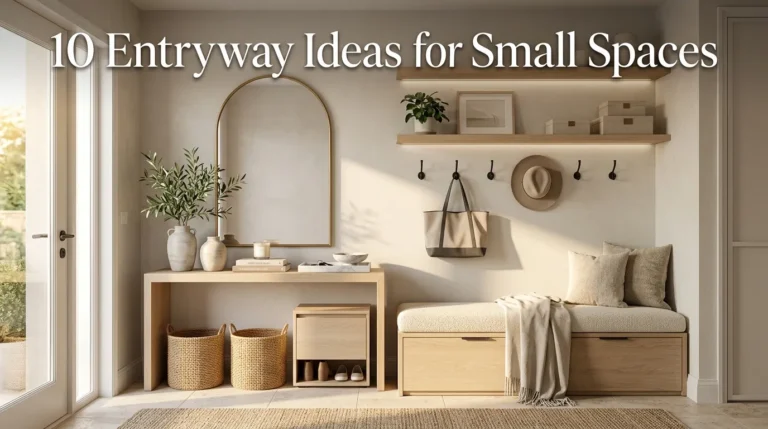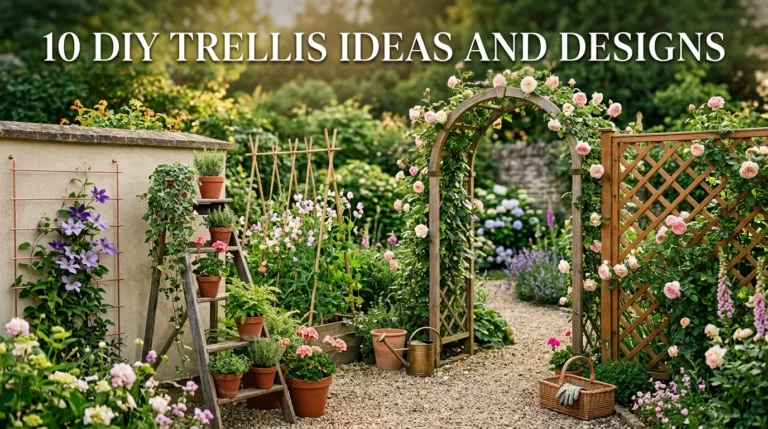
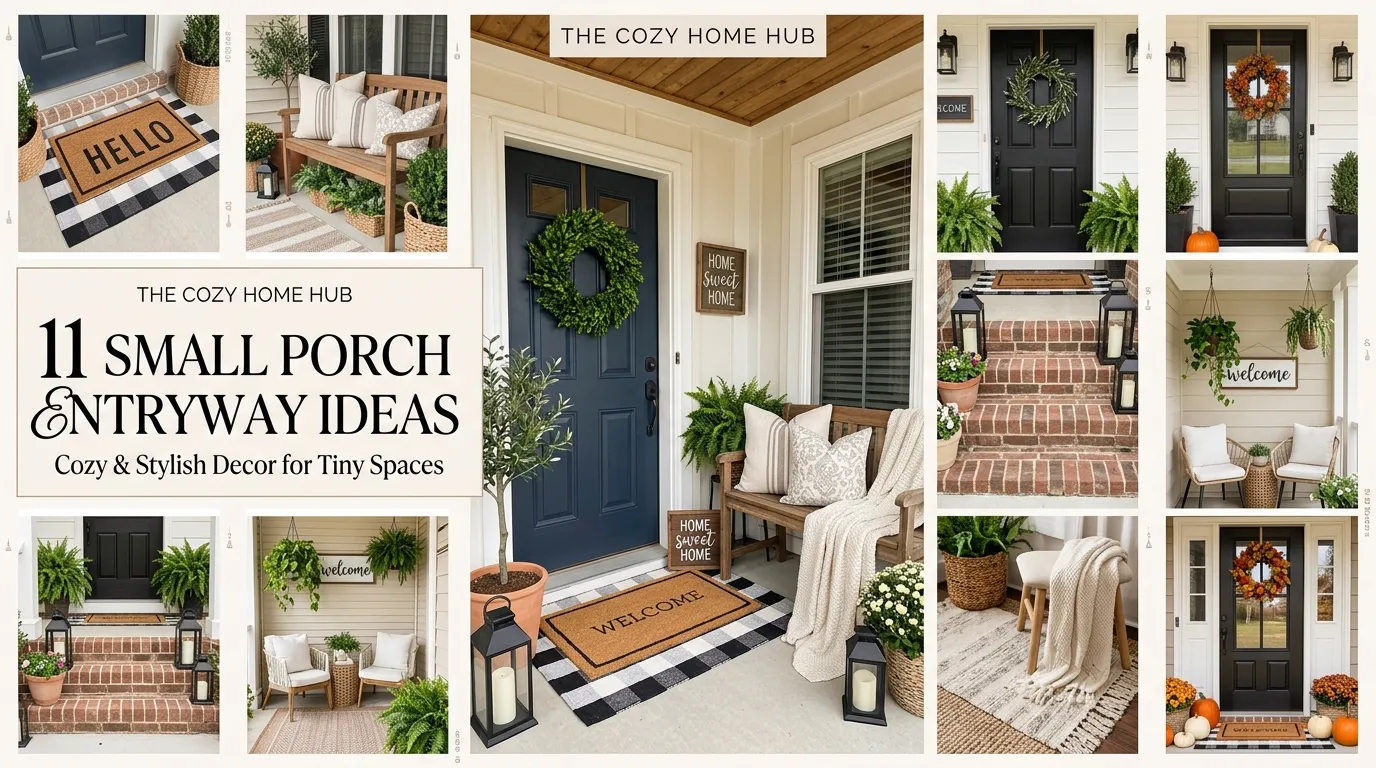
11 Small Porch Entryway Ideas
Introduction
A compact porch can still make a full-size first impression when every detail is chosen with purpose. For many USA homes, the entry is not a wide wraparound porch or dramatic covered veranda. It may be a narrow stoop, a small covered landing, or a few front steps beside the door. That limited space can still look beautiful, welcoming, and polished with smart styling. The goal is to create a clean arrival point that feels useful, balanced, and visually warm from the sidewalk for guests and neighbors without looking crowded or unfinished.
This guide is designed for homeowners who want realistic upgrades without rebuilding the entire exterior. You will find ideas for paint, lighting, planters, seating, mats, hardware, greenery, and seasonal accents that work in tight spaces. Each idea focuses on curb appeal, everyday function, and Pinterest-friendly style. Whether your home is a townhouse, cottage, ranch, farmhouse, brick house, or suburban new build, these entryway updates can help your Small Porch feel more intentional, charming, and ready for guests throughout the year without requiring a full renovation budget. The ideas are simple, visual, and practical.
1. Door Refresh
- Creates a clear focal point without taking up space
- Works with wood, fiberglass, painted, or glass-panel doors
- Adds instant curb appeal through color, polish, and contrast
- Looks best with exterior paint in satin or semi-gloss finish
- Helps wreaths, planters, mats, and hardware feel more coordinated
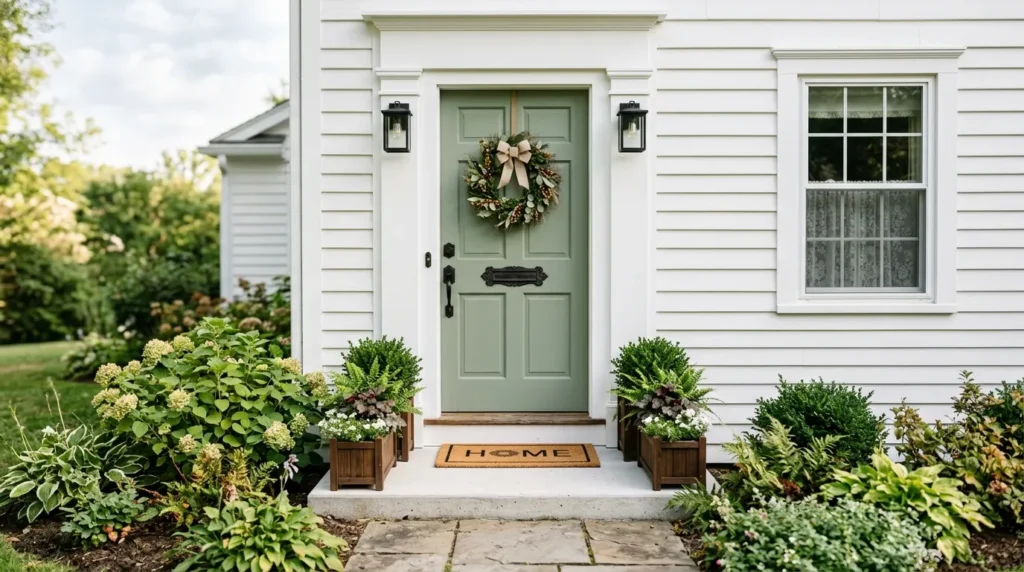
A freshly painted door can make the smallest entrance feel instantly more intentional. When there is not much porch space to decorate, the door becomes the main visual feature, so color matters. Deep green, warm black, navy, brick red, soft blue, or classic white can completely change the mood without taking up a single inch of floor space. Choose exterior paint made for weather exposure, and use satin or semi-gloss for easier cleaning. In my experience, a polished door color often makes basic siding, brick, and trim look more updated.
The best transformation happens when the door color connects with the rest of the exterior. Look at your roof, shutters, railings, walkway, porch light, and landscaping before choosing a shade. A darker door can add contrast to a light house, while a softer color can brighten a shaded entrance. Clean the surface, sand rough areas, prime where needed, and remove hardware before painting if possible. Once finished, even a simple wreath, new handle, or pair of planters will look more deliberate because the doorway finally has a strong focal point.
2. Slim Seating
- Adds comfort without overcrowding a narrow entry
- Creates a useful spot for bags, shoes, packages, or decor
- Works with benches, stools, folding chairs, or compact bistro seats
- Looks best in weather-resistant wood, metal, wicker, or resin
- Makes the entrance feel warmer and more lived-in
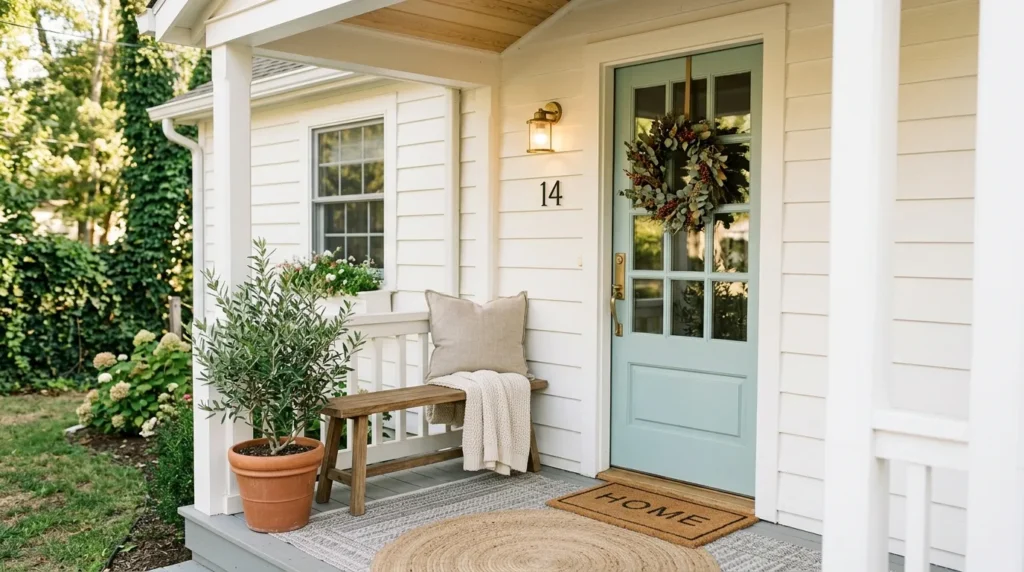
Slim seating can make a tiny entry feel welcoming without making it crowded. A narrow bench, small stool, folding chair, or compact bistro seat gives the space a sense of comfort and purpose. It also creates a practical spot for setting packages, slipping off muddy shoes, or placing a small seasonal pillow. The key is scale and safe movement. Choose seating that leaves enough room for the door to open fully and for guests to walk safely. Weather-resistant wood, powder-coated metal, resin wicker, and treated bamboo are smart materials for outdoor use.
A small seat works best when it feels styled but not stuffed with decor. Add one outdoor cushion, a folded throw in cooler months, or a tiny side planter for balance. If the porch is very narrow, place the seat against a side wall instead of directly beside the door. For covered entries, a slim wooden bench can feel cozy and cottage-like. For modern homes, a black metal stool may look cleaner. I’ve noticed that even one thoughtful seating piece can make a small entrance feel more personal and lived-in.
3. Layered Mats
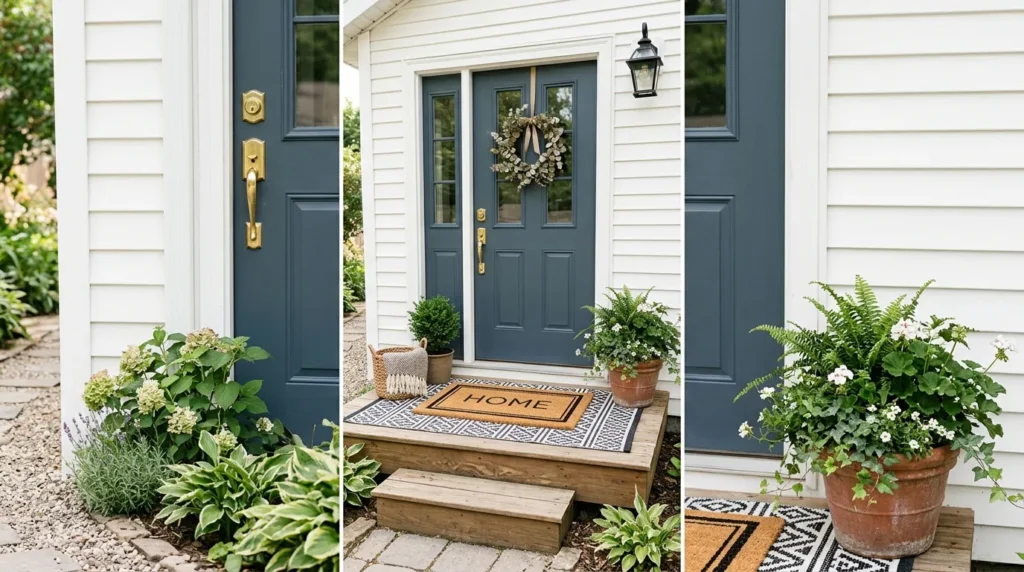
- Adds pattern and texture without using vertical space
- Makes a basic stoop feel styled and intentional
- Works well with coir mats, washable rugs, stripes, and checks
- Can be changed easily for seasons and holidays
- Helps frame the doorway in Pinterest-friendly photos
Layered mats are one of the easiest ways to add pattern, texture, and charm to a tight entry. Instead of using only one basic doormat, place a slightly larger outdoor rug underneath and a smaller coir mat on top. This creates a framed look that feels styled without adding clutter or blocking the door. Black-and-white checks, stripes, natural woven textures, and muted seasonal patterns all work well. The larger rug should extend beyond the doormat enough to show the layer clearly, especially in photos or from the walkway. It feels layered, polished, and welcoming.
This idea is practical because it can change with the seasons and still protect the floor. Use a washable outdoor rug as the base, then choose a durable coir mat for wiping shoes and catching grit. In spring, try soft stripes or pale neutrals. In fall, use warm plaid or rust tones. In winter, switch to evergreen, black, or tan textures. Make sure the rug lies flat and does not create a tripping edge near the threshold. The result feels welcoming, clean, and Pinterest-ready without using valuable porch space. It also photographs beautifully from the front.
4. Tall Planters
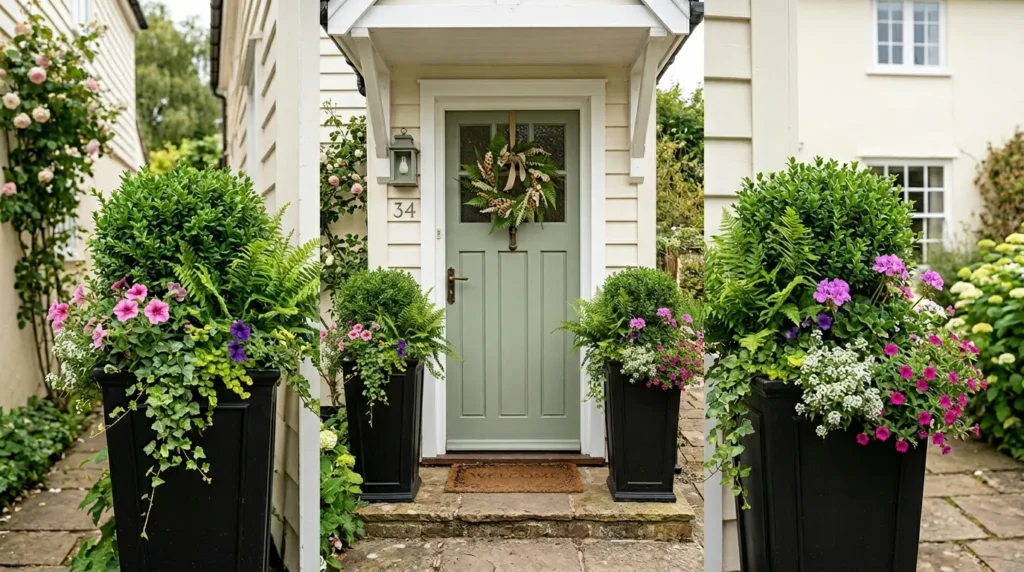
- Adds height and greenery without spreading across the porch
- Frames the door and softens hard exterior surfaces
- Works with ferns, boxwood, grasses, flowers, and evergreens
- Looks best in narrow containers with drainage holes
- Makes the entrance feel fresh, balanced, and seasonal
Tall planters help a compact entry feel fuller without spreading across the floor. When space is limited, height becomes your best styling tool because it draws attention upward. A pair of narrow planters beside the door can frame the entrance beautifully, while one tall planter can soften a corner or blank wall. Choose containers that match the home’s style, such as black metal, terracotta, concrete, ceramic, or wood-look resin. For plants, consider boxwood, ferns, ornamental grasses, dwarf evergreens, lavender, or seasonal flowers depending on the sunlight and climate. This is helpful for narrow stoops.
The biggest benefit of tall planters is that they add life and structure at the same time. They draw the eye upward, which makes the entrance feel more designed and less cramped. For sunny porches, use heat-tolerant plants like geraniums, lantana, salvia, or sweet potato vine. For shade, try ferns, caladiums, impatiens, or hostas. Always check drainage holes so water does not pool near the doorway or damage surfaces. I’ve seen this work well in many homes because even one vertical planter can make a plain stoop feel fresh and balanced.
5. Better Lighting
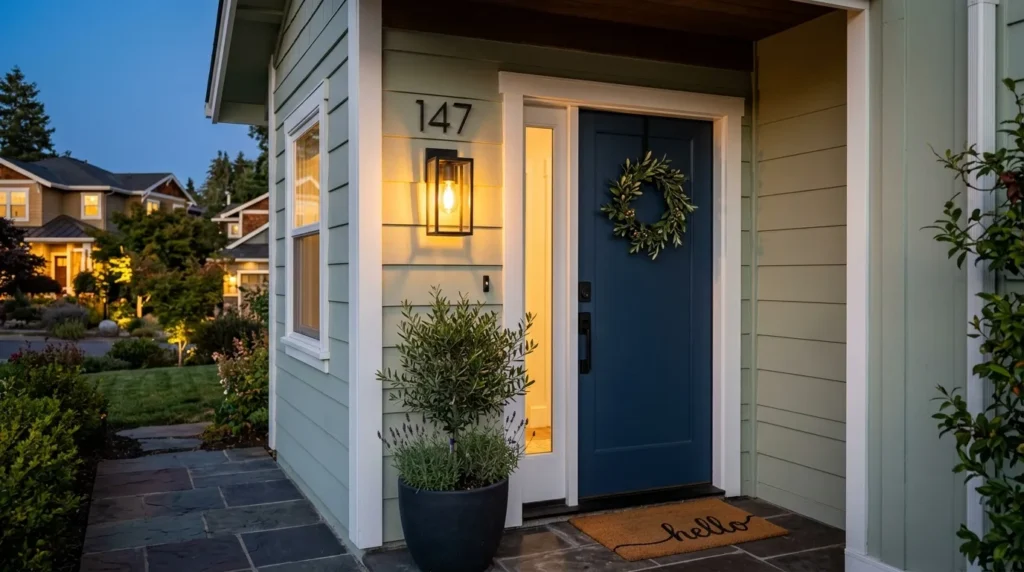
- Makes the entry safer and more welcoming at night
- Adds style without taking up any floor space
- Works with sconces, lanterns, pendants, and modern fixtures
- Looks best when matched with hardware or house numbers
- Helps the doorway feel polished during daytime and evening
Updated lighting can make a small entrance look safer, warmer, and more expensive at once. A dated porch light often makes the whole exterior feel tired, even if the rest of the area is clean. Replace it with a fixture that fits the size of the door and wall space. Lantern sconces, modern cylinders, farmhouse lights, and small pendant fixtures can all work depending on the porch design. Choose outdoor-rated materials that can handle rain, heat, cold, wind, and humidity in your region. Style and proportion matter here. Choose a finish that complements trim.
Lighting should be useful as well as beautiful, especially near steps or narrow landings. Warm white bulbs usually create a softer welcome than harsh blue-white light. If your entrance feels dark at night, consider dusk-to-dawn bulbs, motion-sensor fixtures, or smart outdoor lighting for convenience. Match the finish to nearby hardware, house numbers, or railing for a coordinated look. That’s why many designers recommend treating lighting as both decor and safety equipment. A brighter, better-scaled fixture can make guests feel comfortable before they even reach the door. It also improves evening curb appeal.
6. Seasonal Wreath
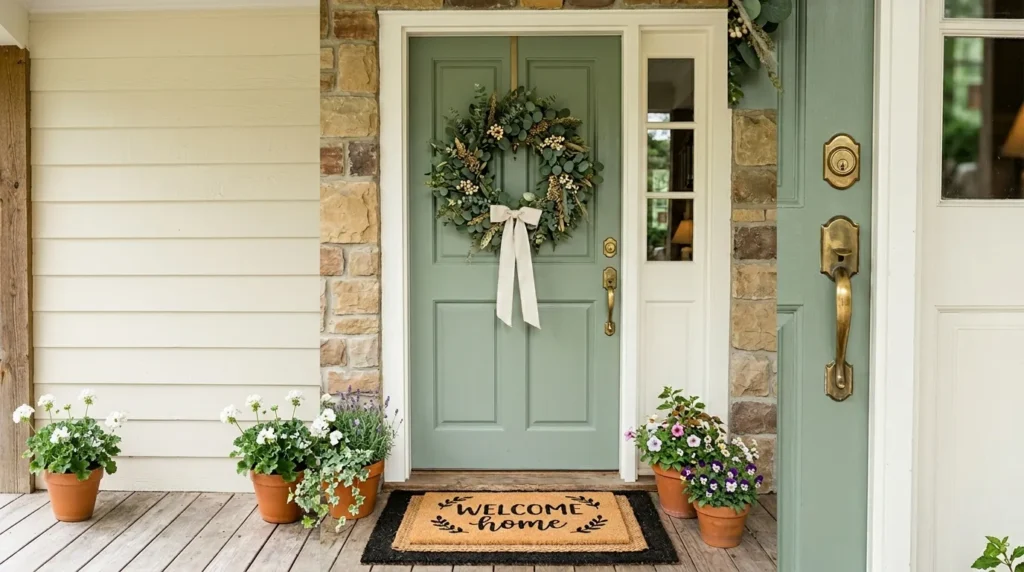
- Adds color and charm without using porch floor space
- Works for spring, summer, fall, winter, and holidays
- Looks beautiful with eucalyptus, magnolia, pine, florals, or ribbon
- Helps the door feel styled even with minimal decor
- Creates an easy focal point for curb appeal photos
A wreath gives a small entrance instant personality because it decorates vertically instead of taking floor space. It works on nearly every door style, from traditional wood to painted fiberglass or glass-paneled designs. The best wreaths connect with the season, exterior color, and overall mood of the home. Eucalyptus, olive branches, magnolia leaves, wildflowers, pine, berries, and simple grapevine bases can all look beautiful. Choose a size that fills the upper half of the door without blocking windows, hardware, or a peephole. This keeps the design pretty and functional. It also adds clear visual charm.
Seasonal wreaths are especially useful because they let the entry feel refreshed without major changes. A spring wreath can bring soft green and floral tones, while a fall wreath can add warm leaves, wheat, or dried textures. For winter, evergreen and ribbon can feel classic without looking busy. Use a sturdy outdoor hook, ribbon hanger, or magnetic holder depending on your door material. In my experience, the most timeless wreaths are full but not oversized. They create a welcoming focal point while keeping the entrance clean, simple, and easy to maintain.
7. Door Hardware
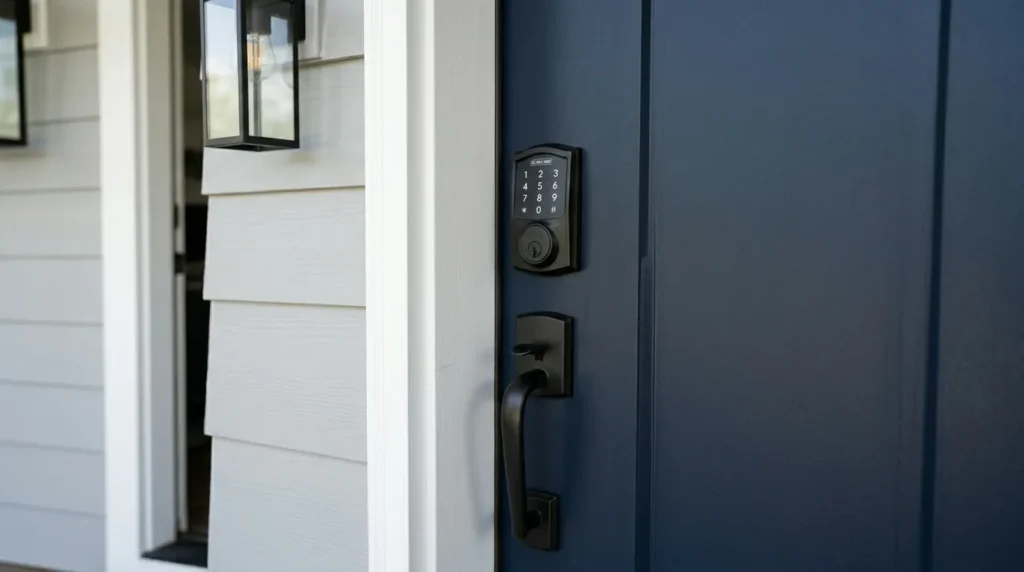
- Upgrades the entrance without changing the full door
- Adds polish through black, brass, bronze, or nickel finishes
- Improves security, comfort, and daily function
- Works with handles, levers, knobs, smart locks, and knockers
- Helps coordinate lighting, numbers, mailbox, and rail details
Door hardware can quietly upgrade the entire entry because people notice it up close. A scratched handle, faded lock, or builder-grade knob may make the doorway look older than it is. Replacing it with a matte black handle set, brushed brass knob, aged bronze lever, or smart lock adds polish and better function. The finish should coordinate with lighting, house numbers, mailbox, and railings if they are visible. This creates a pulled-together look that feels intentional rather than pieced together over time. It is a practical weekend update. It also feels fresh immediately.
Before buying new hardware, measure carefully so the replacement fits your door. Check the backset, borehole size, door thickness, and whether the door needs a left-handed or right-handed lever. For busy households, a keypad or smart lock can make daily routines easier, especially for kids, guests, or deliveries. If your hinges show, consider matching or updating them too. This is a small project with a noticeable result. It gives the entrance a cleaner, more secure, and more finished look without using any porch space at all. No floor space is needed at all.
8. Styled Steps
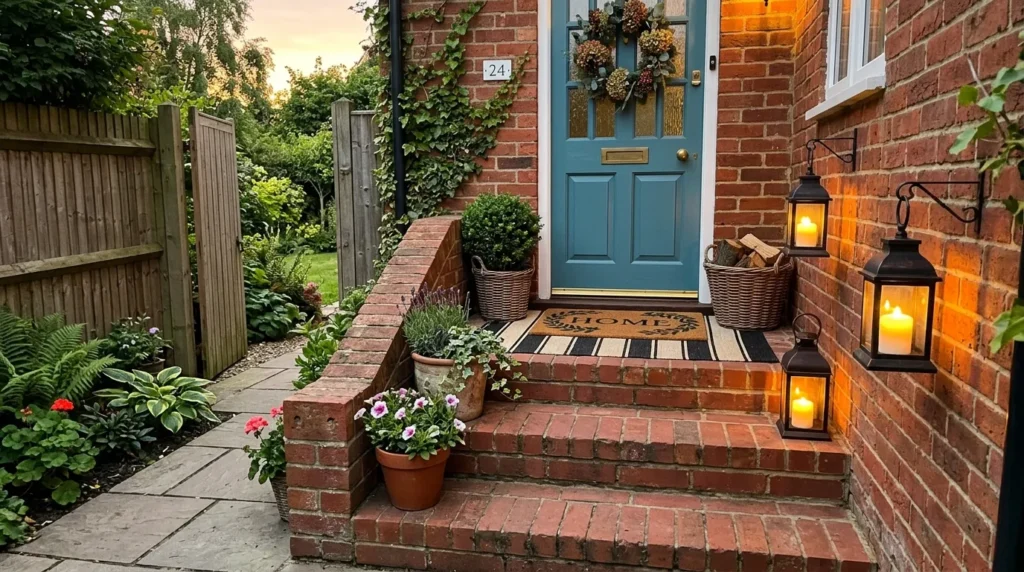
- Makes plain steps feel connected to the entry design
- Works with lanterns, pots, greenery, stair treads, and paint
- Keeps the approach beautiful while staying safe and open
- Adds charm to concrete, brick, stone, or wood steps
- Helps the entire entrance feel more finished from the curb
Step styling can turn plain concrete or brick steps into part of the overall design. Many small entries have only one or two steps, but those surfaces still affect the curb appeal. Add small planters, lanterns, or low greenery along one side while keeping the walking path open. If the steps are worn, consider power washing, painting concrete, staining wood, or adding slip-resistant outdoor stair treads. The goal is to make the approach feel cared for without creating obstacles where people need to walk. Safety should always guide the layout.
The best step arrangements use rhythm and restraint. Place decor on alternating sides, or group two items at the lower corner rather than lining every step. Lanterns look beautiful in evening light, but they should be heavy enough to resist wind. Small pots can work well if they do not block railings or foot traffic. For safety, avoid loose rugs on steps unless they are designed for outdoor stair use. I’ve noticed that clean, simple step styling often looks more expensive than crowded arrangements with too many small decorations. Keep the pathway open and comfortable.
9. Wall Accents
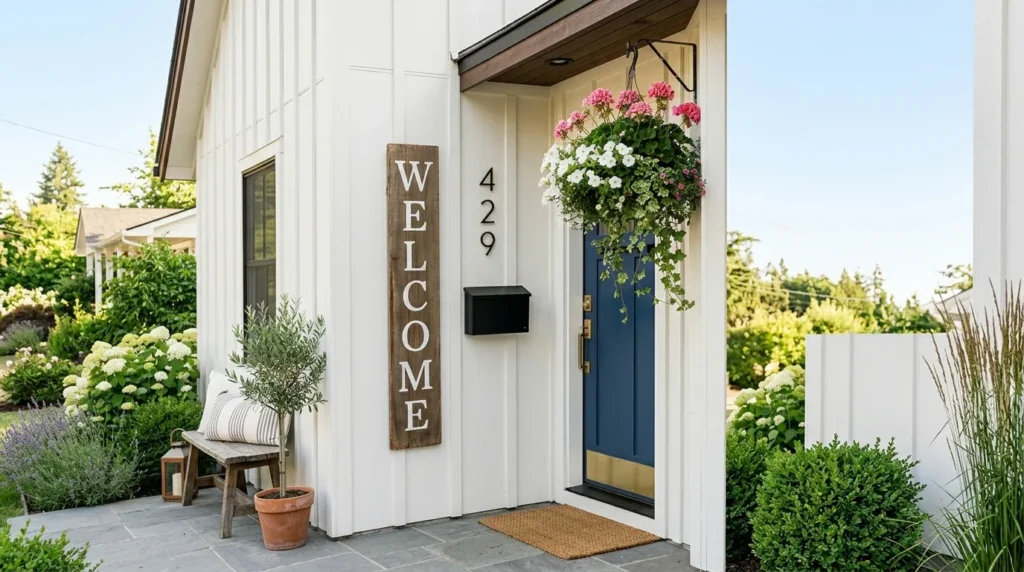
- Uses vertical space when the floor area is limited
- Works with welcome signs, plaques, mirrors, baskets, or mailboxes
- Adds personality without making the entry feel crowded
- Helps blank siding or brick feel more styled
- Looks best when scaled to the door and wall size
Wall accents can add style when the floor area is too limited for furniture or large planters. Think of the wall around the door as valuable design space, not empty background. A small address plaque, vertical welcome sign, outdoor mirror, hanging basket, mailbox, or decorative wall lantern can bring detail without crowding the porch. Choose pieces that are weather-safe and sized correctly for the wall. Oversized signs can look awkward on narrow entries, while tiny accents may disappear from the street and feel unbalanced beside the door. Scale and placement matter most.
The trick is choosing one or two wall details that support the doorway instead of distracting from it. A vertical sign can add height to a farmhouse-style entry, while a clean metal address plaque may suit a modern home. Hanging baskets work well for covered porches with enough shade and protection. If you use an outdoor mirror, place it where it reflects greenery or light, not clutter. This approach helps the entrance feel decorated while keeping the floor clear, which is especially helpful for townhouses, duplexes, and narrow stoops. That balance keeps the space practical.
10. Compact Greenery
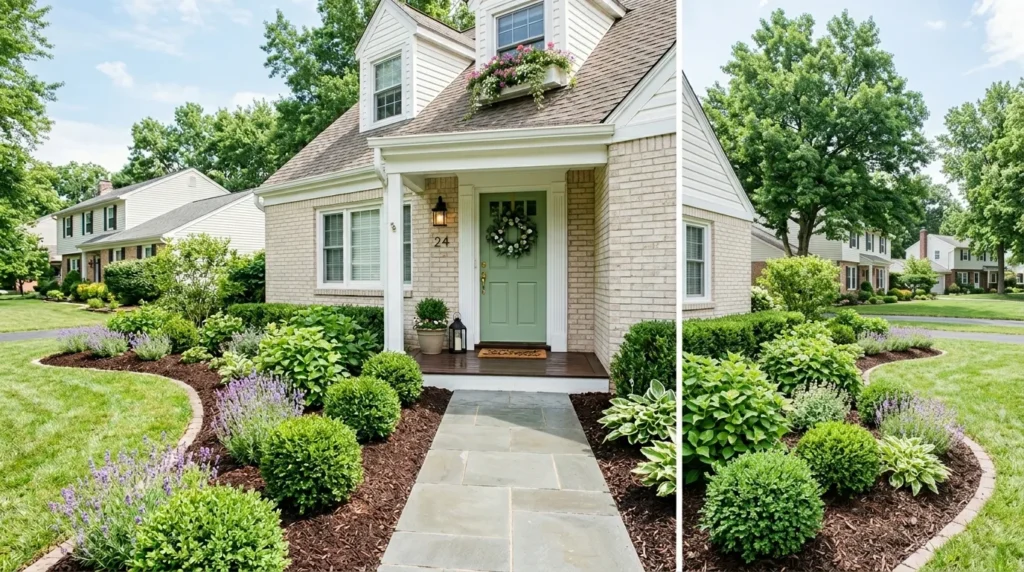
- Softens the entry without blocking the walkway
- Works with window boxes, small shrubs, vines, and low plants
- Adds color, texture, and natural curb appeal
- Helps connect the porch to the yard or front path
- Looks best with plants suited to local sunlight and climate
Small-scale greenery can soften an entry without overwhelming the walkway. Instead of large shrubs that crowd the door, choose compact plants, trailing vines, window boxes, or narrow foundation beds. Greenery helps connect the house to the yard and makes the entrance feel more alive. For a clean look, use plants with repeated textures or colors instead of too many random varieties. Boxwood, dwarf holly, lavender, creeping Jenny, ferns, heuchera, and compact hydrangeas can all work depending on the light, local climate, and maintenance level. Choose plants that suit your region.
A good greenery plan should be easy to maintain and safe to walk around. Keep plants trimmed below windows, away from door swings, and clear of steps. Use mulch or stone to create a finished edge, and choose planters with drainage to protect porch surfaces. If your home has a tiny front bed, repeat one plant type on both sides for balance. That’s why many designers recommend simple planting layers near small entries. They create softness, color, and curb appeal without making the entrance feel crowded or messy. This keeps maintenance simple through changing seasons.
11. Balanced Styling
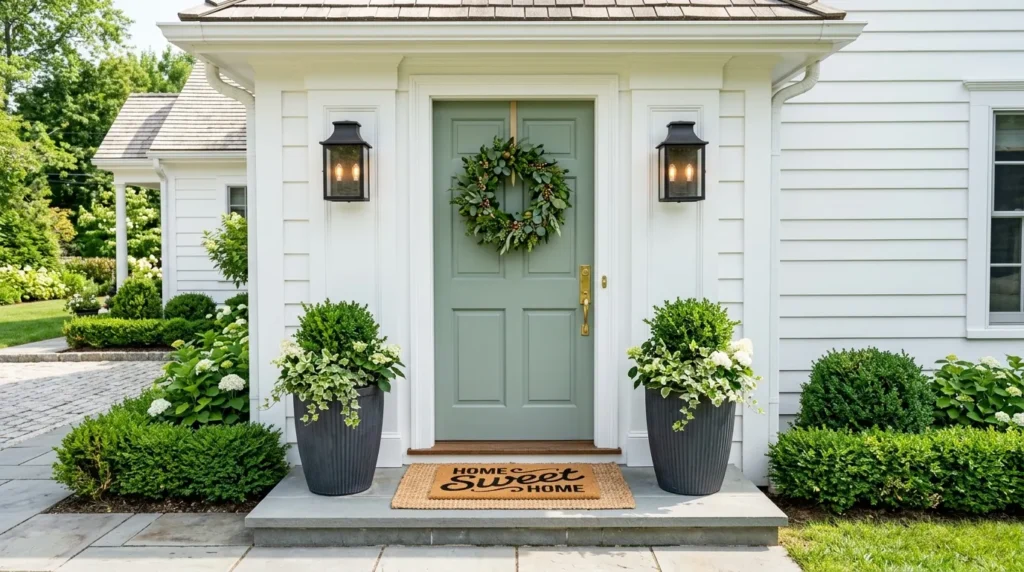
- Creates a calm and polished look from the street
- Works with matching planters, lights, wreaths, mats, or lanterns
- Helps tight entries feel organized instead of busy
- Makes photos look cleaner and more Pinterest-ready
- Gives the entrance a designer-inspired sense of order
Symmetry can make a small entrance feel calmer, cleaner, and more polished. Matching planters, lanterns, sconces, topiaries, or mats create visual order that looks good from the street and in photos. Even if the porch is not perfectly centered, repeating shapes and materials can create balance. This is especially helpful for narrow entries because too many different items can feel chaotic quickly. A simple pair of tall planters or matching lights often looks more upscale than several unrelated decorations placed around the door. This works especially well in photos. It works for almost any style.
Symmetry does not always mean everything must match exactly. If one side has less room, use visual weight instead of identical pieces. A planter on one side can balance a lantern cluster or small bench on the other if the colors and heights relate. Keep the center path clear so the entry remains practical. I’ve seen this work well in many homes because balanced styling makes the doorway feel designed, not accidental. It also photographs beautifully, which matters for Pinterest, real estate listings, and everyday curb appeal. The balanced look feels calm and welcoming.