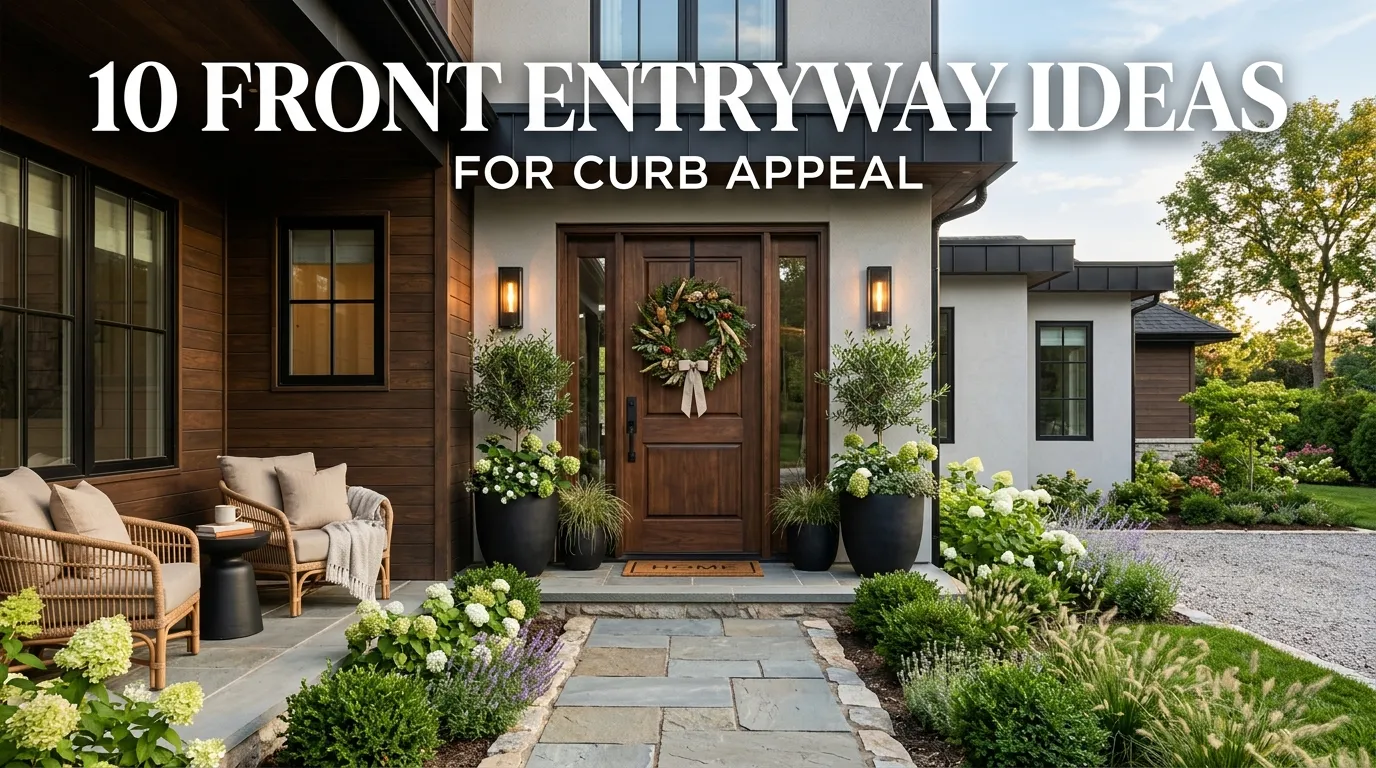
10 Front Entryway Ideas for Curb Appeal
Introduction
Your home’s entrance is one of the first things people notice, even before they look closely at the landscaping, siding, porch, or windows. It tells guests what kind of mood to expect inside. A clean, styled, and welcoming entrance can make a modest home feel cared for, while a neglected one can make even a beautiful house look unfinished. That is why curb appeal matters so much for USA homeowners, especially if you want your home to feel inviting, photograph beautifully, or make a stronger impression from the street.
The good news is that you do not need a full exterior renovation to create a noticeable upgrade. Many of the best improvements are simple, affordable, and weekend-friendly. Paint, lighting, planters, mats, hardware, seating, greenery, and small styling details can completely change the way your doorway feels. These updates work for suburban homes, townhouses, farmhouse porches, craftsman-style houses, brick homes, coastal cottages, and even small apartment entries.
A beautiful Front Entryway should feel practical as well as pretty. It should be easy to walk through, safe at night, simple to maintain, and connected to the rest of your exterior. The goal is not to overcrowd the space with decor. The goal is to create a clear, balanced, welcoming area that looks polished in real life and Pinterest-ready in photos.
Below are 10 curb appeal ideas that focus on visual impact, useful materials, easy styling, and realistic updates. Each idea can stand alone, but the best results usually come from combining two or three. Start with the detail that feels most outdated, then build from there.
1. Painted Door
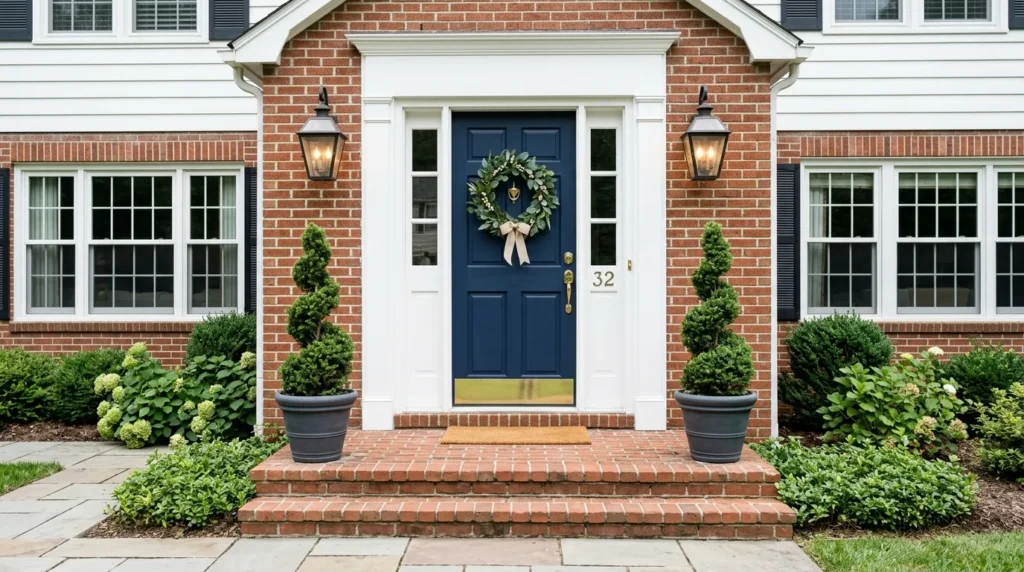
- Creates an instant focal point without changing the full exterior
- Works with brick, siding, stucco, stone, and painted trim
- Adds personality through classic, bold, or soft color choices
- Looks best with durable exterior paint in satin or semi-gloss finish
- Helps wreaths, hardware, lighting, and planters feel more intentional
Your home’s entrance creates the first impression before anyone steps inside. A freshly painted door can make an ordinary exterior feel intentional, updated, and welcoming without requiring a full remodel. The right color should connect with your siding, roof, shutters, landscaping, and overall neighborhood style. Deep blue, warm black, olive green, brick red, and classic white all work beautifully depending on the home. In my experience, satin or semi-gloss exterior paint gives the best balance of durability, cleanability, and visual polish for busy American homes year-round, especially in changing weather.
A painted door also gives you a clear focal point for decorating through every season. Once the color feels finished, simple details like a wreath, brass knocker, black lanterns, or potted mums instantly look more styled. Before painting, clean the surface, sand rough areas, prime bare spots, and remove or tape hardware carefully. A smooth finish matters because doors catch direct attention. This update works for small porches, farmhouse entries, suburban homes, townhouses, and even rentals where the landlord allows exterior cosmetic changes near the main entrance without major construction.
2. Layered Doormats
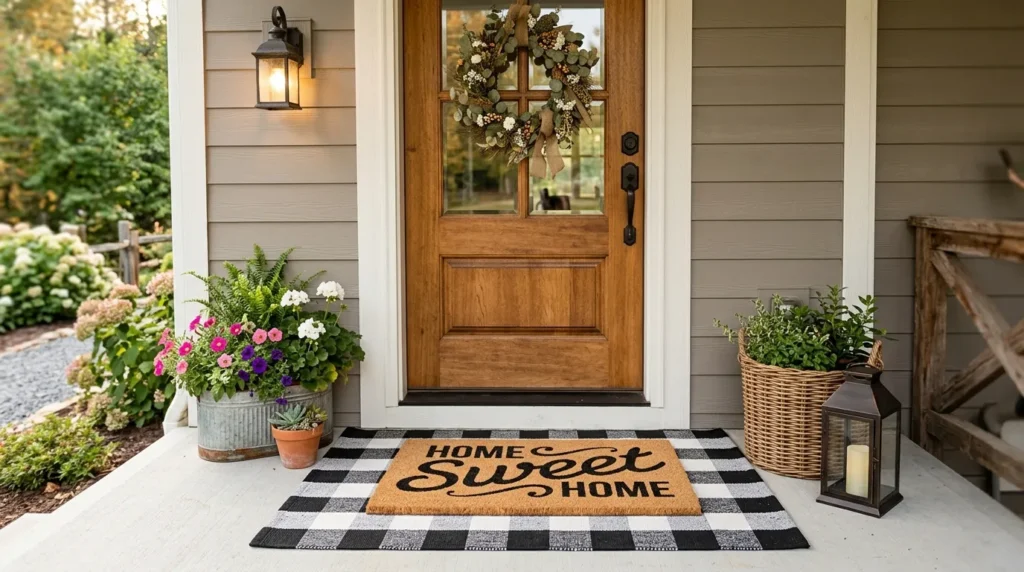
- Adds texture and pattern right at the doorway
- Makes a small stoop or porch feel styled without bulky decor
- Lets you change the look easily for seasons and holidays
- Combines a washable outdoor rug with a practical coir mat
- Works well for farmhouse, modern, cottage, and casual home styles
Layered mats make the entrance feel decorated before guests even reach the door. This simple styling trick uses one larger outdoor rug underneath a smaller doormat to create texture, color, and personality. A black-and-white check rug, natural jute-look outdoor rug, striped mat, or neutral woven base can instantly frame the doorway. Then the top mat adds the practical message or seasonal design. The combination feels fuller than a single mat and works especially well for porches, stoops, apartment entries, and covered suburban doorways in every season easily.
This idea is easy to change throughout the year, which makes it perfect for Pinterest-friendly curb appeal. Use a washable outdoor rug as the base and choose a coir mat on top for scraping shoes. In fall, add warm plaid or rust tones. In spring, switch to soft stripes or fresh neutrals. Make sure the bottom rug is wider than the doormat so the layered look is visible. I’ve noticed this small detail often makes the whole porch feel more complete, welcoming, and thoughtfully styled for guests on a tight budget.
3. Statement Lighting
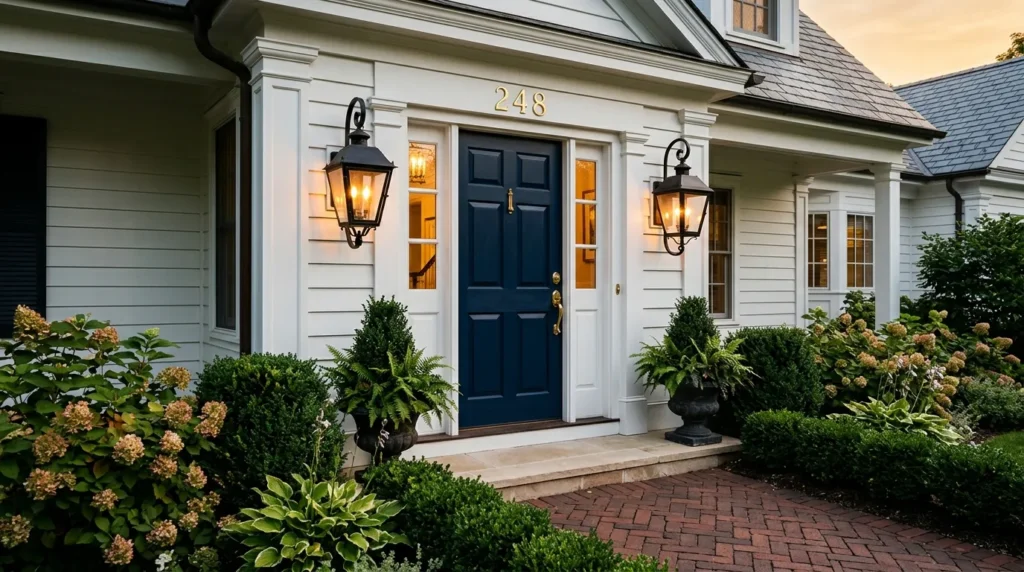
- Improves curb appeal during both daytime and evening hours
- Makes the doorway feel safer, warmer, and more finished
- Works with lanterns, sconces, pendants, or modern outdoor fixtures
- Looks best when the finish matches hardware or house numbers
- Adds a polished designer look without taking up floor space
Good lighting can make an entry look safer, warmer, and more expensive at the same time. A dated porch fixture can quietly drag down the whole exterior, even when the door and landscaping look nice. Replacing it with a lantern, sconce pair, pendant, or modern cylinder light can sharpen the entire view. Choose a finish that connects with your door hardware, house numbers, or mailbox. Black, bronze, brass, and aged nickel are popular because they feel classic but still work with modern American home styles and older houses across many neighborhoods.
The best fixture size depends on your door height, porch ceiling, and wall space. A tiny light beside a tall door can look awkward, while an oversized fixture may crowd a narrow stoop. That’s why many designers recommend measuring first and choosing outdoor-rated materials that can handle rain, sun, and temperature changes. Warm white bulbs usually create the most welcoming glow. For extra function, consider dusk-to-dawn bulbs or smart outdoor lighting. The result is a brighter, more polished entrance that feels useful, safe, and inviting after sunset nightly.
4. Seasonal Planters
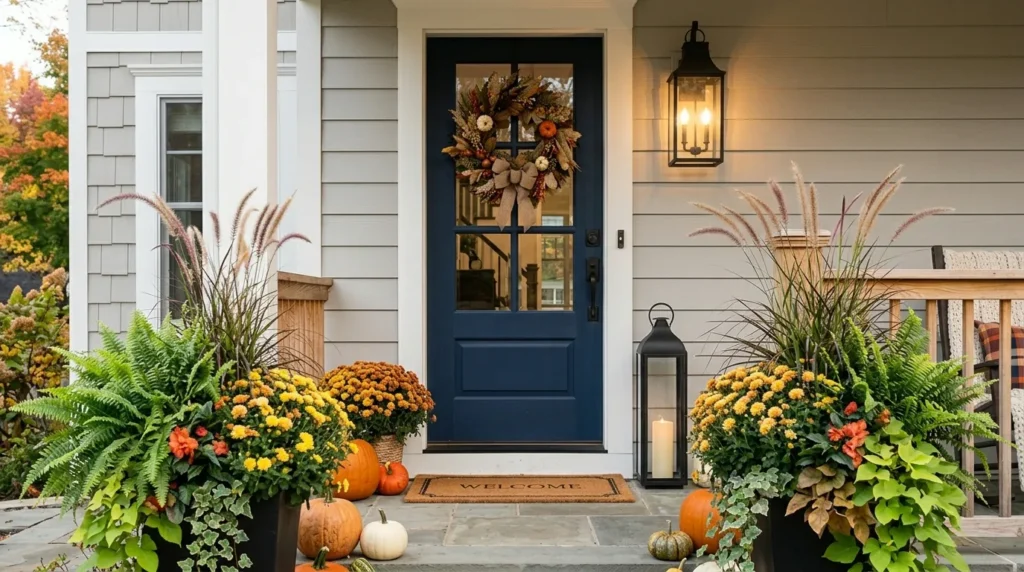
- Adds natural color, height, and softness around the doorway
- Helps frame the door without permanent construction
- Works with flowers, evergreens, grasses, ferns, or small shrubs
- Makes the porch feel fresh in spring, summer, fall, and winter
- Looks best in containers that match the home’s exterior style
Planters bring life, height, and color to an entrance faster than almost any other decor piece. They soften hard surfaces like concrete, brick, siding, and stone while making the doorway feel cared for. A pair of tall planters can frame the door beautifully, while smaller pots can fill steps or porch corners. For a classic look, use evergreens, boxwoods, ferns, hydrangeas, mums, or ornamental grasses. Choose containers that match your exterior style, such as black urns, terracotta pots, wood boxes, or sleek concrete planters through every season outdoors near walkways.
The most practical planter setups are beautiful but easy to maintain. If your doorway gets full sun, choose plants that tolerate heat, such as geraniums, lavender, salvia, or sweet potato vine. For shade, try ferns, hostas, caladiums, or impatiens. Use quality potting mix, drainage holes, and saucers where needed to protect porch surfaces. I’ve seen this work well in many homes because plants make the entry feel alive and seasonal. Even two simple pots can turn a plain doorway into a polished welcome point with real charm.
5. House Numbers
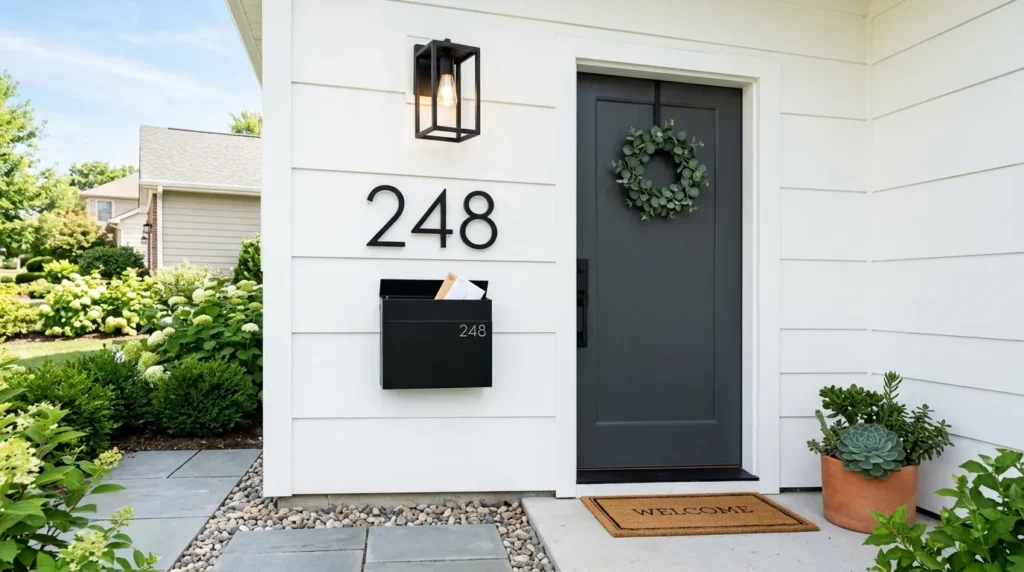
- Makes the home easier to identify from the street
- Adds a clean, modern, and organized exterior detail
- Works on siding, porch columns, plaques, or planter boxes
- Looks best with strong contrast and weather-resistant materials
- Coordinates well with lighting, mailbox, railing, and door hardware
House numbers are small, but they have a surprisingly strong effect on curb appeal. Clean, visible numbers make a home feel updated, organized, and easier for guests, delivery drivers, and emergency services to find. Old faded numbers, tiny plaques, or mismatched styles can make the exterior look neglected. Modern metal digits, black numbers on white trim, brass numbers on dark siding, or a custom plaque near the door can create an instant upgrade. The key is choosing a size and finish that reads clearly from the street during the day.
A number update works best when it connects with nearby exterior details. Match the finish to your lighting, door handle, mailbox, or railing so the entry feels coordinated rather than random. Mount the numbers on siding, a porch column, a planter box, or a clean address plaque depending on visibility. Use weather-resistant materials like stainless steel, powder-coated metal, brass, or acrylic. In my experience, simple numbers with strong contrast look better and function better than overly decorative styles, especially for homes set back from the road or shaded by trees.
6. Porch Seating
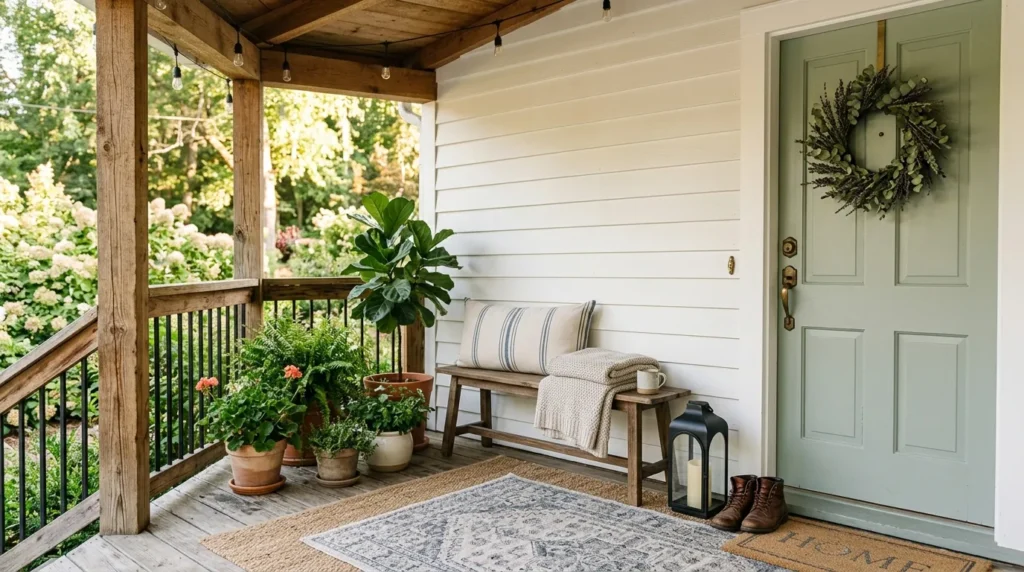
- Makes the entrance feel warm, useful, and lived-in
- Adds comfort without needing a large porch remodel
- Works with benches, rocking chairs, stools, or compact accent chairs
- Creates a practical spot for bags, shoes, coffee, or seasonal decor
- Looks best with weather-safe cushions, wood, metal, or wicker materials
Seating makes an entrance feel less like a pass-through and more like a welcoming outdoor room. Even a small bench, rocking chair, or compact stool can soften the space and make the porch feel intentionally designed. It also gives you a practical spot for setting bags, removing muddy shoes, or enjoying morning coffee. Choose weather-resistant materials like teak, powder-coated metal, resin wicker, or treated wood. Add an outdoor cushion in a color that connects with the door, planters, or seasonal decor for a complete look and extra comfort outside in comfort.
The right seating scale matters more than the amount of furniture. A large bench can overwhelm a narrow porch, while a tiny chair may disappear beside a tall doorway. Leave enough walking space so guests can move easily to the door. For small entries, try a slim bench or single accent chair with a side planter. For larger porches, two chairs with a small table can create balance. I’ve noticed seating instantly makes exterior photos feel more inviting because it suggests comfort, rest, and real everyday use for family life.
7. Walkway Border
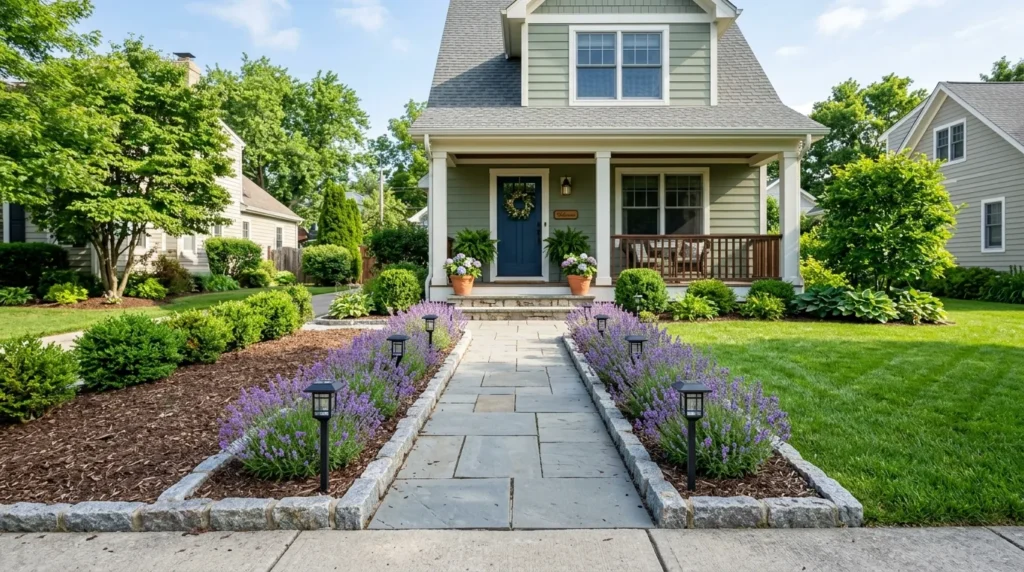
- Creates a clear path from the yard or driveway to the door
- Makes basic concrete, brick, gravel, or paver paths feel finished
- Adds structure with plants, edging, mulch, lighting, or stone
- Improves safety and visual flow around the entrance
- Helps guide the eye naturally toward the main doorway
A defined walkway makes the entrance feel easier to approach and more visually connected to the yard. Whether your path is concrete, brick, pavers, gravel, flagstone, or stepping stones, the border can make it look more finished. Add low plants, edging stones, solar lights, mulch, or small shrubs along the sides to guide the eye toward the door. This works especially well for USA homes with front lawns, long driveways, or basic builder-grade paths that need more shape, direction, and personality near the curb every day with clear purpose clearly.
Walkway borders also improve function by separating the path from grass, mulch, and flower beds. Use metal edging for a clean modern look, brick for traditional charm, or natural stone for a softer cottage feel. Low-maintenance plants like liriope, lavender, dwarf boxwood, creeping thyme, or ornamental grasses can create structure without blocking the view. Keep plant heights low near the path so the walkway remains safe and open. The finished result feels more intentional, making guests naturally follow the route to your door with confidence through the landscape at night.
8. Door Hardware
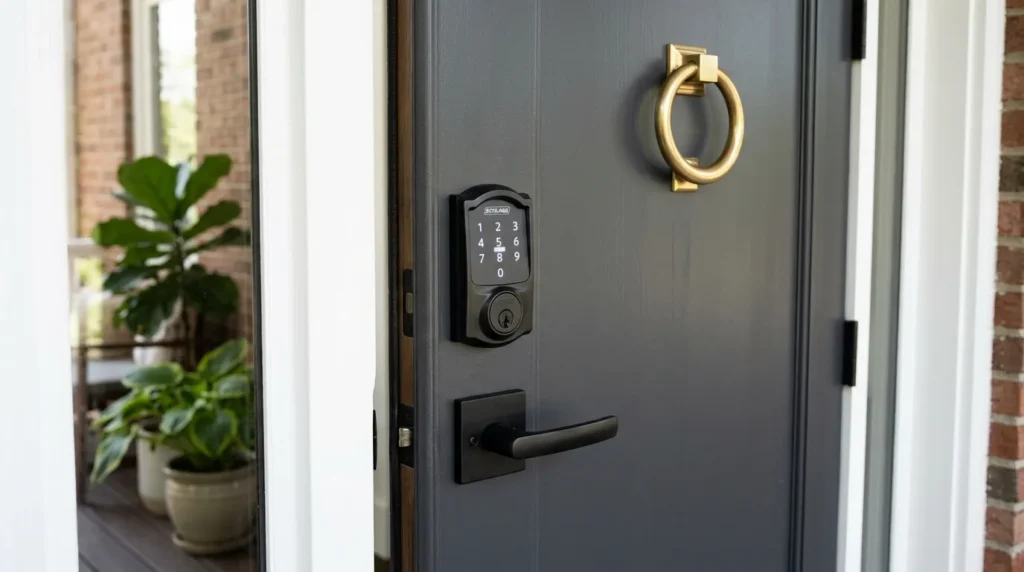
- Refreshes the door without repainting or replacing it
- Adds a polished detail guests notice up close
- Works with smart locks, handle sets, knobs, levers, and knockers
- Looks best when finishes match nearby exterior metals
- Improves both everyday function and visual curb appeal
Door hardware is one of those details people notice up close, even when they cannot explain why the entrance feels polished. A worn handle, scratched lockset, or outdated knob can make the whole door feel tired. Replacing it with a clean handle set, smart lock, brass knob, matte black lever, or aged bronze hardware gives the area a sharper finish. The style should match the home’s architecture, whether it is craftsman, colonial, farmhouse, modern, or traditional suburban with classic exterior trim near the porch every single day outside beautifully.
This upgrade also improves daily function, not just appearance. A sturdy handle feels better in the hand, and a smart lock can add convenience for families, guests, or service providers. Before buying, check door thickness, backset measurements, lock type, and whether you need a left-handed or right-handed setup. Match hinges if they are visible, or at least keep metal tones coordinated. That’s why many designers recommend treating hardware like jewelry for the door. It adds shine, contrast, and a finished look without taking much space or budget for a weekend refresh.
9. Exterior Greenery
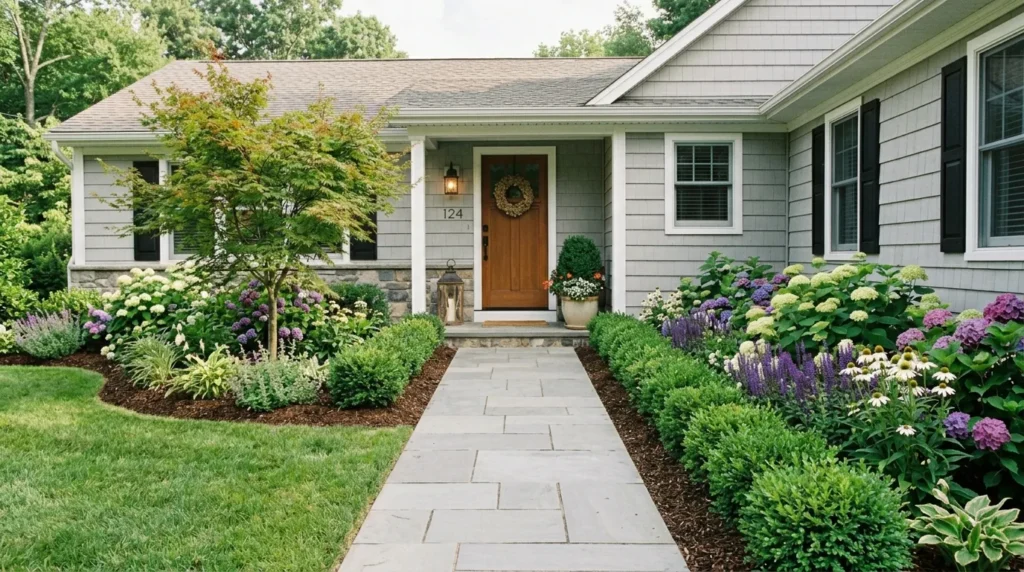
- Softens the home’s exterior and adds a fresh, established look
- Works with shrubs, flower beds, window boxes, vines, or small trees
- Helps connect the porch, walkway, yard, and doorway
- Adds seasonal color while improving the overall curb view
- Looks best when plant sizes match the home’s scale and sunlight
Greenery around the entrance can make the whole home feel softer, fresher, and more established. Instead of relying only on porch decor, use landscaping to frame the approach naturally. Foundation shrubs, small trees, climbing vines, window boxes, and layered flower beds can all support the entry view. The goal is not to hide the house, but to guide attention toward the door. Boxwood, hydrangea, holly, lavender, dwarf spruce, and seasonal flowers are popular choices because they add structure, color, texture, and welcoming movement throughout the year beautifully in every season.
The best greenery plan considers sunlight, climate zone, maintenance level, and mature plant size. A plant that looks cute at the nursery may block windows or crowd the walkway after a few seasons. Keep taller plants near corners, medium shrubs near the foundation, and lower flowers close to paths or steps. Mulch helps control weeds and gives beds a clean finished edge. I’ve seen this work well in many homes because thoughtful greenery makes even a simple exterior feel warmer, healthier, more layered, and more welcoming from the street easily.
10. Symmetrical Styling
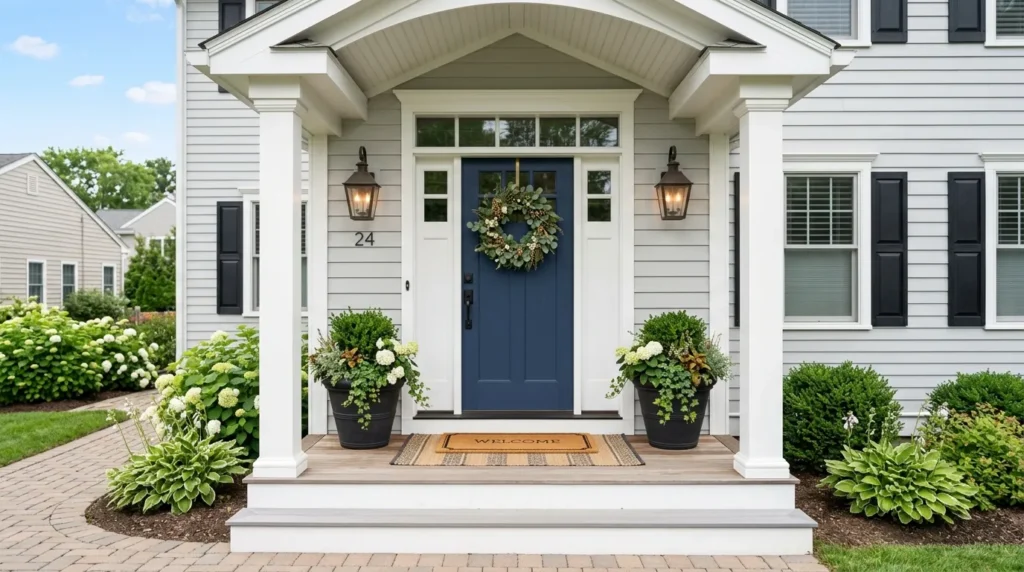
- Creates a balanced, polished view from the street
- Works with matching planters, lanterns, topiaries, chairs, or wreaths
- Makes the doorway look intentional without overdecorating
- Helps small porches feel cleaner and more organized
- Gives exterior photos a strong Pinterest-friendly layout
Symmetry gives an entrance a calm, balanced look that feels instantly pleasing from the street. Matching planters, lanterns, wreaths, topiaries, chairs, or sconces can make even a simple doorway look more custom. This approach works well because the eye naturally likes order, especially around the main door. You do not need everything to be identical, but repeating shape, height, color, or material creates a clean rhythm. It is a reliable styling method for colonial, craftsman, farmhouse, and modern homes with visible porch space and clean lines outside with simple repetition.
Symmetrical styling is also practical because it simplifies decorating decisions. Start with the largest matching elements, such as two planters or two lights, then layer smaller accents carefully. If one side of the entrance has a wall and the other is open, use visual weight instead of exact matching. A planter on one side can balance a bench on the other when colors and heights feel connected. The final look feels polished, steady, and welcoming, which helps the doorway photograph beautifully for listings, Pinterest, and everyday curb appeal all year.