11 Modern Home Office Decor Ideas
Introduction
A well-designed work space can change the way your entire day feels. When your desk is cluttered, lighting is harsh, chair feels uncomfortable, and supplies are scattered everywhere, remote work becomes harder than it needs to be. But when your work area feels calm, clean, and thoughtfully styled, it becomes easier to focus, take calls, plan projects, and end the day without feeling surrounded by visual stress.
For USA homeowners, apartment renters, freelancers, students, and remote workers, a Modern Home office does not have to mean a huge room or expensive furniture. It can be a quiet bedroom corner, a small wall near a window, a converted closet, or a polished desk setup in the living room. The secret is choosing decor that looks beautiful and also supports real daily work.
These ideas focus on comfort, storage, lighting, texture, background styling, and small details that make your office feel intentional. Each one is Pinterest-friendly but also practical enough for everyday use.
1. Neutral Desk
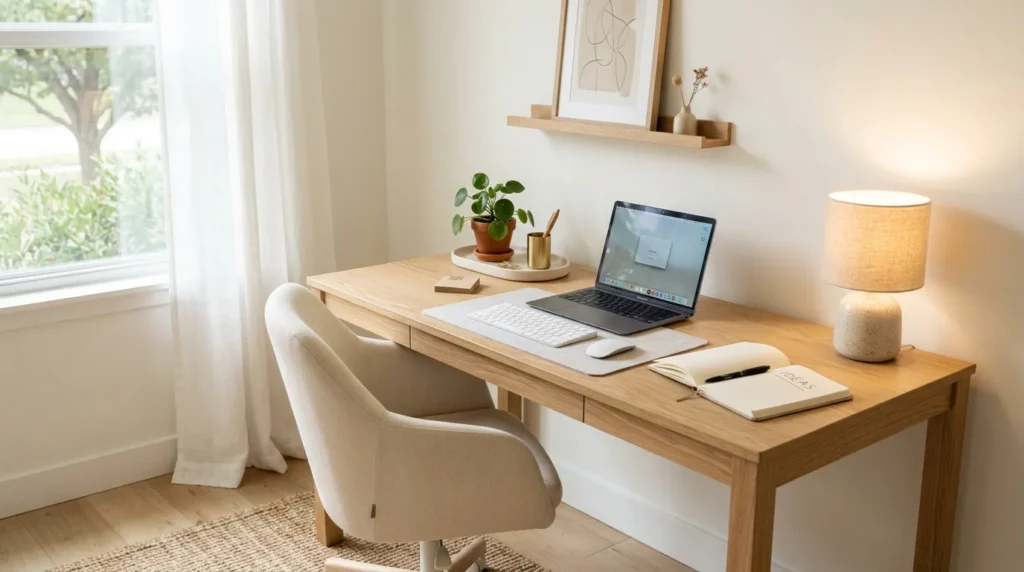
- Choose a white, black, oak, walnut, or light wood desk for a clean base.
- Keep the desktop open with only daily essentials visible.
- Add a tray, small lamp, and one decorative object for balance.
- Use hidden drawers or baskets to reduce paper clutter.
- Match the desk finish with nearby shelves, frames, or chair legs.
A neutral desk creates the foundation for a calm and focused workspace. This idea works because the desk is usually the largest visual piece in the office area, so its color and shape set the tone for everything else. A clean white desk feels bright and airy, while warm wood adds softness and comfort. Black or walnut can feel more polished and dramatic. In my experience, simple desks with clean lines are easier to decorate because they do not compete with shelves, lighting, rugs, or wall art.
The transformation comes from styling the surface with restraint. Keep your laptop, monitor, notebook, and one small tray within reach, then store everything else in drawers or baskets. Add a ceramic cup for pens, a small plant, or a warm lamp to keep the desk from feeling cold. Avoid filling every inch with decor because open space is part of the design. This setup works beautifully for remote workers who want a work area that feels organized, calm, and easy to reset every evening.
2. Floating Shelves
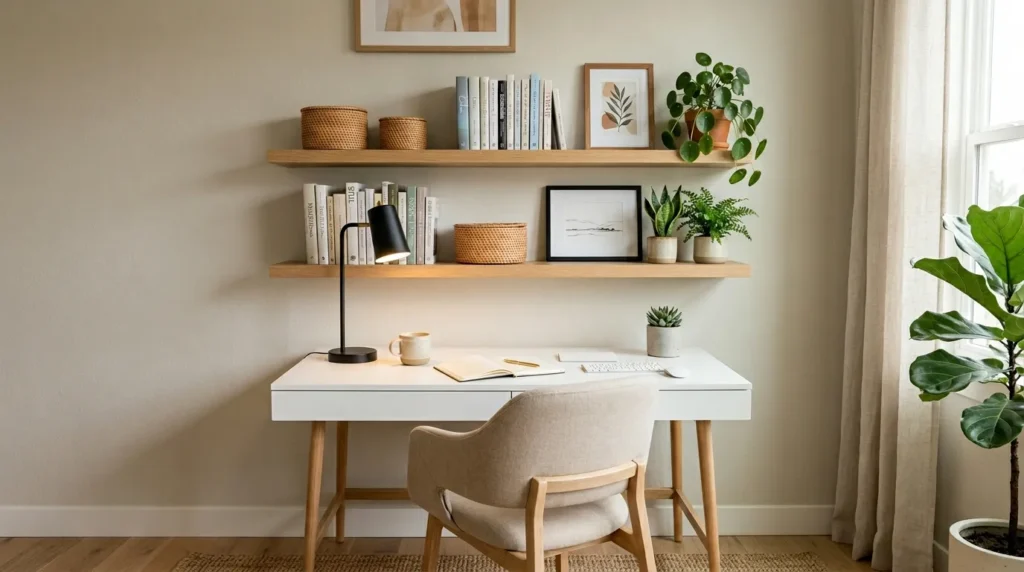
- Install floating shelves above or beside the desk for vertical storage.
- Mix books, baskets, small plants, framed art, and useful office supplies.
- Keep shelf colors connected to the desk or room furniture.
- Leave empty space between items so the shelves do not feel crowded.
- Use matching boxes to hide chargers, cords, papers, and extra tools.
Floating shelves make a work area feel custom without needing built-in cabinets. They use empty wall space wisely, which is especially helpful in apartments, bedrooms, and small office corners. The best shelves hold both useful items and beautiful details, so the setup feels practical but still styled. That’s why many designers recommend mixing storage with decor. A few books, a woven basket, a framed print, and a small plant can make a simple desk wall look finished without overwhelming the room.
The final result should feel balanced, not packed. Place heavier items lower and lighter decor higher so the arrangement looks natural. Use baskets or closed boxes for messy items like chargers, sticky notes, printer supplies, and extra cables. If your desk is used for video calls, style the shelves so they look clean in the background. This idea is perfect for anyone who wants an office wall that feels Pinterest-ready while still helping with daily organization, planning, and work supplies.
3. Statement Chair
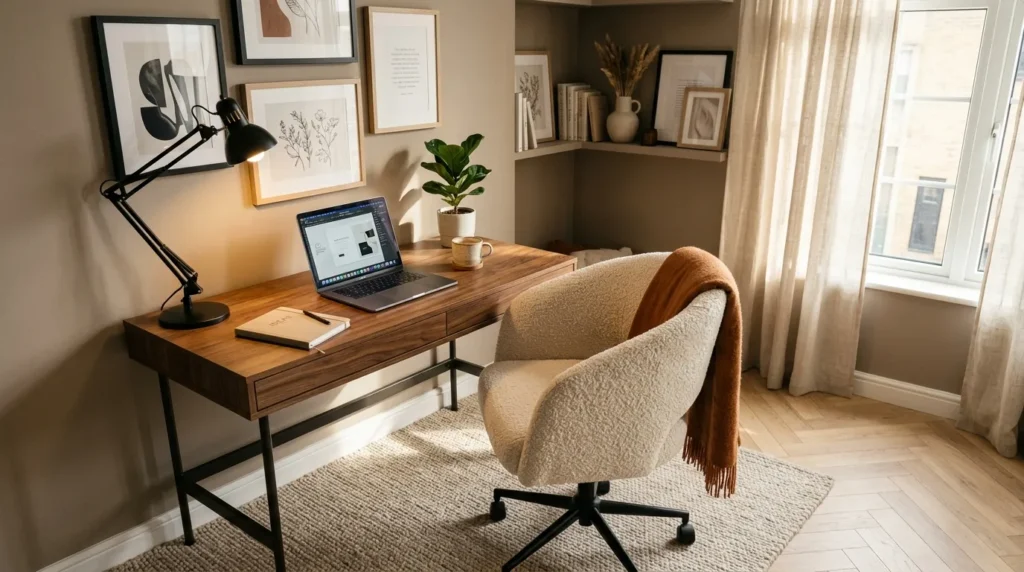
- Choose a chair that supports your body and matches the room style.
- Look for soft upholstery, leather, boucle, mesh, or molded modern shapes.
- Pick adjustable height and back support if you work long hours.
- Use color carefully, such as black, cream, tan, olive, or soft gray.
- Add a small lumbar pillow if you need comfort without changing the chair.
A statement chair can make your workspace look styled while improving comfort. The chair is one of the most visible pieces in the room, especially if your desk faces outward or appears on video calls. A beautiful chair should still support your body, because remote work often means long sitting sessions. Cream upholstery feels soft and elegant, black leather feels sharp, tan adds warmth, and light gray blends easily with neutral rooms. The goal is to choose something that looks intentional and feels good.
The right chair can instantly upgrade the whole office corner. Instead of using a random dining chair, choose one that fits your posture, desk height, and daily routine. If you need extra support, add a slim lumbar pillow in a matching fabric. For a softer look, pair a structured chair with a textured rug or warm wood desk. For a cleaner look, choose a chair with simple legs and minimal details. This idea works because comfort and decor meet in one important piece.
4. Layered Lighting
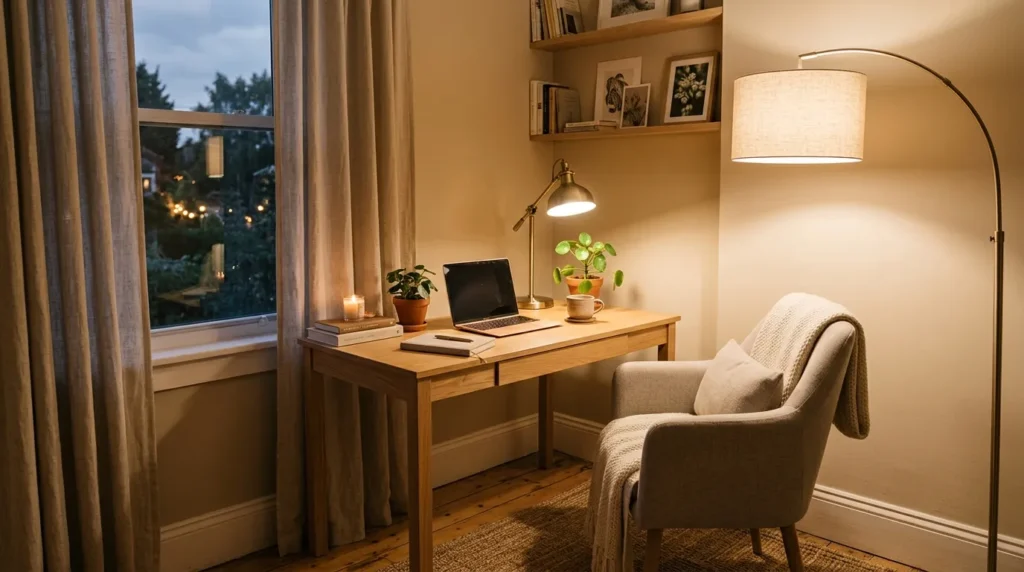
- Use a desk lamp for focused tasks like reading, writing, and planning.
- Add a floor lamp or wall sconce to soften the room after sunset.
- Choose warm white bulbs for a comfortable, inviting work mood.
- Avoid relying only on harsh overhead ceiling lights.
- Place lighting where it improves both work comfort and video-call appearance.
Layered lighting makes an office feel warm instead of flat. Many workspaces rely on one ceiling light, which can create shadows, glare, and a cold mood by late afternoon. A better setup combines natural light, a desk lamp, and soft background lighting. This makes the space more comfortable throughout the day and helps your eyes adjust as lighting changes. I’ve noticed that even a simple lamp upgrade can make a desk feel more inviting, especially during winter months or evening work sessions.
The transformation is both practical and visual. A task lamp helps you focus on paperwork, while a floor lamp or wall sconce gives the room a softer glow. Choose brass, matte black, ceramic, glass, or wood finishes depending on your decor style. If you take video calls, keep light in front of you rather than behind you so your face appears clear. Good lighting makes the workspace feel designed, but it also makes real work easier, calmer, and less tiring.
5. Cable Station
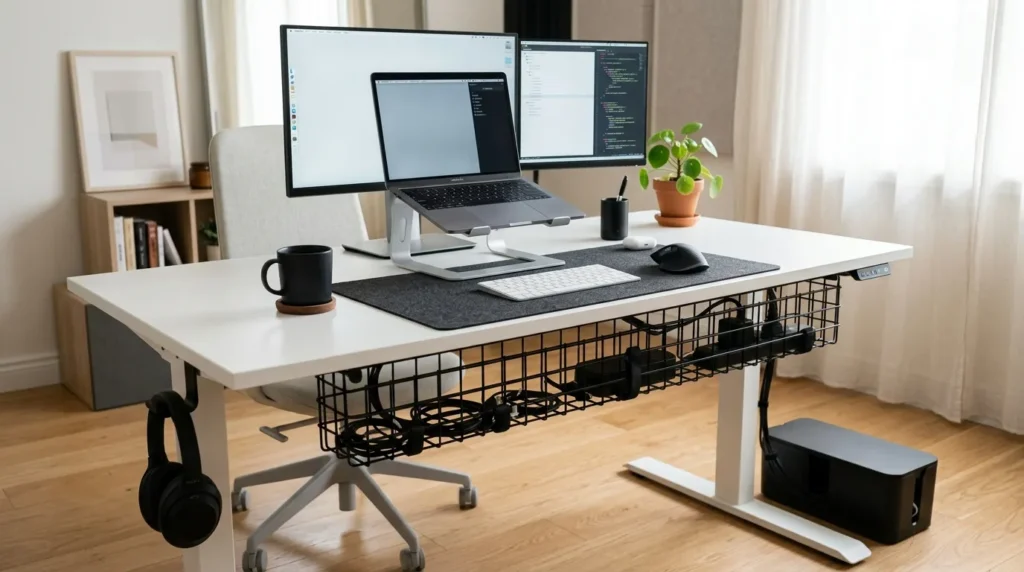
- Use cable clips, cord sleeves, boxes, or under-desk trays to hide wires.
- Keep chargers grouped in one area instead of spread across the desk.
- Label cords if you use multiple devices for work.
- Place a power strip under or behind the desk for a cleaner surface.
- Choose wireless accessories where possible to reduce visual clutter.
Cable clutter can make even the most beautiful desk look messy. Wires from monitors, laptops, chargers, lamps, speakers, and phones quickly create a tangled look that distracts from the rest of the decor. A clean cable station solves this problem by giving cords a hidden path and a dedicated home. This does not require expensive tools. Simple cord clips, sleeves, Velcro ties, and an under-desk tray can make the whole setup feel cleaner within an hour.
The finished space feels lighter because your eye is not constantly catching on messy wires. Mount a power strip under the desk, route cords down one side, and use a cable box if plugs are visible on the floor. Keep daily chargers in one tray or drawer so they do not spread across the surface. This idea is especially important for shared rooms, small apartments, and open-plan spaces where the office area is always visible. Clean cords make the whole room feel more peaceful.
6. Textured Rug
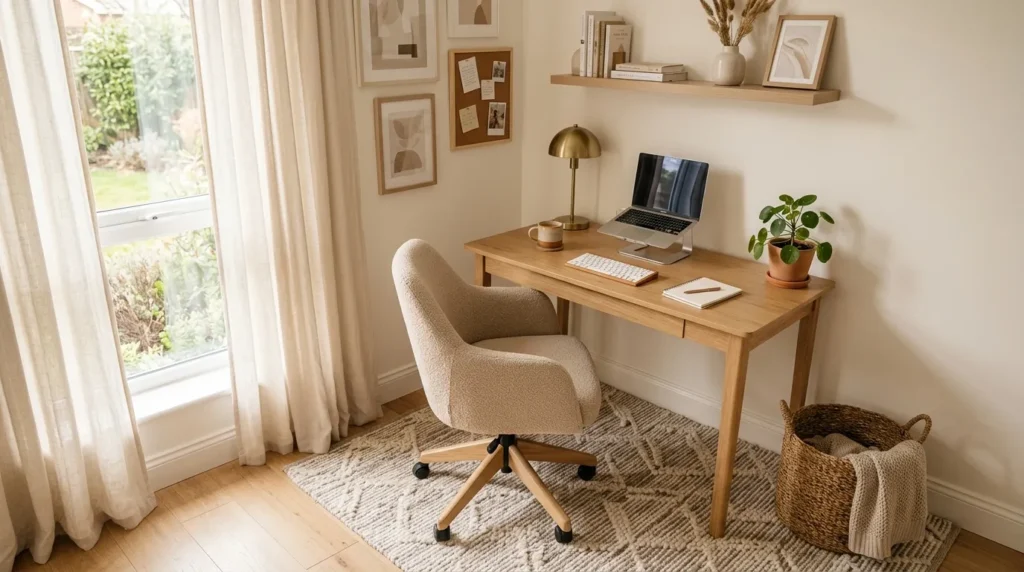
- Add a rug under the desk to define the work zone visually.
- Choose low-pile rugs so the chair can move smoothly.
- Use neutral patterns, soft geometric designs, or muted vintage styles.
- Pick a rug size that fits both the desk and chair comfortably.
- Use a rug pad to prevent slipping and protect floors.
A textured rug makes a workspace feel like a real room, not just a desk against a wall. It visually separates the office area from the rest of the space, which is helpful in bedrooms, living rooms, and studio apartments. Texture also adds warmth, especially if the desk and shelves have clean lines. A flatweave, low-pile wool, washable rug, or muted vintage-inspired design can soften the floor without making chair movement difficult. The rug should support the work zone, not fight it.
The result feels more finished and comfortable underfoot. Make sure the chair stays on the rug even when pulled back, because a too-small rug can feel awkward and make rolling difficult. Choose beige, gray, cream, tan, or muted pattern if you want a calm look. For a stronger style, use a subtle black-and-white design or faded Persian-inspired pattern. This idea is useful because it adds both beauty and function, especially in spaces where your office needs to blend into a larger room.
7. Gallery Wall
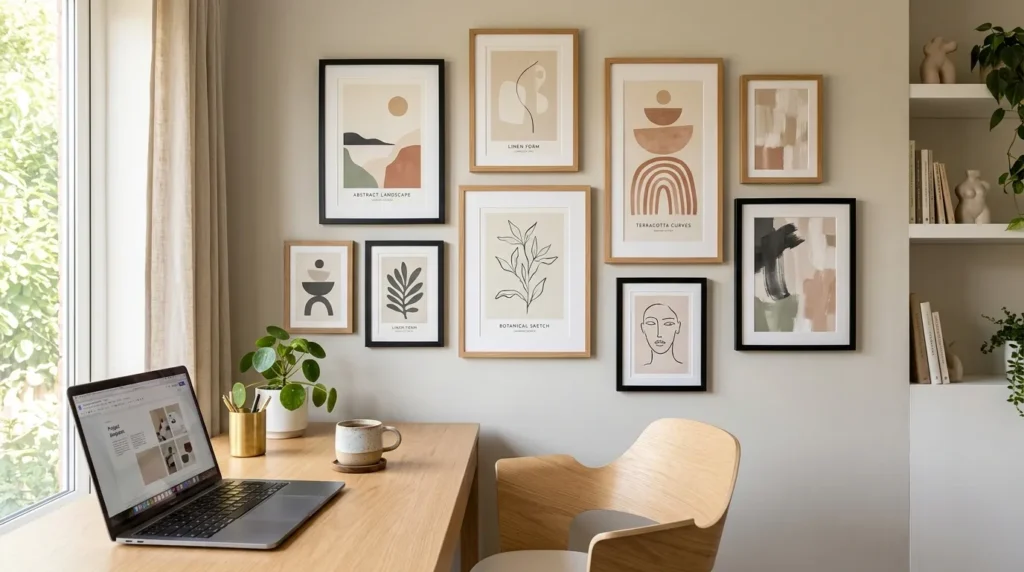
- Create a small wall display with art, prints, photos, or framed quotes.
- Keep frames consistent in black, white, gold, wood, or mixed neutrals.
- Use two to five pieces if the wall is small.
- Leave enough space around frames so the layout feels clean.
- Choose artwork that feels calm, inspiring, and appropriate for video backgrounds.
A gallery wall brings personality into a workspace without taking up desk space. This idea works because wall decor can make an office feel personal, creative, and finished. The key is keeping the layout controlled. Too many frames can make a work area feel busy, especially if the desk already has shelves or supplies. Choose a few pieces that match your mood, such as abstract art, landscape prints, black-and-white photography, or soft motivational typography.
The final wall should feel inspiring but not distracting. Use matching frames for a clean look, or mix wood and black frames for a warmer style. Before hanging anything, lay the pieces on the floor and test the arrangement. If your desk appears on video calls, check the camera view so the art looks balanced behind you. This decor idea works well for creative professionals, students, bloggers, coaches, and anyone who wants their office to feel more personal without cluttering the work surface.
8. Plant Corner
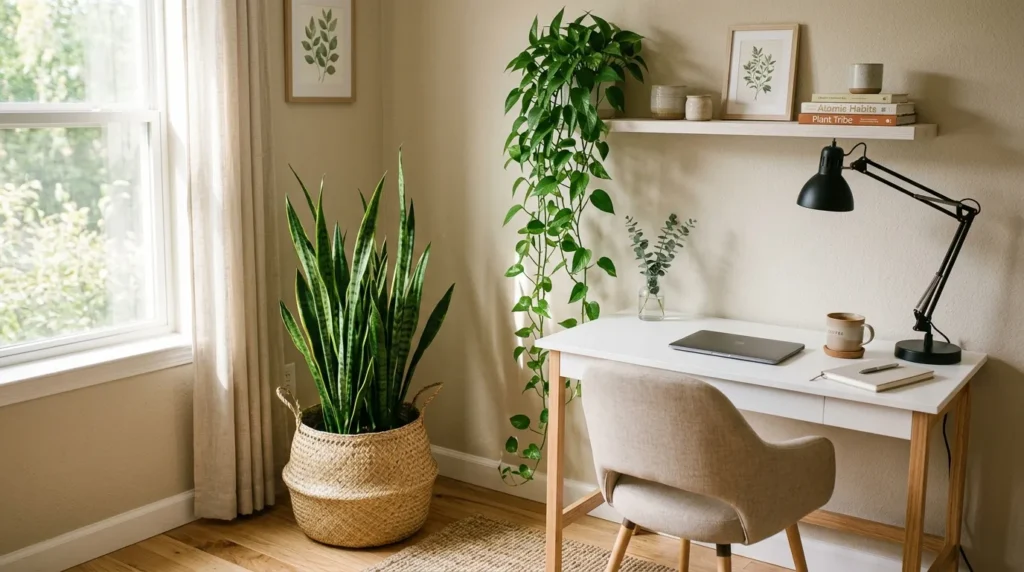
- Add one tall plant or a few small plants near the desk.
- Choose low-maintenance options like pothos, snake plant, ZZ plant, or philodendron.
- Use matching planters to keep the area looking clean.
- Place plants where they get the right amount of light.
- Avoid overcrowding the desk with too many small pots.
A plant corner can make a work area feel fresher and more alive. Greenery softens hard surfaces like desks, monitors, shelves, and metal chair legs. It also adds height and texture without needing bold colors or heavy decor. For busy remote workers, low-maintenance plants are usually the best choice. Snake plants, pothos, ZZ plants, and philodendrons are popular because they are forgiving and easy to style. A single tall plant can often make more impact than several small pots scattered everywhere.
The transformation feels natural and calming. Place a tall plant beside the desk, add a trailing plant on a shelf, or use one small pot near a lamp. Choose planters that match your room, such as matte white, black ceramic, terracotta, or woven baskets. Make sure the plant suits your available light so it stays healthy. This idea is especially helpful in neutral workspaces because greenery adds life without making the room feel busy. It creates a softer, more balanced office mood.
9. Built-In Style
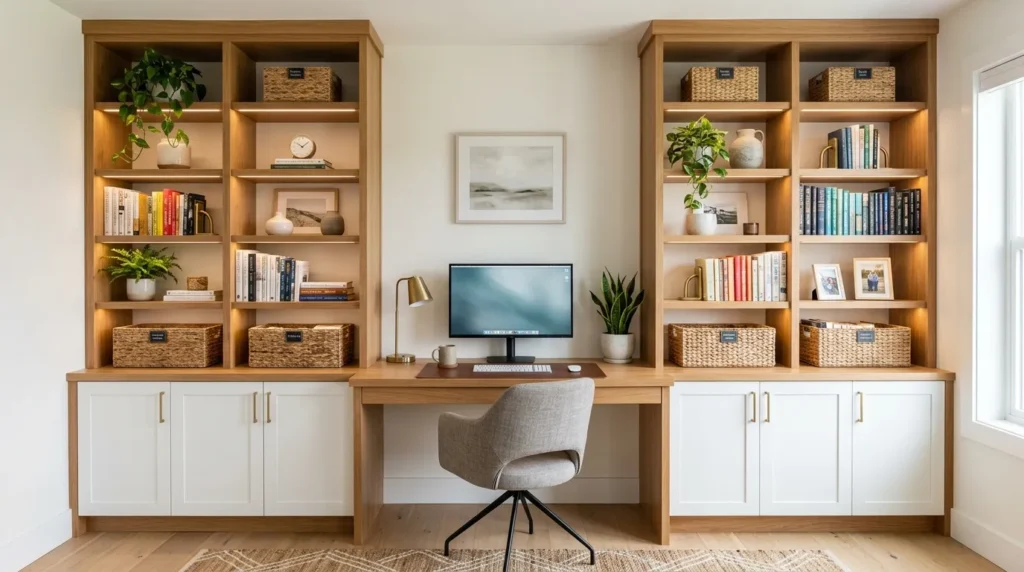
- Use bookcases, cabinets, or wall units to create a custom office look.
- Place the desk between shelves for a built-in workstation effect.
- Match paint colors or wood tones for a more seamless design.
- Use baskets and cabinet doors to hide less attractive office supplies.
- Add lighting inside shelves for a more polished finish.
A built-in style office can look expensive even when it is created with affordable furniture. The idea is to make separate pieces feel like one planned wall. Place a desk between two bookcases, add floating shelves above, or use matching cabinets around the workspace. This creates structure and storage at the same time. That’s why many designers recommend this look for spare rooms, guest rooms, and office walls that need both beauty and function.
The finished result can feel polished, organized, and very practical. Paint shelves the same color as the wall for a seamless look, or use warm wood tones for contrast. Store printer paper, files, and tech items behind cabinet doors or inside baskets. Use open shelves for books, plants, and decor so the design does not feel too heavy. Add small puck lights or picture lights if you want a high-end effect. This setup works beautifully for a full-time work-from-home routine.
10. Minimal Storage
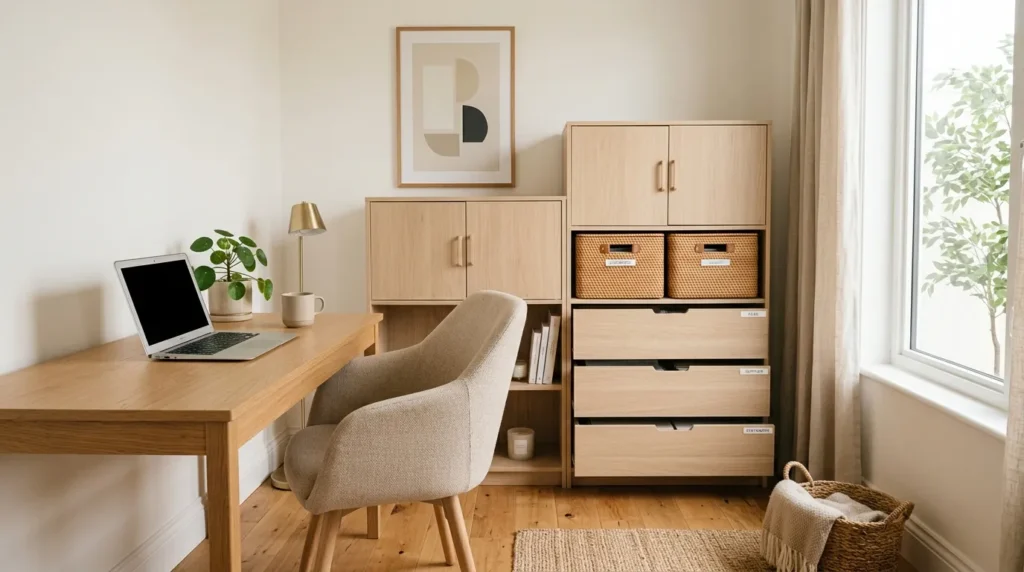
- Keep only daily-use items within arm’s reach.
- Use drawer organizers for pens, sticky notes, cords, and office tools.
- Add closed cabinets or boxes for paperwork and supplies.
- Sort papers weekly so clutter does not build up.
- Choose storage that matches the room instead of looking temporary.
Minimal storage helps the office stay calm because everything has a clear place. The goal is not to own fewer supplies than you need; it is to stop supplies from living on the desk all day. Closed storage is especially useful because it hides visual clutter and makes the room feel cleaner instantly. A drawer unit, low cabinet, woven box, or simple file holder can make a big difference. In my experience, workspaces stay organized longer when storage is easy to reach.
The transformation happens through daily reset habits. Keep your notebook, laptop, and current project nearby, then store extras out of sight. Use drawer dividers for small items so pens, paper clips, chargers, and sticky notes do not mix together. Choose baskets or boxes that match your decor if they stay visible. A calm office is easier to maintain when the system feels simple. This idea works especially well for people who feel distracted by piles, loose papers, and too many desk accessories.
11. Camera Backdrop
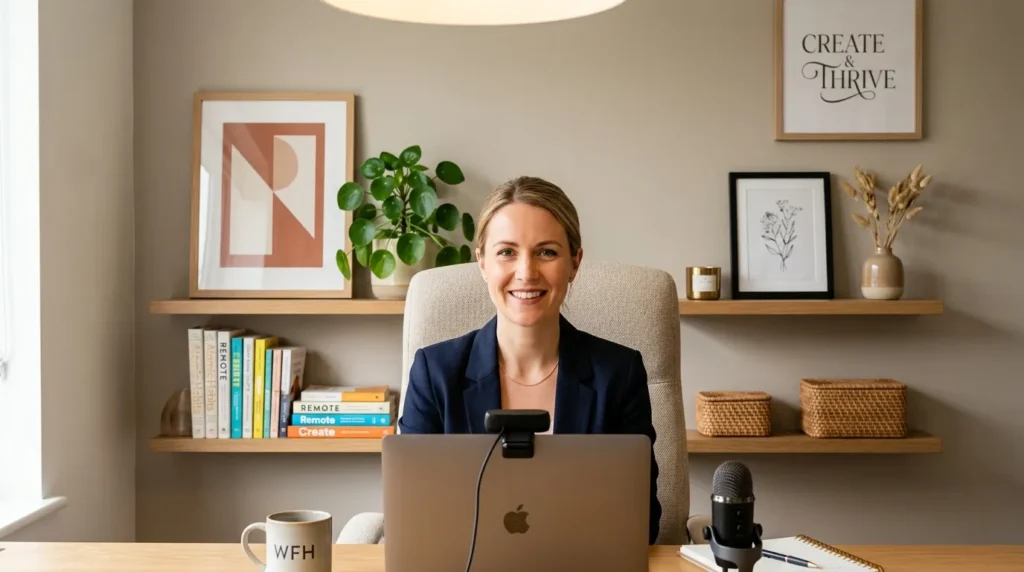
- Style the wall behind your chair for video calls and online meetings.
- Use shelves, art, plants, paneling, or a clean neutral wall.
- Keep personal clutter, laundry, open closets, and busy patterns out of frame.
- Add soft front lighting so your face appears clear on camera.
- Test your camera angle before finalizing desk and decor placement.
A camera-ready backdrop makes your workspace feel more professional during remote meetings. The background behind you becomes part of your online presence, whether you are speaking with clients, coworkers, students, or interviewers. A clean wall with one piece of art can work, but styled shelves, plants, or simple wall paneling can make the frame feel warmer. The goal is to look polished without making the background feel overly staged or distracting.
The final setup should support both work and the rest of the room. Place your desk so the camera shows a tidy, balanced view rather than a busy corner. Use soft lighting in front of you and avoid sitting with a bright window directly behind your head. Keep colors calm and decor simple. This is one of the most useful Modern Home office upgrades because it improves confidence, video quality, and the way your workspace appears during important calls.