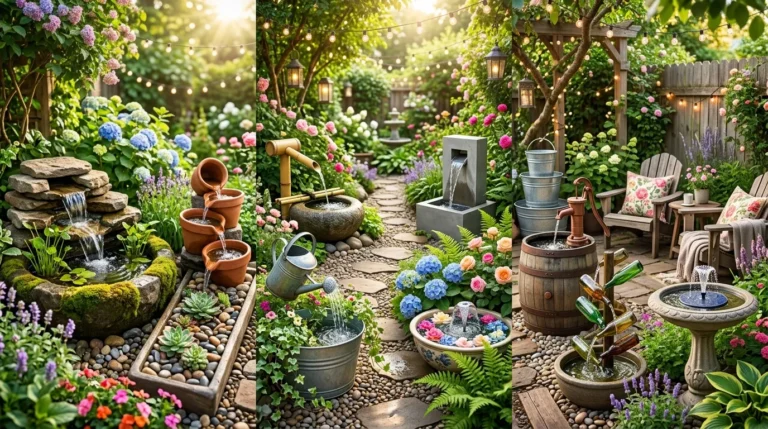
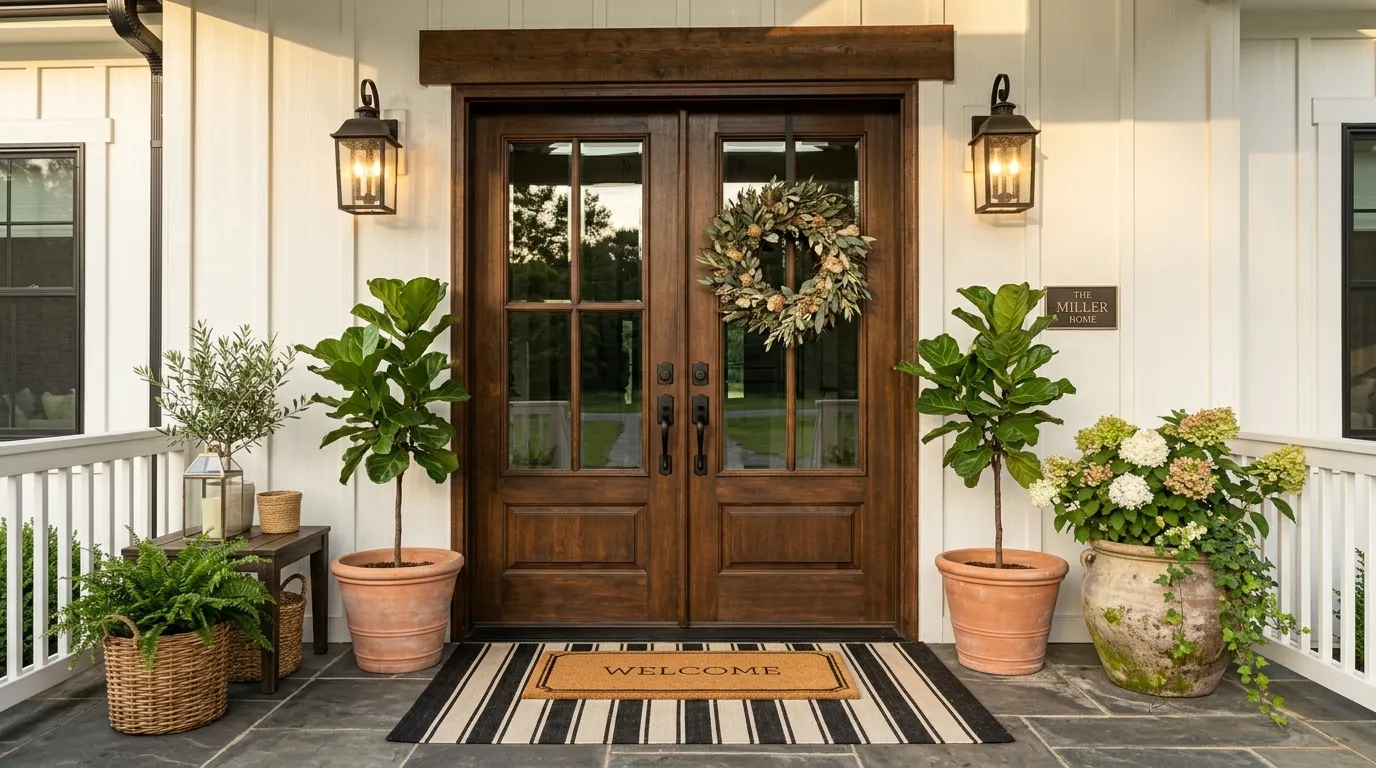
10 Outdoor Entryway Ideas That Welcome Guests
Introduction
A welcoming entrance does more than make a home look pretty from the curb. It sets the mood before guests ring the bell, step onto the porch, or walk through the door. In many USA homes, the entry area is the first real design moment people see, so it deserves the same care as an indoor room. A clean path, fresh paint, warm lighting, layered textures, and simple greenery can turn a plain doorway into a polished arrival space that feels thoughtful, safe, and inviting.
The best Outdoor Entryway ideas are not always expensive or complicated. Most strong curb appeal updates come from choosing the right details and arranging them with balance. A painted door can create a focal point. Planters can soften hard surfaces. Lighting can make the space feel safer at night. Seating, mats, hardware, and seasonal decor can make the entrance feel lived-in without looking crowded. This guide shares practical, Pinterest-friendly ideas that work for porches, stoops, patios, walkways, townhomes, cottages, farmhouse exteriors, and suburban front doors.
1. Painted Door
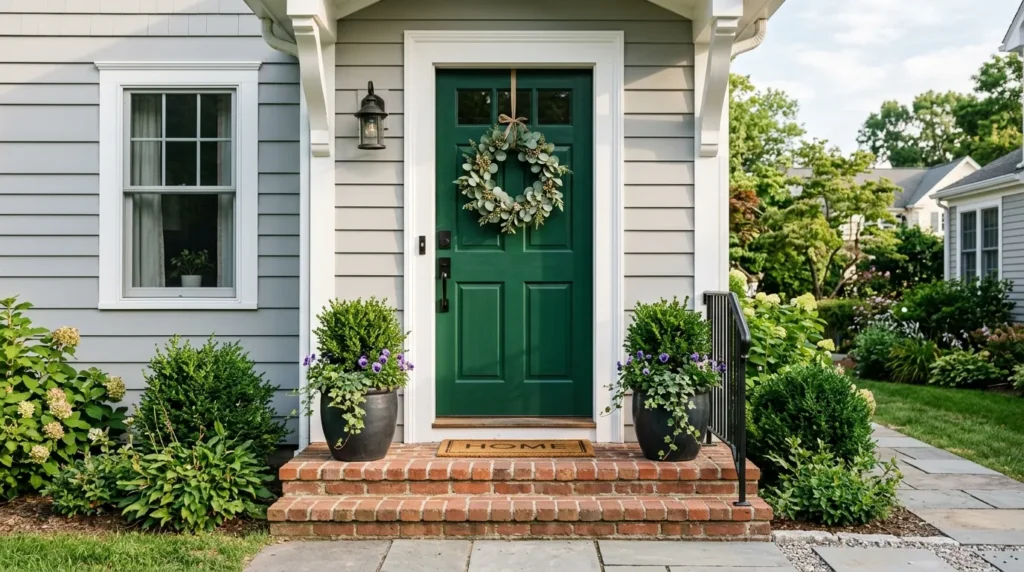
- Creates a strong focal point from the street
- Adds color without changing the full exterior
- Works with brick, siding, stucco, stone, and trim
- Looks best with durable exterior paint
- Helps hardware, wreaths, and planters feel more polished
A freshly painted door can change the entire mood of your home’s entrance in one weekend. When the door looks faded, scratched, or too plain, the whole exterior can feel unfinished. A rich navy, soft sage, warm black, brick red, deep green, or classic white can instantly create a stronger focal point. Choose a color that works with your siding, roof, shutters, walkway, and landscaping. In my experience, satin or semi-gloss exterior paint gives the best mix of durability, cleanability, and visual shine for busy homes.
The transformation works because the door naturally pulls attention first. Before painting, clean the surface, sand rough spots, repair small cracks, and use primer when needed. Remove hardware if possible for a smoother finish, or tape carefully around handles and locks. A bold door looks beautiful with simple decor, while a softer shade feels calm and classic. Once the paint dries, add a wreath, updated handle, or matching planters. The result feels fresh, intentional, and welcoming without needing a full exterior renovation or expensive construction work.
2. Layered Mats
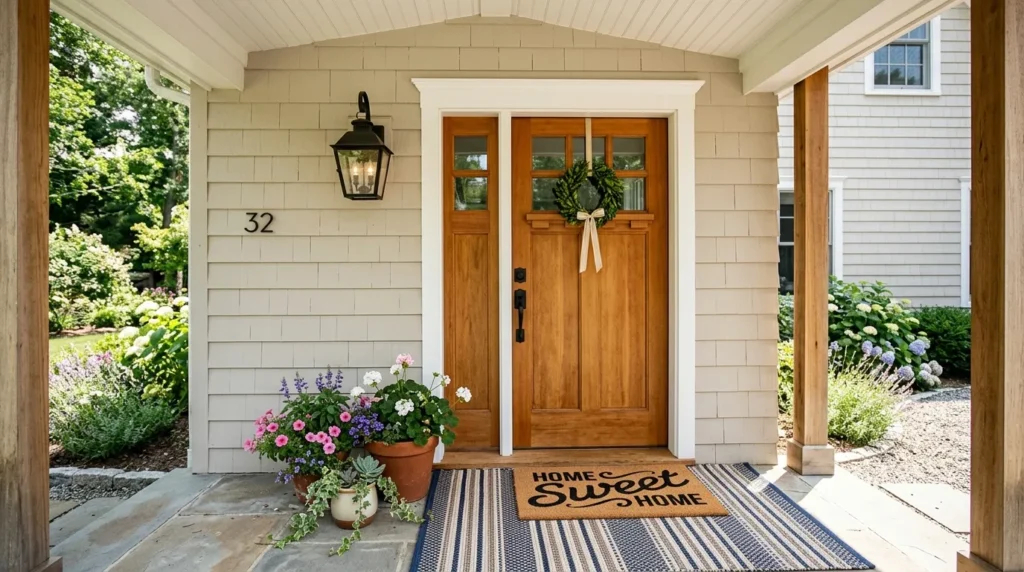
- Adds texture and pattern at the doorway
- Makes a plain stoop feel more styled
- Works with coir mats and washable rugs
- Can be changed for every season
- Helps frame the entrance for Pinterest-style photos
Layered mats make the entry feel finished before guests even touch the door handle. This idea is simple, affordable, and perfect for porches, stoops, and covered landings. Start with a larger outdoor rug as the base, then place a smaller coir doormat on top. Stripes, checks, woven neutrals, black-and-white patterns, and muted seasonal colors all work beautifully. The larger rug should show around the edges so the layering feels intentional. This gives the doorway texture and personality without using extra furniture or bulky decor.
This update is also practical for everyday use. The lower rug adds style and coverage, while the top mat helps scrape shoes before anyone enters. Use washable outdoor materials that can handle dirt, moisture, and changing weather. In spring, try soft stripes or natural tan. In fall, use plaid, rust, or warm brown. In winter, black, evergreen, or gray feels classic. I’ve noticed layered mats photograph especially well because they create a clear frame around the door and make even a simple entrance look thoughtfully styled.
3. Warm Lighting
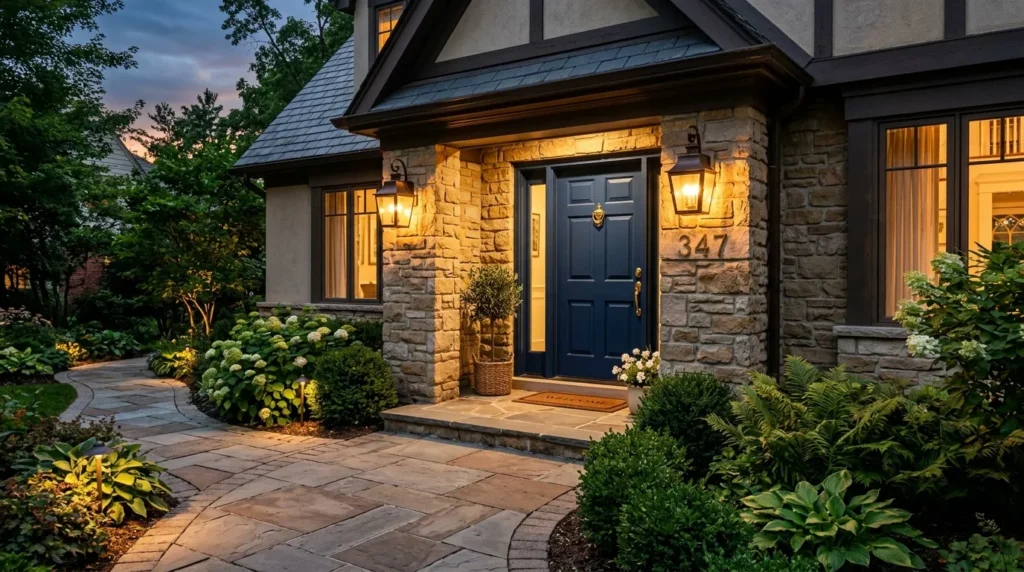
- Makes the entrance safer after dark
- Adds a cozy and welcoming glow
- Works with sconces, pendants, lanterns, and smart bulbs
- Looks best when matched with hardware finishes
- Improves both function and evening curb appeal
Good lighting makes an entrance feel safer, warmer, and more expensive at the same time. A small outdated fixture can quietly make the whole exterior look tired, even when the door and porch are clean. Replacing it with a lantern sconce, modern cylinder light, farmhouse fixture, or hanging pendant can give the entry a sharper finish. Choose an outdoor-rated design that fits your door size and porch scale. Black, bronze, brass, and aged nickel finishes work well because they coordinate easily with hardware and house numbers.
The right bulb matters just as much as the fixture itself. Warm white light usually feels softer and more welcoming than harsh cool light, especially near a front door. For convenience, consider motion-sensor lighting, dusk-to-dawn bulbs, or smart outdoor bulbs that can be scheduled. Make sure steps, door locks, and walkways are easy to see at night. That’s why many designers recommend treating exterior lighting as both decor and safety. A beautiful glow can make guests feel comfortable before they even step inside the home.
4. Tall Planters
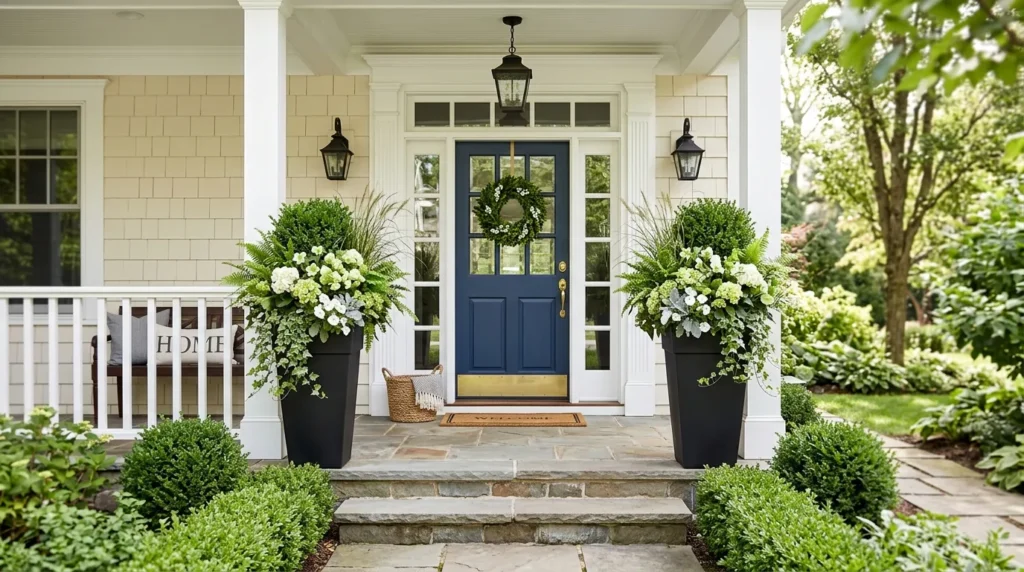
- Adds height without crowding the floor
- Frames the doorway with natural color
- Works with flowers, evergreens, grasses, and ferns
- Softens brick, concrete, siding, and stone
- Creates seasonal curb appeal with easy updates
Tall planters are perfect when you want a fuller entrance without using too much space. Their height draws the eye upward and makes the doorway feel more balanced. A pair of planters can frame the door beautifully, while a single planter can soften a blank corner. Choose containers that match your exterior style, such as black metal, terracotta, ceramic, concrete, wood, or resin. For plants, try boxwood, ferns, ornamental grasses, lavender, dwarf evergreens, or seasonal flowers based on your local sunlight and climate.
The best planter arrangements are beautiful but still easy to maintain. For sunny entries, choose hardy plants like geraniums, salvia, lantana, lavender, or sweet potato vine. For shady porches, ferns, caladiums, hostas, and impatiens can look fresh and full. Always use pots with drainage holes so water does not collect near the door or damage porch surfaces. I’ve seen this work well in many homes because planters add life, structure, and seasonal color without requiring permanent changes. They make the entrance feel cared for immediately.
5. Clean Walkway
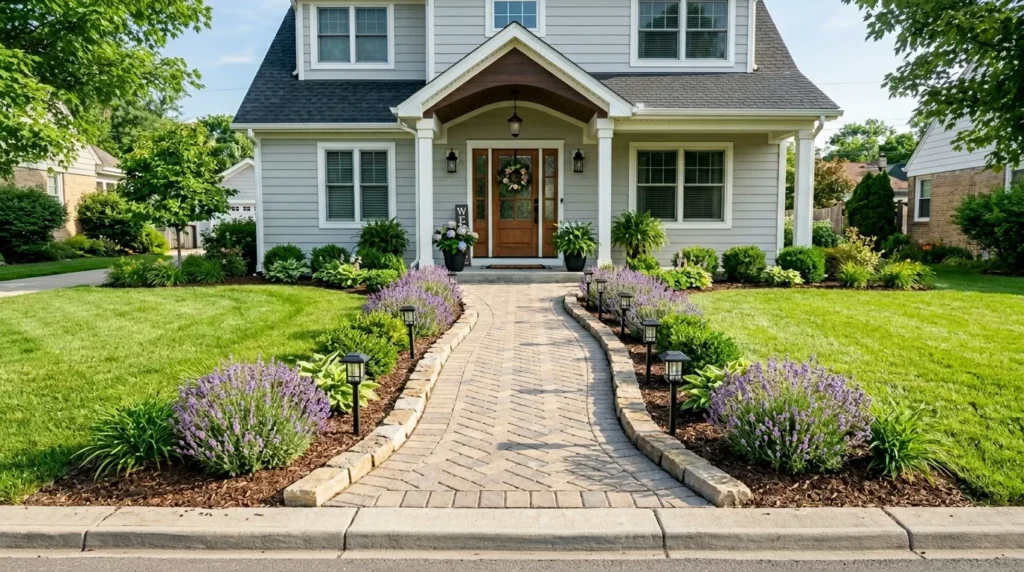
- Guides guests naturally toward the door
- Improves safety and visual flow
- Works with concrete, brick, gravel, pavers, or stone
- Looks better with edging, lighting, and low plants
- Connects the yard, driveway, and entrance beautifully
A clean walkway creates a clear invitation from the curb to the front door. Even if the porch is beautifully styled, a cracked, dirty, or overgrown path can make the entrance feel neglected. Start by power washing concrete, sweeping debris, trimming grass edges, and removing weeds between pavers. If the walkway feels too plain, add simple edging, mulch, solar lights, or low-growing plants along the sides. These details guide the eye forward and make the entire approach feel more organized, polished, and easy to follow.
Walkway updates are especially useful because they improve both curb appeal and daily function. Guests should be able to move comfortably without brushing against plants, stepping over decor, or walking through muddy grass. Use brick edging for traditional homes, metal edging for modern exteriors, or natural stone for cottage-style charm. Low plants like lavender, liriope, creeping thyme, dwarf boxwood, or ornamental grass can add texture without blocking the path. A clean, defined walkway makes the entrance feel intentional before anyone reaches the porch or front step.
6. Porch Seating
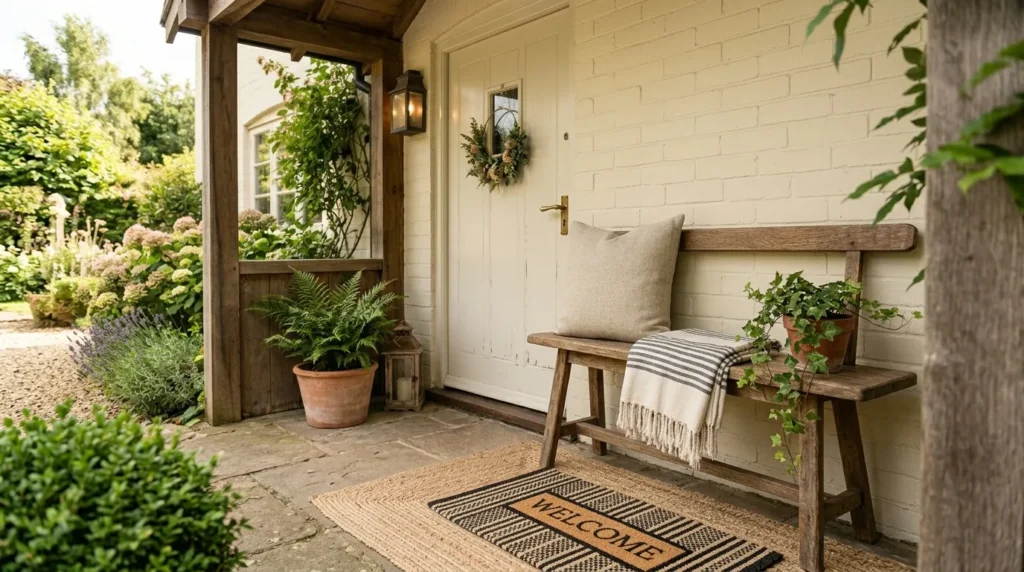
- Makes the entrance feel warm and usable
- Works with benches, stools, chairs, and rockers
- Adds comfort without needing a full porch remodel
- Creates a spot for bags, shoes, or seasonal pillows
- Looks best with weather-resistant outdoor materials
A little seating can make an entrance feel more personal and inviting. Even a small bench, rocking chair, garden stool, or compact bistro chair adds comfort and purpose. It tells guests the space is not just a pass-through but a cared-for part of the home. Choose weather-resistant materials like treated wood, teak, powder-coated metal, resin wicker, or outdoor-safe plastic. Add one cushion, a folded throw, or a small pillow if the porch is covered enough to protect fabric from heavy rain.
The key is choosing the right scale for the space. A large bench can overwhelm a narrow stoop, while a tiny chair may look lost on a deeper porch. Leave enough room for the door to open fully and for guests to walk safely. For small entries, place seating along a side wall or near a planter instead of blocking the main path. In my experience, simple seating instantly makes the entrance feel warmer, more lived-in, and more photo-ready without requiring a major design investment.
7. Door Hardware
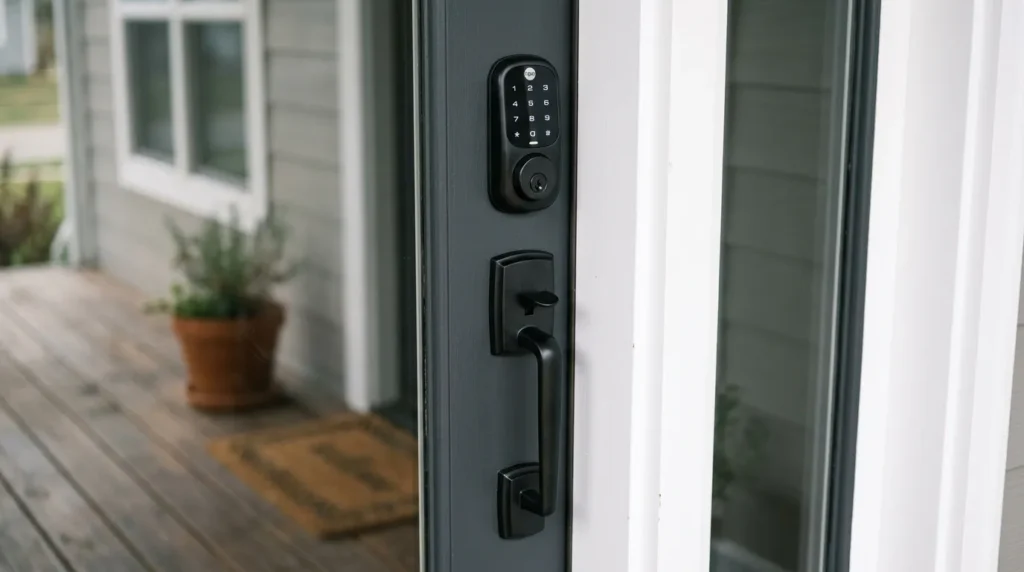
- Refreshes the door without repainting
- Adds polish through black, brass, bronze, or nickel finishes
- Improves security and daily function
- Works with handles, knobs, levers, knockers, and smart locks
- Coordinates with lights, numbers, railings, and mailboxes
Door hardware works like jewelry for the entrance because it adds shine, contrast, and detail. A scratched knob, faded lock, or mismatched handle can make the door look older than it really is. Replacing it with a matte black handle set, brushed brass knob, aged bronze lever, or smart lock creates an instant upgrade. The finish should connect with nearby exterior details like the porch light, house numbers, railing, or mailbox. This small coordination trick makes the entire entry feel more thoughtful and finished.
This update also improves everyday life, not just appearance. A sturdy handle feels better to use, while a keypad or smart lock can help families, guests, pet sitters, and delivery routines. Before buying, check your door thickness, backset measurement, borehole size, and handing direction. If hinges are visible, consider matching them for a more complete look. That’s why many designers recommend paying attention to hardware early in an exterior refresh. It is a small detail, but it can make the whole doorway feel newer and more secure.
8. Seasonal Accents
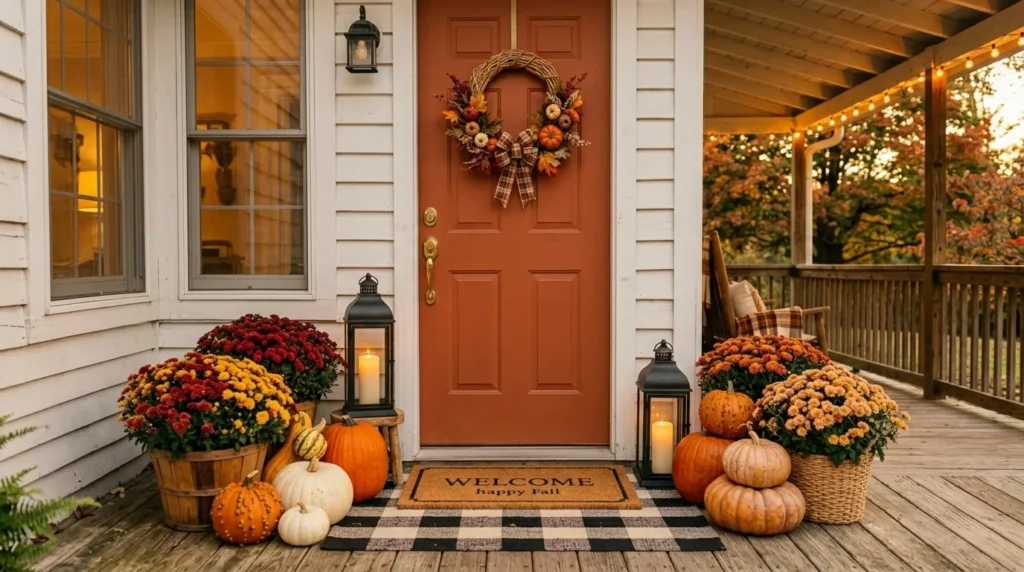
- Keeps the entrance fresh throughout the year
- Works with wreaths, flowers, lanterns, pillows, and mats
- Adds personality without permanent changes
- Helps the home feel warm for guests and holidays
- Looks best when colors stay simple and coordinated
Seasonal accents make the entrance feel current, cheerful, and cared for without a full makeover. A spring wreath, summer flowers, fall pumpkins, winter greenery, or holiday lanterns can refresh the space quickly. The trick is choosing a simple color palette instead of using every decoration at once. Two or three coordinated accents usually look more polished than a crowded porch. For example, fall can feel elegant with rust mums, natural pumpkins, and a plaid mat, while winter can look classic with pine, black lanterns, and cream ribbon.
These details work best when they support the home’s existing style. A farmhouse entrance may look beautiful with baskets, wood signs, and vintage lanterns, while a modern home may need cleaner planters and simple greenery. Use outdoor-safe materials that can handle wind, rain, sun, and temperature shifts. Keep walkways and door swings clear so decor never becomes a safety issue. I’ve noticed the most beautiful seasonal entries feel layered but edited. They welcome guests with warmth while still keeping the doorway practical and easy to maintain.
9. Address Details
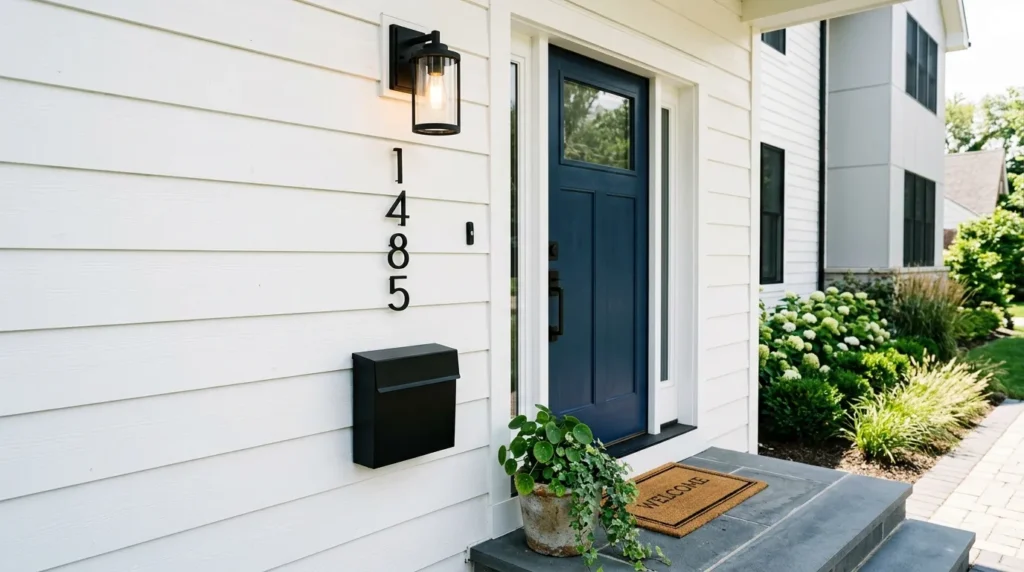
- Helps guests and deliveries find the home easily
- Adds a clean and organized exterior feature
- Works with plaques, metal numbers, posts, or planter boxes
- Looks best with strong contrast from the street
- Coordinates well with lighting and door hardware
Clear address details make the entrance look organized while helping guests, deliveries, and emergency services find your home. Faded numbers, tiny plaques, or hidden digits can make an exterior feel neglected and less functional. Choose numbers large enough to read from the street, especially if your home sits back from the road. Black numbers on light siding, brass numbers on dark paint, or white numbers on brick plaques can create strong contrast. Weather-resistant metal, acrylic, ceramic, stone, and wood plaques are all useful options.
Address styling should feel connected to the rest of the exterior. Match the finish to your door hardware, light fixtures, mailbox, or railings for a cleaner look. Numbers can be mounted beside the door, on a porch column, near the garage, on a planter box, or along the walkway, depending on visibility. Make sure plants do not cover them during the growing season. This small update is practical, affordable, and often overlooked. A crisp address detail can make the entrance feel sharper, safer, and more complete.
10. Balanced Styling
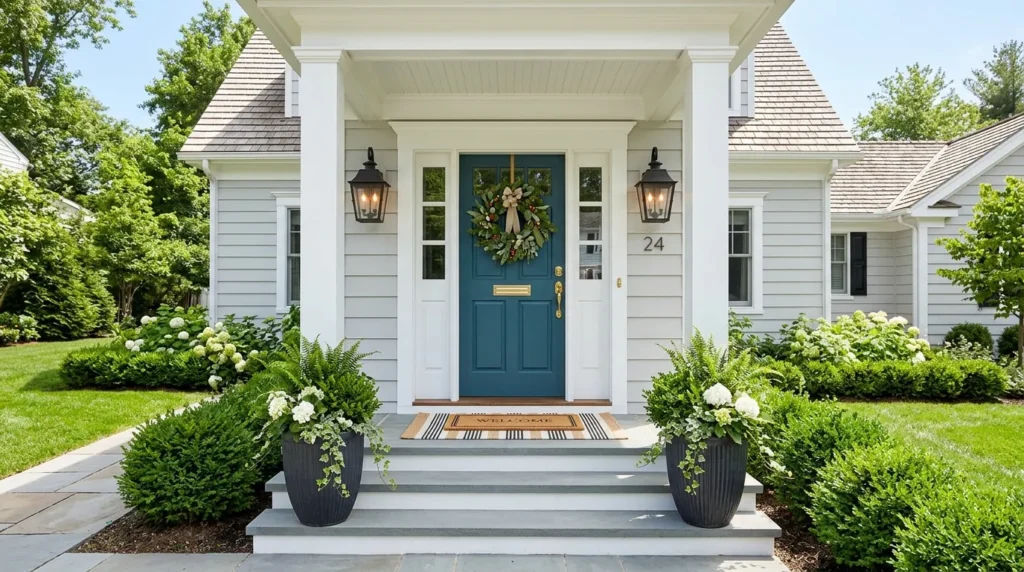
- Creates a calm and polished first impression
- Works with matching planters, lanterns, mats, lights, or chairs
- Prevents the entrance from looking cluttered
- Helps photos feel clean and Pinterest-friendly
- Makes the whole entry look more intentional
Balanced styling helps an entrance feel calm, organized, and welcoming from the street. The eye naturally likes order, so repeating shapes, colors, materials, or heights can make the whole area look more designed. Matching planters, twin lanterns, symmetrical sconces, paired chairs, or a centered wreath can create instant polish. This does not mean everything must be identical. It means the pieces should feel connected. For an Outdoor Entryway, balance is especially important because too many unrelated items can quickly make the space look messy.
The best approach is to start with one strong anchor and build around it. A painted door, large wreath, pair of planters, or beautiful light fixture can guide the rest of the styling. Keep the walking path open and avoid overcrowding small porches with too many accessories. If one side has more space than the other, use visual weight instead of exact matching. A bench can balance a tall planter when colors and textures relate. The final result feels polished, useful, and ready to welcome guests year-round.