10 Neutral Home Aesthetic Ideas for Calm Spaces
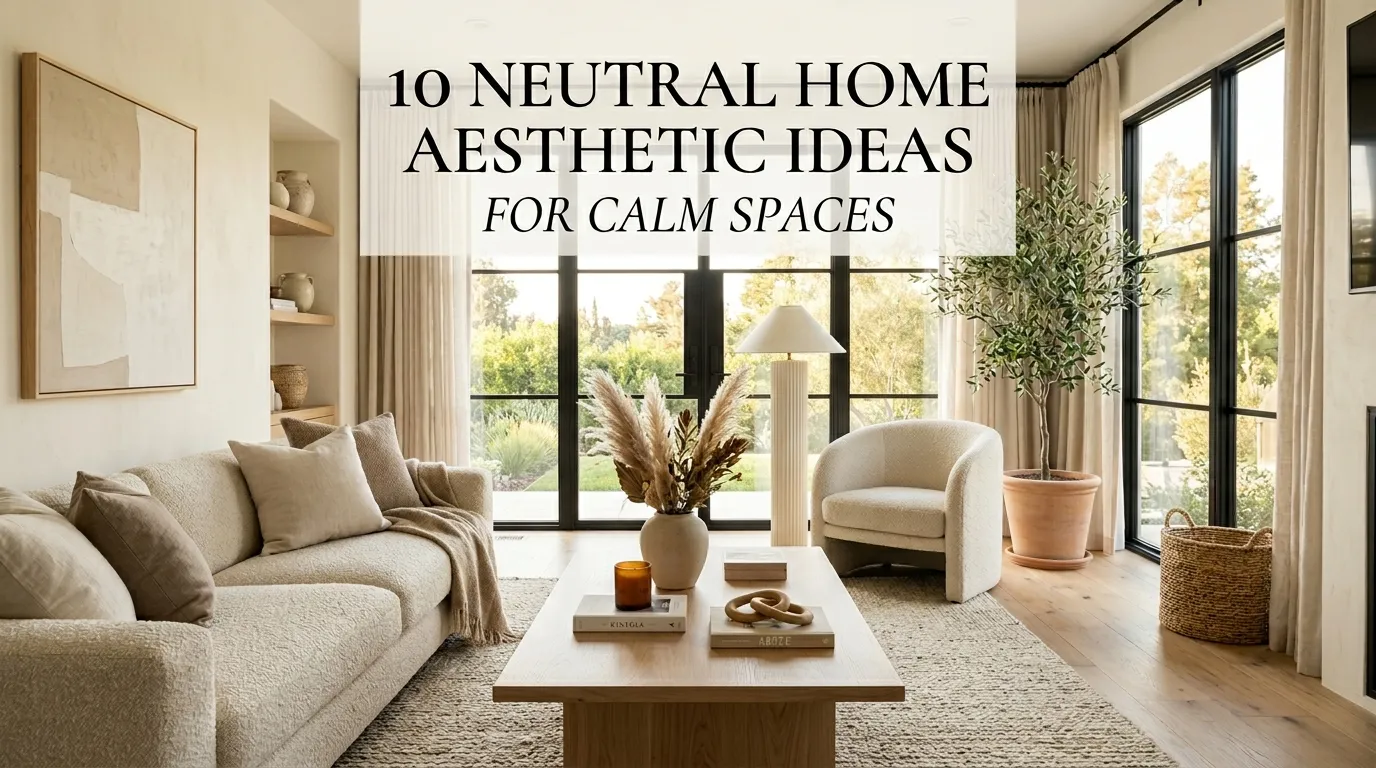
A calm home starts with how the space makes you feel the moment you walk in. Soft colors, natural textures, clean surfaces, warm lighting, and thoughtful furniture choices can make everyday rooms feel lighter, quieter, and easier to enjoy. This style is not about making your home look empty. It is about creating balance, comfort, and visual breathing room.
For USA homes, a neutral aesthetic works beautifully because it can fit apartments, family houses, rentals, bedrooms, living rooms, open layouts, and small spaces. A Neutral Home can feel cozy, elegant, modern, organic, or classic depending on the materials you choose.
These ideas will help you design calm spaces with soft palettes, practical storage, warm textures, and Pinterest-worthy styling that still feels realistic for daily life.
1. Soft Color Palette
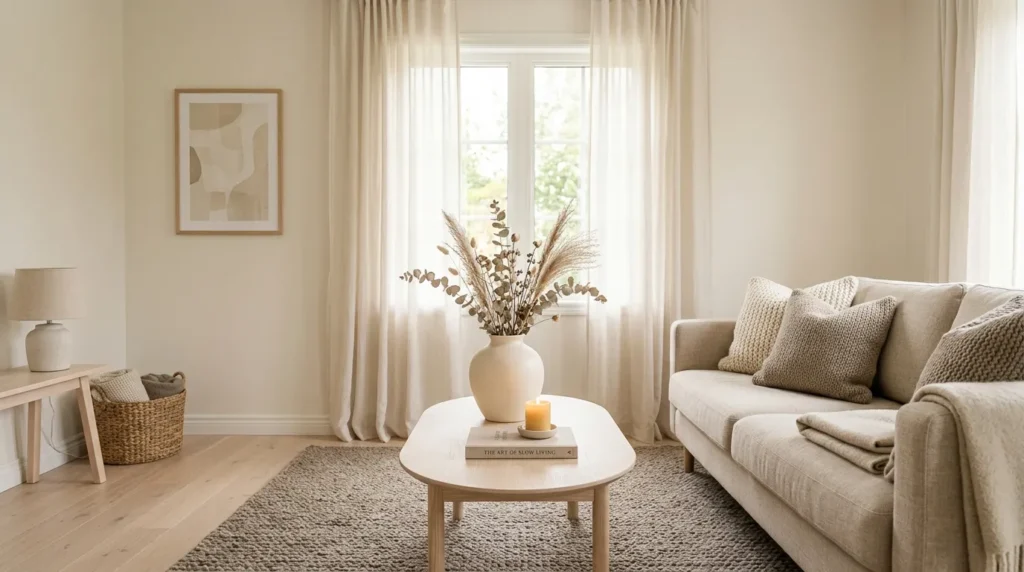
- Creates a calm base with cream, beige, taupe, ivory, and warm gray.
- Helps rooms feel brighter, larger, and more peaceful.
- Works beautifully with wood, linen, stone, ceramic, and woven materials.
- Makes furniture and decor easier to mix without visual clutter.
- Gives every room a relaxed, timeless, and polished foundation.
A soft color palette can change the whole mood of a home before you buy anything new. This idea works because quiet colors reduce visual noise and make the room feel easier to look at. Start with warm whites, creamy beige, oatmeal, taupe, and soft gray instead of harsh bright white. These tones feel gentle in natural light and cozy at night. In my experience, warm neutrals are easier to live with because they feel clean without making the space look cold.
The transformation feels calm, flexible, and timeless. Once the main palette is soft, you can layer furniture, rugs, pillows, curtains, and art without the room feeling busy. Use slightly different shades so the space does not look flat. For example, pair ivory curtains with a beige sofa, a light wood table, and a taupe rug. This approach is practical because you can update small decor later without changing the entire room. The space stays peaceful, but it never feels plain or unfinished.
2. Layered Textures
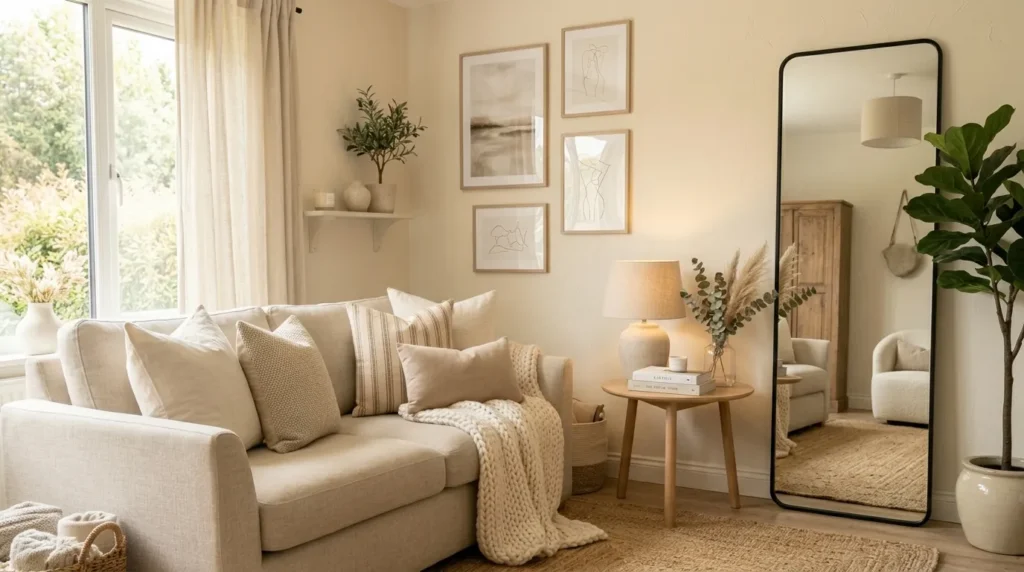
- Adds warmth without using bold colors or busy patterns.
- Works with linen, boucle, cotton, wool, jute, rattan, and wood.
- Makes simple rooms feel cozy, soft, and more expensive.
- Helps neutral decor look intentional instead of empty.
- Great for sofas, beds, rugs, chairs, curtains, and baskets.
Layered texture is the secret that keeps neutral rooms from feeling boring. This idea works because texture gives the eye something to enjoy even when the colors stay quiet. A cream sofa becomes more inviting with linen pillows, a chunky knit throw, a woven rug, and a smooth wood table nearby. Each material adds a different feeling without making the room loud. That is why many designers recommend texture first when a neutral space feels too flat.
The finished room feels soft, rich, and comfortable. Use natural materials whenever possible because they age well and bring warmth into the space. Try mixing smooth, rough, soft, woven, matte, and plush surfaces in the same room. A jute rug, boucle chair, ceramic lamp, and cotton curtains can all work together beautifully. This styling is practical because you do not need many extra decorations. The materials themselves create depth, which keeps the room calm while still making it feel finished.
3. Warm Wood
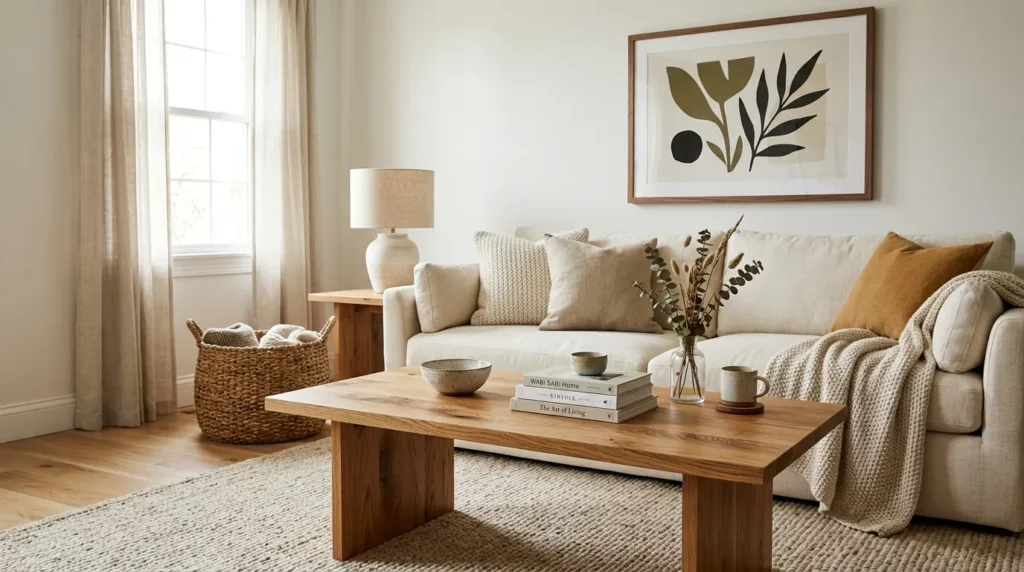
- Adds natural warmth to soft neutral rooms.
- Works with oak, pine, ash, walnut, maple, and reclaimed wood.
- Balances white walls, cream sofas, and pale rugs.
- Looks beautiful in coffee tables, shelves, chairs, benches, and frames.
- Helps the space feel grounded, organic, and welcoming.
Warm wood brings life into a neutral room without adding strong color. This idea works because wood has natural grain, movement, and warmth that softens clean spaces. A light oak coffee table, walnut console, pine bench, or wood picture frame can make the whole room feel more grounded. Choose wood tones that match the mood you want. Pale wood feels airy and Scandinavian, while medium wood feels cozy, classic, and slightly richer.
The transformation is subtle but important. Wood keeps neutral interiors from feeling too perfect or too sterile. It pairs beautifully with linen, wool, stone, clay, rattan, and cotton. Avoid mixing too many unrelated wood tones in one small room, because that can make the space feel less calm. Two main wood finishes are usually enough. This idea is practical because wood furniture is durable, versatile, and easy to style across seasons. It adds warmth while keeping the overall design peaceful.
4. Clean Surfaces
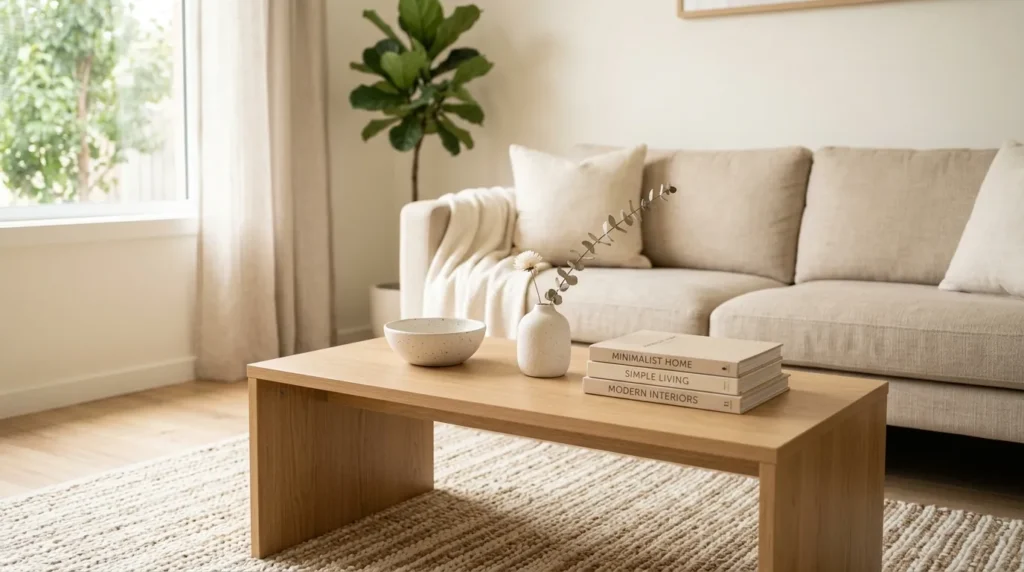
- Makes rooms feel instantly more open and organized.
- Works with trays, bowls, drawer organizers, baskets, and hidden storage.
- Helps reduce clutter on counters, tables, dressers, and shelves.
- Makes cleaning easier because fewer items need moving.
- Lets your best decor pieces stand out naturally.
Clean surfaces can make a room feel calmer even before you change the furniture. This idea works because tabletops, counters, and dressers collect visual clutter quickly. Start by clearing one surface completely, then bring back only what is useful or beautiful. A tray can hold candles, books, or small items, but it should not become a dumping spot. Keep some empty space visible so the room feels lighter. I’ve noticed this habit makes the biggest difference in busy homes.
The finished look feels fresh, simple, and easier to maintain. A coffee table may only need one book, one vase, and one small bowl. A kitchen counter may look better with a cutting board, a ceramic jar, and nothing else. Use drawers, cabinets, and baskets for things that do not need to stay visible. This is practical for families because it does not require owning very little. It simply gives everyday items better places to go.
5. Cozy Lighting
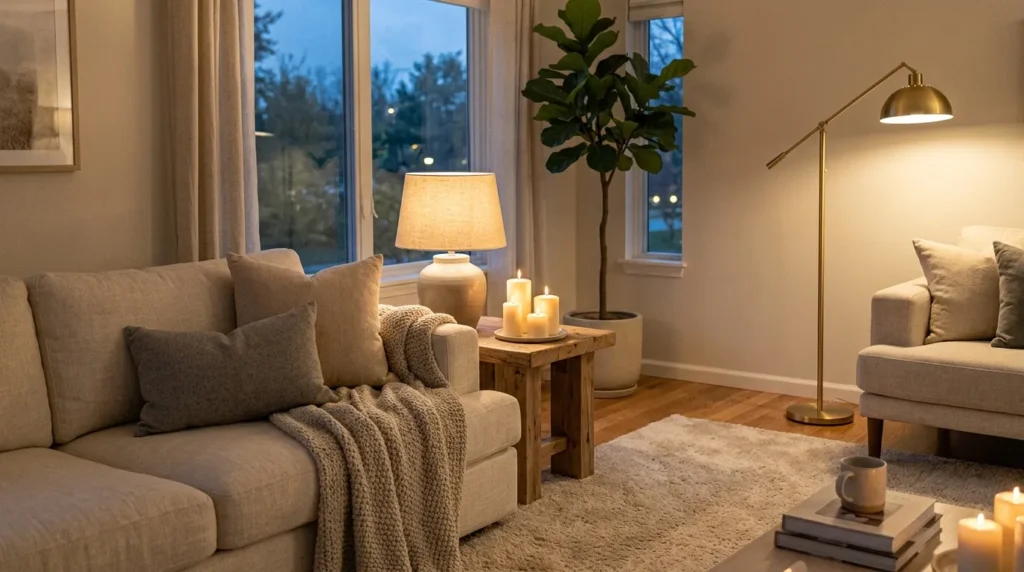
- Creates warmth during evenings and cloudy days.
- Works with table lamps, floor lamps, sconces, candles, and warm bulbs.
- Makes beige, cream, wood, and soft gray tones feel richer.
- Helps avoid harsh overhead lighting in relaxing spaces.
- Adds comfort to bedrooms, living rooms, hallways, and reading corners.
Cozy lighting can make a neutral room feel warm instead of plain. This idea works because light changes how colors, textures, and furniture appear. Overhead lighting alone can feel harsh, especially at night. Add table lamps, floor lamps, wall sconces, and candles to create layers of light at different heights. Warm-white bulbs usually look better with neutral interiors than cool bright bulbs. They make cream walls, wood tables, and soft fabrics feel more inviting.
The transformation is immediate once the room has softer light. A lamp beside the sofa creates a cozy reading spot, while a small lamp on a console makes an entryway feel welcoming. Candles can add mood, but use them safely and keep them simple. This approach is practical because lighting changes the feeling of a space without requiring major furniture updates. It also helps the home feel calm in the evening, which matters when you want your rooms to support real rest.
6. Simple Furniture
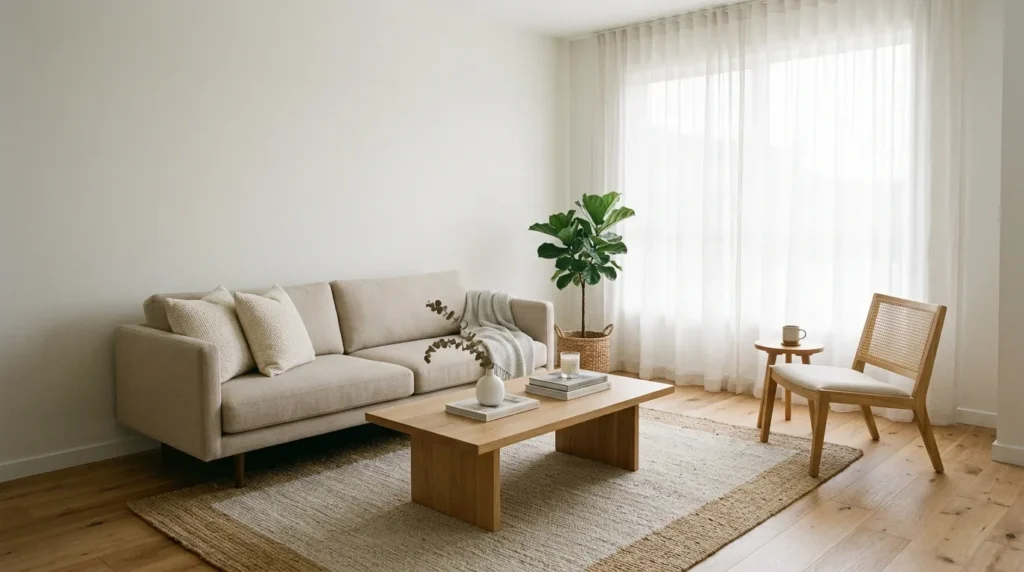
- Keeps rooms open, functional, and easy to move through.
- Works with clean-lined sofas, slim tables, soft chairs, and low-profile beds.
- Helps small spaces feel larger and less crowded.
- Makes the design feel timeless instead of trend-heavy.
- Supports comfort while keeping the room visually quiet.
Simple furniture gives a neutral room structure without overwhelming it. This idea works because clean shapes allow the space to breathe. Choose pieces with balanced proportions, soft edges, and practical materials. A sofa with slim arms, a light wood table, a quiet accent chair, or a simple upholstered bed can feel elegant without needing extra decoration. The goal is not to buy plain furniture. The goal is to choose pieces that support daily life and still look calm.
The finished room feels easier to use and easier to style. Before adding furniture, think about walking paths, door swings, rug size, and how people actually move through the room. Avoid filling every corner just because space is available. A little breathing room makes the whole layout feel more expensive. This idea is practical for apartments and family homes because fewer strong furniture shapes mean less visual stress. Comfort still matters, but the room feels open, balanced, and peaceful.
7. Natural Decor
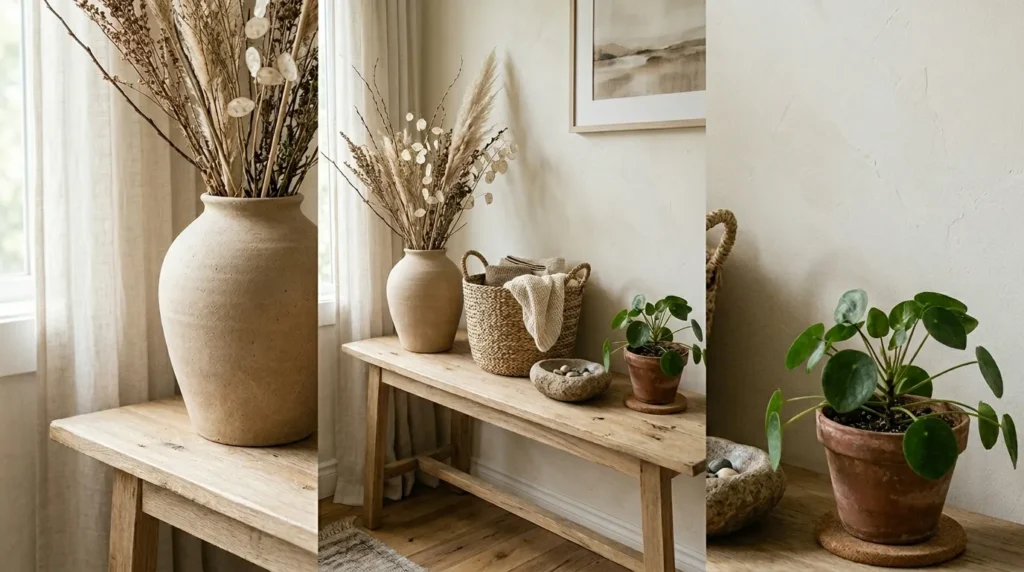
- Adds organic beauty without making the room feel busy.
- Works with plants, ceramic vases, stone trays, woven baskets, and clay bowls.
- Softens modern furniture and plain walls.
- Brings quiet texture into bedrooms, kitchens, and living areas.
- Makes the space feel collected, warm, and personal.
Natural decor helps a calm space feel human and lived in. This idea works because organic pieces have texture, shape, and small imperfections that make a room warmer. A clay vase, stone bowl, woven basket, wood tray, or leafy plant can add interest without introducing loud color. Choose fewer pieces that feel meaningful instead of filling every surface. That small restraint is what keeps the room peaceful while still giving it personality.
The transformation feels grounded and relaxed. Place a ceramic vase on a console, a woven basket beside the sofa, or a small plant near a window. Dried branches, pampas stems, olive branches, or eucalyptus can also look beautiful in neutral rooms. Keep the shapes simple and the colors soft. This styling is practical because natural decor works in every season and every room. It adds quiet beauty without making the home harder to clean or maintain.
8. Muted Artwork
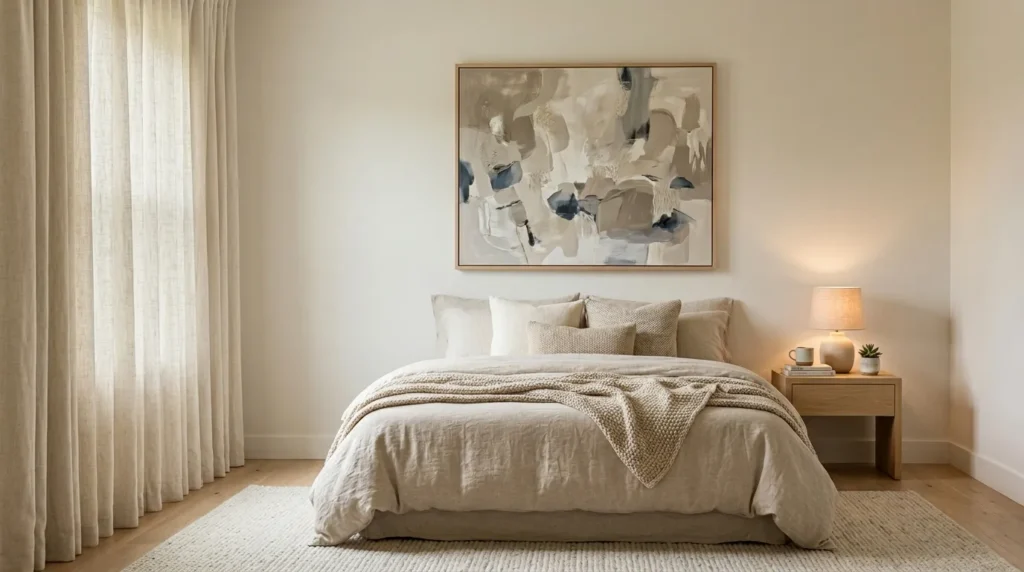
- Adds personality while keeping the room calm.
- Works with abstract prints, landscape art, line drawings, and soft photography.
- Helps fill blank walls without adding visual noise.
- Looks best with wood, black, brass, or white frames.
- Creates a finished look above sofas, beds, consoles, and shelves.
Muted artwork gives a calm room personality without disrupting the soft mood. This idea works because walls need interest, but bold colors are not always necessary. Choose art with beige, cream, charcoal, soft brown, muted green, pale blue, or warm gray tones. Abstract shapes, quiet landscapes, line drawings, and soft photography all work well. The frame matters too. Light wood feels organic, black feels modern, and brass adds a gentle touch of warmth.
The finished wall makes the room feel styled and complete. Hang one large piece above a sofa or bed for a clean look, or create a small gallery with matching frames for balance. Keep spacing consistent so the arrangement feels intentional. This approach is practical because artwork can change the mood of a room without taking up floor space. It also helps a neutral space feel personal. The key is choosing pieces that feel peaceful, not loud or distracting.
9. Soft Bedroom
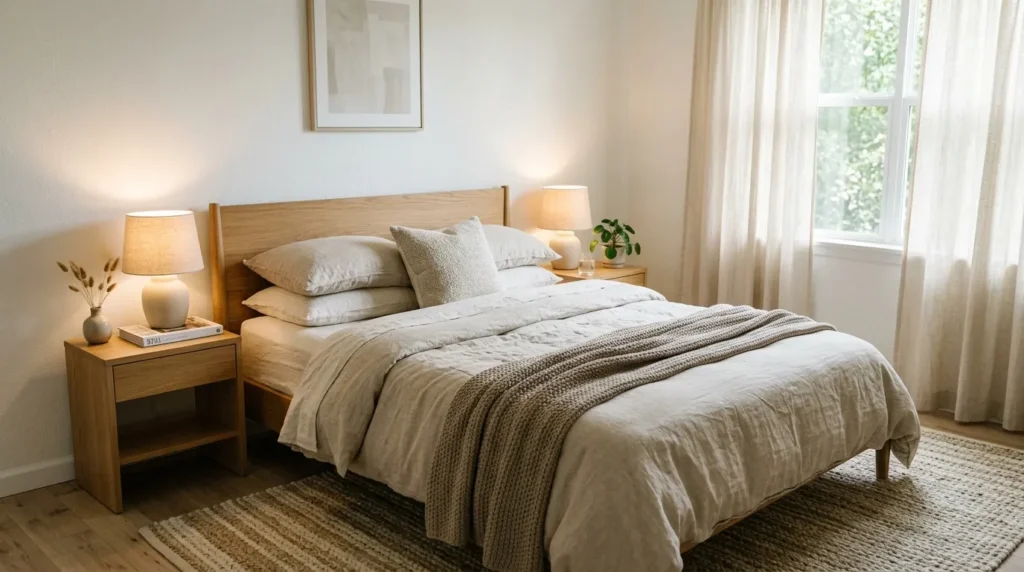
- Creates a restful space with quiet colors and cozy layers.
- Works with linen bedding, warm lamps, neutral rugs, and simple nightstands.
- Helps reduce visual clutter around sleep areas.
- Makes the room easier to reset every morning.
- Adds comfort without making the design feel heavy.
A soft bedroom can make daily life feel calmer at the beginning and end of the day. This idea works because the bedroom should support rest, not visual busyness. Start with simple bedding in cream, white, beige, or taupe. Add a textured throw, two or three pillows, warm bedside lamps, and curtains that soften the windows. Keep nightstands simple with only what you actually use. In my experience, bedrooms feel cleaner when the bed is the clear focal point.
The transformation feels peaceful and practical. A neutral rug can warm the floor, while linen bedding gives the room a relaxed, breathable look. Closed drawers or baskets help hide books, chargers, skincare, and small items that often crowd the space. This setup works for large bedrooms, small bedrooms, and apartments because it focuses on comfort first. A soft bedroom does not need heavy styling. It needs clean surfaces, gentle light, good textures, and a layout that makes rest feel easy.
10. Calm Corners
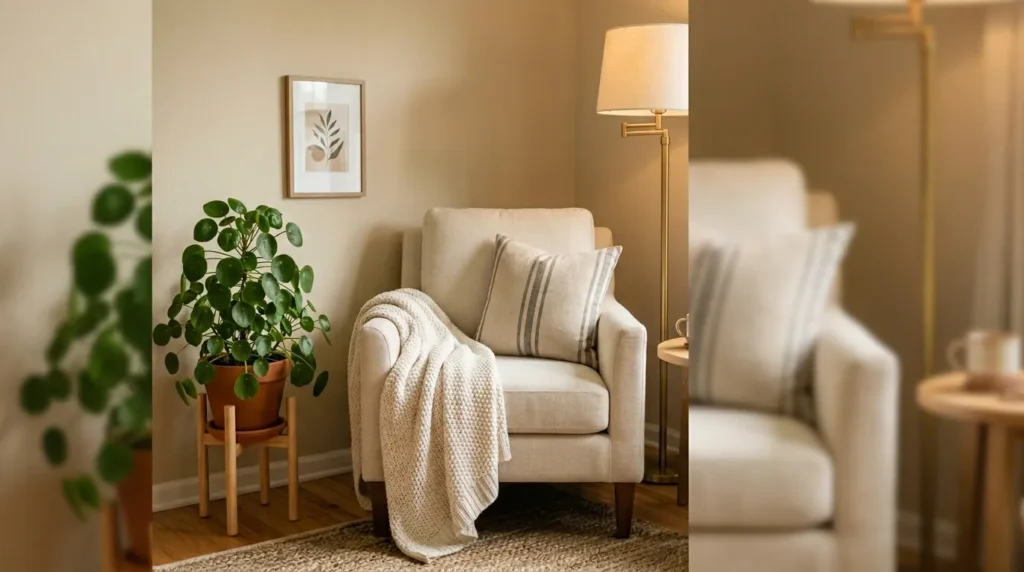
- Turns unused spaces into peaceful, useful areas.
- Works with accent chairs, small tables, lamps, baskets, and plants.
- Great for reading, coffee, journaling, or quiet phone calls.
- Adds function without crowding the main room.
- Makes the home feel thoughtful and complete.
Calm corners make a home feel more intentional because they give empty spaces a purpose. This idea works especially well in living rooms, bedrooms, hallways, and open layouts where one area feels unfinished. Add a comfortable chair, a small side table, a lamp, and one soft throw. Keep the styling simple so the corner feels restful instead of crowded. A basket nearby can hold books, blankets, or magazines without creating mess.
The finished corner becomes a small daily retreat. It can be used for reading, coffee, journaling, prayer, phone calls, or simply sitting away from screens for a few minutes. This is a practical way to improve a Neutral Home without renovating or buying large furniture. Choose pieces that match the rest of your palette so the corner blends naturally. With soft lighting, warm texture, and a little breathing room, even an overlooked corner can feel beautiful.