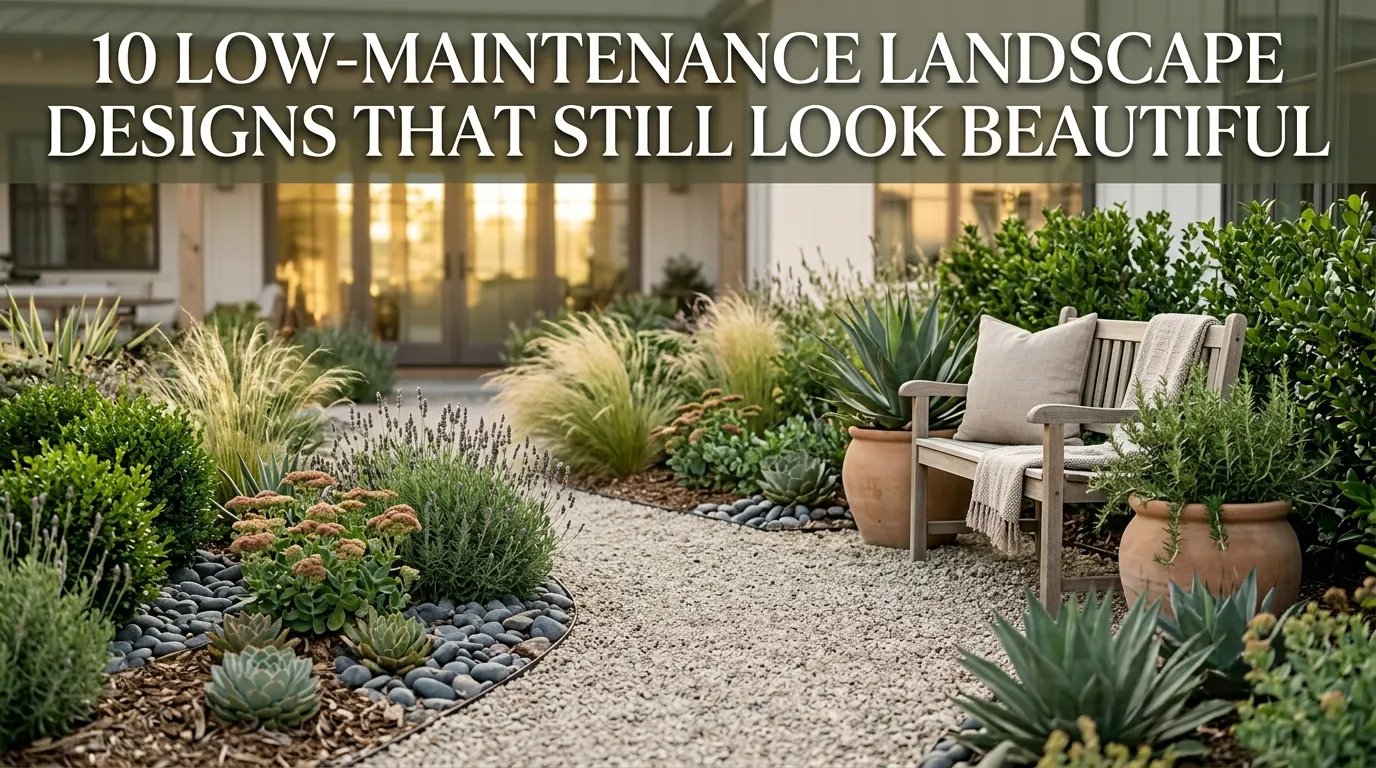
10 Low-Maintenance Landscape Designs That Still Look Beautiful
For years, I assumed a beautiful yard and a low-maintenance yard were two different things. I spent one entire summer fighting with a lawn that needed watering twice a day, edging every weekend, and still managed to brown out by August. It wasn’t until a neighbor showed me her gravel-and-native-plant front yard, which she touched maybe once a month, that I realized how wrong I’d been. Her yard looked more intentional than mine, and it required a fraction of the effort.
A mistake many homeowners make is assuming low-maintenance automatically means low-impact, or worse, that it means gravel and a few cacti and nothing else. In my experience, the opposite is true. The best low-maintenance landscapes are often more visually layered than a traditional lawn, because they rely on texture, structure, and seasonal interest instead of a single, high-upkeep patch of grass.
I’ve noticed that homeowners who switch to a lower-maintenance design don’t just save time. They save water, reduce chemical use, and often end up with a yard that photographs beautifully in every season, not just the two months when the lawn happens to look decent. That’s why many landscape designers are moving away from traditional turf-heavy yards altogether, especially in regions where water restrictions and drought conditions make a thirsty lawn impractical.
This guide covers ten real-world, low-maintenance landscape designs you can adapt to almost any climate, yard size, or budget. Each one includes practical guidance on materials, layout, and plant choices, so you can start planning a yard that looks good with far less effort than a traditional lawn demands.
Table of Contents
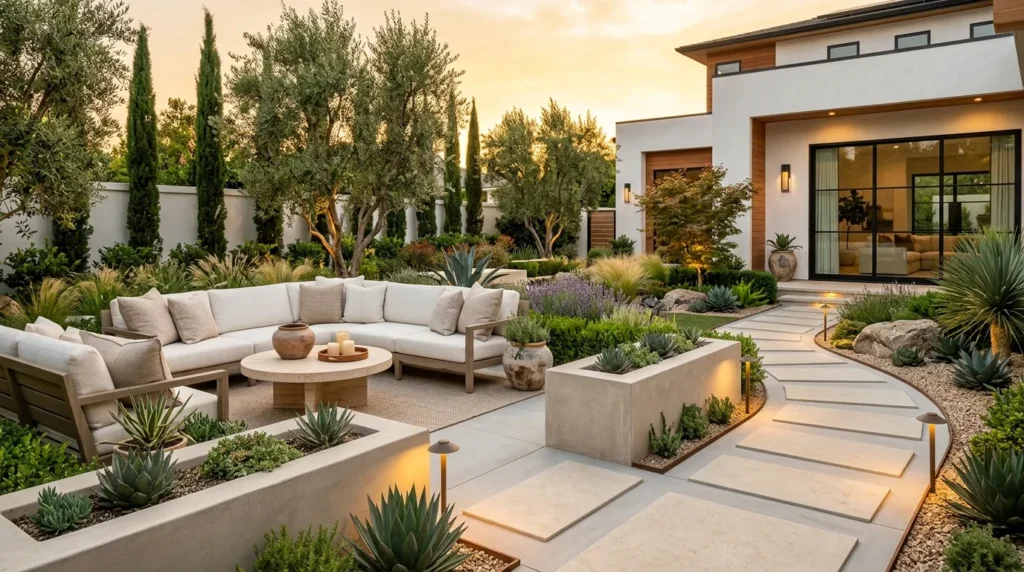
- Native Plant Beds — Using regionally adapted plants that thrive without extra care.
- Gravel Ground Cover — Replacing thirsty turf with textured, weed-resistant gravel.
- Evergreen Foundation Plantings — Structure and year-round color near the home.
- Raised Planter Boxes — Contained, easy-to-manage growing spaces.
- Artificial Turf Areas — A green lawn look without the mowing or watering.
- Drought-Tolerant Succulents — Sculptural plants built for neglect.
- Mulched Border Edges — Clean lines that suppress weeds naturally.
- Ornamental Grasses — Movement and texture with minimal upkeep.
- Permeable Paver Paths — Functional walkways that reduce lawn area.
- Perennial Ground Cover — A living lawn alternative that spreads on its own.
1. Native Plant Beds
Quick Benefits
- Requires little to no supplemental watering once established
- Naturally resists local pests and diseases
- Supports pollinators and local wildlife
- Reduces or eliminates the need for fertilizer
- Adapts well to your region’s natural rainfall patterns
Why It Works
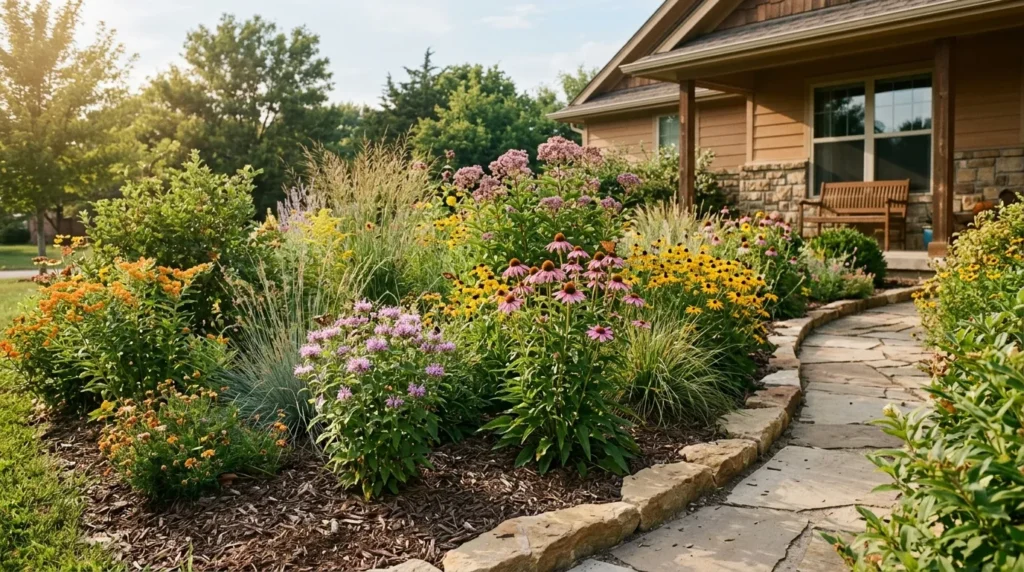
Native plants have already spent generations adapting to your exact climate, soil, and rainfall, which means they simply don’t need the intervention that non-native ornamentals require. A mistake many homeowners make is choosing plants because they look good at the nursery, without checking whether they’re suited to the region at all. I’ve seen native plant beds go an entire summer without supplemental watering while a neighboring bed of imported annuals wilted within a week. That resilience is the entire appeal of building a landscape around native species.
How To Style It
Start by researching which plants are native to your specific region — a quick search for your state’s native plant society will usually turn up a solid list. Group plants by height, with taller native grasses or shrubs toward the back of a bed and shorter flowering perennials toward the front. Mix bloom times so something is flowering in spring, summer, and fall, which keeps the bed visually interesting well beyond a single season.
2. Gravel Ground Cover
Quick Benefits
- Eliminates mowing entirely in the areas it covers
- Naturally suppresses weeds when installed with a barrier layer
- Handles foot traffic and drainage better than grass
- Works in nearly any climate, including drought-prone regions
- Pairs well with modern, Mediterranean, and desert-inspired styles
Why It Works
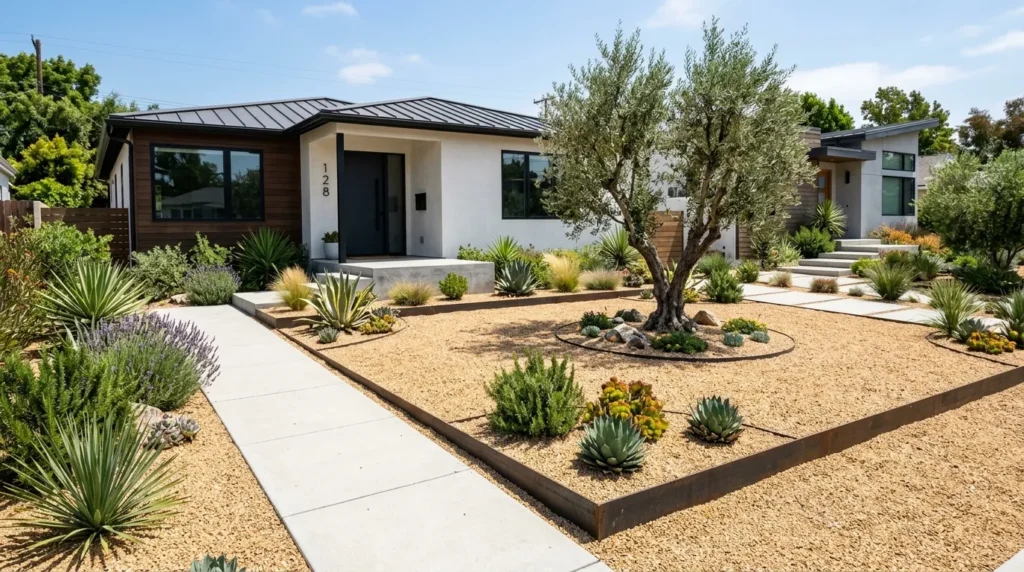
Gravel has become one of the most popular lawn replacements for a simple reason: it looks intentional rather than neglected, unlike a patch of dead grass. One thing that works especially well is using gravel not as a blank replacement for lawn, but as a textured base that highlights the plants and hardscaping around it. Because gravel doesn’t need water, mowing, or fertilizing, it dramatically reduces the ongoing labor of a front or back yard while still reading as a designed, deliberate space rather than an empty lot.
How To Style It
Install a weed barrier fabric beneath the gravel layer to prevent growth pushing through over time, then choose a gravel size and color that complements your home’s exterior — warmer tan tones for brick or stucco homes, cooler grays for modern facades. Break up large gravel areas with defined planting pockets of drought-tolerant shrubs or ornamental grasses so the space doesn’t feel like an empty lot. Edging with steel or stone keeps the gravel contained and gives the whole design a finished, tailored look.
3. Evergreen Foundation Plantings
Quick Benefits
- Provides year-round color and structure, even in winter
- Requires infrequent pruning compared to flowering shrubs
- Softens the transition between a home’s exterior and the yard
- Reduces the need for seasonal plant swaps
- Works in nearly every climate zone
Why It Works
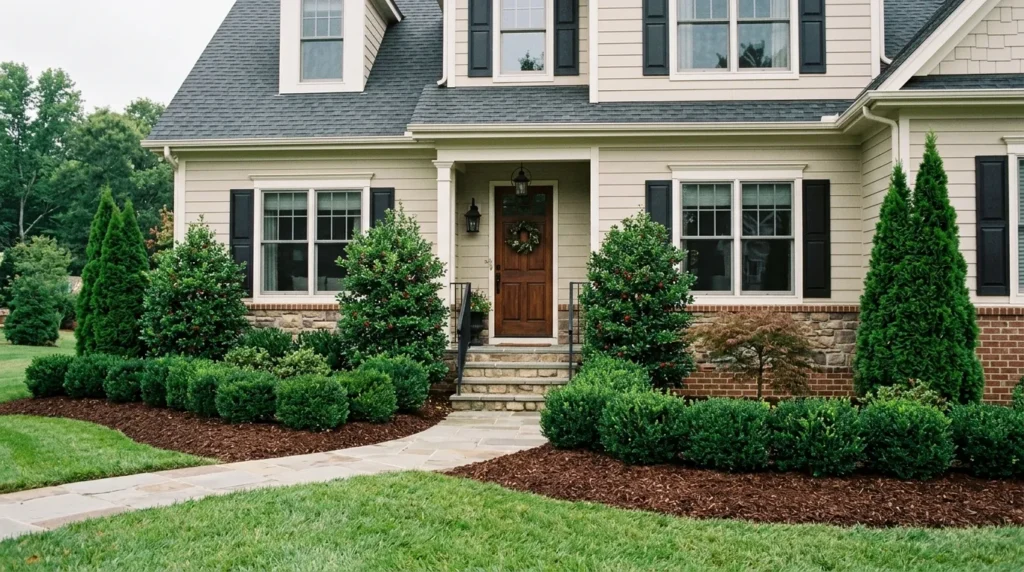
Evergreen shrubs and small trees do the heavy lifting in a low-maintenance landscape because they hold their shape and color through every season, unlike deciduous plants that need seasonal cleanup or perennials that die back completely in winter. That’s why many designers recommend anchoring a yard with evergreens first, then layering in seasonal color afterward. A yard built entirely around plants that need to be replaced or cut back twice a year will always demand more attention than one built around plants that simply hold steady.
How To Style It
Choose two or three evergreen varieties in varying heights and textures — a low boxwood, a mid-height holly, and a taller arborvitae, for example — and repeat them along the foundation of the home for a cohesive, tailored look. Prune lightly once or twice a year to maintain shape rather than reactively cutting back overgrowth. Underplant with a low-maintenance ground cover instead of mulch alone, which reduces weeding even further while adding texture at the base of the shrubs.
4. Raised Planter Boxes
Quick Benefits
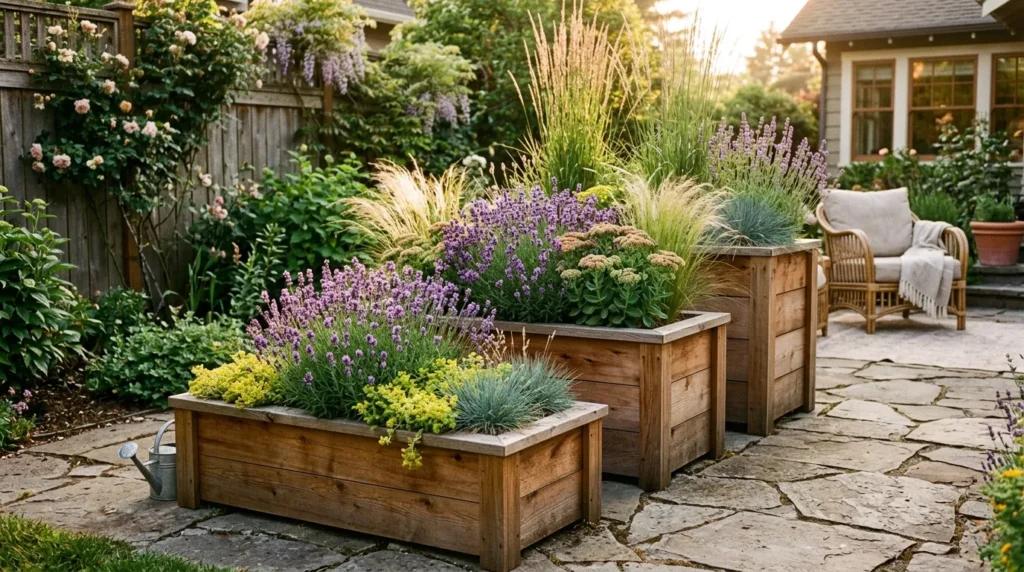
- Confines plant growth to a manageable, defined area
- Improves drainage and soil quality compared to in-ground beds
- Reduces weeding since the growing area is contained
- Works well for renters or homeowners with poor native soil
- Easy to adjust or replace without disturbing the rest of the yard
Why It Works
Raised planter boxes solve one of the biggest maintenance headaches in traditional gardening: poor or inconsistent soil. Because you control exactly what goes into the box, drainage and soil quality are dramatically easier to manage, which means less time spent troubleshooting struggling plants. I’ve seen this idea transform yards where the native soil was too clay-heavy or rocky to support much of anything, simply by lifting the growing area above grade and starting with a quality soil mix from day one.
How To Style It
Use cedar, composite, or metal planter boxes, which hold up better over time than untreated wood, and keep the height between 12 and 24 inches for easy access without excessive digging. Fill with a well-draining soil mix and choose low-maintenance perennials or drought-tolerant shrubs rather than annuals that need yearly replanting. Group two or three boxes at varying heights near an entry or patio for a layered, intentional look that also doubles as a natural privacy screen.
5. Artificial Turf Areas
Quick Benefits
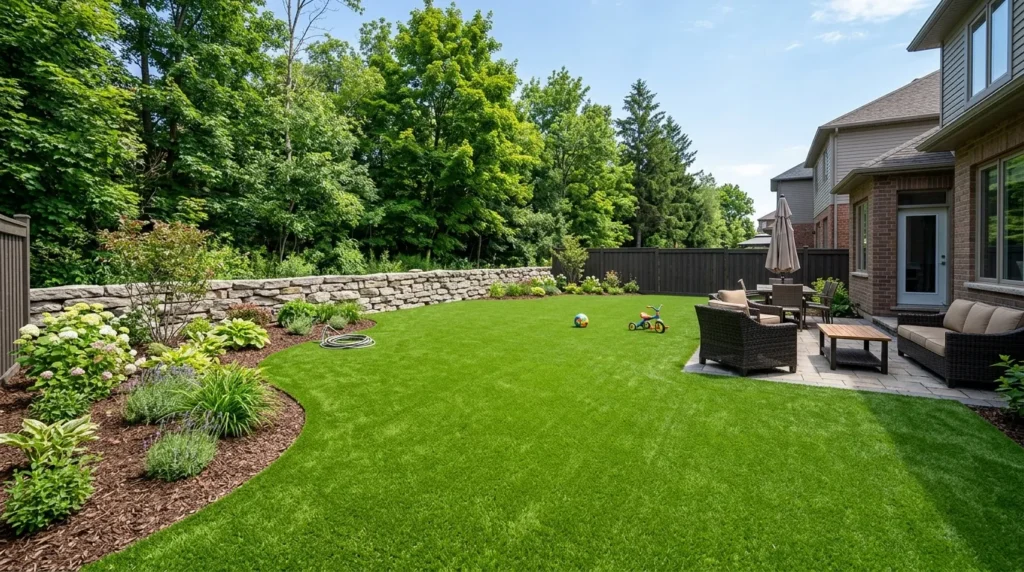
- Eliminates mowing, watering, and fertilizing entirely
- Stays green year-round regardless of drought or season
- Handles heavy foot traffic and pet use well
- Reduces long-term water bills significantly
- Requires only occasional rinsing to stay clean
Why It Works
Artificial turf has improved dramatically over the last decade, and today’s synthetic grass looks far more realistic than older versions, with better drainage and a more natural texture underfoot. If you’re anything like me, the idea of fake grass once felt like a compromise, but for households with pets, kids, or simply no interest in weekend mowing, artificial turf removes nearly all ongoing yard labor while still delivering the visual softness of a lawn. It’s a particularly practical option in regions facing water restrictions, where a real lawn is difficult to maintain responsibly.
How To Style It
Choose a turf blade height and color that matches your climate’s natural grass — cooler climates typically look best with a slightly darker green, while warmer regions suit a lighter, more yellow-green shade. Install a proper drainage base beneath the turf to prevent pooling, especially in yards with heavy rain. Frame turf areas with a mulched or gravel border and real plantings around the edges, which keeps the space from reading as artificial and instead blends it naturally into the rest of the landscape.
6. Drought-Tolerant Succulents
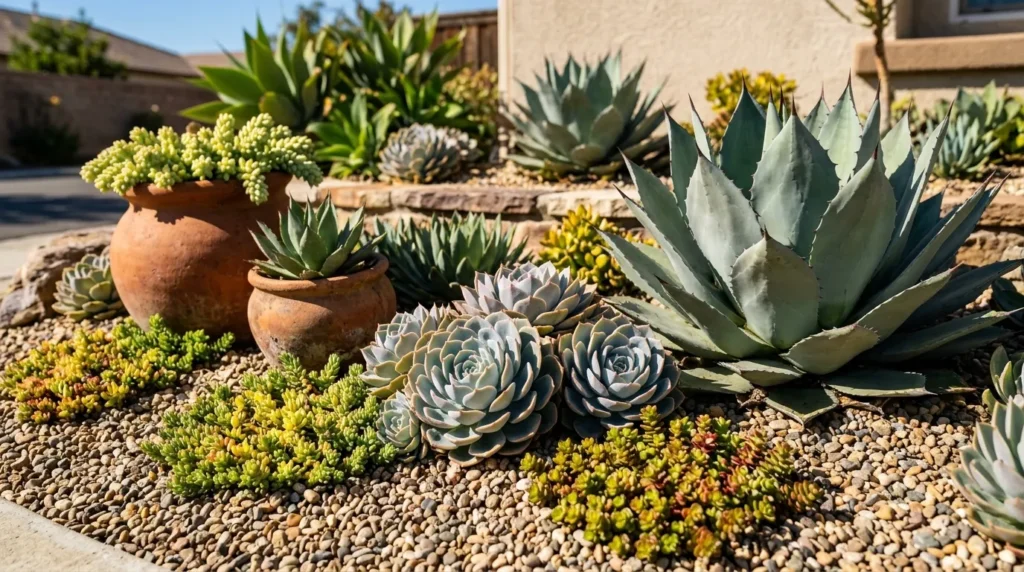
Quick Benefits
- Survives extended periods without water
- Adds sculptural, modern visual interest
- Requires minimal fertilizing or pest control
- Thrives in containers or in-ground beds alike
- Works especially well in hot, sunny yards
Why It Works
Succulents store water in their leaves and stems, which is exactly why they tolerate neglect so well — a missed watering or two simply doesn’t bother them the way it would a thirsty annual. One simple trick I always suggest for hot, sunny yards is leaning into succulents rather than fighting the climate with plants that need constant supplemental water. Beyond the practical benefit, succulents bring a strong sculptural quality to a landscape, with rosette shapes and varied textures that read as intentional and modern rather than sparse.
How To Style It
Group succulents by size and shape rather than scattering them randomly — taller agave or yucca toward the back, rosette-forming echeveria in the middle, and low-growing sedum along the front edge. Plant in well-draining soil, ideally amended with sand or a cactus mix, and avoid low spots where water might pool after rain. Use succulents in both in-ground beds and containers near entries or patios for a cohesive look that ties different areas of the yard together.
7. Mulched Border Edges
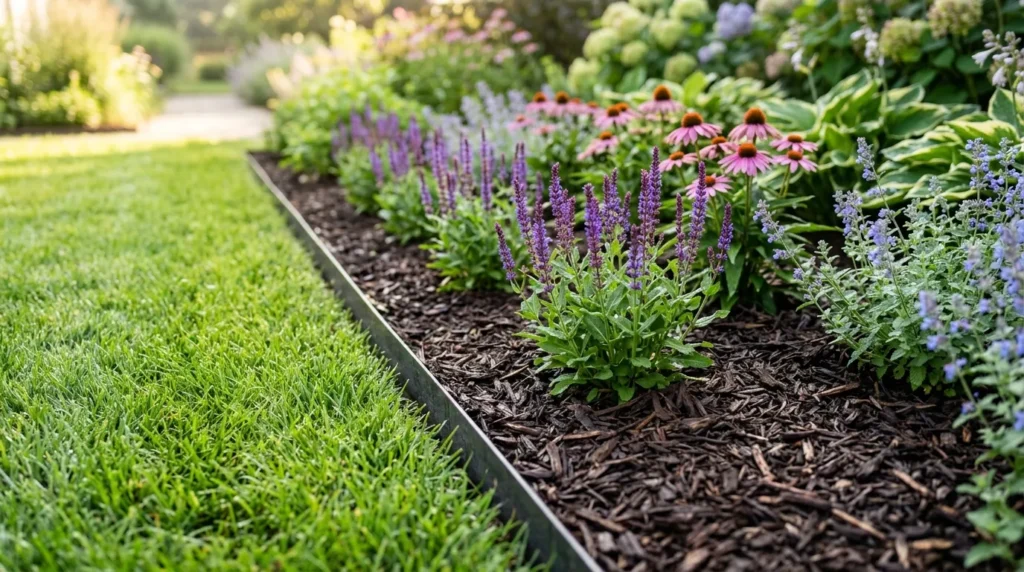
Quick Benefits
- Suppresses weeds naturally without chemical intervention
- Retains soil moisture, reducing watering frequency
- Creates clean, defined lines throughout the landscape
- Improves soil health as it breaks down over time
- Inexpensive to install and refresh annually
Why It Works
A well-mulched border does more work than most homeowners realize. Beyond simply looking tidy, mulch suppresses weed growth by blocking sunlight, retains soil moisture so beds need less frequent watering, and slowly breaks down to improve soil quality. A mistake many homeowners make is skipping mulch or applying it too thin, which allows weeds to push through within weeks. A properly applied mulch layer, by contrast, can keep a bed nearly weed-free for most of a growing season.
How To Style It
Apply mulch two to three inches deep around plants, keeping it a few inches away from stems and trunks to prevent rot. Choose a mulch color and material that complements your home’s exterior — dark brown or black mulch tends to make plant colors pop, while lighter wood chips suit a more casual, natural look. Refresh the top layer once a year rather than piling on new mulch over old, which can create a compacted layer that blocks water from reaching the soil.
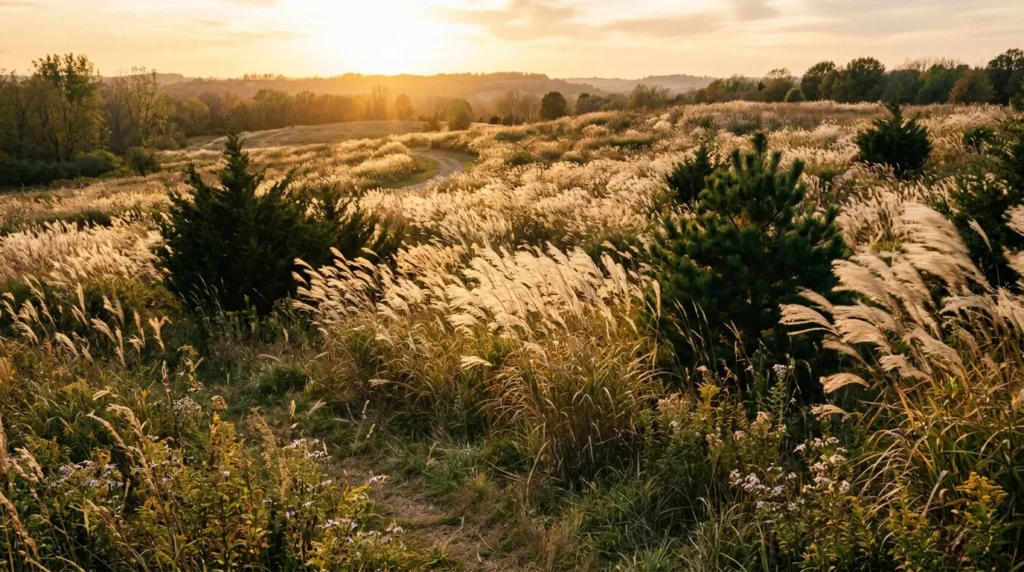
8. Ornamental Grasses
Quick Benefits
- Adds movement and texture without regular pruning
- Tolerates drought better than most flowering perennials
- Provides four-season interest, including winter structure
- Requires only one annual cutback rather than ongoing maintenance
- Works in both formal and naturalistic landscape styles
Why It Works
Ornamental grasses bring a kind of visual movement that flowering plants simply can’t replicate, swaying with every breeze and catching light in a way that adds life to a landscape. I’ve noticed that yards which feel static and flat are often missing this element entirely. Grasses also require far less maintenance than most flowering perennials since they typically only need one significant cutback per year, in late winter or early spring, rather than ongoing deadheading or pruning throughout the growing season.
How To Style It
Plant ornamental grasses in drifts of three or more for the best visual impact, rather than as single scattered specimens, and vary the heights to create layers throughout a bed. Leave the dried seed heads and foliage standing through winter for texture and interest, then cut the entire clump back to a few inches above the ground in late winter before new growth emerges. Pair grasses with structural evergreens or succulents for contrast between soft, moving texture and solid, static form.
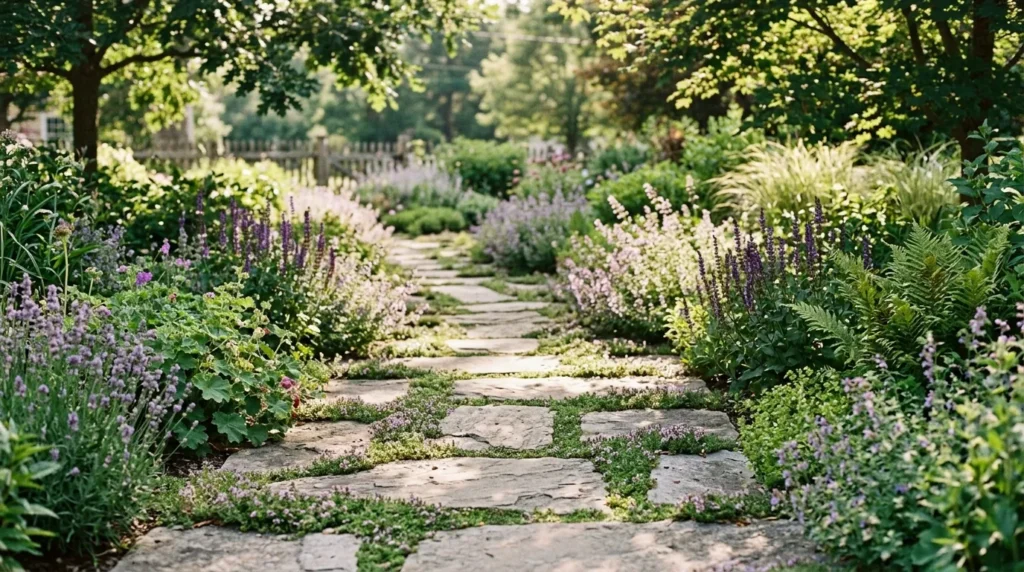
9. Permeable Paver Paths
Quick Benefits
- Reduces the total lawn area that needs mowing and watering
- Improves drainage compared to solid concrete surfaces
- Adds structure and defined circulation through the yard
- Requires minimal upkeep beyond occasional weeding between joints
- Increases usable outdoor living space
Why It Works
Replacing a section of lawn with a permeable paver path accomplishes two things at once: it reduces the total area that needs regular mowing and watering, and it creates a defined, functional space for movement through the yard. That’s why many designers recommend incorporating hardscaping like this into even a small yard, since it immediately cuts down on the total green space that requires upkeep while adding visual structure. Permeable pavers also allow water to filter through naturally, which reduces runoff compared to solid poured concrete.
How To Style It
Choose a paver material and pattern that complements your home’s architecture — natural stone for a more organic look, or clean-cut concrete pavers for a modern feel. Leave small gaps between pavers filled with gravel or a low-growing ground cover like creeping thyme, which softens the hard edges and adds a touch of green without any real maintenance. Use the path to connect key areas of the yard, like a patio to a garden bed, so it feels functional rather than purely decorative.
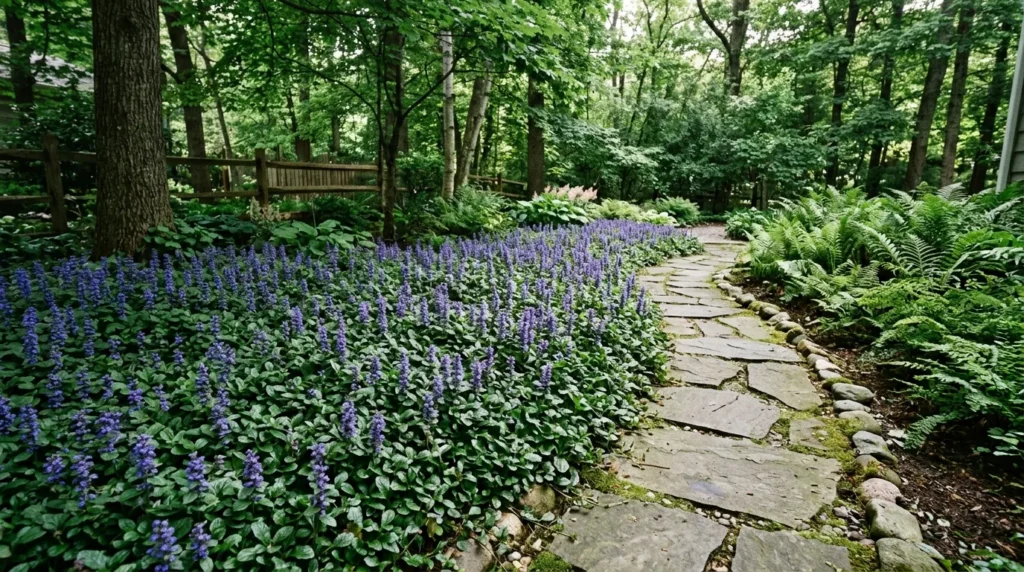
10. Perennial Ground Cover
Quick Benefits
- Spreads naturally to fill in bare areas over time
- Requires far less mowing and watering than traditional turf
- Suppresses weeds by densely covering the soil
- Tolerates foot traffic in many varieties
- Provides a soft, green lawn alternative in shaded areas
Why It Works
Perennial ground covers like creeping thyme, clover, or sedum spread on their own to fill in bare patches, which means the plant does much of the maintenance work for you over time rather than requiring constant reseeding or patching the way traditional turf does. I’ve seen this idea transform shaded yards in particular, where regular grass often struggles and thins out, leaving bare dirt behind. A ground cover suited to shade fills in those same problem areas and actually thrives there instead of fighting a losing battle against the lack of sun.
How To Style It
Choose a ground cover suited to your yard’s specific light conditions — creeping thyme and sedum for full sun, and varieties like ajuga or vinca for shadier spots. Plant in small plugs spaced a foot or so apart rather than trying to cover the entire area at once, since most ground covers will fill in the gaps naturally within one to two growing seasons. Use ground cover as a full lawn replacement in smaller yards, or as a border transition between a lawn and garden beds in larger ones.
Frequently Asked Questions
What is the easiest low-maintenance landscaping option for beginners? Gravel ground cover paired with a few structural evergreen shrubs is one of the easiest starting points. It requires no mowing or regular watering once installed, and mistakes are far less costly than with a full plant-based design, since gravel doesn’t die if you forget about it for a season.
Do low-maintenance landscapes cost more upfront than a traditional lawn? Often yes, since materials like gravel, pavers, and mature plants have a higher initial cost than grass seed or sod. However, the long-term savings in water, mowing equipment, fertilizer, and time typically offset that upfront investment within a few years.
Can I convert my lawn to a low-maintenance design gradually? Yes, and this is often the most manageable approach. Start by converting one section, like a side yard or a strip along the driveway, before tackling the entire property. This spreads out both the cost and the labor while letting you refine your plant choices as you go.
Are low-maintenance landscapes good for homes with pets? Many are, though some options work better than others. Artificial turf and mulched paths tend to hold up well to pet traffic, while delicate succulents or newly planted ground covers may need protection until they’re established.
How much water do drought-tolerant landscapes really save? Estimates vary by region and design, but converting a traditional lawn to drought-tolerant plantings commonly reduces outdoor water use significantly, since established native and drought-tolerant plants need little to no supplemental irrigation once settled in.
Will a low-maintenance yard still need any upkeep at all? Yes, though far less than a traditional lawn. Expect occasional weeding, an annual mulch refresh, seasonal pruning of shrubs, and a yearly cutback of ornamental grasses. The difference is in frequency and intensity, not a complete absence of care.
What’s the best low-maintenance option for a shaded yard? Perennial ground covers like ajuga or vinca, paired with shade-tolerant evergreens, tend to perform best in low-light areas where traditional grass typically struggles and thins out over time.
Conclusion
A beautiful yard and a low-maintenance yard aren’t opposites, and in many cases, the two go hand in hand once you choose the right combination of plants and materials for your climate and lifestyle. Whether you start with a native plant bed, a gravel foundation, or a simple swap to drought-tolerant ground cover, each of these ten approaches reduces the ongoing labor a traditional lawn demands while still delivering a space that looks intentional and cared for.
The best approach is rarely to overhaul an entire yard at once. Start with one or two ideas from this list — maybe converting a small section of lawn to gravel, or adding a few structural evergreens near your foundation — and expand from there as you see what works in your specific space and climate.
Over time, a low-maintenance landscape doesn’t just save you hours of yard work each month. It tends to look better through every season, hold up through drought or heavy rain, and give you a yard you can actually enjoy instead of one that feels like a constant chore.
Related Articles
- Drought-Tolerant Garden Ideas
- Small Backyard Patio Designs
- Front Yard Curb Appeal Upgrades
- DIY Garden Border Ideas
- Native Plant Garden Layouts