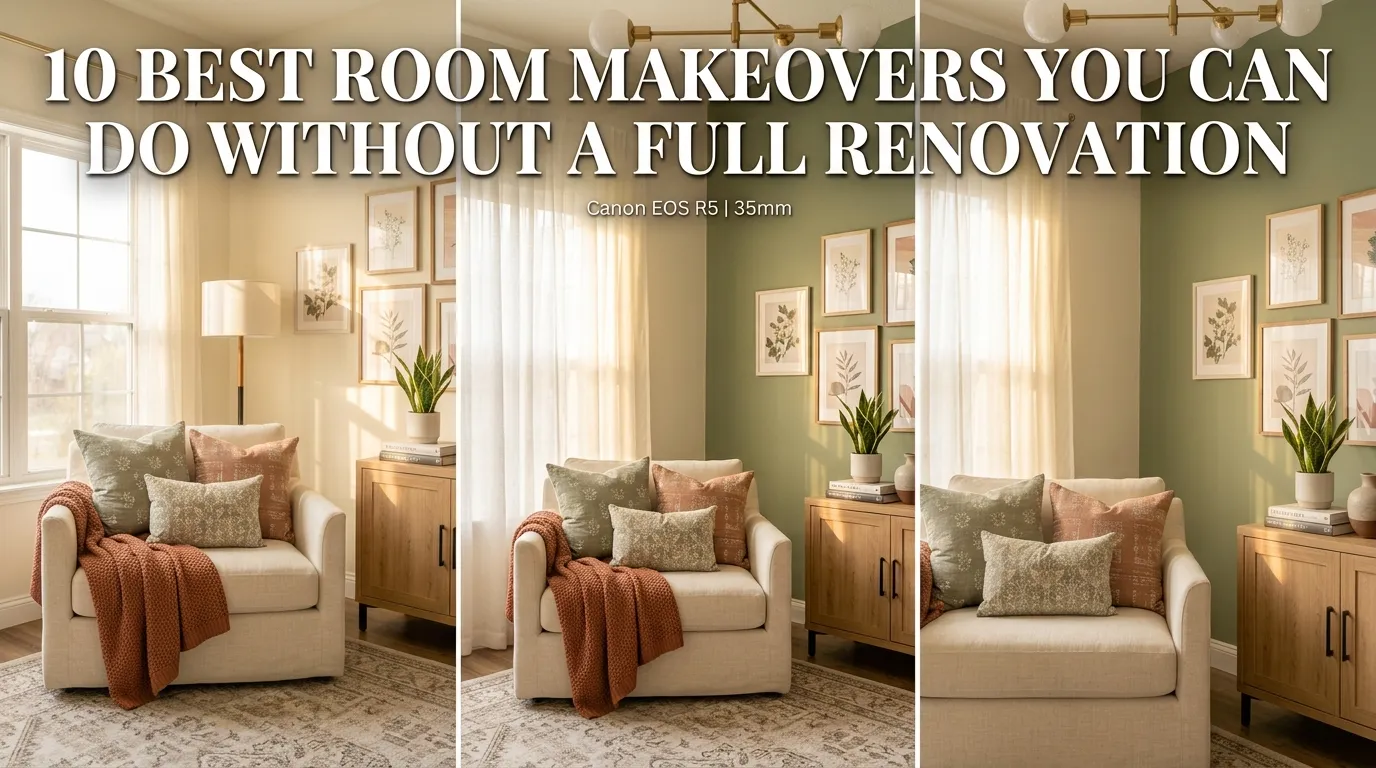
10 Best Room Makeovers You Can Do Without a Full Renovation
A few years ago, I helped a friend “redo” her living room, and by the end of the weekend, we hadn’t moved a single wall, replaced a floor, or spent anywhere close to what a full renovation would cost. We rearranged the furniture, swapped out the lighting, layered in a new rug, and updated a handful of textiles. When she posted a photo afterward, several people assumed she’d hired a designer and gutted the space. She hadn’t. She’d simply made a series of smart, targeted changes.
A mistake many homeowners make is assuming a room makeover requires construction, a big budget, or months of planning. In my experience, some of the most dramatic transformations come from a handful of focused updates rather than a complete overhaul. The furniture you already own, arranged more intentionally, often does more for a room than an expensive new purchase.
I’ve noticed that the rooms people respond to most on Pinterest aren’t always the most expensive ones. They’re the ones that feel cohesive, intentional, and lived-in, which is something you can achieve with a weekend, a clear plan, and a handful of the right changes. That’s why many designers recommend starting with smaller, high-impact updates before ever considering a full renovation.
This guide walks through ten of the best room makeover strategies, each one designed to transform a space without tearing anything out. You’ll find practical guidance for implementing each idea, along with the reasoning behind why it works, so you can prioritize the changes that will make the biggest difference in your own home.
Table of Contents
- Furniture Layout Reset — Rearranging what you already own for better flow.
- Statement Lighting Swap — Replacing fixtures for an instant style upgrade.
- Textile Refresh — Updating pillows, throws, and curtains for a new feel.
- Gallery Wall Update — Curating art and photos into a cohesive display.
- Paint Color Refresh — Changing wall color for a completely different mood.
- Vintage Furniture Mix — Blending old and new pieces for character.
- Window Treatment Upgrade — Framing a room with better curtains or shades.
- Decluttered Surfaces — Editing down for a calmer, more intentional look.
- Rug Layering — Anchoring a room with the right rug choice and placement.
- Accent Furniture Swap — Replacing one key piece for maximum impact.
1. Furniture Layout Reset
Quick Benefits
- Costs nothing since you’re using furniture you already own
- Improves traffic flow and conversation areas
- Makes a room feel larger or more balanced
- Reveals whether you actually need new furniture at all
- Can be undone easily if the new layout doesn’t work
Why It Works
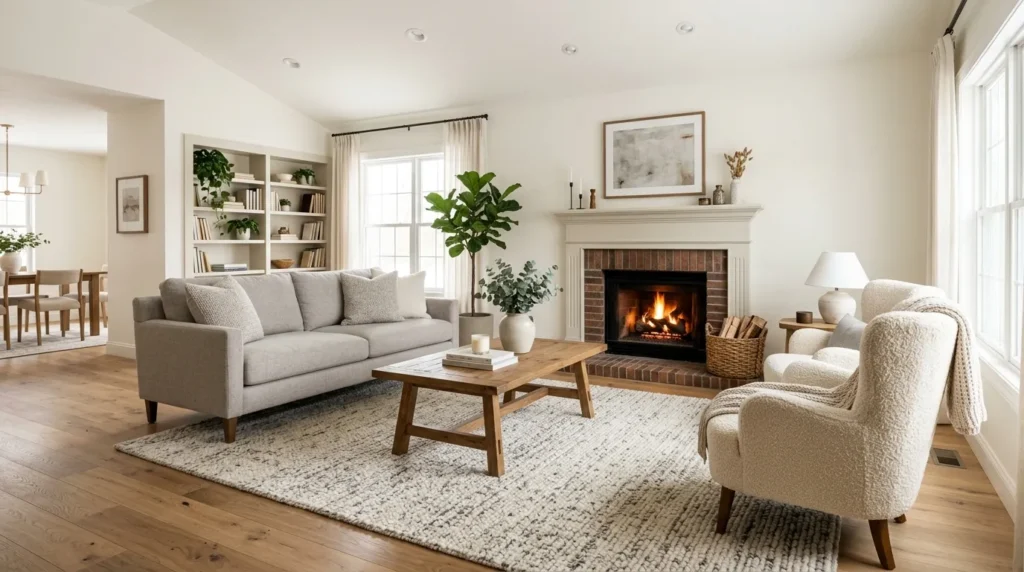
Most rooms are arranged the way furniture happened to fit when it was first moved in, not the way that actually serves how the room is used. A mistake many homeowners make is assuming a room needs new furniture when it really just needs a better layout. I’ve seen this idea transform living rooms simply by floating the sofa away from the wall to create a conversation area, or by angling a chair to open up a walking path. The furniture doesn’t change. The way the room functions and feels completely does.
How To Style It
Start by identifying the room’s natural focal point — a fireplace, a window, or a media wall — and arrange the main seating to face or relate to it rather than the nearest wall. Pull furniture a few inches away from walls to create a sense of intentional grouping instead of a room that looks pushed to the perimeter. Walk the space afterward to check traffic flow, making sure there’s a clear, unobstructed path between doorways and major furniture pieces.
2. Statement Lighting Swap
Quick Benefits
- Changes the entire mood of a room in one afternoon
- Draws the eye upward, making ceilings feel taller
- Works as a focal point without any additional decor
- Relatively affordable compared to furniture or paint
- Improves both function and style simultaneously
Why It Works
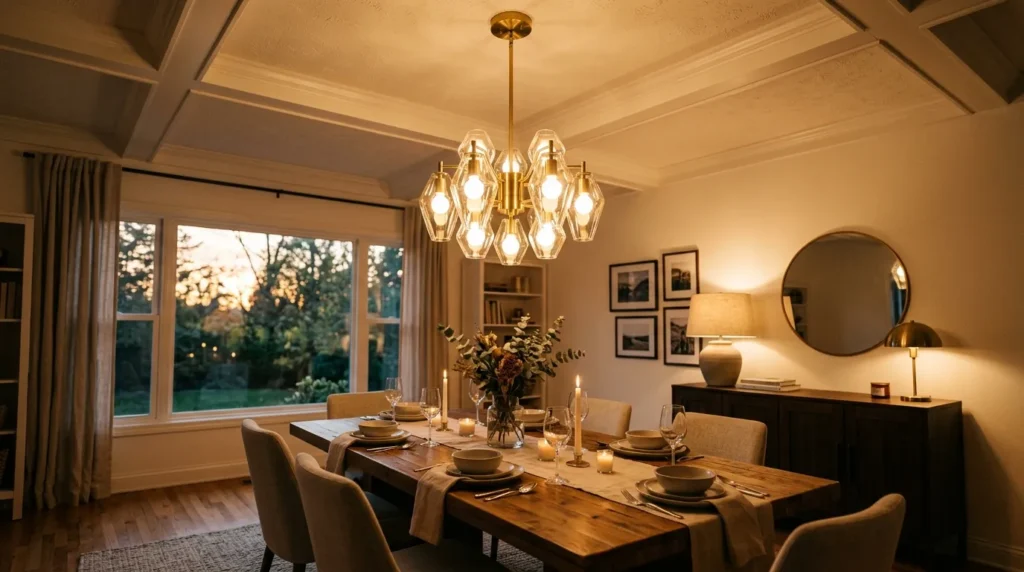
Lighting does more to set the tone of a room than almost any other single element, and yet it’s often the last thing homeowners think to update. One thing that works especially well is swapping a builder-grade flush mount for a statement pendant or chandelier, which instantly elevates a space without touching anything else in the room. That’s why many designers recommend lighting as one of the first updates in any room makeover — it changes the entire feel of a space while requiring only a single fixture swap.
How To Style It
Choose a fixture in proportion to the room; a dining table generally looks best with a pendant roughly two-thirds the width of the table, hung about 30 to 36 inches above the surface. In living rooms, consider layering lighting instead of relying on a single overhead source — a floor lamp, a table lamp, and an overhead fixture together create a warmer, more dimensional feel than one light alone. Choose a finish that complements existing metals in the room, like brass, matte black, or brushed nickel, so the new fixture feels intentional rather than mismatched.
3. Textile Refresh
Quick Benefits
- One of the most affordable ways to update a room’s look
- Easy to swap seasonally without a major investment
- Adds texture and softness to a space quickly
- Requires no tools, painting, or installation
- Lets you experiment with color and pattern with low risk
Why It Works
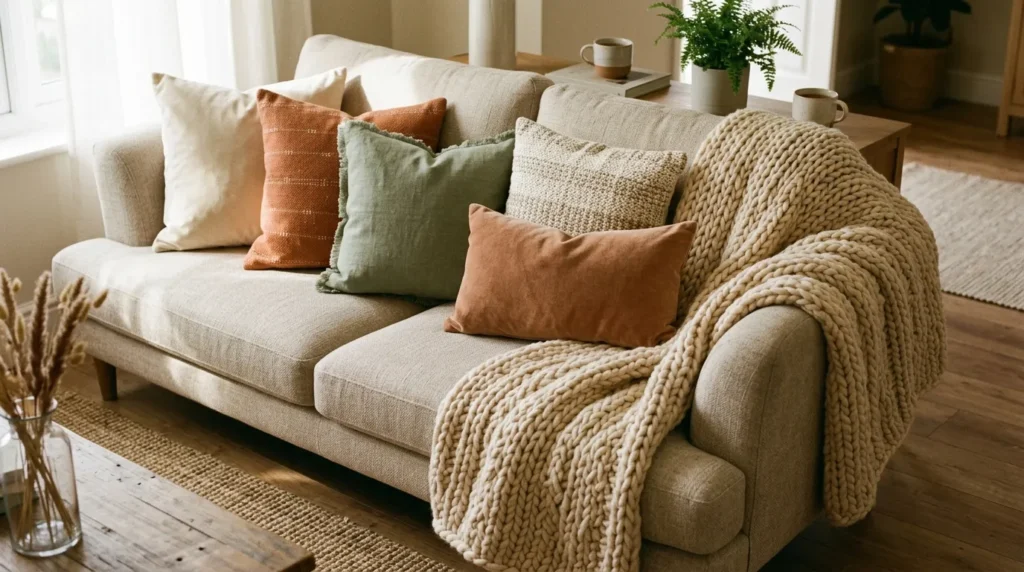
Textiles — pillows, throws, curtains, and rugs — are the fastest and least expensive way to shift a room’s entire feel without touching the furniture or walls. I’ve noticed that a tired, dated room often just has tired, dated textiles, while the furniture underneath is perfectly fine. Updating a few key soft pieces can make a room feel current again without the expense of replacing anything structural, and it gives you room to experiment with color or pattern trends without committing to something permanent like paint.
How To Style It
Choose two to three coordinating pillow fabrics rather than a single matching set, which reads as more curated and less like a matched showroom display. Swap heavier winter textiles for lighter linens in warmer months, and vice versa, to keep the room feeling seasonally appropriate. If your curtains are outdated, prioritize replacing those first; floor-to-ceiling curtains hung close to the ceiling make the biggest visual impact of any single textile change in a room.
4. Gallery Wall Update
Quick Benefits
- Personalizes a space without a large investment
- Fills empty wall space that can make a room feel unfinished
- Creates a strong visual focal point
- Allows you to display meaningful photos and art together
- Easy to expand or rearrange over time
Why It Works
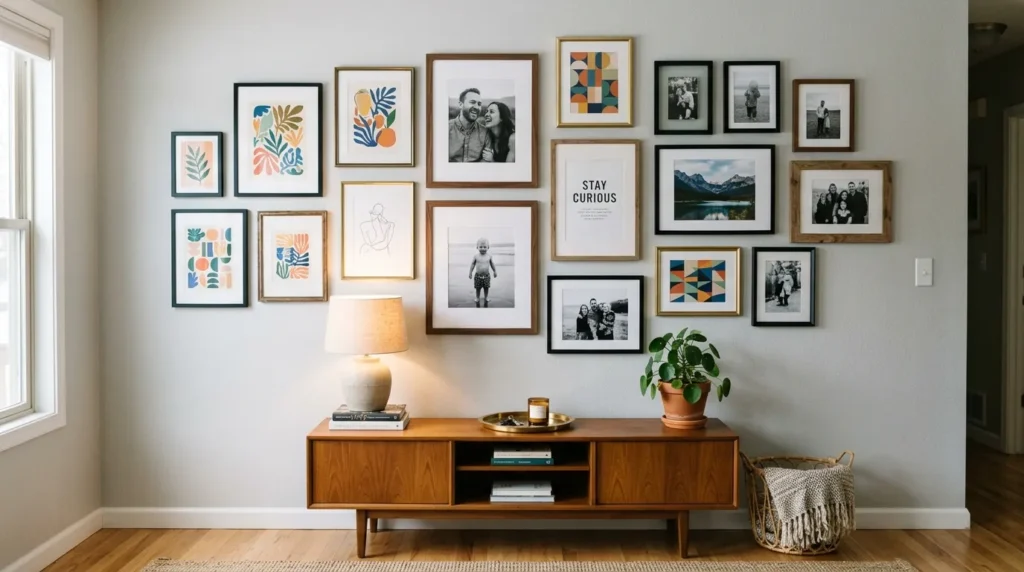
A blank wall, even in an otherwise well-decorated room, can make the whole space feel unfinished. A well-curated gallery wall solves that problem while adding personality that store-bought decor alone can’t provide. If you’re anything like me, you’ve collected art, prints, and photos over the years that never quite found a home. Bringing them together into a single, cohesive display turns scattered pieces into an intentional design feature, rather than leaving them boxed up or scattered individually around the house.
How To Style It
Lay out your frames on the floor first to test the arrangement before committing to any wall holes, mixing frame sizes and orientations for visual interest rather than using all matching frames. Keep spacing consistent, generally two to three inches between frames, and choose a mix of frame finishes that share at least one common element, like color or material, to keep the display cohesive. Center the overall arrangement at eye level, roughly 57 to 60 inches from the floor to the center of the grouping.
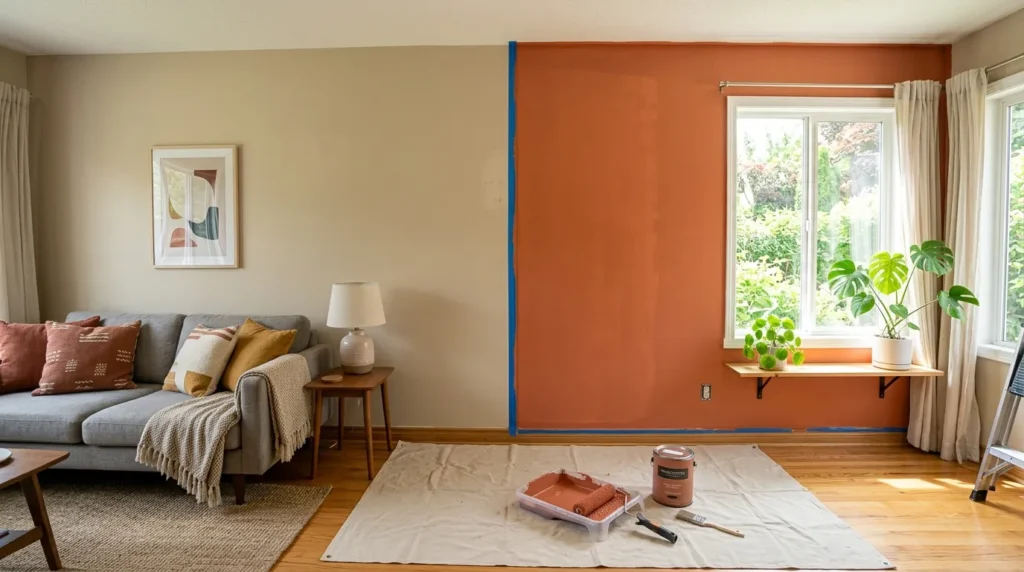
5. Paint Color Refresh
Quick Benefits
- One of the most cost-effective full-room transformations available
- Can make a small room feel larger or a large room feel cozier
- Sets the tone for every other design decision in the space
- Covers up scuffs, dated colors, and wear from previous years
- Reversible if you want to change direction later
Why It Works
Paint remains one of the single highest-impact, lowest-cost updates available for any room makeover. A mistake many homeowners make is spending money on new furniture or decor before addressing an outdated or poorly chosen wall color, which undermines everything else in the room. I’ve seen the exact same furniture arrangement look completely different simply by changing the wall color from a dated beige to a warmer, more current neutral. Because paint is relatively inexpensive and fully reversible, it’s one of the lowest-risk, highest-reward changes you can make.
How To Style It
Test your chosen color in the actual room across multiple times of day before committing to a full repaint, since lighting dramatically affects how a color reads. Consider painting trim and ceilings in addition to walls for a more finished, cohesive look, rather than treating wall color as an isolated decision. If a full repaint feels like too much, start with a single accent wall or a smaller connected space, like a hallway or powder room, to test the color’s impact before expanding it further.
6. Vintage Furniture Mix
Quick Benefits
- Adds character and history that new furniture alone can’t replicate
- Often more affordable than buying everything new
- Creates a more collected, personal look
- Reduces waste by giving older pieces new life
- Blends well with both traditional and modern styles
Why It Works
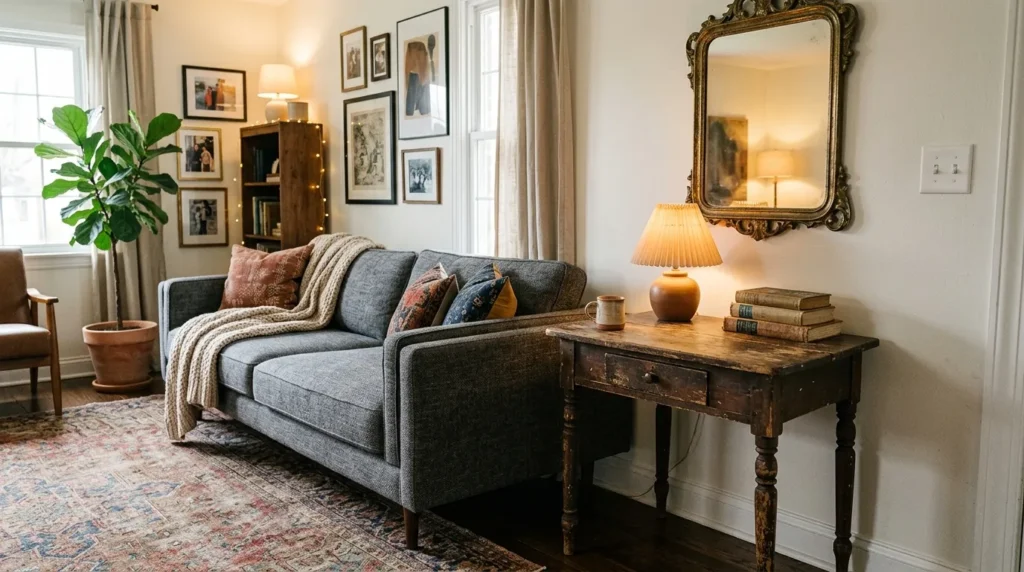
A room filled entirely with brand-new furniture can sometimes feel sterile, like a showroom rather than a home. One simple trick I always suggest is mixing in at least one vintage or secondhand piece — an antique side table, a vintage mirror, a reupholstered chair — which immediately adds a sense of history and personality that new furniture alone struggles to achieve. That’s why many designers recommend blending old and new rather than furnishing a room entirely from one source or one era.
How To Style It
Start small with a single vintage accent piece rather than overhauling the entire room at once, since one well-placed older item can anchor a space without overwhelming it. Look for pieces with solid wood construction or interesting hardware, which tend to hold up better and photograph more beautifully than newer, mass-produced alternatives. Pair a vintage piece with more streamlined, contemporary furniture around it, letting the older item stand out as an intentional focal point rather than getting lost among other traditional pieces.
7. Window Treatment Upgrade
Quick Benefits
- Frames a room and adds a finished, polished feel
- Improves natural light control and privacy
- Makes windows and ceilings appear taller
- Softens hard architectural lines in a room
- Relatively simple to install without professional help
Why It Works
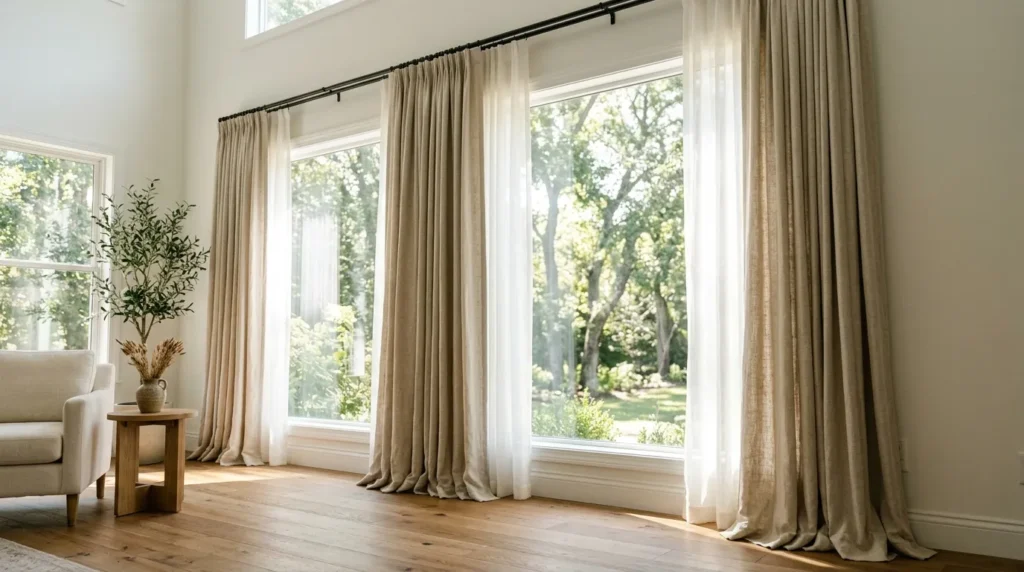
Bare or poorly fitted window treatments are one of the most common reasons a room feels unfinished, even when everything else is in place. I’ve noticed that homeowners often overlook curtains entirely, treating them as an afterthought rather than a core design element. Properly hung curtains do more than block light; they frame the entire window and, by extension, the room, adding a layer of softness and height that a bare window simply can’t provide.
How To Style It
Hang curtain rods as close to the ceiling as practical, rather than directly above the window frame, which creates the illusion of a taller window and higher ceiling. Choose curtains long enough to just graze the floor or gently pool, since curtains that stop short of the floor tend to look unfinished or too small for the window. Layer sheers behind heavier drapes if you want both privacy and light control, which also adds visual depth to the window itself.
8. Decluttered Surfaces
Quick Benefits
- Makes a room feel instantly calmer and more spacious
- Costs nothing beyond time and organization
- Highlights the pieces you actually want to showcase
- Improves how a room photographs for Pinterest or resale
- Creates a foundation that makes future decor decisions easier
Why It Works
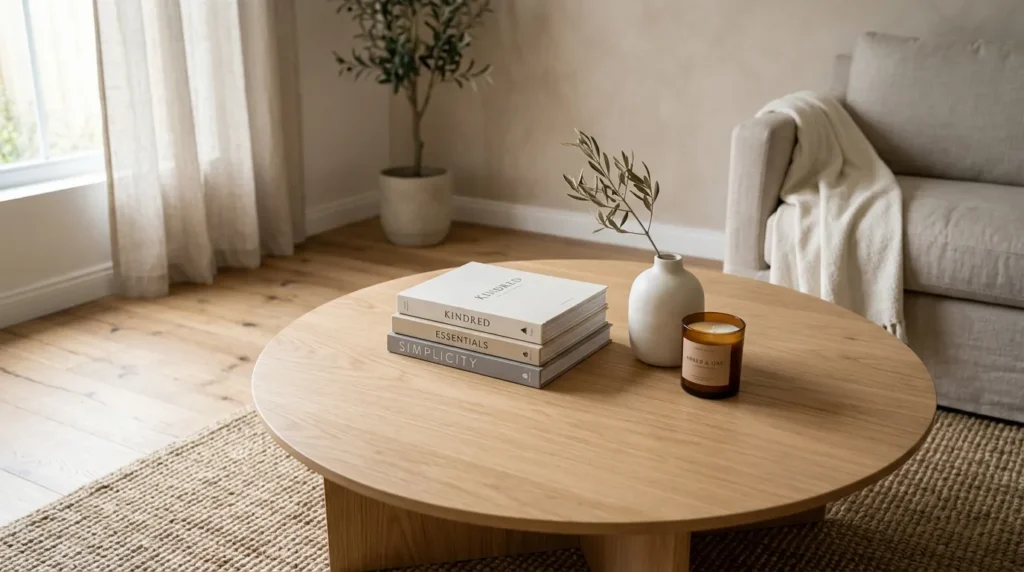
Before adding anything new to a room, editing down what’s already there often makes the biggest visible difference of any single change. A mistake many homeowners make is layering new decor on top of an already cluttered space, which only adds to the visual noise rather than resolving it. I’ve seen rooms transform dramatically simply by clearing surfaces down to a few intentional objects, since a decluttered space allows the good pieces you already own to actually stand out instead of competing with everything else.
How To Style It
Go surface by surface — coffee tables, shelves, countertops — and remove everything, then reintroduce only the pieces that add real visual or functional value. Group remaining objects in odd numbers, typically three, and vary their height and shape for a more curated look rather than a straight, even row. Store or donate anything that doesn’t serve a clear purpose or that you haven’t used or appreciated in the past year, which keeps the edit from creeping back to its original cluttered state.
9. Rug Layering
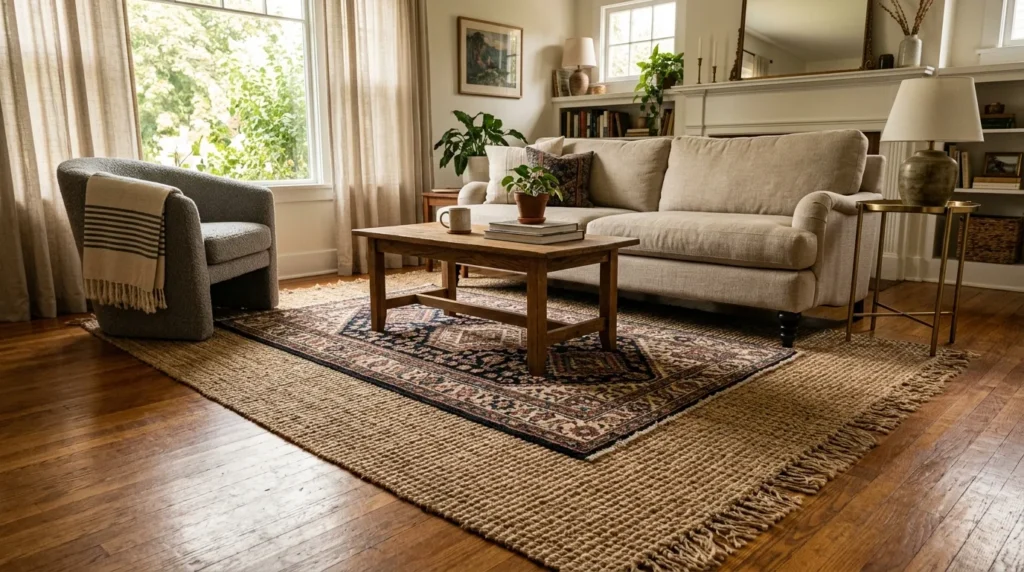
Quick Benefits
- Anchors furniture and defines separate zones in open spaces
- Adds warmth, texture, and color underfoot
- Helps balance hard flooring in larger rooms
- Can visually enlarge or define a space depending on placement
- Easy to update seasonally or as trends shift
Why It Works
A rug does more than add softness underfoot; properly sized and placed, it anchors an entire furniture arrangement and defines a room’s use, especially in open floor plans where multiple zones share the same space. That’s why many designers recommend rug placement as one of the first decisions in a room makeover rather than an afterthought. A too-small rug, floating in the middle of a room with furniture pushed to its edges, is one of the most common reasons a well-decorated room still feels slightly off.
How To Style It
In a living room, choose a rug large enough for at least the front legs of every major seating piece to rest on it, which visually ties the furniture grouping together. In a dining room, size the rug so chairs remain on it even when pulled out from the table. Layer a smaller, patterned rug over a larger neutral jute or sisal rug for added texture and visual interest, particularly in rooms that could otherwise feel flat or one-dimensional.
10. Accent Furniture Swap
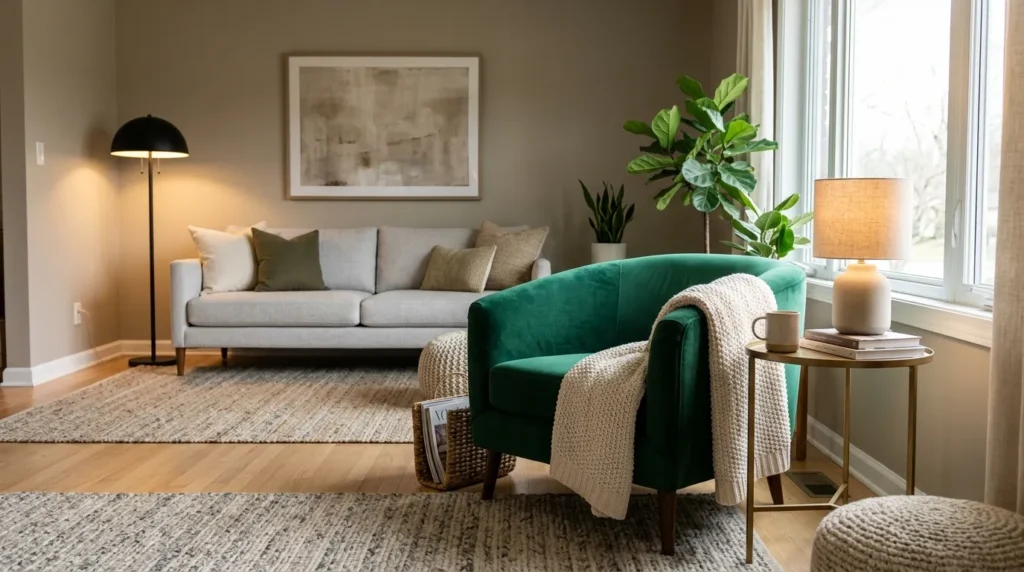
Quick Benefits
- Delivers a big visual impact with a single purchase
- Refreshes a room without replacing the entire furniture set
- Allows for experimenting with a bolder color or material
- Draws the eye to a new focal point
- More budget-friendly than a full furniture overhaul
Why It Works
You don’t need to replace every piece of furniture in a room to make it feel new again. One simple trick I always suggest is identifying the single most dated or least-loved piece in a room and replacing just that item, whether it’s an outdated coffee table, a worn accent chair, or a dated media console. I’ve seen this single-swap approach completely change how a room feels, since the new piece draws attention and sets a fresh tone that makes the rest of the existing furniture read as more current by association.
How To Style It
Choose an accent piece in a material, color, or shape that contrasts intentionally with the rest of the room — a curved chair in an otherwise angular space, or a bold color against a neutral backdrop. Keep the surrounding furniture consistent so the new piece stands out as a deliberate focal point rather than clashing with everything around it. Prioritize the piece that gets the most visual attention in the room, typically the coffee table, an accent chair, or whatever sits directly in the sightline from the room’s main entry point.
Frequently Asked Questions
What is the cheapest way to makeover a room? Rearranging existing furniture and decluttering surfaces cost nothing beyond time, and both can dramatically change how a room feels. After that, textile updates like pillows and throws typically offer the most visual impact for the lowest cost.
How long does a typical room makeover take? Many of the ideas in this list, like a furniture layout reset or a textile refresh, can be completed in a single afternoon or weekend. Larger updates like painting or replacing lighting fixtures usually take a full day or two, depending on the room’s size.
Should I paint or buy new furniture first when doing a makeover? Paint first. Wall color sets the tone for the entire room and is far less expensive to change than furniture, so choosing furniture around an already-finished wall color prevents mismatches and wasted purchases.
Do small budget changes really make a noticeable difference? Yes. A furniture layout reset, a lighting swap, or a rug change can transform how a room feels without any major expense, and small changes like these often make people assume a much bigger renovation took place.
How do I choose which room to makeover first? Start with the room you spend the most time in or the one that feels the most outdated relative to the rest of your home. High-traffic spaces like living rooms often deliver the most noticeable day-to-day impact from a makeover.
Can a room makeover increase my home’s resale value? Cosmetic updates like paint, lighting, and decluttering can improve how a home shows to potential buyers, though they typically won’t add significant resale value on their own the way a kitchen or bathroom renovation might. They do, however, make a space more appealing in photos and showings.
What’s the biggest mistake people make during a room makeover? Buying new furniture or decor before addressing the room’s layout, paint color, or lighting. Without those foundational elements in place first, even beautiful new pieces can end up clashing with or getting lost in the existing space.
Conclusion
A dramatic room makeover doesn’t require a full renovation, a designer, or a significant budget. Some of the most successful transformations come from a handful of focused, intentional changes: rearranging furniture you already own, updating lighting, refreshing textiles, or simply editing down what’s cluttering a surface.
Whether you start with a paint color refresh, a new rug, or a single accent furniture swap, the goal is the same — making a space feel more intentional and cohesive without unnecessary expense. Each of these ten approaches can stand alone or work together, so there’s no need to tackle all of them at once.
Pick the one or two changes that would make the biggest difference in your space right now, and start there. A room makeover built gradually, with attention to what the space actually needs, will almost always feel more finished and personal than one rushed all at once.
Related Articles
- Cozy Bedroom Ideas
- Small Living Room Layouts
- Budget-Friendly Home Decor
- DIY Accent Wall Ideas
- Neutral Home Styling