
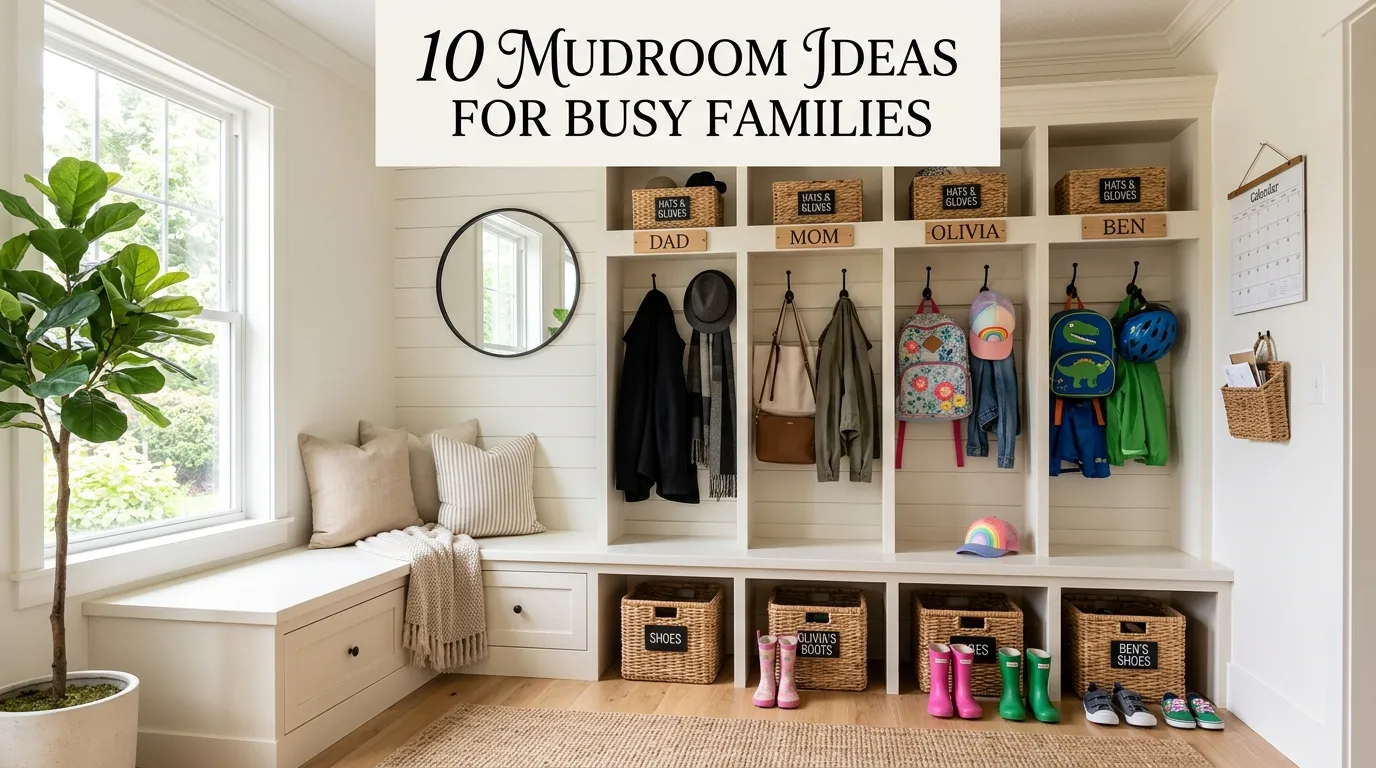
10 Mudroom Ideas for Busy Families
Introduction
A busy family home needs more than a pretty entrance. It needs a practical landing zone where shoes, backpacks, jackets, sports gear, pet supplies, lunchboxes, keys, and everyday clutter can land without taking over the kitchen or living room. That is exactly why a well-planned mudroom has become such a valuable space in many USA homes. Whether it sits near the garage door, back door, laundry room, side entrance, or hallway, this small area can make daily routines feel smoother and less stressful.
The best mudrooms are not just about built-ins or expensive custom cabinetry. They are about smart zones, easy-to-clean materials, family-friendly storage, and a layout that matches real habits. If kids drop shoes by the door, the storage should be right there. If backpacks pile on the floor, hooks and cubbies should be low enough to use. If pets come in muddy after rain, washable flooring and towel storage matter. These Mudroom Ideas are designed to help busy families create a space that feels organized, durable, welcoming, and realistic for everyday life.
A good mudroom should work hard without looking messy. It should offer a place to sit, hang, store, wipe, sort, charge, wash, and reset before the rest of the home gets cluttered. This guide shares practical and stylish ideas that work for large mudrooms, small entry areas, laundry-mudroom combinations, garage entries, farmhouse-style homes, suburban family houses, and compact spaces that need better organization.
1. Drop Zone Bench
- Creates a practical sitting spot for shoes, boots, and daily transitions
- Works well near garage doors, back doors, laundry entries, and family entrances
- Adds storage underneath with baskets, drawers, open shelves, or boot trays
- Helps kids and adults pause before bringing outdoor mess into the home
- Looks best with durable wood, painted cabinetry, washable cushions, and wall hooks
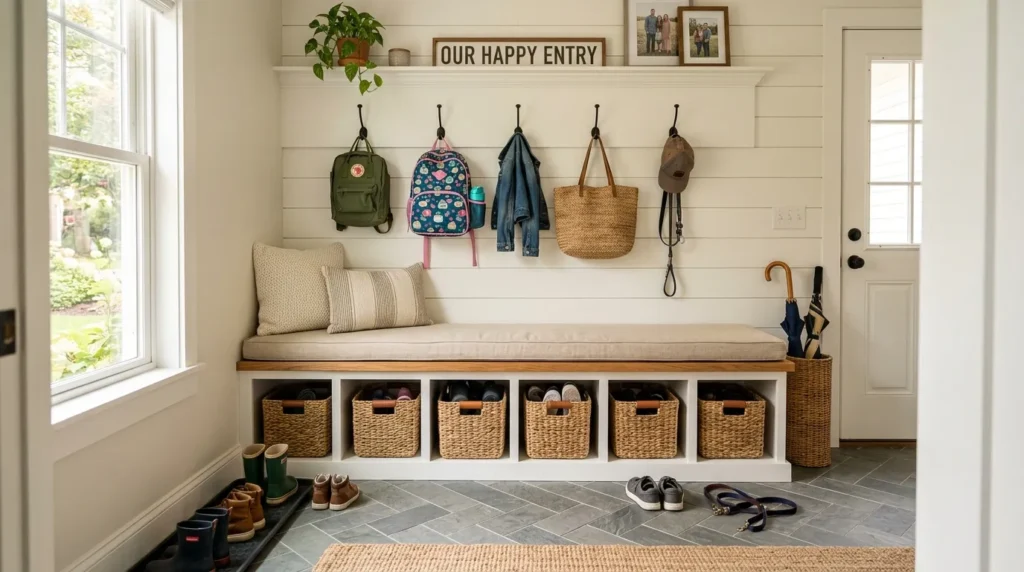
A bench can turn a chaotic family entrance into a calm daily landing spot. When everyone comes home with shoes, backpacks, coats, and bags, the first problem is usually where to stop and unload. A sturdy bench gives the space a clear purpose. It tells kids where to sit, where to remove shoes, and where outdoor items should begin to settle. In my experience, benches work best when they are placed directly beside the most-used door, not across the room where people are less likely to use them consistently.
The most useful bench designs combine comfort with storage. Open shelves underneath can hold shoes and baskets, while drawers can hide gloves, pet leashes, sunscreen, or extra socks. A boot tray under the bench helps catch mud, water, and winter slush before it spreads across the floor. If you add a cushion, choose indoor-outdoor fabric or a washable cover that can handle real family use. Wood, painted MDF, beadboard backs, and simple shaker-style details can make the area feel polished while still being tough enough for busy mornings and after-school routines.
2. Wall Hooks
- Keeps coats, backpacks, hats, and totes off the floor
- Works better than closets for fast family access
- Can be installed at kid-friendly heights for everyday independence
- Helps each family member claim a clear personal spot
- Looks stylish in black, brass, bronze, nickel, or wood peg finishes
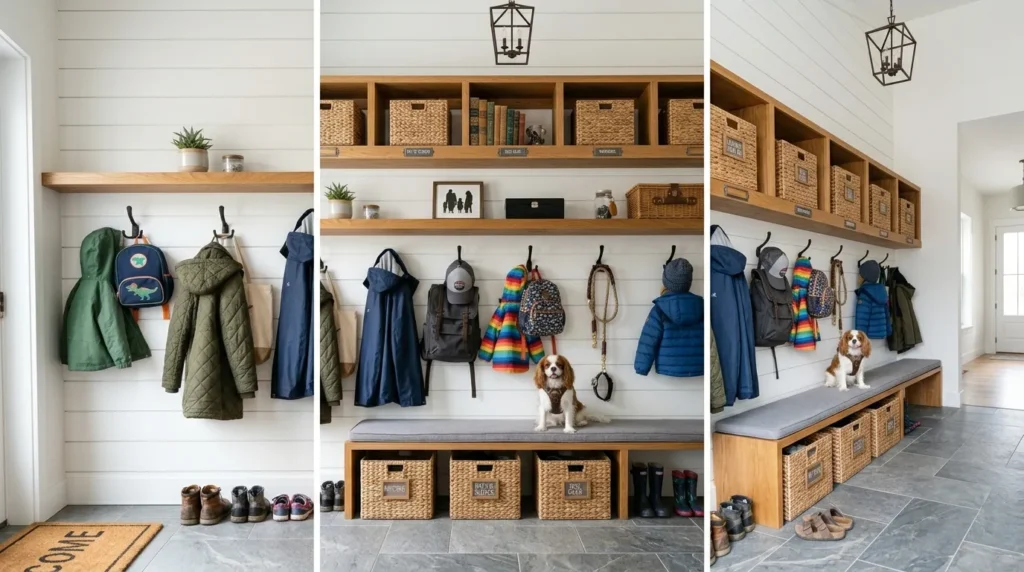
Wall hooks are one of the simplest ways to stop daily clutter from spreading. Closets look nice in theory, but busy families often need storage that is visible, fast, and easy to use. Hooks make it simple to hang jackets, backpacks, umbrellas, dog leashes, lunch bags, and tote bags without opening doors or searching through shelves. That small convenience matters during school mornings, sports practices, grocery runs, and rainy days. Choose strong hooks with enough depth to hold bulky items instead of tiny decorative hooks that bend or feel flimsy.
The best hook layout depends on who uses the space most. For young kids, install a lower row so they can hang their own backpacks and coats. For adults, add a higher row for longer jackets, bags, and seasonal outerwear. Keep spacing generous so items do not overlap too tightly. A wood rail with black hooks gives a farmhouse look, while brass hooks on painted paneling feel warmer and more refined. That’s why many designers recommend combining hooks with labels, cubbies, or baskets to make the system easier for everyone to maintain.
3. Shoe Storage
- Prevents piles of sneakers, boots, sandals, and cleats near the door
- Works with shelves, cubbies, baskets, cabinets, or pull-out drawers
- Helps protect floors from mud, rain, snow, and grass stains
- Makes school mornings faster because shoes are easier to find
- Looks best when storage matches the number of everyday shoes used
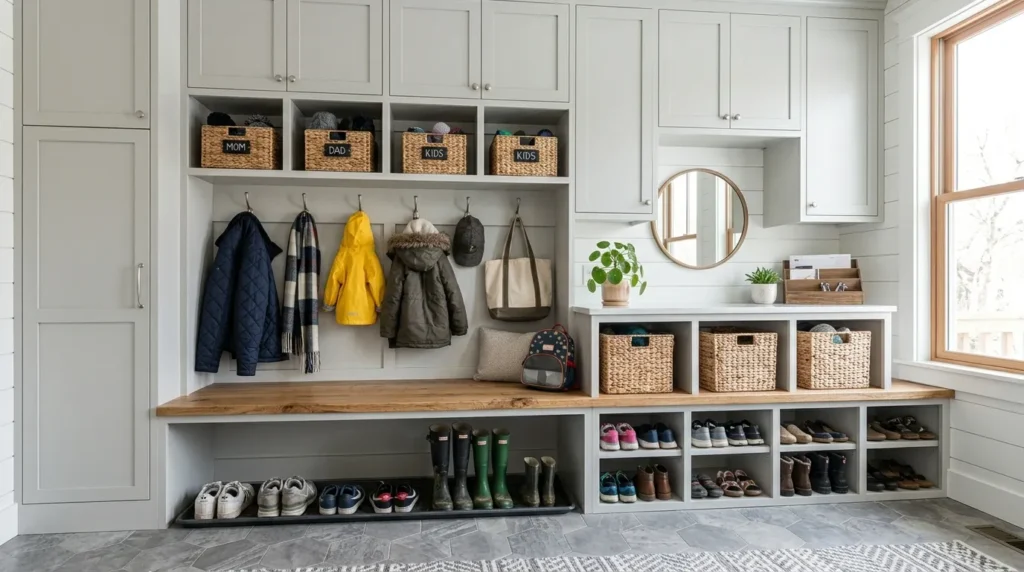
Shoe storage can make or break the function of a family mudroom. If shoes do not have a realistic place to go, they will end up scattered across the floor no matter how pretty the space looks. The best setup depends on your family’s routine. Open shelves work well for everyday sneakers and school shoes, while baskets are helpful for sandals, slippers, and small children’s footwear. Closed cabinets look cleaner but may not work if family members forget to use them. The goal is easy access, not perfect hidden storage.
A strong shoe system should also handle weather. In many USA homes, mudrooms deal with rain boots, snow boots, soccer cleats, wet sneakers, and muddy yard shoes. Add a boot tray, washable mat, or ventilated shelf so footwear can dry properly. Keep the most-used shoes at reachable height and move occasional pairs to upper shelves or a nearby closet. I’ve noticed that families stay more organized when each person has a defined shoe zone. Even simple labels or separate baskets can reduce morning searches and keep the entry floor safer.
4. Family Cubbies
- Gives each family member a personal storage area
- Works for backpacks, jackets, shoes, sports bags, and school items
- Helps reduce arguments over missing belongings
- Can be open, closed, built-in, freestanding, or DIY-friendly
- Looks organized with labels, baskets, hooks, and matching finishes
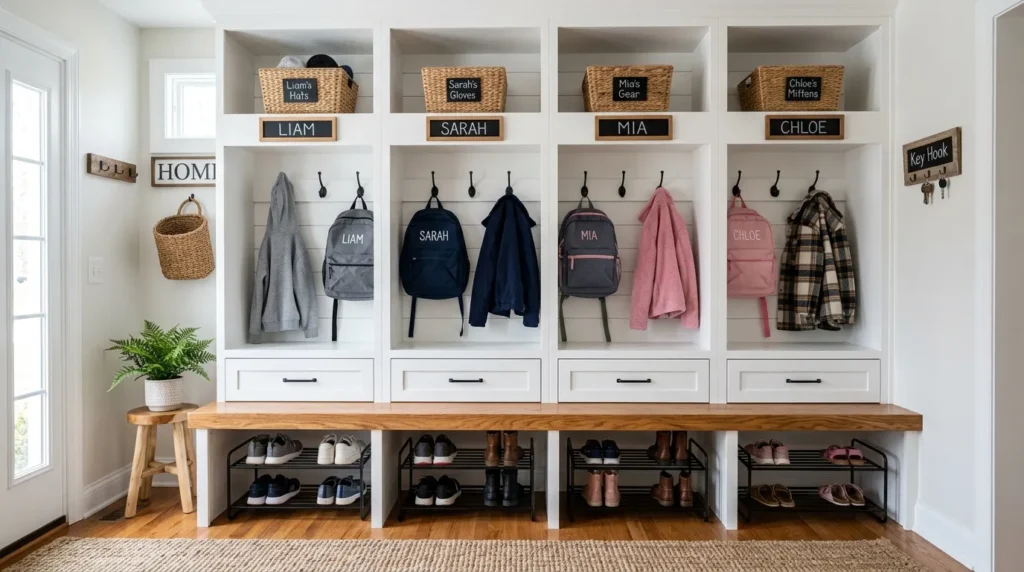
Family cubbies are perfect for homes where everyone needs a personal landing spot. Instead of mixing coats, shoes, backpacks, and accessories into one shared pile, cubbies divide the mudroom into clear zones. Each person gets a place for daily essentials, which makes routines easier and clutter easier to control. This works especially well for families with school-age kids, sports schedules, daycare bags, work totes, and seasonal gear. In my experience, cubbies are most successful when they are simple enough for kids to use without constant reminders from parents.
The layout can be as custom or budget-friendly as needed. Built-in cubbies with drawers, hooks, and overhead cabinets look beautiful, but freestanding lockers, cube shelves, or labeled baskets can work well too. Add a name label, number tag, or small chalkboard plate to make each space feel assigned. Use the top area for hats or seasonal gear, the middle for hanging items, and the bottom for shoes or bags. This structure helps the mudroom look intentional instead of messy, and it makes cleanup much faster at the end of the day.
5. Washable Flooring
- Handles muddy shoes, wet boots, pet paws, and heavy foot traffic
- Works with tile, luxury vinyl plank, sealed brick, rubber, or stone-look materials
- Makes cleaning easier after school, sports, rain, snow, and yard work
- Adds durability while still supporting the overall home style
- Looks best with washable rugs, boot trays, and slip-resistant finishes
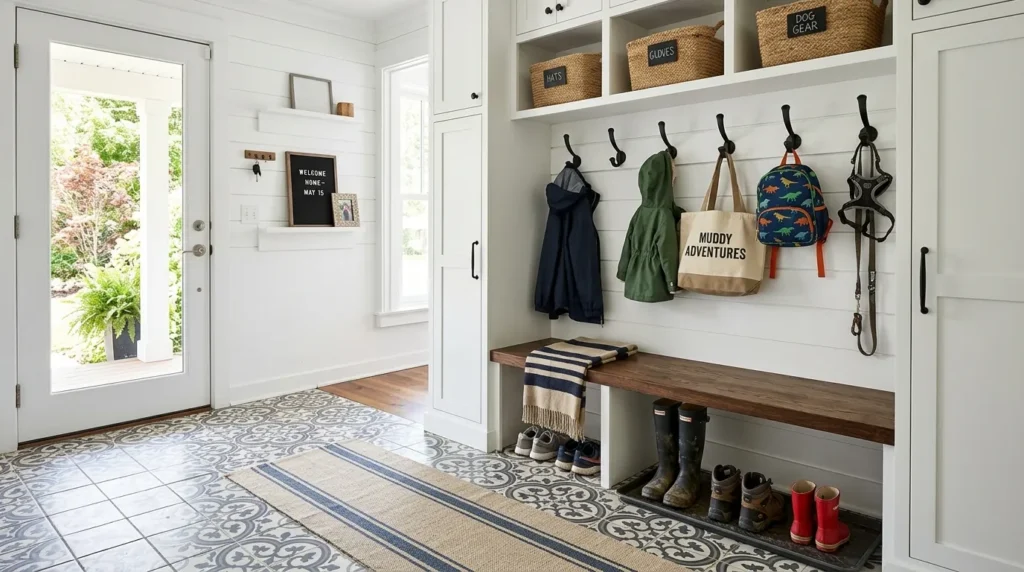
Flooring matters because the mudroom usually takes the hardest hit in the house. This is where wet shoes, muddy boots, sports bags, pet paws, grocery bags, and outdoor gear cross the threshold every day. Pretty flooring is not enough if it stains easily, scratches quickly, or becomes slippery when wet. Durable materials like porcelain tile, luxury vinyl plank, sealed brick, slate-look tile, rubber flooring, or textured stone-look surfaces are practical choices. They can handle mess while still looking stylish enough to connect with the rest of the home.
The best family flooring is easy to clean and safe underfoot. Choose surfaces that can be swept, vacuumed, and mopped without special care. If you love the look of wood, consider waterproof luxury vinyl or tile that mimics wood grain. If you want a farmhouse feel, sealed brick or patterned tile can add charm. Add a washable runner or indoor-outdoor rug to soften the space and catch dirt. That’s why many designers recommend slip-resistant finishes near exterior doors, especially in regions with snow, heavy rain, or lots of outdoor play.
6. Command Center
- Keeps calendars, mail, keys, chargers, and school papers organized
- Works well with corkboards, whiteboards, wall files, baskets, and small shelves
- Helps busy families manage schedules near the door
- Prevents papers and reminders from piling on kitchen counters
- Looks best when it is compact, labeled, and easy to update
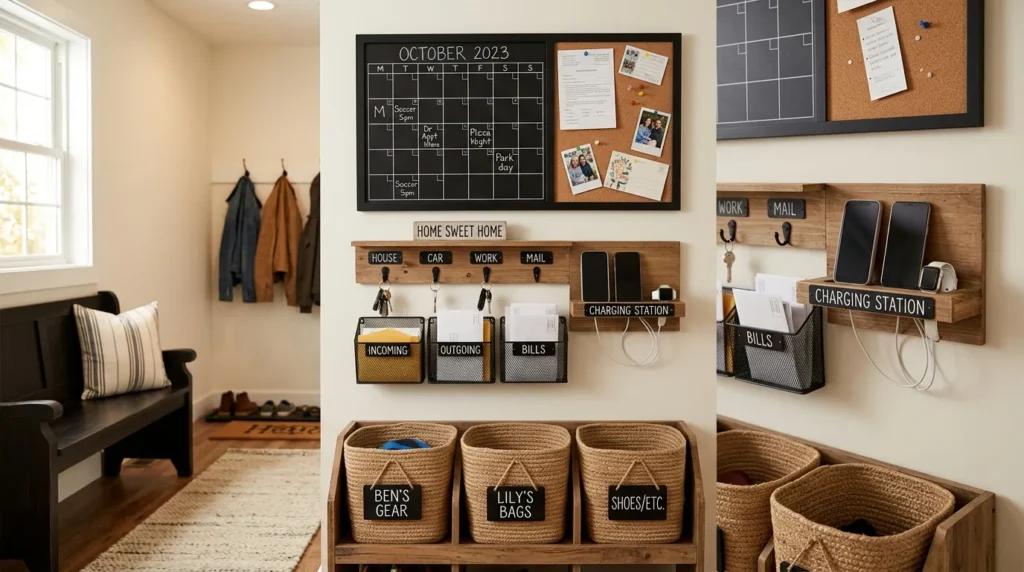
A command center turns the mudroom into a true family organization hub. Busy homes often struggle with permission slips, sports schedules, appointment cards, mail, keys, and small reminders landing on every available surface. A simple wall system can solve that problem before clutter reaches the kitchen. Use a calendar, corkboard, whiteboard, wall file, key hooks, and a small shelf for daily essentials. Keep the setup near the door family members use most often so reminders are visible when everyone leaves and returns during the day.
The secret is keeping the command center useful but not overwhelming. Too many bins, notes, and boards can become visual clutter if the system is not edited regularly. Assign one file for school papers, one for outgoing mail, and one spot for keys or wallets. Add a charging shelf for phones or earbuds if outlets are nearby. I’ve seen this work well in many homes because it connects organization with movement. When reminders sit beside coats and bags, families are more likely to notice them before leaving.
7. Laundry Corner
- Combines mudroom function with laundry needs in one practical zone
- Works with hampers, folding counters, utility sinks, cabinets, and drying rods
- Helps handle dirty uniforms, towels, socks, and pet items quickly
- Keeps mess closer to the entrance instead of spreading through the house
- Looks best with washable surfaces, closed storage, and simple sorting systems
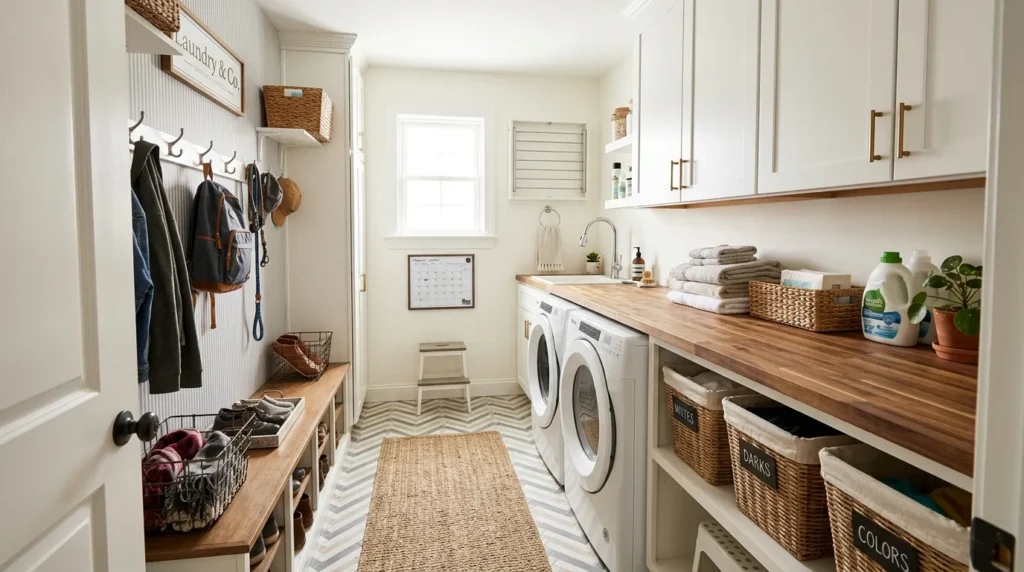
A laundry corner can make a mudroom work even harder for a busy family. Many homes already place the laundry room near the garage or back entrance, which makes it a natural place to collect dirty socks, wet towels, sports uniforms, and muddy clothes. Add labeled hampers, a small folding counter, wall cabinets, or a drying rod to make the space more efficient. If there is room for a utility sink, it can help rinse shoes, soak stains, wash pet bowls, or clean outdoor items before they enter the main house.
The best laundry-mudroom combinations separate clean and dirty zones clearly. Keep hampers near the entrance for quick drop-offs, but store folded laundry away from muddy shoes and wet coats. Use closed cabinets for detergent, cleaning supplies, and extra linens so the space does not feel cluttered. Durable counters like laminate, quartz, butcher block with proper sealing, or solid surface materials can handle frequent use. In my experience, this setup is especially helpful for families with sports, pets, gardening routines, or kids who come home messy after outdoor play.
8. Pet Station
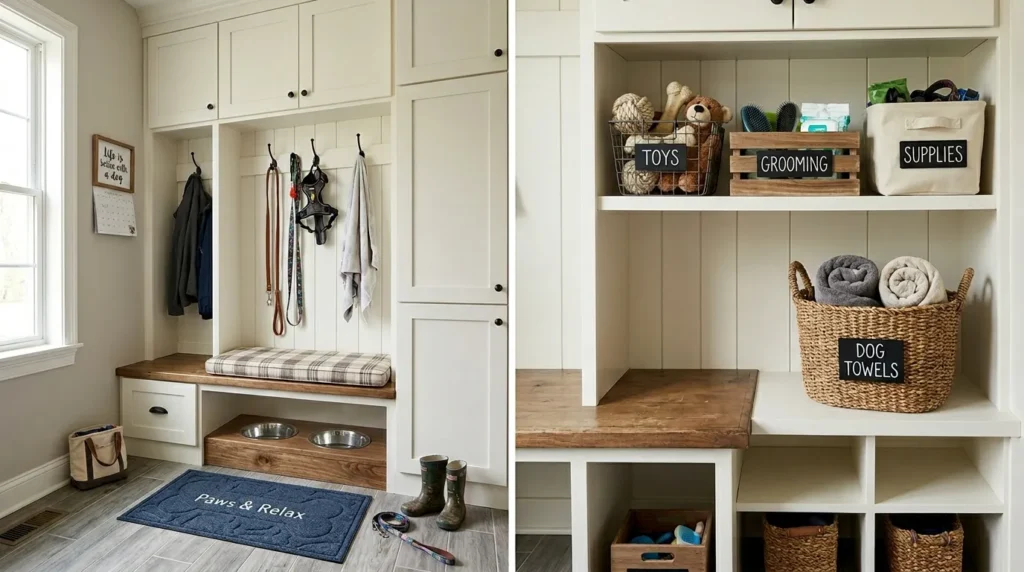
- Creates a dedicated area for leashes, towels, food, and pet gear
- Helps manage muddy paws, wet fur, bowls, toys, and walking supplies
- Works with hooks, baskets, washable mats, bins, and built-in feeding spots
- Keeps pet clutter from spreading into kitchens and living rooms
- Looks best with easy-clean flooring and water-resistant materials nearby
A pet station makes the mudroom more useful for families with dogs or outdoor-loving pets. Instead of storing leashes in one place, towels in another, and treats somewhere else, create one simple zone near the door. Add hooks for leashes and harnesses, a basket for toys, a washable mat for wet paws, and a small bin for waste bags or grooming supplies. If space allows, include a feeding drawer or built-in bowl area. This keeps pet routines organized and helps reduce clutter in the rest of the home.
The materials around a pet area should be easy to clean. Use washable rugs, waterproof flooring, wipeable paint, and baskets that can handle dirt or fur. Keep a towel hook nearby for rainy walks or snowy days. If your dog sheds heavily, choose closed storage for items you want to keep clean. I’ve noticed that pet stations work best when they are simple and close to the exit. When the leash, towel, and paw-wiping mat are right by the door, the whole routine becomes faster and cleaner.
9. Seasonal Baskets
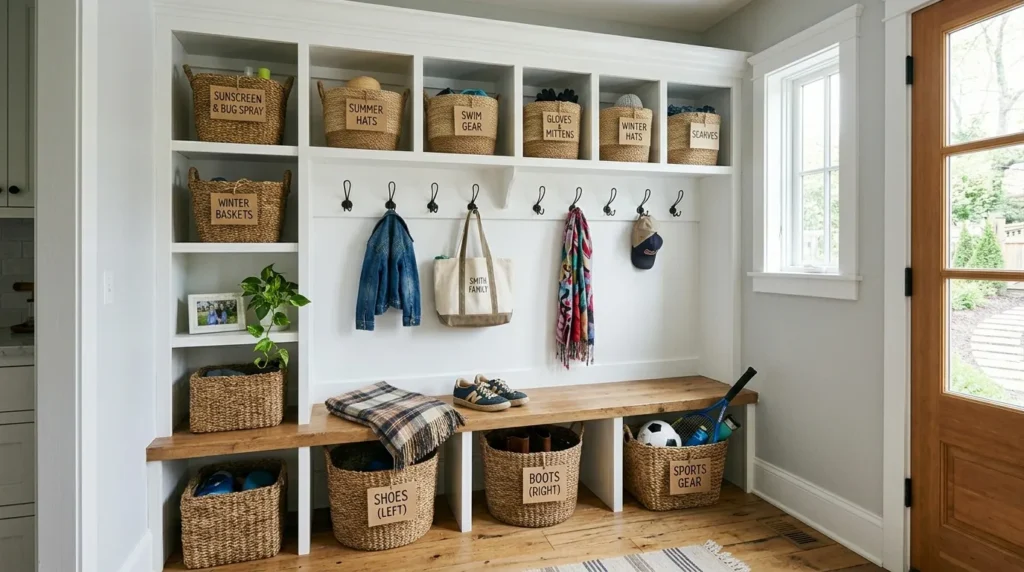
- Stores gloves, scarves, sunscreen, hats, sports items, and outdoor accessories
- Makes it easy to rotate family gear throughout the year
- Works with woven baskets, canvas bins, wire baskets, or labeled containers
- Helps prevent small items from disappearing into drawers or piles
- Looks stylish when baskets match in color, size, or material
Seasonal baskets help a mudroom adjust to real family life throughout the year. The items used in January are not the same as the items needed in July, so storage should be flexible. Use baskets or bins for gloves, scarves, snow pants, sunscreen, swim goggles, baseball caps, bug spray, umbrellas, and sports accessories. This keeps small items from spreading across counters, benches, or kitchen drawers. Choose baskets that slide easily onto shelves or under benches so everyone can grab what they need quickly before leaving.
The best system is simple, labeled, and rotated seasonally. Keep only the current season’s items within easy reach, then move off-season gear to upper shelves, closets, or storage bins. Woven baskets add warmth, canvas bins feel soft and family-friendly, and wire baskets make it easy to see contents. Add labels for kids who can read, or picture tags for younger children. That’s why many designers recommend storage that changes with the season instead of forcing one permanent setup. It keeps the mudroom useful all year without feeling overcrowded.
10. Hidden Storage
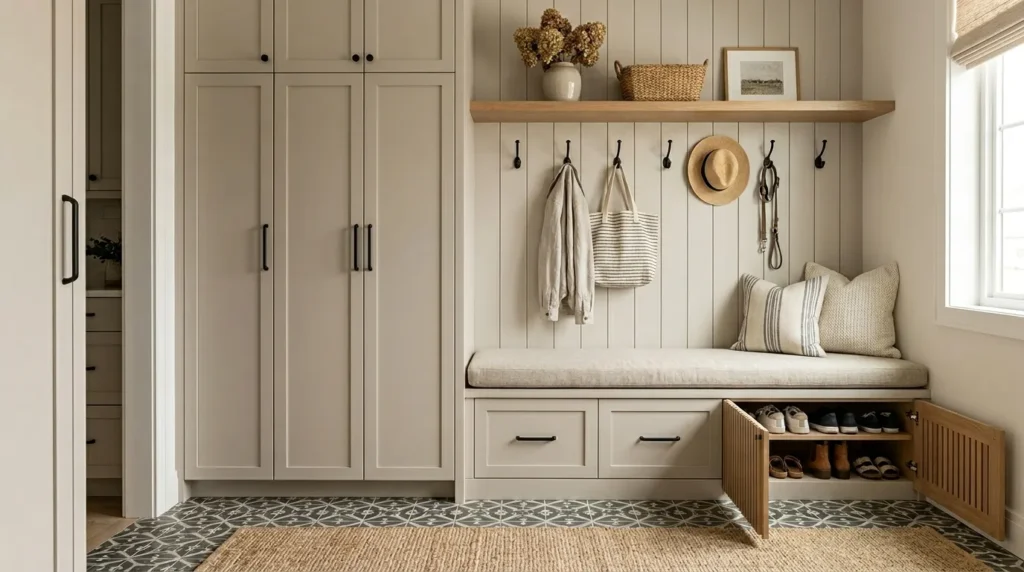
- Keeps visual clutter behind doors, drawers, benches, and cabinets
- Works well for cleaning supplies, backpacks, sports gear, and extra shoes
- Helps the mudroom look calmer when guests enter
- Can be built-in, freestanding, or created with budget-friendly furniture
- Looks best when closed storage balances open hooks and daily-use shelves
Hidden storage is the key to making a hardworking mudroom look calm. Open hooks and shelves are helpful for daily items, but not everything needs to be on display. Closed cabinets, drawers, storage benches, lockers, and tall wardrobes can hide bulky gear, cleaning supplies, extra shoes, off-season jackets, and sports equipment. This balance is especially important if the mudroom is visible from the kitchen, hallway, or main living area. A few closed storage pieces can make the entire home feel less cluttered and more peaceful.
The smartest hidden storage is placed where clutter naturally collects. A bench with drawers can hide shoes and accessories. Tall cabinets can store vacuums, brooms, backpacks, or winter coats. Overhead cabinets can hold seasonal gear that is not used every day. If custom built-ins are not in the budget, use freestanding wardrobes, cube units with doors, or storage benches from home stores. I’ve seen this work well in many homes because it lets families keep the function they need while still creating a clean, polished space that feels guest-ready.