Top 10 Apartment Balconies: Do Garden Ideas
Introduction
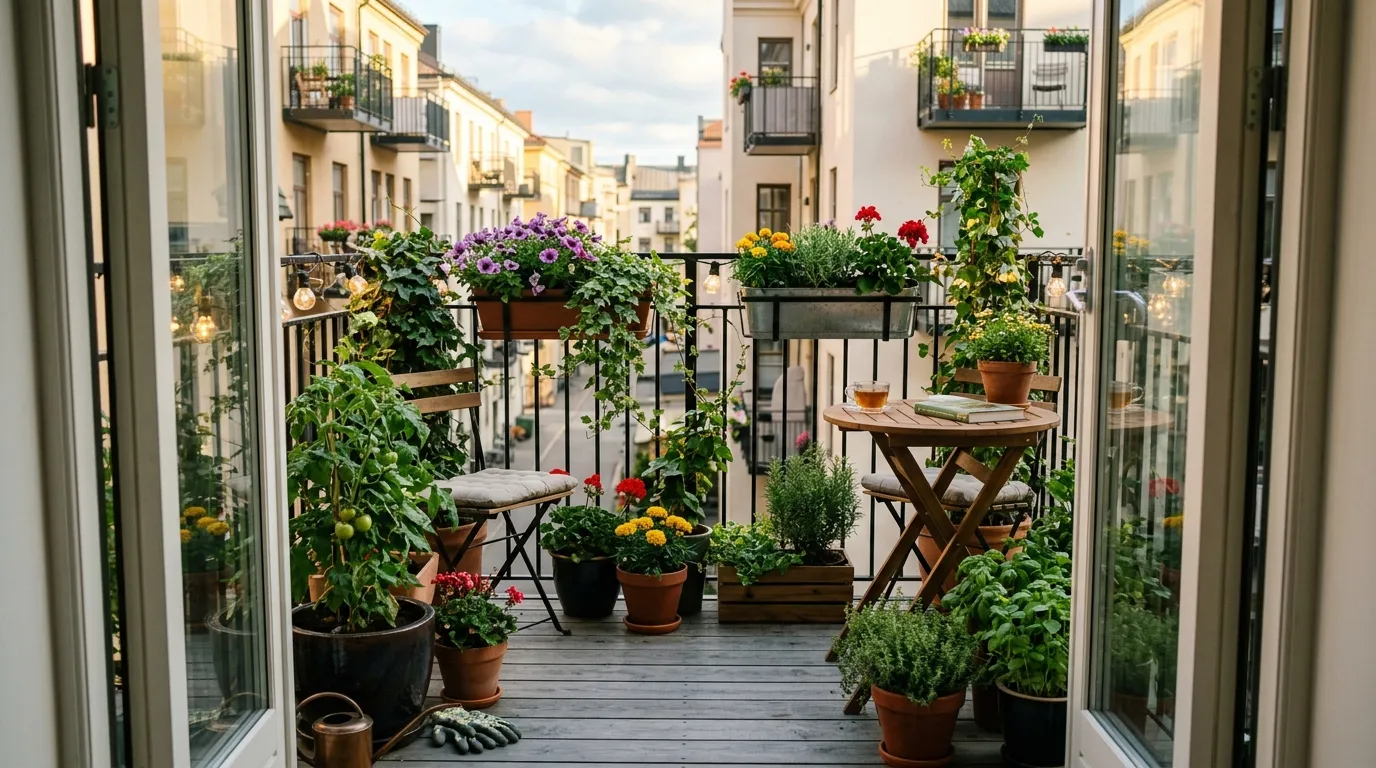
Apartment balconies are often overlooked areas, yet they hold immense potential to become vibrant, functional outdoor spaces. In my experience, carefully curated garden ideas can transform a standard balcony into a lush, inviting retreat. Apartment balconies not only provide aesthetic appeal but also enhance air quality, create privacy, and serve as relaxing outdoor extensions of living spaces. For residents across the USA, even a small balcony can be upgraded using vertical gardening, hanging planters, and multi-functional furniture, turning compact outdoor areas into Pinterest-worthy havens.
Successful apartment balcony makeovers rely on creativity, practicality, and thoughtful plant selection. Vertical gardens, tiered plant arrangements, and layered greenery maximize limited space while adding texture, color, and depth. Each balcony makeover tip in this guide emphasizes usability, visual appeal, and maintenance simplicity. Implementing these strategies ensures thriving plants and cohesive styling, transforming overlooked balconies into beautiful, functional, and relaxing outdoor spaces suitable for work, leisure, or socializing.
1. Vertical Garden Walls
- Use wall-mounted or pocket planters
- Combine trailing and upright plants for depth
- Save floor space while creating greenery focal points
- Lightweight, modular systems for flexibility
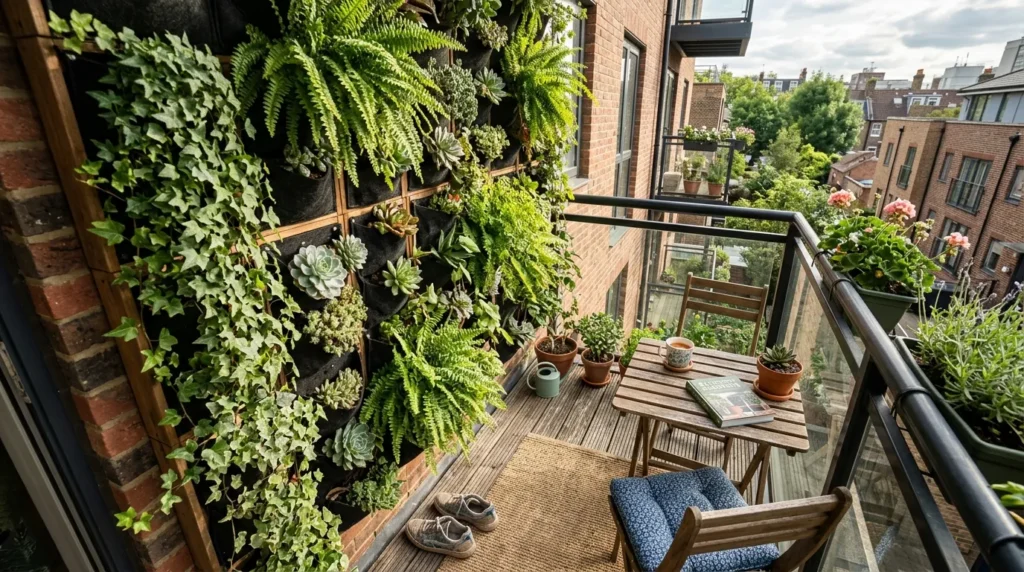
Vertical garden walls are ideal for maximizing greenery on limited balcony surfaces. In my experience, modular wall planters allow residents to rotate plants seasonally while keeping maintenance manageable. Combining trailing vines like pothos with upright plants such as ferns or small flowering varieties creates layered textures that visually expand the space. Designers recommend lightweight panels to avoid structural stress and to enable easy repositioning. Vertical gardens not only add beauty but also provide partial privacy and shade while establishing a natural focal point that elevates the balcony’s design.
The transformation is striking. Blank walls turn into living green features, adding height and visual depth. Floor space is freed for seating, decorative accents, or pathways, enhancing functionality. Proper irrigation and light exposure ensure plants thrive year-round, creating a multi-dimensional greenery display. Vertical walls provide both aesthetic richness and practical utility, making even small apartment balconies feel spacious, engaging, and Pinterest-ready.
2. Hanging Planter Clusters
- Suspend multiple baskets at staggered heights
- Combine trailing foliage with flowering plants
- Adds dimension without occupying floor space
- Adjustable for seasonal rotation and sunlight
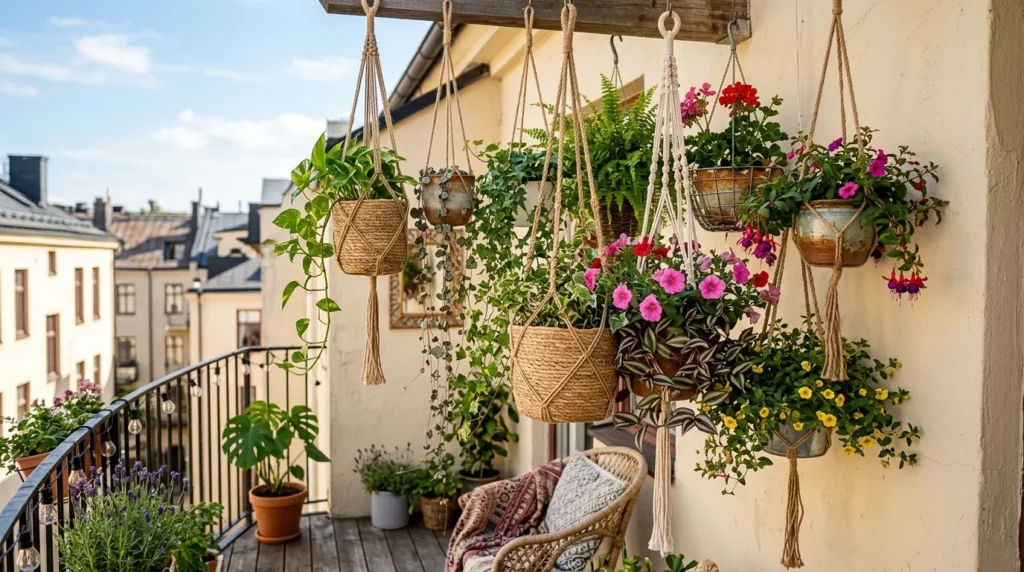
Hanging planter clusters are perfect for small apartment balconies with limited floor space. In my experience, arranging three to five baskets at different heights creates cascading greenery that adds movement and texture. Pairing trailing foliage with seasonal flowers introduces color, depth, and visual interest. Designers often recommend lightweight materials and adjustable hooks to allow repositioning or seasonal plant rotation. Hanging clusters improve airflow, maintain open floor space, and add a dynamic vertical element, balancing style with practicality in compact outdoor areas.
The transformation is visually and functionally significant. Trailing plants soften architectural edges and provide privacy, while flowering plants introduce seasonal vibrancy. Floor space remains available for seating or small decorative items, improving usability. Hanging arrangements encourage daily engagement, easy care, and visual layering. Even the smallest apartment balconies feel lush, curated, and Pinterest-ready with cascading baskets that enhance depth and ambiance.
3. Multi-Tiered Plant Stands
- Stack multiple plant levels on shelves
- Combine herbs, flowers, and succulents
- Organize plants for accessibility and care
- Ideal for small to medium balconies
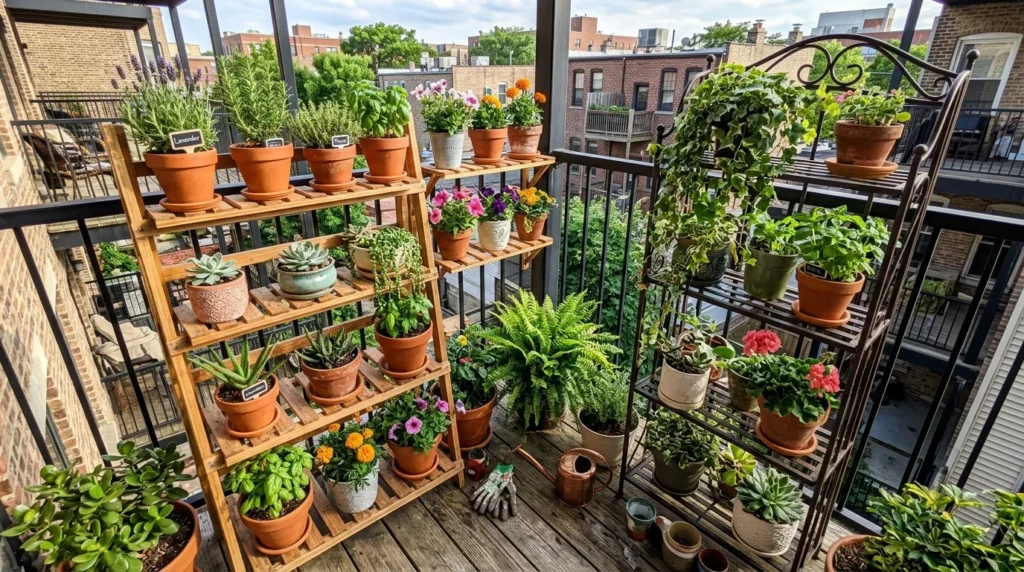
Tiered plant stands are a practical solution to display multiple plants efficiently. In my experience, multi-level stands allow sunlight to reach all plants while maintaining visual organization. Designers suggest modular or adjustable shelves to accommodate plant growth and seasonal rotation. Lightweight materials ensure stability and ease of rearrangement. Tiered arrangements create layers of texture and height, improving accessibility and enhancing the aesthetic appeal of compact balconies.
The effect is immediate. Layered displays create visual rhythm and depth, making small spaces feel larger and structured. Mixing plant types increases sensory appeal and encourages interaction. Floor space remains available for furniture or décor, improving functionality. Tiered plant arrangements support regular care and maintenance, producing a balcony that is visually striking, functional, and Pinterest-ready for both everyday enjoyment and social presentation.
4. Cozy Seating Corners
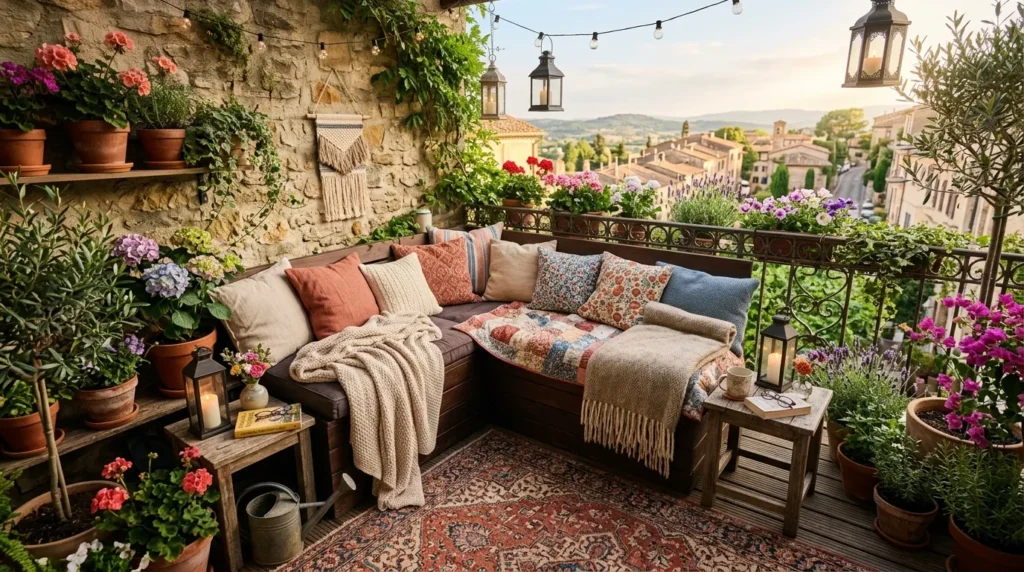
- Include a bench, chair, or compact swing
- Surround seating with plants for privacy and texture
- Add cushions, throws, and small rugs
- Visually define functional zones
Creating a cozy seating corner converts an ordinary balcony into a functional outdoor living area. In my experience, layering plants around seating adds privacy, visual depth, and comfort. Designers suggest combining low-maintenance greenery with textiles like rugs, cushions, or throws to improve both aesthetics and usability. Even narrow apartment balconies can accommodate a small chair or bench, creating a relaxing nook for reading, morning coffee, or evening leisure. Surrounding plants soften the space and enhance the ambiance.
The transformation is immediate and practical. Plants create enclosure, define zones, and enhance visual flow. Textural accents add comfort and style without cluttering limited space. Strategic placement encourages daily use and interaction, making small balconies feel more inviting. The combination of greenery, seating, and textiles creates a Pinterest-ready space that balances function, relaxation, and aesthetic appeal, elevating the overall outdoor experience.
5. Edible Plant Boxes
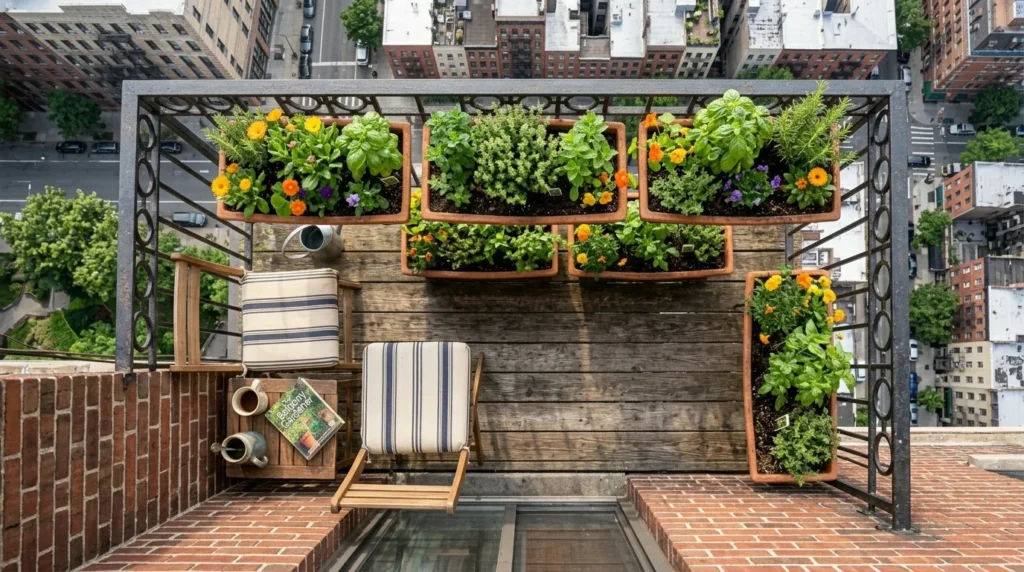
- Use railing-mounted or raised planters
- Grow herbs, vegetables, or edible flowers
- Combine decorative and functional greenery
- Easy access for harvesting and maintenance
Edible plant boxes are ideal for creating a balcony that’s both beautiful and practical. In my experience, railing-mounted boxes allow herbs and vegetables to thrive in sunlight without taking up floor space. Designers recommend lightweight, durable containers with proper drainage for plant health. Pairing edible plants with ornamental foliage maintains a visually appealing layout. Companion planting can improve soil quality and deter pests, creating a functional, productive garden that complements decorative greenery.
The effect is multi-functional. Fresh herbs and vegetables add fragrance, color, and culinary value. Layered plant arrangements increase depth, texture, and seasonal variation. Easy access encourages daily interaction and care, enhancing usability. Even the smallest apartment balconies gain a functional and aesthetically pleasing design. Edible plant boxes create a Pinterest-ready space that blends style, practicality, and greenery seamlessly.
6. Ambient Lighting Solutions
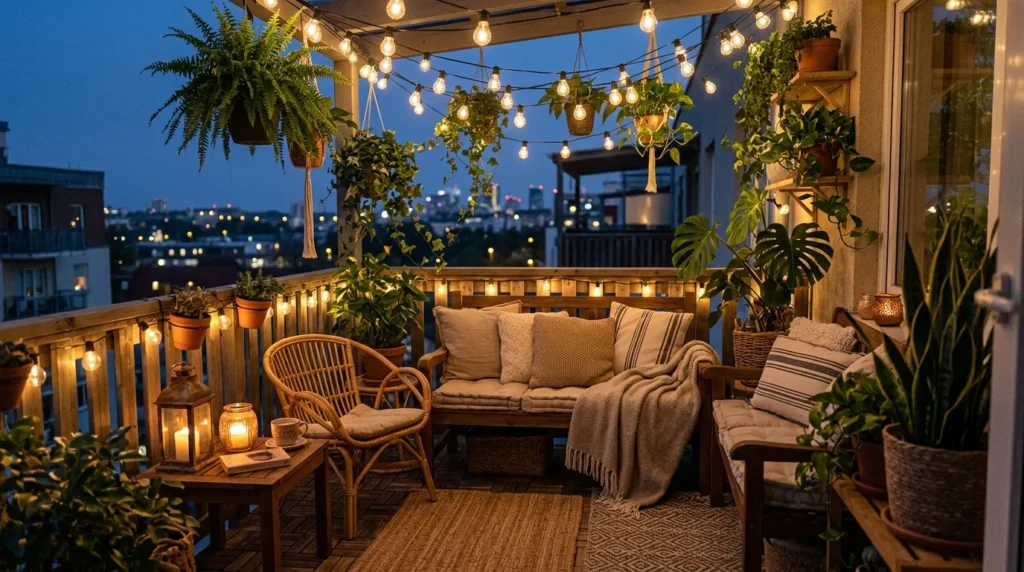
- Install string lights, lanterns, or solar lamps
- Highlight plant arrangements and seating areas
- Create warmth and evening ambiance
- Energy-efficient and safe options
Lighting enhances the aesthetic and functionality of balconies. In my experience, string lights or lanterns create layers of soft illumination that highlight greenery and seating. Designers recommend solar-powered or LED options for energy efficiency and safety. Placing lights at varying heights emphasizes vertical and horizontal elements, adding depth and visual interest. Well-planned lighting allows balconies to be used during evening hours while enhancing the beauty of plant arrangements and creating a cozy, inviting atmosphere.
The transformation is significant. Warm lighting adds intimacy, highlights textures, and emphasizes focal points. Even small balconies feel larger and more inviting. Layered illumination enhances depth and encourages evening use for relaxation or socializing. Thoughtfully integrated lighting makes a balcony multifunctional, visually compelling, and Pinterest-ready, combining style, usability, and comfort in a compact outdoor area.
7. Seasonal Flower Rotation
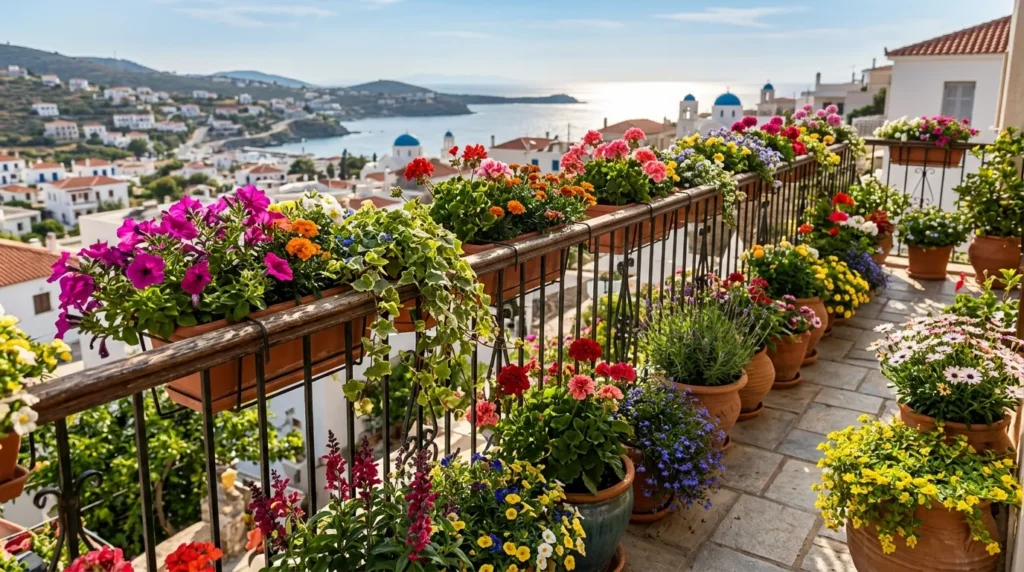
- Swap flowers seasonally to maintain freshness
- Mix trailing and upright blooms for depth
- Use floor or railing planters
- Add seasonal color and fragrance
Seasonal flower rotation keeps balconies visually fresh and engaging year-round. In my experience, changing blooms with the seasons introduces variety and prevents visual monotony. Designers recommend pairing trailing flowers with upright blooms to create layers and depth, enhancing visual texture. Choosing flowers suited to local sunlight and climate ensures long-lasting health and vibrancy. Seasonal rotation also allows refreshing soil and replacing worn containers, maintaining both aesthetics and plant wellness, transforming a small balcony into a lively, inviting, and multi-sensory retreat.
The transformation is impressive. Each season introduces new textures, colors, and scents, creating a dynamic focal point. Layered arrangements give dimension and make compact spaces feel larger. Frequent plant rotations encourage engagement and maintenance, promoting healthy growth. Seasonal blooms enhance Pinterest appeal, creating a balcony that feels alive, functional, and visually stunning throughout the year while supporting usability and comfort.
8. Privacy Green Screens
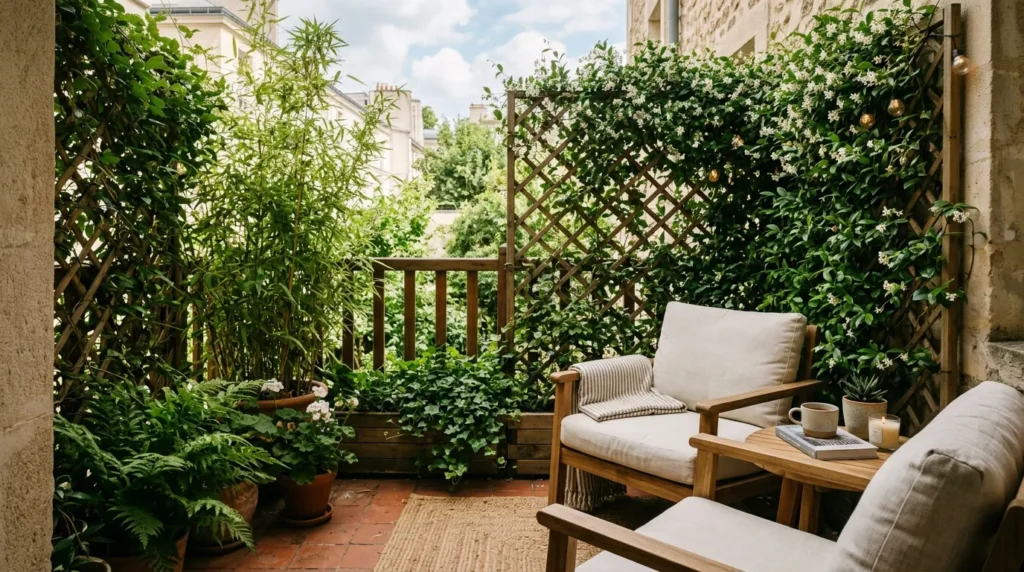
- Install bamboo, lattice, or trellis panels
- Encourage climbing plants like ivy or jasmine
- Maintain sunlight flow while providing seclusion
- Blend naturally with furniture and decor
Privacy green screens create intimate and visually appealing balcony zones. In my experience, trellises with climbing vines soften hard edges and provide natural screening. Designers often select lightweight, durable panels that support plant growth without structural strain. Vertical greenery adds depth, shading, and sound reduction while maintaining airflow. When paired with furniture and planters, green screens create a cohesive, functional outdoor retreat that feels private yet open, enhancing both visual appeal and usability.
The results are dramatic. Dense climbing plants create secluded spaces and visual interest while drawing attention upward. Vertical layers increase perceived height and make compact balconies feel larger. Strategically placed greenery provides year-round lushness and privacy, making the balcony Pinterest-ready, practical, and comfortable. Green screens transform functional yet overlooked balconies into inviting, stylish, and immersive outdoor spaces.
9. Mini Water Features
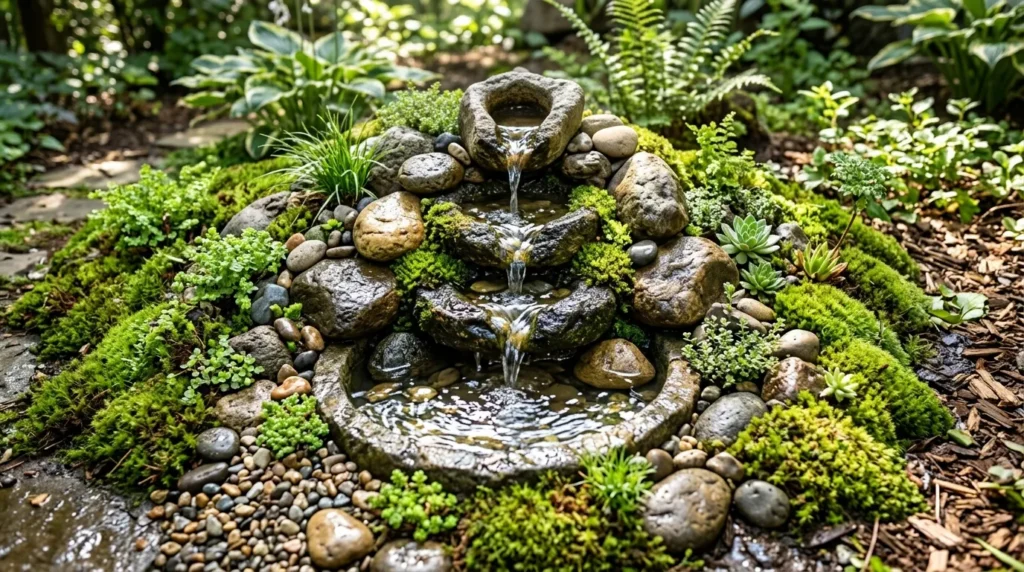
- Incorporate small fountains or bubbling bowls
- Surround with moss, pebbles, or low-growing plants
- Add soothing sound and gentle movement
- Use durable, weather-resistant materials
Mini water features introduce a calming, multi-sensory element to balconies. In my experience, even a compact fountain enhances the outdoor experience by adding soft motion and sound. Designers recommend materials like stone, ceramic, or resin for durability and visual appeal. Surrounding moss or low-growing greenery integrates the feature naturally into the balcony garden. Flowing water reduces urban noise, creates a relaxing focal point, and elevates both auditory and visual appeal in a small space.
The transformation is immediate. Water features become focal points that draw the eye and soften hard lines. Even small balconies feel more expansive and serene with moving water. Surrounding plants amplify depth and texture. Mini fountains encourage mindfulness, daily interaction, and routine maintenance. They create a Pinterest-ready balcony that balances functionality, relaxation, and aesthetic charm, turning ordinary spaces into tranquil retreats.
10. Multi-Functional Furniture
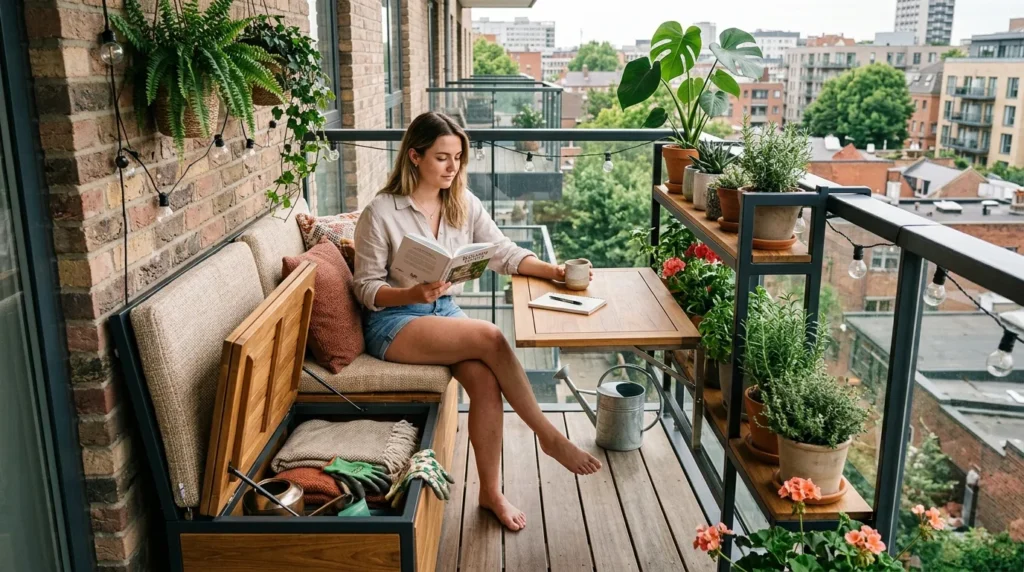
- Include storage benches, foldable tables, or planters with seating
- Combine seating, storage, and plant display
- Maximize usable balcony space
- Use durable, outdoor-friendly materials
Multi-functional furniture allows small balconies to achieve full usability while maintaining style. In my experience, benches with storage or tables that double as plant displays optimize limited areas efficiently. Designers recommend durable materials such as treated wood, metal, or synthetic rattan. Integrating greenery around or atop furniture softens edges and enhances visual flow. Thoughtful layout ensures seating, gardening, and relaxation coexist comfortably, transforming compact spaces into functional, stylish, and inviting retreats.
The transformation is striking. Multi-purpose furniture defines zones and adds visual structure while offering practical benefits. Surrounding plants create layered textures and vertical interest. Even compact apartment balconies feel organized, functional, and curated. Multi-functional furniture encourages daily use, supports plant care, and elevates the space from an ordinary balcony to a dynamic, Pinterest-ready outdoor area that is both beautiful and practical.