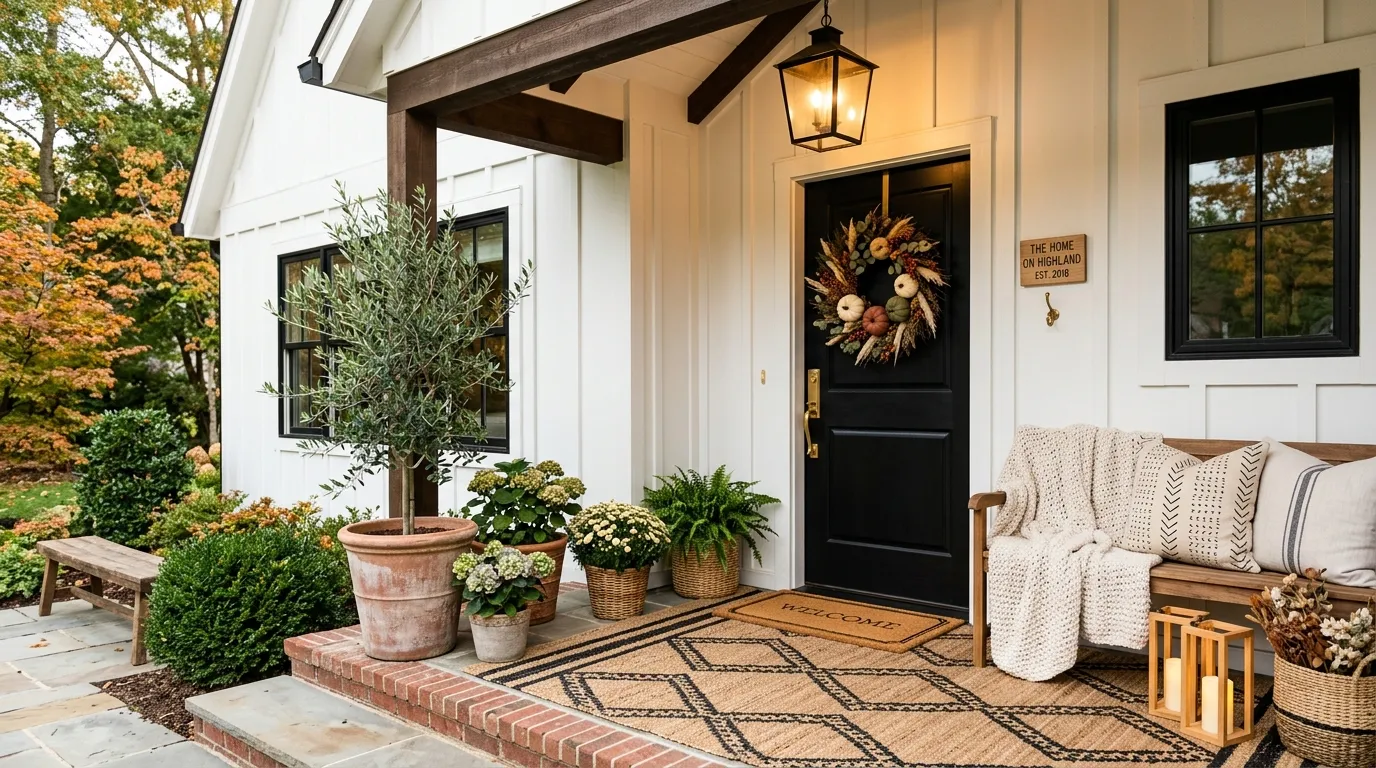
11 Porch Entry Ideas That Look Stylish
Introduction
A stylish Porch Entry can change the entire feeling of a home before anyone steps inside. It is the first detail guests notice, the first photo-worthy moment from the sidewalk, and one of the easiest places to improve curb appeal without a full exterior renovation. For many USA homes, the porch area may be small, narrow, shaded, or builder-basic, but it can still feel warm and polished. With the right mix of color, lighting, greenery, texture, and practical styling, even a simple entrance can look thoughtfully designed.
The best porch ideas are not only decorative. They should make the home easier to approach, safer at night, more comfortable for guests, and more connected to the rest of the exterior. A painted door, layered mat, tall planter, new light fixture, or slim bench can create a big visual upgrade with a modest budget. This guide shares 11 stylish ideas that work for farmhouse homes, brick houses, townhomes, cottages, ranch-style homes, and modern suburban entries while keeping everything realistic, useful, and Pinterest-ready.
1. Painted Door
- Creates a strong visual focal point from the street
- Adds color without changing the full exterior
- Works with brick, siding, stone, stucco, and wood trim
- Looks best with durable exterior paint in satin or semi-gloss
- Helps wreaths, planters, mats, and hardware feel more coordinated
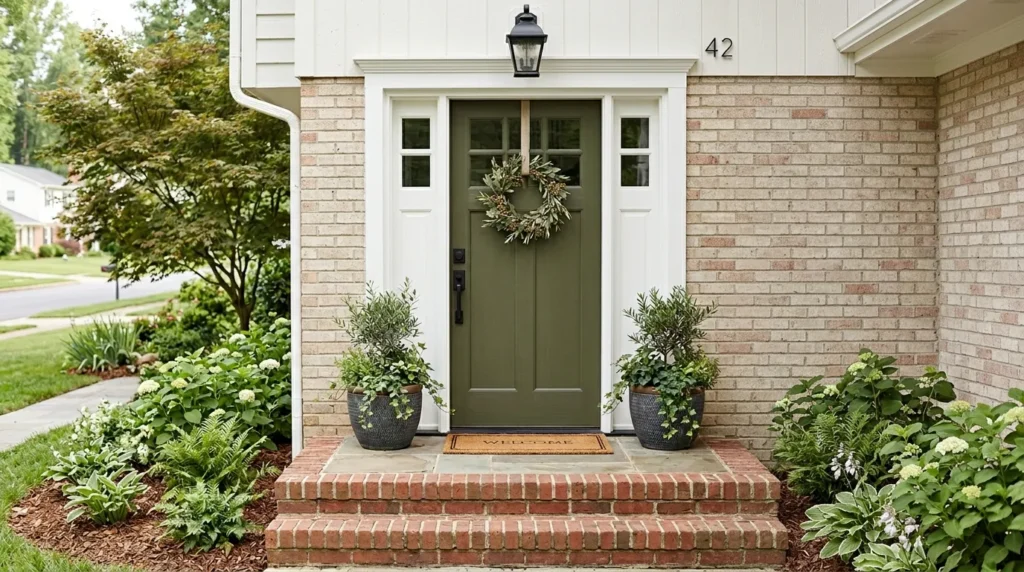
A freshly painted door can make the whole entrance feel new, even when nothing else changes. Color naturally pulls the eye, so the front door becomes the anchor for every other detail around it. Deep green, navy, warm black, brick red, muted blue, or creamy white can all work beautifully depending on your siding, roof, shutters, and landscaping. In my experience, satin or semi-gloss exterior paint is usually the smartest choice because it handles fingerprints, sun exposure, rain, and everyday use better than a flat finish.
The best results come from careful preparation, not just choosing a pretty shade. Clean the door first, sand rough areas, fill small dents, and use primer if the old color is dark or uneven. Remove hardware when possible so the finish looks smooth around handles and locks. Once painted, the door will make simple accents look more intentional, including a wreath, lanterns, a layered mat, or seasonal flowers. This upgrade is practical, affordable, and especially powerful for small porches where the door is the main design feature.
2. Layered Mats
- Adds texture and pattern without taking up vertical space
- Makes a plain stoop or porch feel styled
- Works with coir mats, washable rugs, checks, and stripes
- Can be changed easily for seasons and holidays
- Helps frame the doorway beautifully in photos
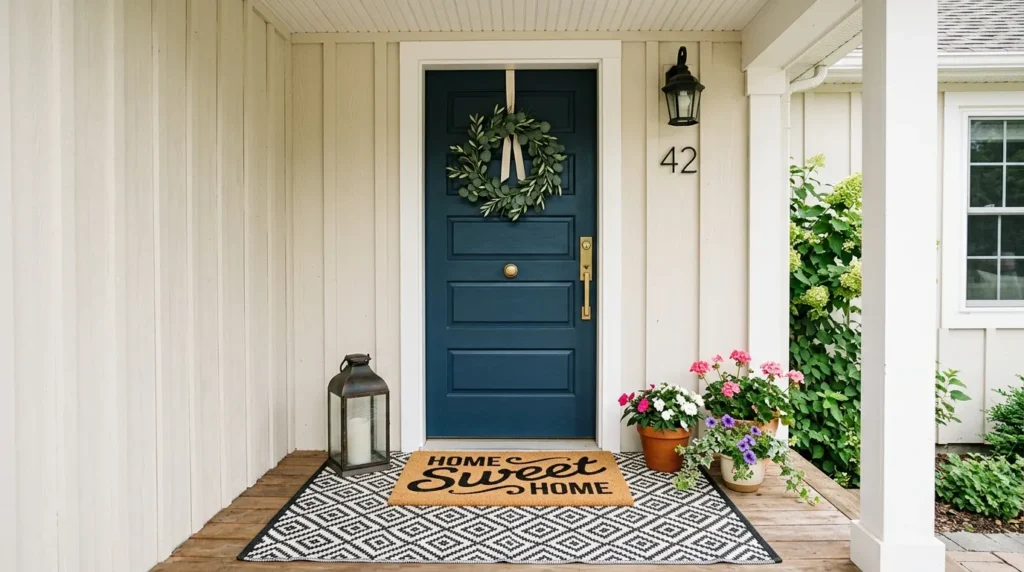
Layered mats make an entrance feel styled before guests even reach the door. The idea is simple: place a larger outdoor rug underneath a smaller coir doormat so the edges show clearly. This adds pattern, texture, and depth without using bulky decor. Black-and-white checks, soft stripes, natural woven textures, and muted seasonal prints work especially well for USA homes because they photograph beautifully and feel casual. The lower rug should be wide enough to frame the doormat, but not so large that it blocks the door swing.
This setup also works well for real life because each layer has a purpose. The outdoor rug adds visual softness, while the coir mat helps catch dirt, leaves, and moisture before people walk inside. Choose washable, weather-friendly materials that can handle foot traffic and changing seasons. In spring, try pale stripes or fresh neutrals. In fall, use warm plaid or tan textures. In winter, black, gray, or evergreen tones feel classic. I’ve noticed this small detail can make even a builder-grade stoop look cozy and intentionally finished.
3. Tall Planters
- Adds height and greenery without crowding the walkway
- Frames the door and softens hard exterior surfaces
- Works with ferns, boxwood, flowers, grasses, and evergreens
- Looks best in containers with proper drainage
- Creates seasonal curb appeal with simple plant swaps
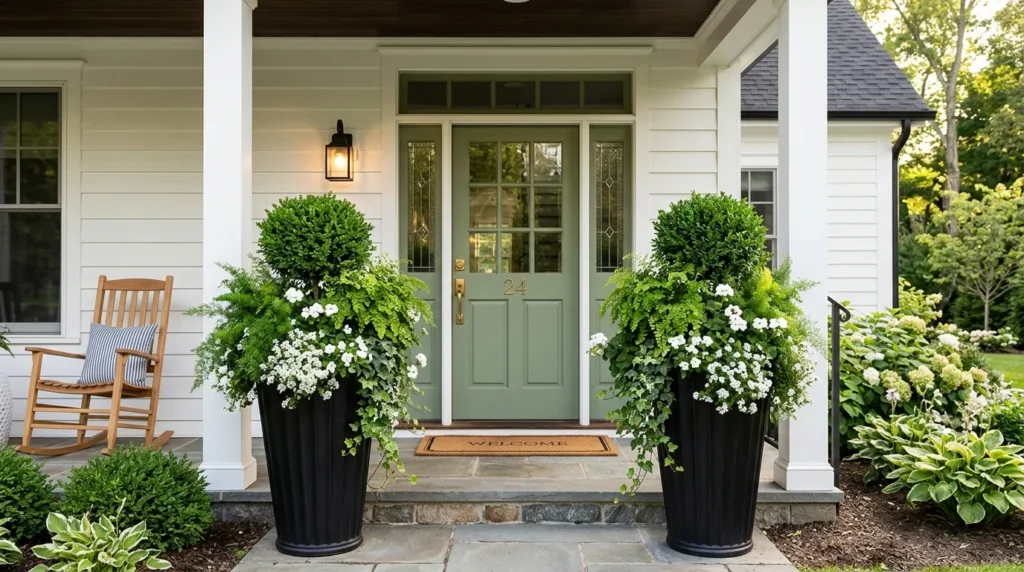
Tall planters are perfect when the entry needs style but does not have much floor space. Their height draws the eye upward, which makes the porch feel more balanced and complete. A matching pair can frame the door beautifully, while one large planter can soften a bare corner or narrow wall. Choose containers that fit the home’s exterior style, such as black metal, terracotta, ceramic, concrete, wood-look resin, or classic urns. For plants, consider boxwood, ferns, ornamental grasses, lavender, mums, dwarf evergreens, or trailing greenery.
The right planting choice depends on sunlight, climate, and maintenance level. Sunny porches can handle geraniums, lantana, salvia, lavender, and sweet potato vine, while shaded entries often look better with ferns, hostas, caladiums, or impatiens. Always use good potting mix and containers with drainage holes so water does not collect near the door. I’ve seen this work well in many homes because planters add color, structure, and life without permanent construction. They also let you refresh the entrance seasonally with flowers, greenery, branches, or simple evergreen arrangements.
4. Warm Lighting
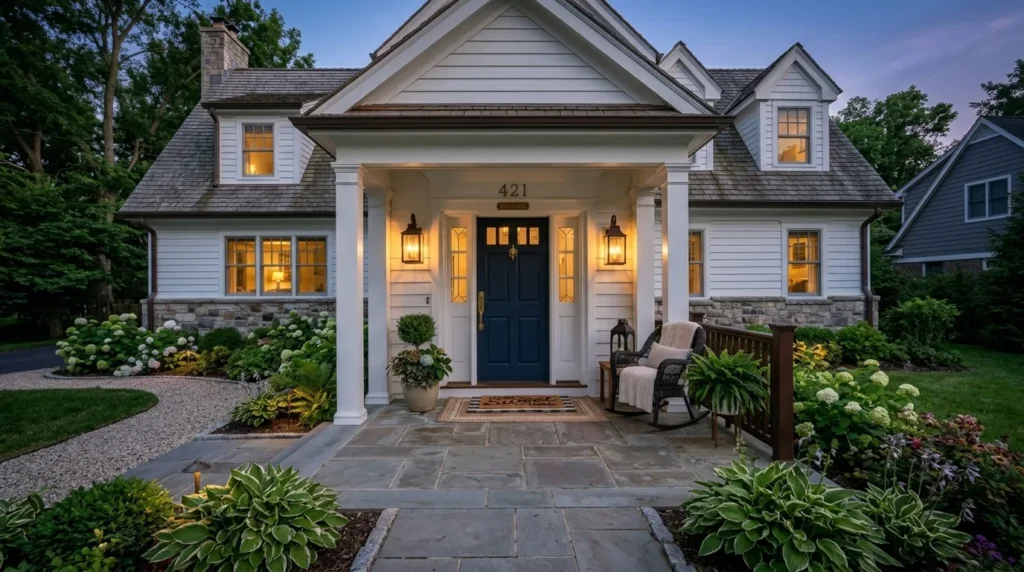
- Improves safety and visibility after dark
- Adds a welcoming glow near the door
- Works with sconces, lanterns, pendants, and smart bulbs
- Looks best when coordinated with hardware or house numbers
- Makes the entrance feel polished during day and night
Good lighting can make a porch look safer, warmer, and more expensive at the same time. An outdated or undersized fixture can quietly make the whole entrance feel tired, even if the door and plants look nice. Replace it with an outdoor-rated lantern, wall sconce, pendant, or modern cylinder light that fits the scale of the door. Black, bronze, brass, and aged nickel finishes are popular because they coordinate easily with handles, mailboxes, railings, and address numbers. Warm light creates a softer welcome than harsh cool bulbs.
Lighting should be chosen for both beauty and daily function. Make sure the lock, steps, mat, and walkway are visible at night so guests can approach safely. Dusk-to-dawn bulbs, motion sensors, and smart outdoor bulbs can make the space easier to use without remembering switches. That’s why many designers recommend treating porch lighting as an exterior design feature, not just a utility item. When the fixture size, finish, and glow feel right, the entrance becomes more inviting in the evening and more polished from the curb.
5. Slim Seating
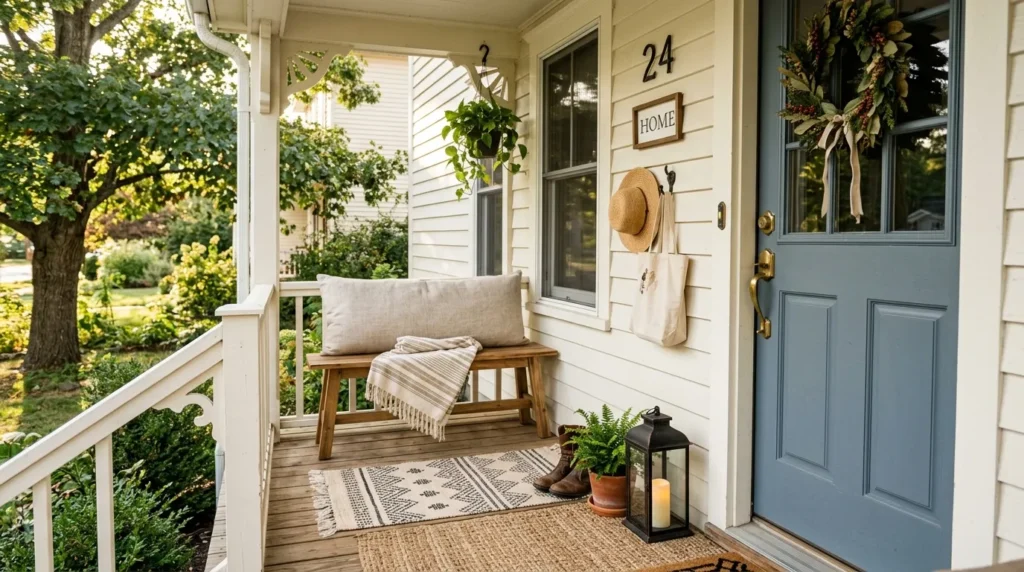
- Adds comfort without overwhelming the porch
- Creates a practical spot for bags, shoes, or packages
- Works with benches, stools, rockers, and compact chairs
- Looks best in weather-resistant outdoor materials
- Makes the entrance feel more welcoming and lived-in
Slim seating can turn a simple porch into a small outdoor welcome zone. Even one narrow bench, compact stool, rocking chair, or bistro chair can make the entrance feel warmer and more useful. It gives people a place to set bags, remove shoes, wait for a ride, or enjoy morning coffee. The key is choosing furniture that fits the scale of the porch and does not block the door or walking path. Weather-resistant wood, teak, powder-coated metal, resin wicker, and treated bamboo are good practical options.
Styling the seat should be simple, especially if the porch is small. Add one outdoor cushion, a neutral pillow, or a folded throw if the area is covered and protected from heavy rain. A small side planter or lantern can help the seat feel connected to the rest of the entry. Avoid oversized furniture that crowds the doorway or makes guests step around it. In my experience, the most stylish porch seating feels useful first and decorative second, which is why slim pieces often work better than bulky outdoor furniture.
6. House Numbers
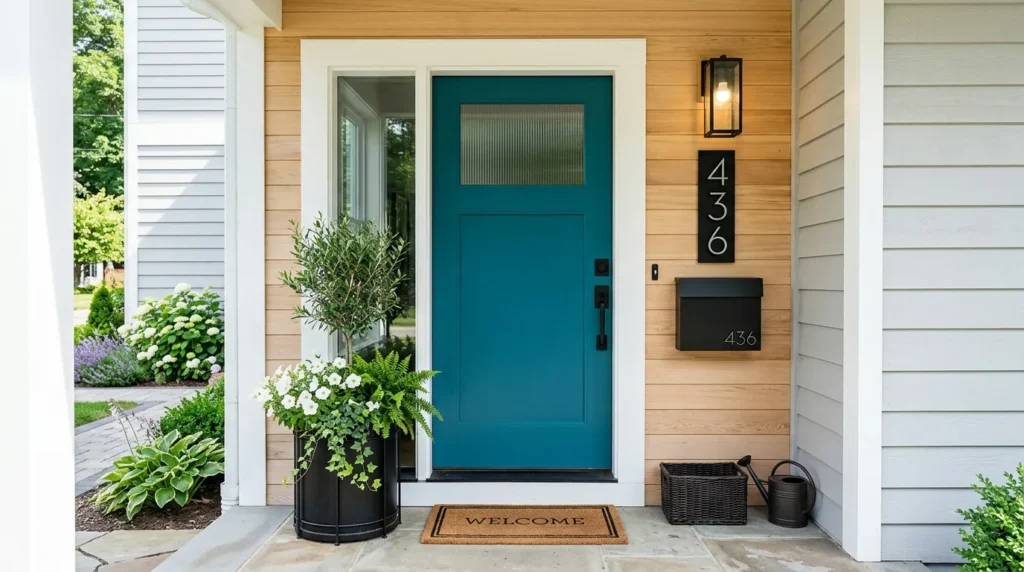
- Makes the home easier to find from the street
- Adds a clean, organized exterior detail
- Works on siding, columns, plaques, planters, or posts
- Looks best with strong contrast and weather-safe materials
- Coordinates beautifully with lighting, hardware, and mailboxes
House numbers are small details, but they can make a porch look sharper and more finished. Faded, tiny, or hidden numbers can make the home feel less cared for and harder to identify. Clear numbers help guests, delivery drivers, and emergency services find the house quickly, which makes them both stylish and practical. Choose a size that can be read from the street and a finish that contrasts with the background. Black numbers on light siding, brass on dark paint, or white on brick plaques can look clean.
Placement matters just as much as style because numbers should be visible in different lighting conditions. Mount them beside the door, on a porch column, near the garage, on a planter box, or along the walkway depending on what people see first. Use weather-resistant metal, acrylic, stone, ceramic, or treated wood so they last through rain and sun. Match the finish to your door hardware, light fixture, or mailbox for a coordinated look. This simple update gives the entry a more organized and polished curb appeal detail.
7. Seasonal Wreath
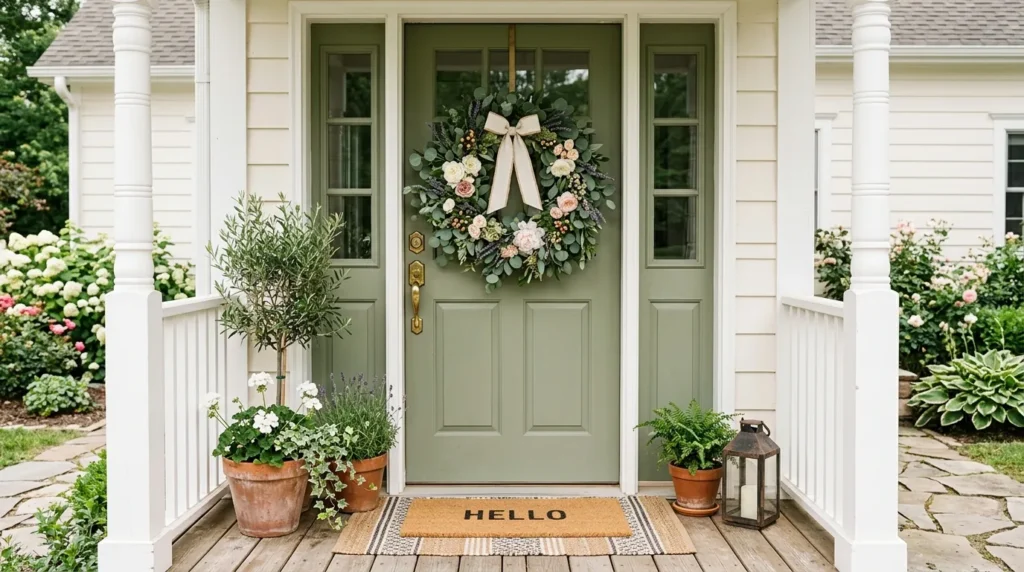
- Adds color and texture without using floor space
- Works for spring, summer, fall, winter, and holidays
- Looks beautiful with eucalyptus, magnolia, pine, florals, or ribbon
- Helps the door feel styled with minimal effort
- Creates an easy focal point for porch photos
A seasonal wreath adds instant charm because it decorates vertically instead of taking up porch space. This makes it especially useful for small entries, narrow stoops, and covered landings where floor decor must stay minimal. The best wreaths match the season while still fitting the home’s exterior colors. Eucalyptus, olive branches, magnolia leaves, wildflowers, pine, berries, grapevine, and simple ribbon can all look beautiful. Choose a size that fills the upper door nicely without blocking glass panels, hardware, a knocker, or a peephole.
The easiest way to keep the entrance fresh is to rotate wreaths a few times a year. Spring can feel soft with greenery and small blooms, while fall looks warm with leaves, wheat, and muted orange tones. Winter can stay classic with evergreen, pinecones, bells, or cream ribbon. Use a sturdy hook, magnetic hanger, or ribbon over the top of the door depending on the door material. I’ve noticed simple wreaths often look more expensive than overly busy ones because they feel clean, natural, and easy to style.
8. Styled Steps
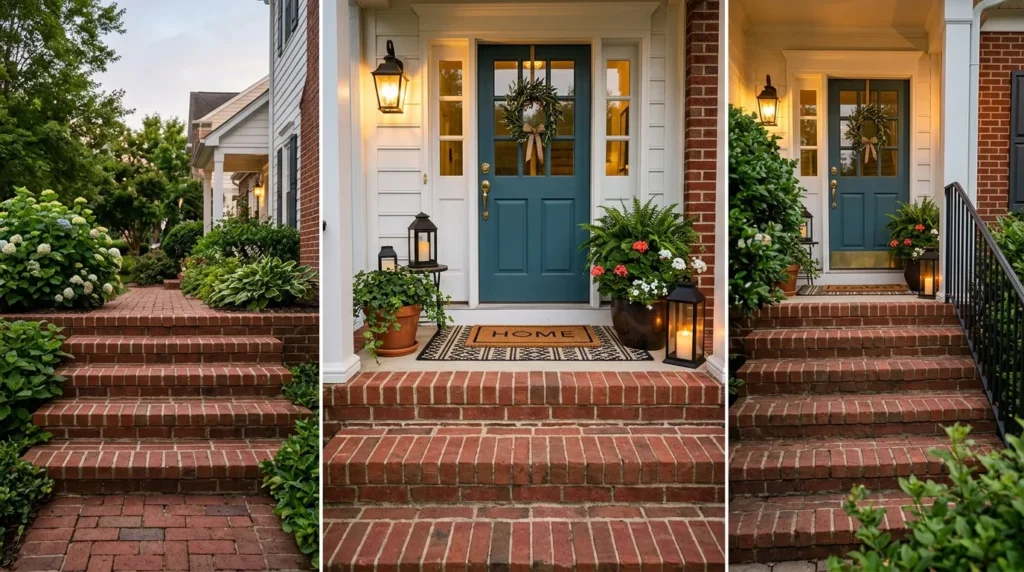
- Connects the walkway to the porch visually
- Works with lanterns, planters, stair treads, paint, or stain
- Makes concrete, brick, wood, or stone steps feel finished
- Improves safety when the walking path stays clear
- Adds charm without requiring a full porch remodel
Styled steps can make the approach feel just as beautiful as the door itself. Many homes have plain concrete, brick, wood, or stone steps that are functional but not very attractive. Start by cleaning them well, removing weeds, repairing cracks, or refreshing worn surfaces with paint, stain, or sealer when appropriate. Then add simple details along the sides, such as small planters, lanterns, greenery, or seasonal accents. The goal is to create visual interest while keeping the center of each step open and safe for guests.
This idea works best when decor is placed with restraint. Avoid filling every step with small objects because it can look cluttered and create a tripping hazard. Instead, group two or three pieces at the lower corner, or place matching planters on both sides of the top step. Use heavy lanterns that will not blow over easily, and choose outdoor-safe materials that can handle rain and sunlight. A clean, styled set of steps can make the entire entrance feel more complete, polished, and connected to the walkway.
9. Porch Greenery
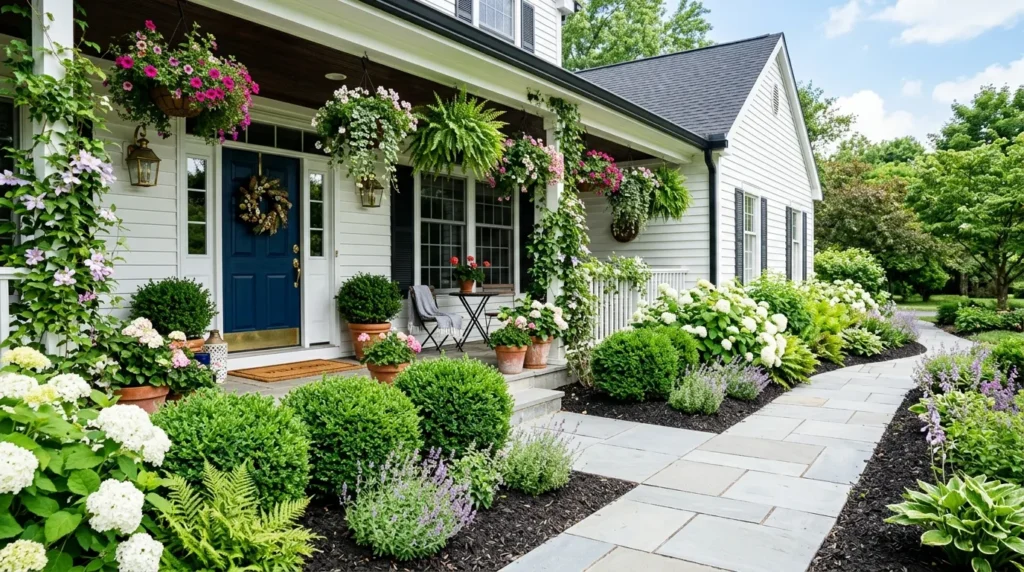
- Softens siding, brick, concrete, and railings
- Adds natural color and texture around the entrance
- Works with shrubs, vines, window boxes, and hanging baskets
- Helps connect the porch to the yard or walkway
- Looks best with plants suited to local climate and sunlight
Greenery makes a porch feel fresh, alive, and more welcoming from the curb. It softens hard exterior surfaces like brick, concrete, siding, railings, and stone while adding color and movement. You can use hanging baskets, window boxes, small shrubs, climbing vines, porch pots, or low foundation plants depending on the layout. The goal is to frame the entrance without hiding it. For many USA homes, boxwood, hydrangea, lavender, ferns, holly, dwarf spruce, and seasonal flowers create a timeless look that feels neat and inviting.
A smart greenery plan should be easy to maintain and scaled to the space. Avoid plants that will quickly outgrow the entry, block windows, or crowd the walkway. Use taller plants near corners, medium plants by railings, and lower flowers near steps or paths. Mulch, stone edging, or matching containers can make the planting look cleaner. In my experience, repeated greenery often looks better than too many different plant types. It creates a more calming, designer-inspired look while still allowing the entry to feel natural, relaxed, and welcoming.
10. Wall Accents
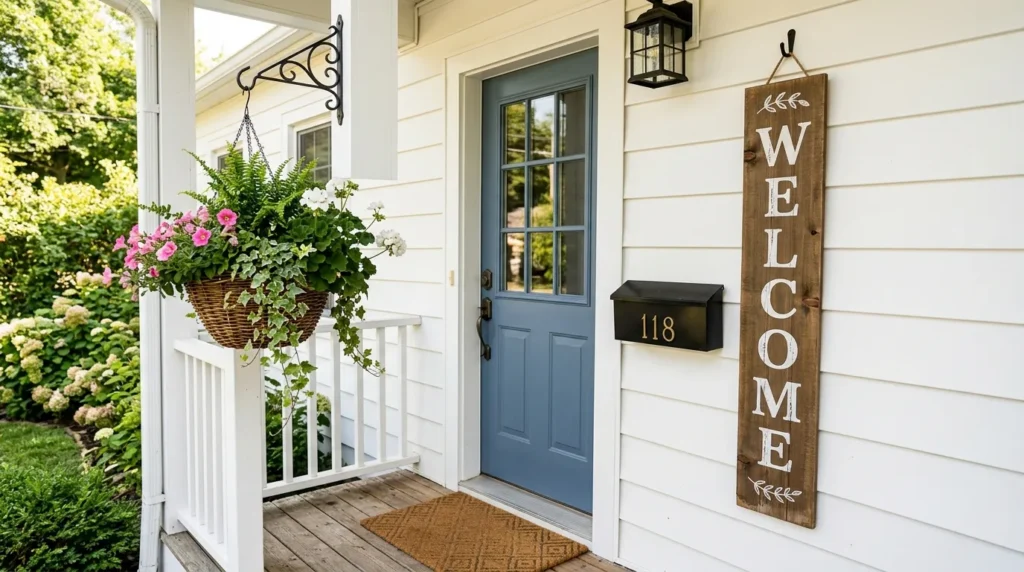
- Uses vertical space when the porch floor is limited
- Works with signs, plaques, baskets, mirrors, and mailboxes
- Adds personality without blocking the walking path
- Helps blank siding or brick feel more styled
- Looks best when sized properly for the wall
Wall accents are a smart way to decorate when porch space is limited. Instead of filling the floor with too many items, use the vertical area around the door. A slim welcome sign, metal address plaque, hanging basket, outdoor-safe mirror, wall mailbox, or decorative hook can add personality without crowding the entrance. Choose pieces that can handle outdoor conditions and match the home’s style. A farmhouse porch may suit a wood sign, while a modern exterior may look better with clean metal or simple black accents.
The key is editing so the wall does not become too busy. One strong vertical piece often looks more stylish than several small decorations scattered around the door. Pay attention to scale, especially beside tall doors, sidelights, or narrow trim. If you use a mirror, place it where it reflects greenery or light rather than clutter. If you use a sign, keep the colors connected to the door, mat, or planters. This approach helps the porch feel styled while keeping the walking area clear, practical, and easy to maintain.
11. Balanced Layers
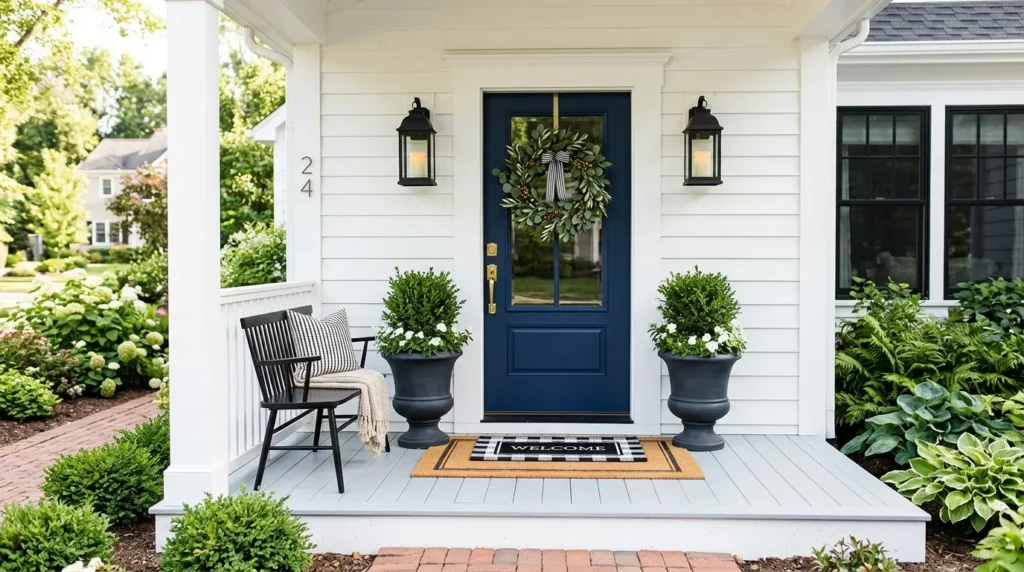
- Creates a polished and organized look from the street
- Works with matching planters, rugs, lights, wreaths, and seating
- Keeps the porch stylish without looking overcrowded
- Helps exterior photos look clean and Pinterest-friendly
- Makes the entrance feel intentional and welcoming
Balanced layers help a porch feel designed instead of randomly decorated. Start with one main anchor, such as a painted door, wreath, bench, or pair of planters. Then add supporting details that repeat color, material, shape, or height. For example, black lanterns can connect with a black door handle, while natural woven baskets can connect with a coir mat. This kind of repetition creates order, which is why the entry looks cleaner and more polished from the sidewalk. It is especially useful for a stylish Porch Entry.
The best layered entrances still leave enough empty space for movement. Guests should not need to step around too many pots, lanterns, signs, or pillows to reach the door. If your porch is small, choose fewer pieces with stronger visual impact. If it is larger, repeat materials across both sides to create balance. I’ve seen this work well in many homes because it combines beauty with function. The final result feels welcoming, practical, and photo-ready without looking staged, cluttered, or difficult to maintain through changing seasons.