Top 14 Small Balconies: Do Apartment Plants
Introduction
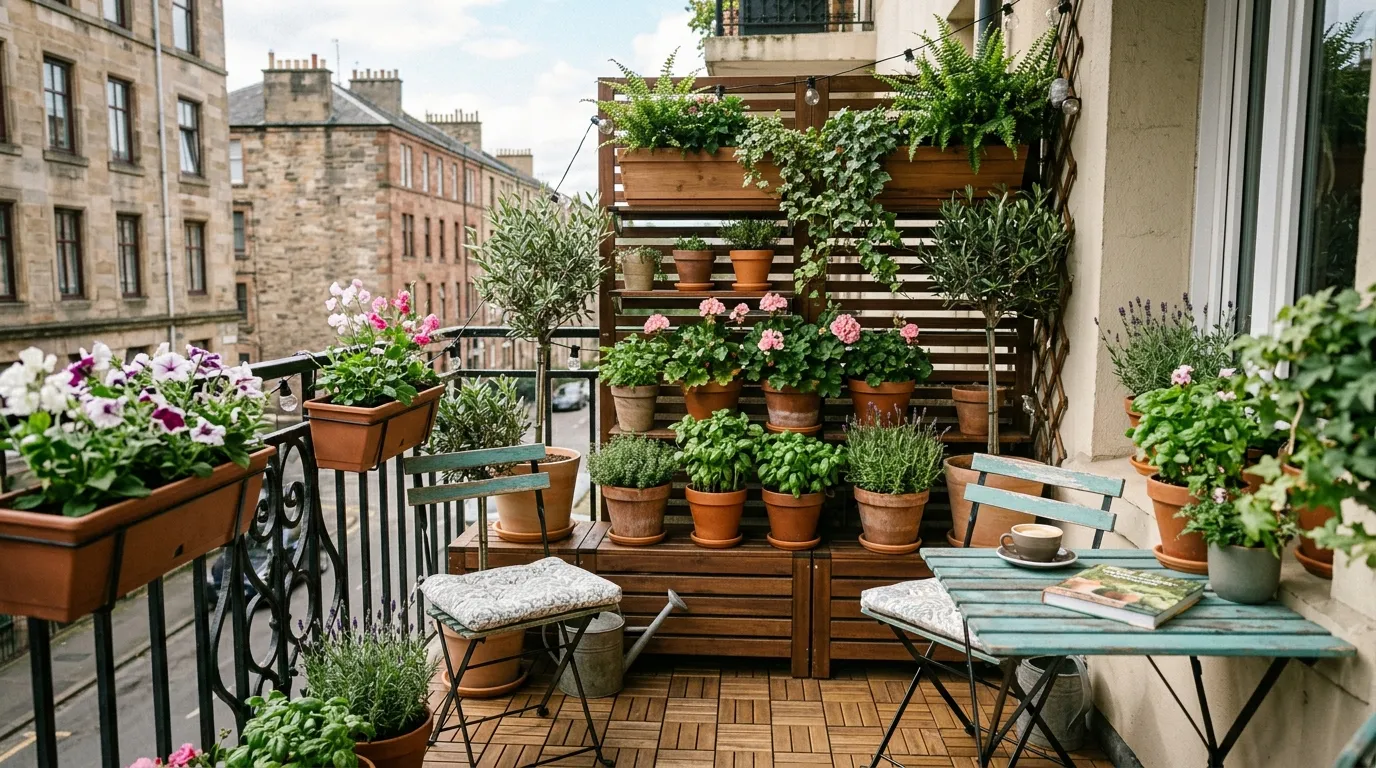
Small balconies can often feel cramped, underutilized, and uninspiring. In my experience, introducing well-chosen apartment plants transforms these spaces into vibrant, functional extensions of your home. Plants add color, texture, and natural ambiance while maximizing limited space. For urban residents in the USA, even a few square feet can become a serene retreat with the right combination of greenery, furniture, and decor. This guide offers practical, visually inspiring ideas that balance aesthetics and usability, helping you create an intimate balcony environment perfect for relaxation, socializing, or simply enjoying fresh air.
The key to success lies in thoughtful plant selection, creative layout, and cohesive design. Indoor-outdoor plants, vertical gardens, hanging planters, and multi-functional furniture allow small balconies to feel spacious, inviting, and Pinterest-worthy. Each idea in this guide includes actionable advice on materials, styling logic, and practical tips for maintaining healthy, thriving plants. By applying these strategies, you’ll transform an overlooked balcony into a stylish, functional space that encourages daily use and creates a lasting impression.
1. Vertical Garden Panels
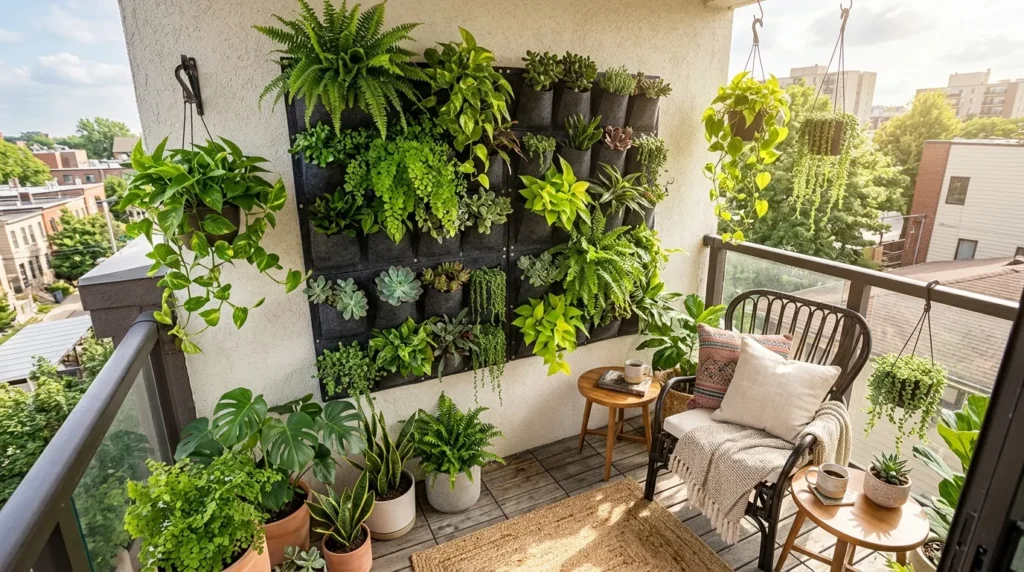
- Install wall-mounted planters or trellis systems
- Combine trailing vines with upright plants for depth
- Saves floor space and enhances privacy
- Lightweight materials for safety and versatility
Vertical garden panels are ideal for compact balconies, providing greenery without occupying floor space. In my experience, modular wall planters allow seasonal rotations and easy maintenance. Combining different plant types, such as pothos, ferns, and succulents, creates layers of texture and depth. Designers often recommend lightweight frames to avoid structural strain and facilitate rearrangement. Vertical arrangements also offer privacy from neighbors, filter sunlight, and create a lush focal point that elevates the overall balcony aesthetic while enhancing air quality and natural ambiance.
The transformation is dramatic. What was once a flat, underused wall becomes a vibrant, living feature. Vertical greenery adds height and dimension, giving the illusion of a larger space. It allows residents to enjoy dense plant arrangements without compromising seating or functional areas. With proper irrigation and plant selection, vertical panels remain vibrant year-round. They create a balanced mix of color, texture, and height, turning even the tiniest balcony into an immersive, visually compelling outdoor retreat.
2. Hanging Basket Clusters
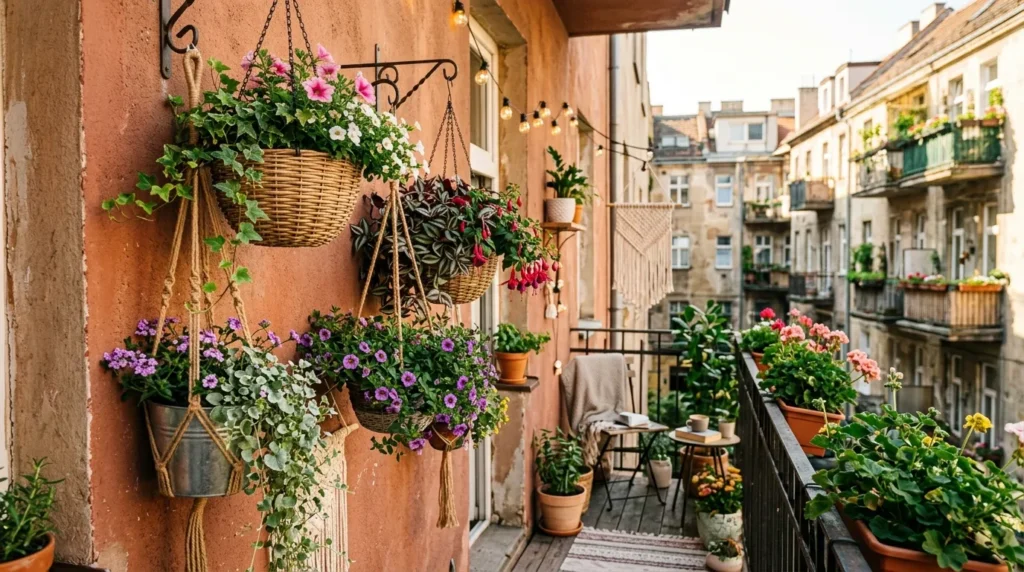
- Use macramé or metal baskets suspended at different heights
- Combine trailing and flowering plants
- Adds vertical interest without crowding the floor
- Easy to reposition for sunlight or design changes
Hanging baskets are perfect for maximizing vertical space in small balconies. In my experience, clustering three to five baskets at staggered heights creates a cascading, dynamic effect that draws the eye upward. Combining leafy trailing plants with colorful flowers adds depth, texture, and visual diversity. Designers suggest lightweight materials and adjustable hooks to simplify seasonal changes or plant rotations. This approach allows the balcony to feel airy and multi-dimensional while maintaining accessibility and functionality.
The transformation is both practical and aesthetic. Hanging baskets provide visual interest without occupying essential floor space for seating or storage. Trailing greenery adds privacy and softness, while flowers contribute seasonal vibrancy. A layered hanging arrangement introduces depth and draws attention to focal points, making the balcony feel curated and inviting. This setup encourages daily interaction with plants, enhances mood, and creates a small balcony environment that is both beautiful and Pinterest-ready.
3. Tiered Plant Stands
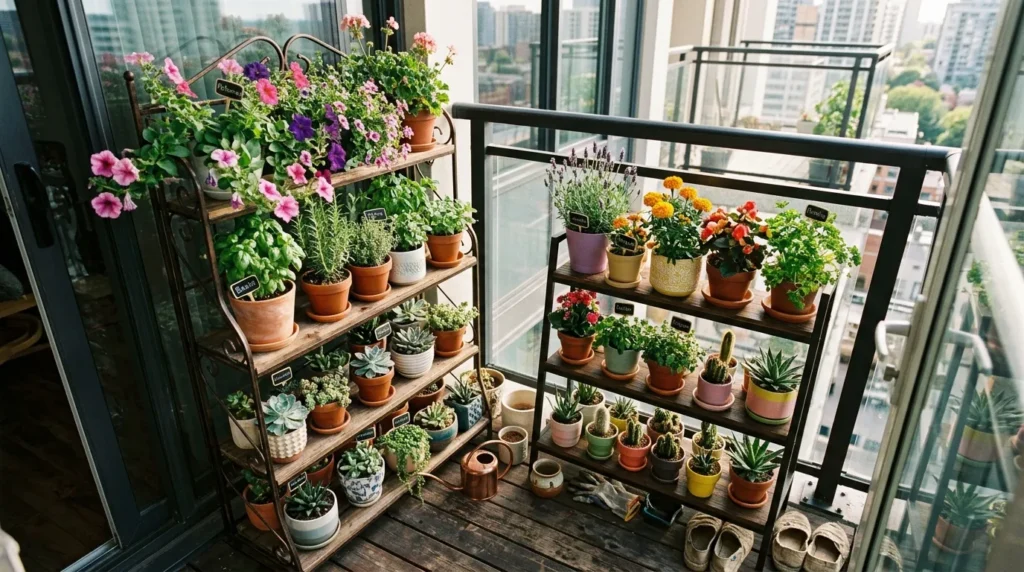
- Stack plants vertically on wooden or metal shelving
- Combine herbs, flowers, and succulents for variety
- Keeps plants accessible and organized
- Ideal for medium to small balconies
Tiered plant stands are a practical solution to display multiple plants while optimizing space. In my experience, multi-level stands allow proper sunlight for all plants while creating a visually appealing layered effect. Designers often recommend staggered heights and modular components to allow flexible arrangements and seasonal rotation. Using lightweight materials ensures stability and easy maintenance. Tiered stands also make watering, pruning, and harvesting straightforward, creating a functional yet attractive vertical display that complements the overall balcony layout.
The impact is immediately noticeable. Plants are displayed in a structured, harmonious way, enhancing visual rhythm and depth. Tiered arrangements provide opportunities for mixing textures, colors, and scents, creating a multi-sensory experience. Even compact balconies feel organized and spacious when floor space is preserved. Accessibility and usability improve as each plant is reachable without disturbing others. This method transforms small balconies into vibrant, functional gardens that encourage relaxation, creativity, and engagement with outdoor greenery.
4. Cozy Seating Corners
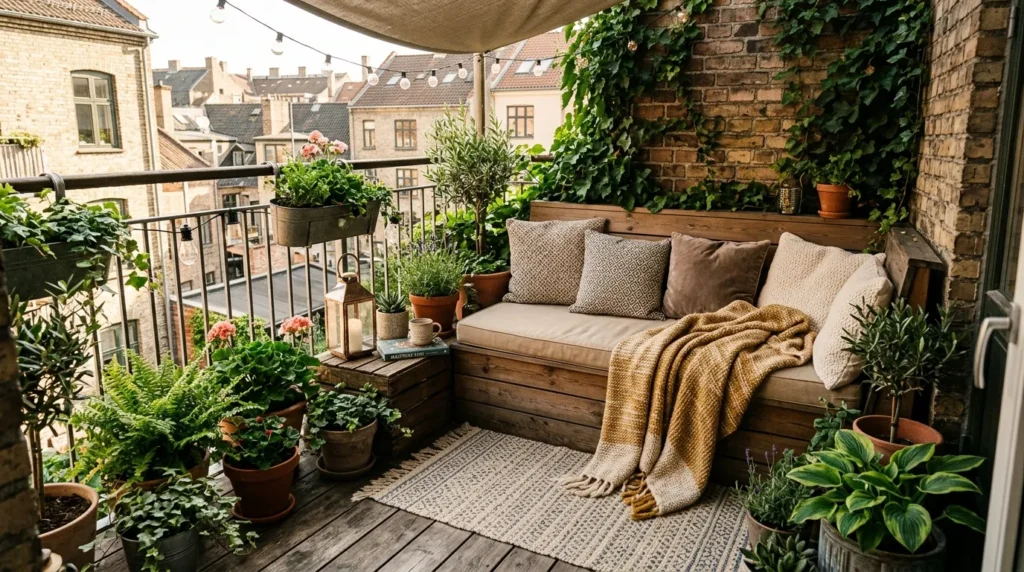
- Add a small bench, chair, or swing
- Surround seating with plants for privacy and texture
- Use cushions, throws, and small rugs for comfort
- Define the space visually and functionally
Creating a cozy seating corner makes a small balcony feel functional and inviting. In my experience, surrounding compact furniture with plants softens the area while providing privacy and natural ambiance. Designers often recommend layering greenery at different heights and textures to create depth. Adding cushions, small rugs, and throws enhances comfort and visually anchors the space. Even in narrow or shallow balconies, this combination transforms a simple ledge into a welcoming retreat for reading, morning coffee, or evening relaxation.
The results are transformative. The balcony becomes a usable outdoor living area that feels private and intimate despite spatial limitations. Plants create enclosure, softening edges while adding natural beauty. Thoughtful placement of furniture ensures comfort and accessibility, while layered greenery creates visual rhythm and interest. This setup encourages daily use and social interaction, turning a compact balcony into a stylish, functional extension of the home that is both Pinterest-worthy and highly livable.
5. Edible Plant Boxes
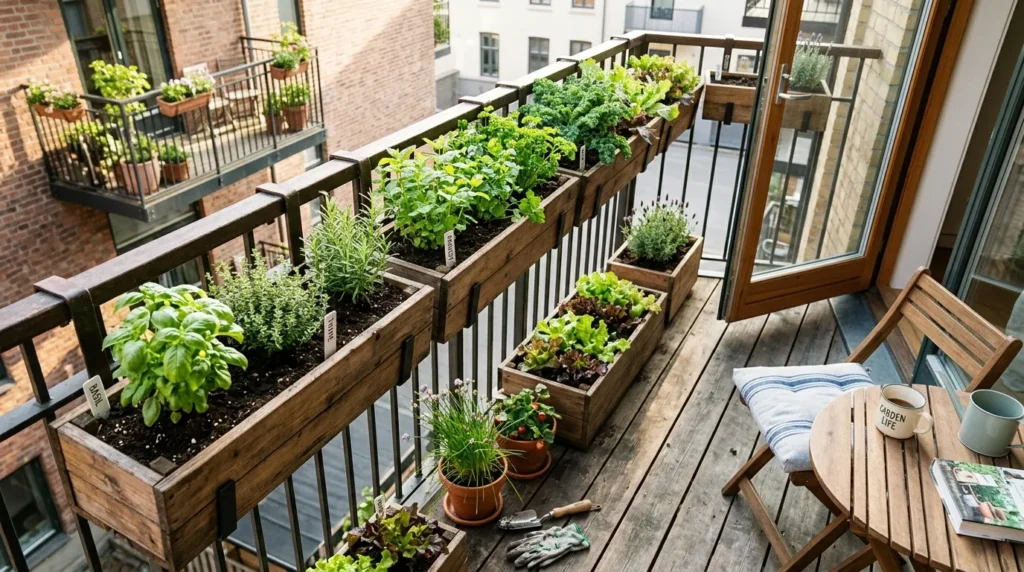
- Use railing-mounted or raised planters
- Grow herbs, greens, or small vegetables
- Combine functionality with aesthetic appeal
- Easy to maintain and harvest
Small balconies can serve a dual purpose of beauty and productivity. In my experience, edible plant boxes allow residents to grow fresh herbs and vegetables without occupying much space. Railing-mounted boxes maximize sunlight and airflow, while raised boxes make harvesting easier. Designers recommend lightweight, durable materials like wood or metal with drainage holes for plant health. Companion planting can improve soil quality and prevent pests. This approach transforms limited balconies into functional gardens that provide fresh ingredients while maintaining lush aesthetics.
The effect is both practical and visually appealing. Edible plants introduce fragrance, color, and texture, enhancing the balcony experience. Layered arrangements create visual depth while keeping floor space clear. Regular harvesting encourages interaction with the space and promotes consistent plant care. Even compact apartments benefit from this balance of utility and decor. Edible plant boxes elevate the balcony from simple outdoor space to a multi-purpose retreat that blends style, function, and practicality seamlessly.
6. Ambient Lighting Solutions
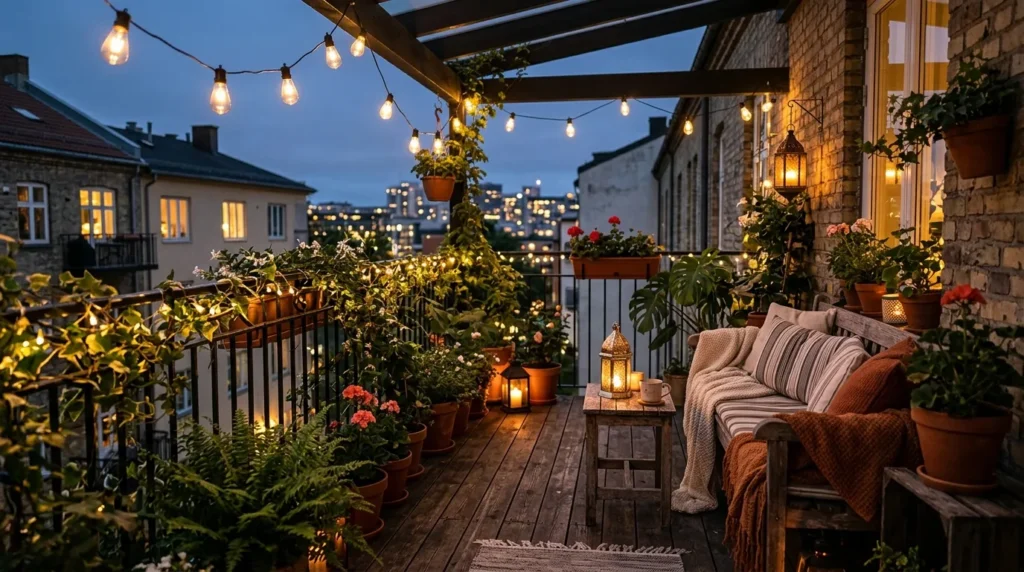
- Add string lights, lanterns, or solar lamps
- Highlight plant arrangements and seating
- Create cozy evening ambiance
- Energy-efficient options for safety and convenience
Lighting transforms small balconies into inviting evening retreats. In my experience, layered lighting enhances depth, accentuates plants, and improves usability after dark. Designers suggest using soft, warm lights like string LEDs or lanterns to create a welcoming glow. Solar-powered options are practical for outdoor use and reduce electricity consumption. Lights can also draw attention to focal points, such as vertical walls or cozy seating corners, creating a balanced, visually appealing atmosphere that is both functional and aesthetically pleasing.
The impact is immediate and practical. Lighting makes small balconies suitable for evening gatherings or relaxation while highlighting textures, colors, and plant arrangements. Warm glow creates intimacy, masking city noise and enhancing comfort. Layered lights at varying heights emphasize verticality and structure. This approach transforms compact balconies into Pinterest-ready spaces that feel cozy, stylish, and multi-functional. Thoughtful lighting design enhances usability, making the balcony a visually captivating retreat both day and night.
7. Seasonal Flower Arrangements
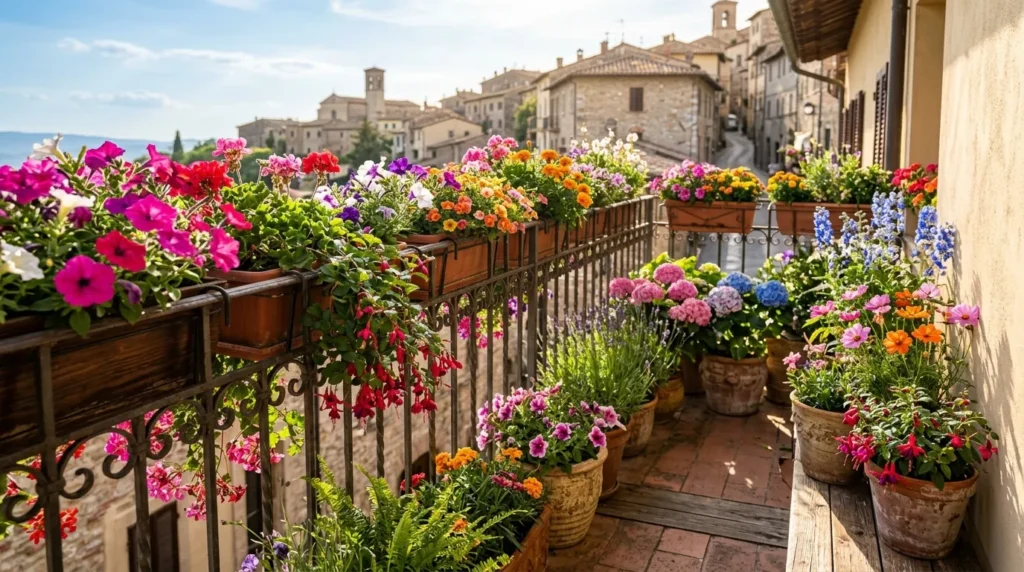
- Rotate flowers to match seasons
- Mix trailing and upright plants for texture
- Use potted or railing-mounted displays
- Enhance color, fragrance, and vibrancy
Seasonal flower arrangements keep small balconies fresh and engaging throughout the year. In my experience, swapping blooms for each season prevents monotony and introduces natural color variation. Designers recommend selecting flowers suited to local sunlight and climate to ensure longevity. Trailing plants create softness and depth, while upright blooms provide vertical interest. Combining railing-mounted pots with floor planters maximizes space, creating a visually dynamic display that draws the eye and enhances sensory appeal with fragrance and texture.
The results are both practical and visually striking. Each season transforms the balcony’s appearance, introducing new colors, shapes, and scents. Layering plants at different heights adds depth, making the space feel larger than it is. Seasonal arrangements encourage engagement with the balcony and promote regular maintenance, ensuring healthy, thriving plants. The combination of aesthetic variety and functionality produces a small balcony that is vibrant, Pinterest-ready, and perfect for relaxation or casual social use.
8. Privacy Green Screens
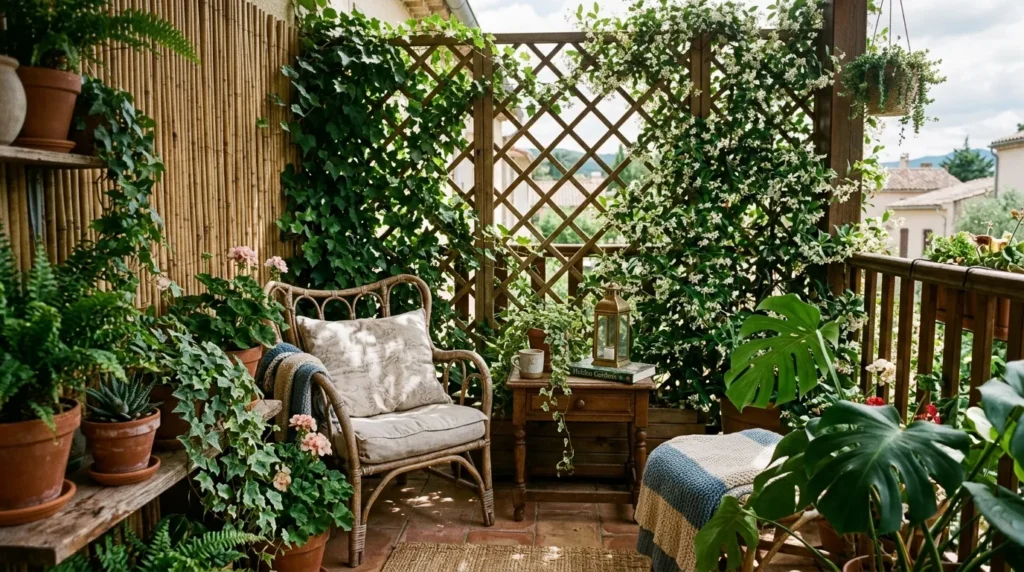
- Install trellises, lattice panels, or bamboo screens
- Grow climbing plants for coverage
- Add shade and intimacy without blocking light
- Integrate naturally with existing decor
Privacy green screens transform compact balconies into intimate retreats. In my experience, climbing vines like ivy or jasmine on trellis or bamboo panels create natural seclusion while maintaining openness and light flow. Designers recommend lightweight, weather-resistant materials that support growth without imposing structural stress. Layering plants of varying heights enhances visual depth, softens hard lines, and adds texture. Green screens also reduce wind and noise, making balconies more usable while contributing to a tranquil, visually pleasing environment.
The transformation is functional and aesthetic. Dense greenery screens provide privacy and create a cozy atmosphere. Vertical growth draws attention upward, enhancing perceived height and spatial depth. Combined with seating and decor, screens visually structure the space and establish zones for relaxation or work. Well-chosen plants thrive year-round with minimal care, turning small balconies into private, lush retreats. This approach balances utility and beauty, resulting in a Pinterest-worthy, engaging, and livable outdoor environment.
9. Mini Water Features
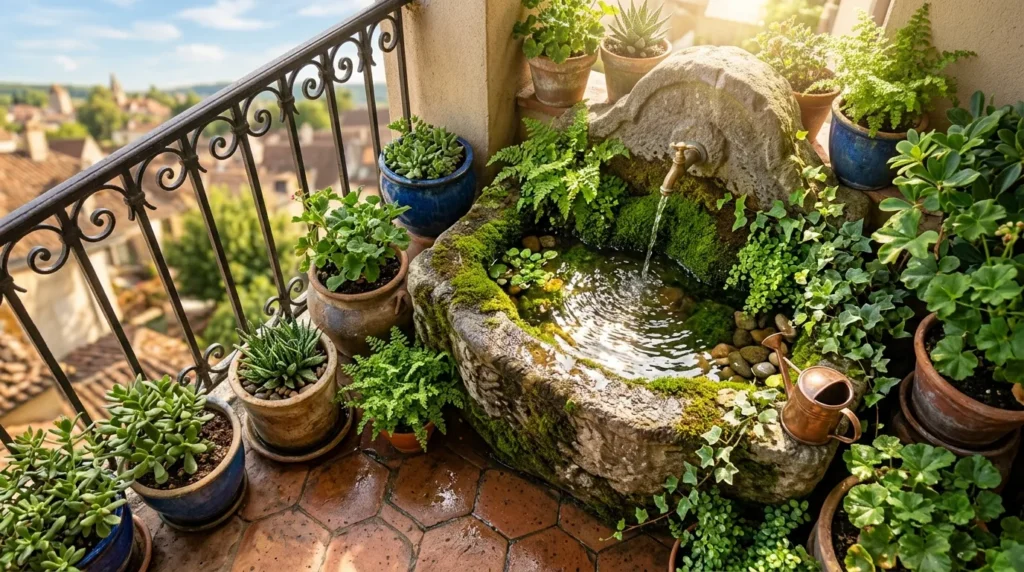
- Add small fountains or bubbling bowls
- Surround with moss, pebbles, or plants
- Introduce sound and motion for serenity
- Use durable, weatherproof materials
Mini water features add a soothing, multi-sensory dimension to small balconies. In my experience, even compact fountains create calming soundscapes that enhance relaxation. Designers suggest materials like stone, ceramic, or resin for durability and aesthetic appeal. Surrounding the water feature with small plants or moss integrates it seamlessly with existing greenery. The gentle movement of water softens the space visually and auditorily, making the balcony feel immersive and serene, perfect for stress relief or quiet moments.
The impact is immediate and transformative. Flowing water draws the eye, adds vertical movement, and improves ambiance. Paired with plants, it contributes to humidity regulation and sensory richness. Even tiny balconies feel more spacious and dynamic when a water element is added. Mini fountains encourage mindfulness and regular engagement with the space while creating a stylish, Pinterest-ready focal point that enhances both comfort and aesthetics in compact outdoor areas.
10. Multi-Functional Furniture
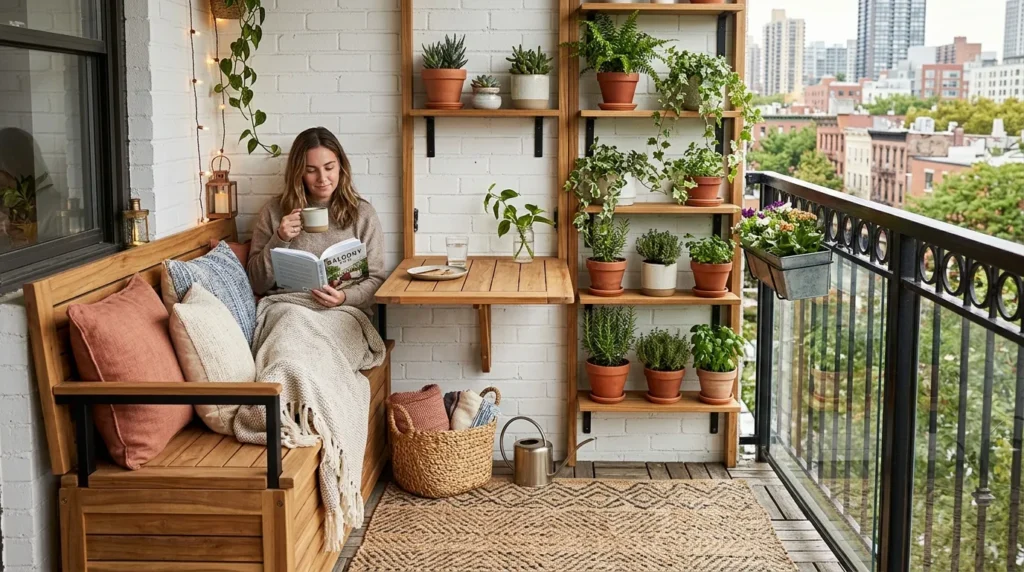
- Use storage benches or foldable tables
- Integrate seating with plant displays
- Optimize limited floor space
- Durable outdoor-friendly materials
Multi-functional furniture maximizes usability in small balcony spaces. In my experience, benches with storage or tables doubling as planters optimize limited areas without sacrificing style. Designers recommend weather-resistant materials like treated wood, metal, or synthetic rattan for longevity. Integrating greenery around or on furniture softens hard edges and visually blends utility with decor. Strategic placement ensures comfort, usability, and flow, allowing balconies to function as dining, gardening, or leisure spaces without feeling cramped.
The transformation is both practical and aesthetic. Multi-purpose furniture creates functional zones while providing visual structure. Seating, storage, and display capabilities combine seamlessly, preserving floor space. Surrounding plants enhance beauty and cohesion, adding vertical interest. This approach turns small balconies into fully functional, comfortable, and visually engaging spaces, ideal for daily living and Pinterest-worthy photography. Multi-functional pieces ensure every inch is utilized efficiently while maintaining style and usability.
11. Hanging Herb Gardens
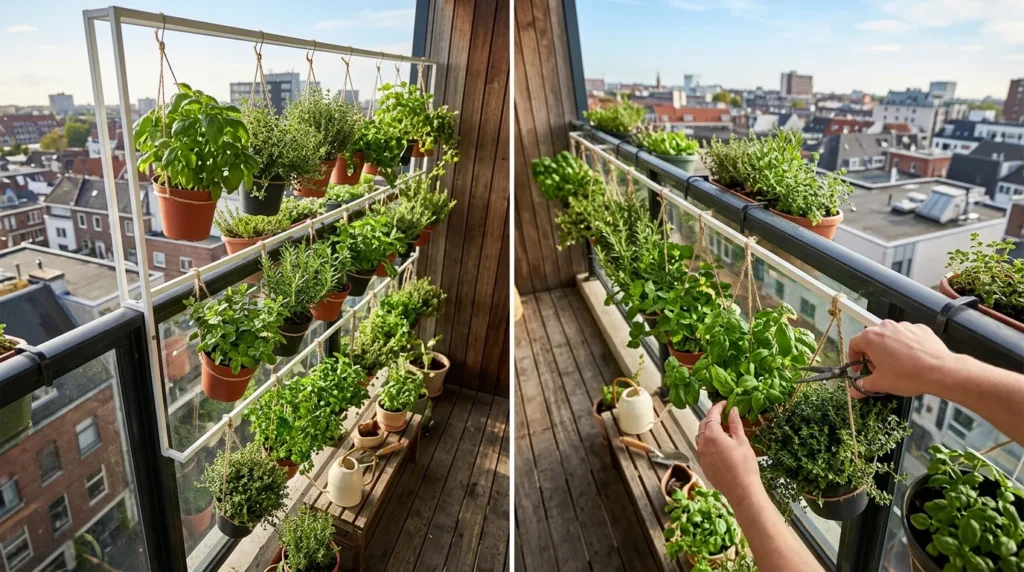
- Suspend small planters from ceiling or railing
- Grow fresh herbs for cooking
- Mix trailing and compact plants
- Saves space while adding greenery
Hanging herb gardens are perfect for small apartment balconies where space is tight. In my experience, suspending herbs in lightweight planters allows residents to grow fresh, edible plants without crowding the floor. Designers recommend grouping herbs in clusters and arranging at varying heights for visual interest. Trailing plants can cascade around the pots, softening structural lines. Hanging gardens improve accessibility for daily cooking while adding a natural, green aesthetic that complements both vertical and horizontal spaces.
The transformation is practical and engaging. Residents enjoy easy access to fresh herbs while the balcony remains uncluttered. The cascading greenery adds visual depth and texture, enhancing style. Hanging herb gardens integrate functionality with beauty, encouraging care and interaction. Even tiny balconies benefit from vertical green layering, resulting in a practical, vibrant, and visually pleasing outdoor space that is ideal for everyday use and Pinterest-ready styling.
12. Compact Outdoor Rugs
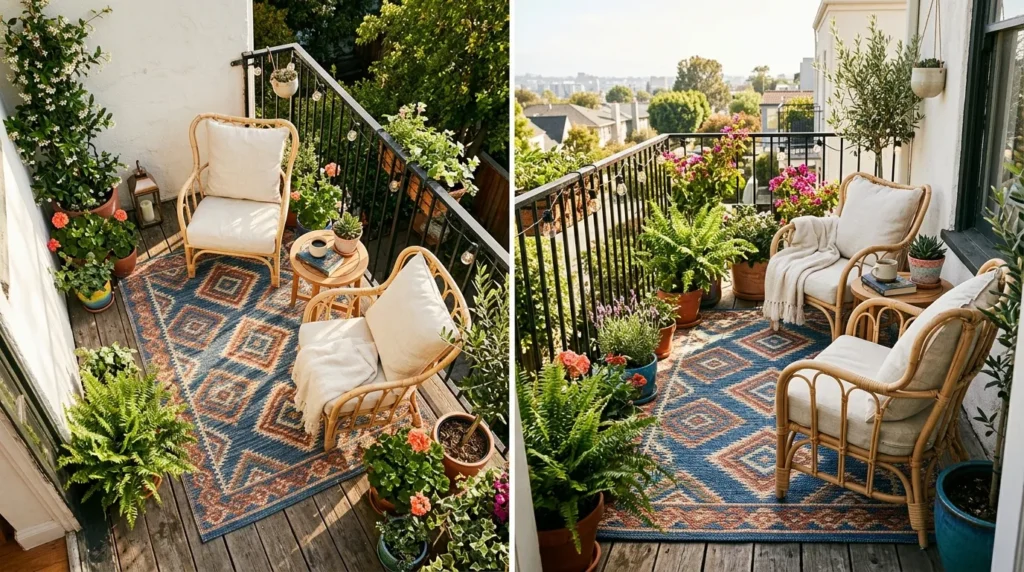
- Anchor seating or dining areas
- Add texture, color, and comfort
- Use weather-resistant synthetic materials
- Coordinate with plants and furniture
Outdoor rugs define balcony zones and elevate comfort. In my experience, placing a rug under seating or small tables creates cohesive areas in limited spaces. Designers often recommend polypropylene or recycled fiber rugs for durability, color retention, and moisture resistance. Patterns and colors should harmonize with surrounding plants and furniture to enhance cohesion. Rugs soften hard surfaces, reduce noise, and provide tactile comfort while visually unifying furniture and greenery, making small balconies feel purposeful and stylish.
The effect is immediate and visually appealing. Rugs delineate functional areas and add warmth, making compact balconies more inviting. They unify decor elements and emphasize textures, improving comfort and usability. With strategic placement, a rug anchors seating or plant arrangements, creating a polished, curated look. This approach enhances style, livability, and Pinterest-worthiness, transforming small outdoor spaces into cohesive, functional, and visually pleasing retreats for relaxation or entertaining.
13. Statement Planters
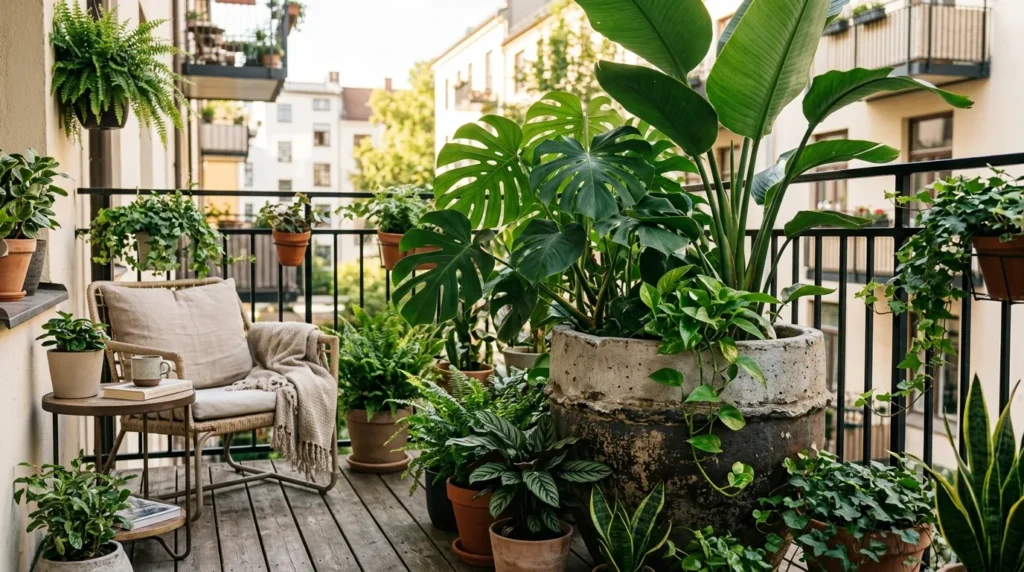
- Include oversized or uniquely shaped planters
- Add bold colors or textures
- Position as focal points
- Pair with smaller plants for balance
Statement planters elevate small balcony design instantly. In my experience, a single oversized planter or a unique shape can become a visual anchor. Designers suggest pairing bold containers with smaller plants to balance scale and create harmony. Materials like concrete, metal, or ceramic provide texture and durability. These planters allow creative freedom for plant selection and color, enhancing the aesthetic appeal of even compact balconies. They serve as conversation pieces while highlighting greenery and layout design.
The transformation is dramatic. Statement planters create a focal point that draws the eye and organizes space visually. Surrounding plants soften edges, add depth, and provide texture. Even limited balconies feel curated and intentional. Combining size, color, and materials produces a visually compelling, functional, and Pinterest-ready outdoor space. Statement planters help transform compact areas into stylish, memorable retreats with minimal effort while maintaining practical usability.
14. Artistic Accents
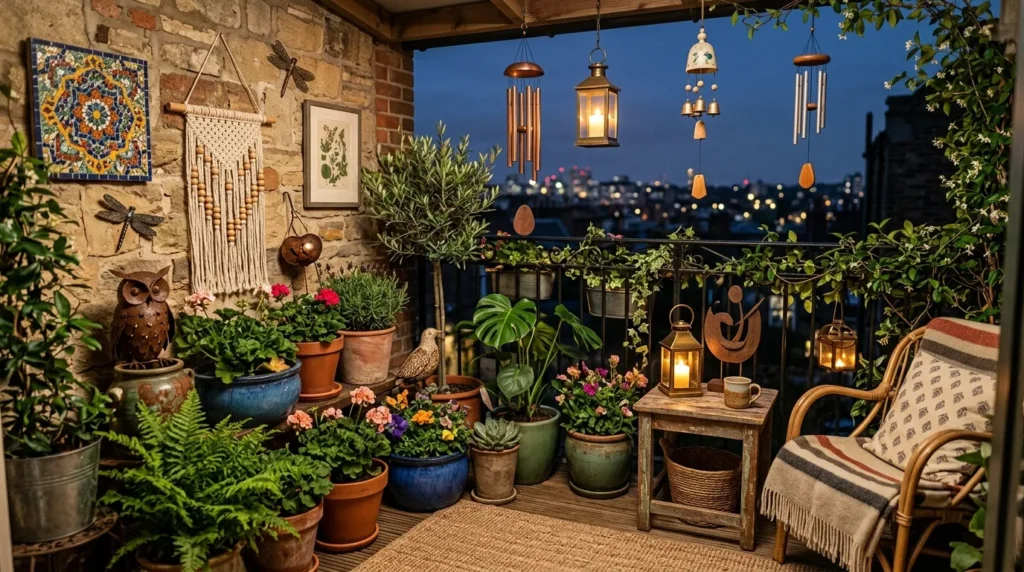
- Add sculptures, decorative wall art, or wind chimes
- Blend with plants and furniture
- Introduce personal style or seasonal elements
- Create visual interest and conversation pieces
Artistic accents personalize and elevate small balconies. In my experience, sculptures, chimes, or wall art bring character while complementing greenery. Designers often suggest neutral or earthy tones for balance, allowing accent pieces to stand out without overpowering the plants. Seasonal rotation of accents keeps the space fresh and engaging. Integrating art with furniture and greenery creates a cohesive layout, enhancing visual depth, texture, and style while maintaining functional usability for compact outdoor areas.
The results are visually dynamic and functional. Artistic elements provide personality and focal points, making balconies feel curated and intentional. They draw the eye and encourage engagement with the space. Combined with plants, lighting, and furniture, accents create a balanced and harmonious outdoor area. Small balconies become inviting, visually compelling, and Pinterest-ready retreats suitable for relaxation, entertaining, and photography. Thoughtful art integration adds dimension, depth, and style to every corner.